
Sign up to save your podcasts
Or

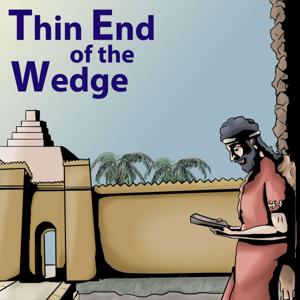


How did ancient cultures understand the end of empires? When was the end even considered a possibility, and did they see it coming? When was an end not an end, but a continuity? Shana explores political change through the perspective of the communities who lived through it.
2:09 why the end of empires?
3:41 how to identify the end
5:58 are symbols of office destroyed?
7:48 ends versus natural rhythms
12:50 mythology of end
17:37 do destroyers take on the divine role?
19:14 would people have seen it coming?
24:28 could anyone intervene to prevent disaster?
26:55 what can we learn from ancient ends?
30:21 how much impact would an end have had?
Music by Ruba Hillawi
Website: http://wedgepod.org
YouTube: https://www.youtube.com/channel/UCSM7ZlAAgOXv4fbTDRyrWgw
Email: [email protected]
Patreon: http://Patreon.com/WedgePod
Gioele talks about the PlANET Project (Plants in the Ancient Near East Texts). How do texts and archaeobotanical evidence combine to explain the economic and functional roles of plants? And what symbolic values did they have? To what extent did they play active roles?
3:27 the PlANET project
5:23 what do we know about plants?
7:57 combining sources
11:13 project goals
13:35 attitudes to environmental change
15:18 interdisciplinary
17:30 identifying plants
21:07 environmental humanities
26:15 plants as actors
29:06 gender studies in plant studies
32:59 BioANE project and PlANET project
33:49 analogical thinking
37:43 current research
40:59 favourite plant
PlANET at La Sapienza
Music by Ruba Hillawi
Website: http://wedgepod.org
YouTube: https://www.youtube.com/channel/UCSM7ZlAAgOXv4fbTDRyrWgw
Email: [email protected]
Patreon: http://Patreon.com/WedgePod
David Kertai explains all about Neo-Assyrian palaces. What, and who, would we find there? How did they function? What do their design and decoration tell us about how they were used? How visible was the king?
David's museum page
Music by Ruba Hillawi
Website: http://wedgepod.org
YouTube: https://www.youtube.com/channel/UCSM7ZlAAgOXv4fbTDRyrWgw
Email: [email protected]
Patreon: http://Patreon.com/WedgePod
International Association for Assyriology awards prizes to early career scholars annually. The for 2025 awards went to:
Best PhD dissertation in the field of Assyriology and Mesopotamian Archaeology: Adeline Reynaud, for “Les diagrammes mathématiques paléo-babyloniens : catalogue, propriétés matérielles, rôles dans les raisonnements”
Best article in Assyriology and Mesopotamian Archaeology:
Laureate: Jon Beltz, for “Everyday Magic? Four Sumerian zi…pa₃ Incantations on Amulets,” in Journal of Cuneiform Studies 77: 97-121.
Runner-up: Andrew Pottorf, for “un-il₂ (“Menials”) as a Serflike Social Stratum during the Ur III Period,” Journal of Ancient Near Eastern History 12/1: 83-113.
Jon and Andrew join us to talk about their prize-winning research.
2:00 What is a zipa incantation?
2:54 amulets and tablets
3:55 practical magic
5:27 main argument
6:29 structures
8:13 place in research
9:10 what's next
11:42 status groups in Ur III
15:52 state of research
20:52 the "people"
22:30 how to become UN.IL2
26:59 social security?
28:50 place in research
30:43 what's next
Music by Ruba Hillawi
Website: http://wedgepod.org
YouTube: https://www.youtube.com/channel/UCSM7ZlAAgOXv4fbTDRyrWgw
Email: [email protected]
Patreon: http://Patreon.com/WedgePod
Lisa Wilhelmi discusses the international system in the ancient Middlle East. The 14th century BC tablets from Amarna in Egypt, and tablets from the royal archives in Hattusa (Türkiye), reveal diplomatic exchanges between the great powers that ruled the region. What did they want from each other? Who and what moved around, and why?
2:00 what does "international" mean?
3:09 what sources our sources say?
5:22 were the letters preserved or did they just survive?
6:50 what language do they use?
8:37 were they equal partners?
10:34 do resources buy membership of the great powers club?
12:15 how did they talk to each other?
14:35 what messages are they sending each other?
16:38 political theatre?
18:32 how princesses were chosen
19:40 did princesses take part in the correspondence?
20:13 why was cuneiform the method of communication?
23:51 cultural exchange
26:52 lost in translation?
Lisa's university page
Music by Ruba Hillawi
Website: http://wedgepod.org
YouTube: https://www.youtube.com/channel/UCSM7ZlAAgOXv4fbTDRyrWgw
Email: [email protected]
Patreon: http://Patreon.com/WedgePod
Gina Konstantopoulos, Andrew Deloucas, Gabriel Moshenska, and Steven Garfinkle discuss internet favourite, Ea-nasir. What do we know about the Dilmun traders and their role in the supply of copper to the kingdoms of Babylonia? Who were his customers and what did they want his copper for? How did he become famous in the 21st century, and what jokes do people make about him? What possibilities does this offer assyriology?
Andrew Deloucas's university page
Gina Konstantopoulos's university page
Gabriel Moshenska's university page
Steven Garfinkle's university page
Music by Ruba Hillawi
Website: http://wedgepod.org
YouTube: https://www.youtube.com/channel/UCSM7ZlAAgOXv4fbTDRyrWgw
Email: [email protected]
Patreon: http://Patreon.com/WedgePod
Rocío and Nathan take us to Babylon in the Late Babylonian period for a remarkable public ritual. The divine love lyrics are one of the most surprising literary survivals from antiquity. Sarpanitu discovers that Marduk has been sleeping with Ishtar. The two goddesses become embroiled in a very public shouting match, throwing insults at each other. What was this ritual and what did it mean?
3:56 introduction to the Divine Love Lyrics
5:42 one text, a series, or something else?
7:20 content in detail
10:45 reading the text
16:55 making sense of the texts
20:29 literary qualities
22:18 whose perspectives?
26:05 the lyrics in Babylonian theology
32:36 was it shocking?
34:29 who was it for?
37:56 what don't we know?
40:15 about the book
Rocío's university page
Rocío's Academia
Rocío's ResearchGate
Nathan's university page
Nathan's Academia
Nathan's personal website
Music by Ruba Hillawi
Website: http://wedgepod.org
YouTube: https://www.youtube.com/channel/UCSM7ZlAAgOXv4fbTDRyrWgw
Email: [email protected]
Patreon: http://Patreon.com/WedgePod
Mustafa discusses his project to document the condition of the gates of Nineveh, and to plan the sustainable conservation and management. What do the gates mean to Mosulis? What reconstruction work has taken place, what condition are the gates in now, and what might they look like in the future?
2:39 the Gates of Nineveh project
4:46 historic reconstructions
5:40 significance
7:19 current condition
9:51 archaeological park
13:45 displaying finds from the gates
16:04 heritage tourism in Mosul
17:07 heritage restoration
21:03 the Banquet Stela of Ashurnasirpal
24:33 where to learn more
Mustafa's Facebook
Music by Ruba Hillawi
Website: http://wedgepod.org
YouTube: https://www.youtube.com/channel/UCSM7ZlAAgOXv4fbTDRyrWgw
Email: [email protected]
Patreon: http://Patreon.com/WedgePod
Augusta talks about the new excavations at Nippur. What are the goals of the new work, and how does she manage the long history of excavations at the site? What are the long term plans for the site? She reveals the first results, including news about the city walls, a huge Neo-Babylonian villa, and a Parthian cemetery. She reflects on how the archaeological situation has changed since she was a student. And she discusses plans for sharing the results of the work.
3:13 why Nippur?
5:26 project goals
8:11 working around previous excavations
12:09 first results
15:39 a Neo-Babylonian villa
19:40 searching for Ur III
22:18 Kassite Nippur
24:06 the dig team
27:14 Neo-Babylonian graves
29:18 challenges
35:19 long term plans
39:11 publication
Music by Ruba Hillawi
Website: http://wedgepod.org
YouTube: https://www.youtube.com/channel/UCSM7ZlAAgOXv4fbTDRyrWgw
Email: [email protected]
Patreon: http://Patreon.com/WedgePod
Tina explains what animal teeth and bones can tell us about life in ancient Iraq. What did people eat? And what did those animals eat? How were flocks and herds managed? What does this tell us about status and economy? We learn what new strands of evidence are provided by scientific analyses.
3:12 about zooarchaeology
4:17 state of play
7:33 cow teeth and society
10:35 why the difference between texts and zooarchaeology?
14:43 feeding cattle
19:02 animal movement and management
26:13 how to get this information
32:06 stress in bones
37:15 how to learn
Tina's University page
Tina's laboratory page
Tina's Academia page
Music by Ruba Hillawi
Website: http://wedgepod.org
YouTube: https://www.youtube.com/channel/UCSM7ZlAAgOXv4fbTDRyrWgw
Email: [email protected]
Patreon: http://Patreon.com/WedgePod
From the publisher's feed

90,880 Listeners

26,180 Listeners

9,192 Listeners

882 Listeners

5,486 Listeners

1,471 Listeners
1,116 Listeners
741 Listeners

3,206 Listeners
3,136 Listeners

3,365 Listeners

15,577 Listeners

1,894 Listeners

1,386 Listeners

192 Listeners