
Sign up to save your podcasts
Or


Want to steal my Objection Handling Cheat Sheet? Click here.
Most people think success in sales, fitness, or business comes down to talent or motivation. It doesn’t. It comes down to a formula.
In this episode, we break down Alex Hormozi’s Value Equation and show how it applies directly to door-to-door sales, recruiting, and life:
Value = (Dream Outcome × Likelihood of Achievement) ÷ (Time Delay × Effort & Sacrifice)
You’ll learn:
Why people overpay for things that feel faster and easier
How top D2D reps close more deals by reducing effort and time for the customer
Why commission-only sales actually increases value for the right person
How to use the formula to sell ideas to customers, recruits, and even yourself
This episode will change how you think about:
Selling pest control
Recruiting high-performing reps
Designing offers that people say yes to without pressure
If you’ve ever wondered why some people win consistently while others struggle doing “the same work,” this episode explains the math behind it.
 View all episodes
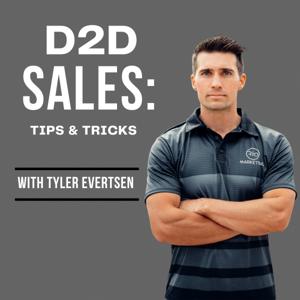
 By Tyler Evertsen

4.6
1616 ratings
Want to steal my Objection Handling Cheat Sheet? Click here.
Most people think success in sales, fitness, or business comes down to talent or motivation. It doesn’t. It comes down to a formula.
In this episode, we break down Alex Hormozi’s Value Equation and show how it applies directly to door-to-door sales, recruiting, and life:
Value = (Dream Outcome × Likelihood of Achievement) ÷ (Time Delay × Effort & Sacrifice)
You’ll learn:
Why people overpay for things that feel faster and easier
How top D2D reps close more deals by reducing effort and time for the customer
Why commission-only sales actually increases value for the right person
How to use the formula to sell ideas to customers, recruits, and even yourself
This episode will change how you think about:
Selling pest control
Recruiting high-performing reps
Designing offers that people say yes to without pressure
If you’ve ever wondered why some people win consistently while others struggle doing “the same work,” this episode explains the math behind it.

16,844 Listeners

32,784 Listeners

85 Listeners

13,987 Listeners

582 Listeners

295 Listeners

4,469 Listeners

2,288 Listeners

437 Listeners
837 Listeners

4,286 Listeners

148 Listeners

957 Listeners

192 Listeners