
Sign up to save your podcasts
Or

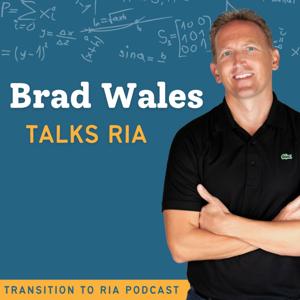


Every year many financial advisors transition their practice from one wirehouse to another.
Provided they’ve done their research and concluded that such a path was best for them, their practice, and their clients, there is nothing wrong with that.
All too often though, that research does not include understanding all potential options.
Thus, they end up making a less than informed decision about something that will impact the balance of their career.
In this episode of the Transition To RIA question & answer series (#140) I work to expand such knowledge by explaining how transitioning to another wirehouse compares to transitioning to the RIA model.
Come take a listen!
P.S. Prefer video? You can find this entire series in video format on Youtube. Search for the TRANSITION TO RIA channel.
Show notes: https://TransitionToRIA.com/how-does-transitioning-to-another-wirehouse-compare-to-transitioning-to-the-ria-model/
About Host: Brad Wales is the founder of Transition To RIA, where he helps financial advisors between $50M and $1B understand everything there is to know about WHY and HOW to transition their practice to the Registered Investment Advisor (RIA) model. Brad has 20+ years of industry experience, including direct RIA related roles in Compliance, Finance and Business Development. He has an MBA and has held the 4, 7, 24, 63 & 65 licenses. The Transition To RIA website (TransitionToRIA.com) has a large catalog of free videos, articles, whitepapers, as well as other resources to help advisors understand the RIA model and how it would apply to their unique circumstances.
If you were to transition your practice to the RIA model, is there is an ideal time of the year to make the change?
Before considering calendar variables, though, you first want to consider factors pertinent to your unique scenario including potential vesting cycles on deferred comp, tranches on forgivable loans, etc.
It is then important to be aware of, and understand why there are certain times of year that advisors/teams generally seek to avoid making a transition during.
On this episode (#139) of the Transition To RIA question & answer series I address these variables and discuss what goes into a timing decision on when to make a transition.
Come take a listen!
P.S. Prefer video? You can find this entire series in video format on Youtube. Search for the TRANSITION TO RIA channel.
Show notes: https://TransitionToRIA.com/what-time-of-year-should-i-transition-to-the-ria-model/
About Host: Brad Wales is the founder of Transition To RIA, where he helps financial advisors between $50M and $1B understand everything there is to know about WHY and HOW to transition their practice to the Registered Investment Advisor (RIA) model. Brad has 20+ years of industry experience, including direct RIA related roles in Compliance, Finance and Business Development. He has an MBA and has held the 4, 7, 24, 63 & 65 licenses. The Transition To RIA website (TransitionToRIA.com) has a large catalog of free videos, articles, whitepapers, as well as other resources to help advisors understand the RIA model and how it would apply to their unique circumstances.
While it is not always referred to as a "1099 model", there is a type of RIA platform offering that many advisors find to be an attractive alternative to running their own RIA.
These "1099 models" come in various flavors but they typically share the following (among other things):
If considering starting your own RIA, it's worthwhile understanding how these models compare.
In this episode (#138) of the Transition To RIA question & answer series I explain what these models are and why they’re worth considering for your practice.
Come take a listen!
P.S. Prefer video? You can find this entire series in video format on Youtube. Search for the TRANSITION TO RIA channel.
Show notes: https://TransitionToRIA.com/what-is-a-1099-ria-model/
About Host: Brad Wales is the founder of Transition To RIA, where he helps financial advisors between $50M and $1B understand everything there is to know about WHY and HOW to transition their practice to the Registered Investment Advisor (RIA) model. Brad has 20+ years of industry experience, including direct RIA related roles in Compliance, Finance and Business Development. He has an MBA and has held the 4, 7, 24, 63 & 65 licenses. The Transition To RIA website (TransitionToRIA.com) has a large catalog of free videos, articles, whitepapers, as well as other resources to help advisors understand the RIA model and how it would apply to their unique circumstances.
We often hear about “breakaway” advisors.
That is commonly understood to refer to wirehouse advisors “breaking away” to setup their own independent practices.
It’s one of the main reasons the RIA channel has been, and continues to be, the fastest growing channel in the industry.
But why do we never hear about independent advisors going in the other direction to the wirehouse model?
Why does the river only run in one direction?
In this episode of the Transition To RIA question & answer series I explain:
Come take a listen!
P.S. Prefer video? You can find this entire series in video format on Youtube. Search for the TRANSITION TO RIA channel.
Show notes: https://TransitionToRIA.com/why-do-advisors-leave-the-wirehouse-model-for-the-ria-model/
About Host: Brad Wales is the founder of Transition To RIA, where he helps financial advisors between $50M and $1B understand everything there is to know about WHY and HOW to transition their practice to the Registered Investment Advisor (RIA) model. Brad has 20+ years of industry experience, including direct RIA related roles in Compliance, Finance and Business Development. He has an MBA and has held the 4, 7, 24, 63 & 65 licenses. The Transition To RIA website (TransitionToRIA.com) has a large catalog of free videos, articles, whitepapers, as well as other resources to help advisors understand the RIA model and how it would apply to their unique circumstances.
A typical RIA “tech stack” is comprised of 3 core pieces of software:
But what exactly does the generic sounding “portfolio management” tool do?
Considering it is typically by far the most expensive piece of a tech stack, it’s important to understand the role it would play in your practice.
In this episode (#136) of the Transition To RIA question and answer series I explain:
Come take a listen!
P.S. Prefer video? You can find this entire series in video format on Youtube. Search for the TRANSITION TO RIA channel.
Show notes: https://TransitionToRIA.com/what-does-the-portfolio-management-tool-in-an-ria-tech-stack-do/
About Host: Brad Wales is the founder of Transition To RIA, where he helps financial advisors between $50M and $1B understand everything there is to know about WHY and HOW to transition their practice to the Registered Investment Advisor (RIA) model. Brad has 20+ years of industry experience, including direct RIA related roles in Compliance, Finance and Business Development. He has an MBA and has held the 4, 7, 24, 63 & 65 licenses. The Transition To RIA website (TransitionToRIA.com) has a large catalog of free videos, articles, whitepapers, as well as other resources to help advisors understand the RIA model and how it would apply to their unique circumstances.
Choosing a custodian to hold your client assets is one of the most important decisions you’ll make when transitioning your practice to the RIA model.
While it might at first seem as simple as picking from the “Big 3” (formerly “Big 4”) custodians, the reality is there are close to a dozen custodial providers to potentially choose from.
Differentiators amongst them include: AUM minimums, pricing, approach to technology, value proposition, service offerings, etc.
In the latest episode (#135) of the Transition To RIA question & answer series I discuss how these variables will factor into your custodial decision.
Come take a listen!
P.S. Prefer video? You can find this entire series in video format on Youtube. Search for the TRANSITION TO RIA channel.
Show notes: https://TransitionToRIA.com/what-is-the-best-custodian-to-use-with-your-ria/
About Host: Brad Wales is the founder of Transition To RIA, where he helps financial advisors between $50M and $1B understand everything there is to know about WHY and HOW to transition their practice to the Registered Investment Advisor (RIA) model. Brad has 20+ years of industry experience, including direct RIA related roles in Compliance, Finance and Business Development. He has an MBA and has held the 4, 7, 24, 63 & 65 licenses. The Transition To RIA website (TransitionToRIA.com) has a large catalog of free videos, articles, whitepapers, as well as other resources to help advisors understand the RIA model and how it would apply to their unique circumstances.
In this episode (#134) of the Transition To RIA question & answer series we expand upon five critical ways advisors can make mistakes when transitioning their practices to the RIA model, and how to avoid them:
Come take a listen!
P.S. Prefer video? You can find this entire series in video format on Youtube. Search for the TRANSITION TO RIA channel.
Show notes: https://TransitionToRIA.com/what-are-the-biggest-ways-to-screw-up-a-transition-to-the-ria-model/
About Host: Brad Wales is the founder of Transition To RIA, where he helps financial advisors between $50M and $1B understand everything there is to know about WHY and HOW to transition their practice to the Registered Investment Advisor (RIA) model. Brad has 20+ years of industry experience, including direct RIA related roles in Compliance, Finance and Business Development. He has an MBA and has held the 4, 7, 24, 63 & 65 licenses. The Transition To RIA website (TransitionToRIA.com) has a large catalog of free videos, articles, whitepapers, as well as other resources to help advisors understand the RIA model and how it would apply to their unique circumstances.
There is a well established process for how to breakaway from a wirehouse, to transition your practice to the RIA model.
This process has been refined within the industry over many decades, and thousands of transitions.
In this episode (#133) of the Transition To RIA question and answer series I outline the three main steps involved, and the variables within each step that are important to be aware of and consider
Come take a listen!
P.S. Prefer video? You can find this entire series in video format on Youtube. Search for the TRANSITION TO RIA channel.
Show notes: https://TransitionToRIA.com/what-are-the-steps-involved-with-breaking-away-from-a-wirehouse-to-transition-to-the-ria-model/
About Host: Brad Wales is the founder of Transition To RIA, where he helps financial advisors between $50M and $1B understand everything there is to know about WHY and HOW to transition their practice to the Registered Investment Advisor (RIA) model. Brad has 20+ years of industry experience, including direct RIA related roles in Compliance, Finance and Business Development. He has an MBA and has held the 4, 7, 24, 63 & 65 licenses. The Transition To RIA website (TransitionToRIA.com) has a large catalog of free videos, articles, whitepapers, as well as other resources to help advisors understand the RIA model and how it would apply to their unique circumstances.
Attracting new clients is the lifeblood of any advisory firm.
One of the advantages of transitioning your practice to the RIA model is the increased flexibility (as compared to most captive advisor models) in how you can brand and market your services.
An example is the ability to establish paid referral relationships with, typically, centers of influence.
These are referred to as solicitor agreements.
But not all RIAs are created equal.
In this episode (#132) of the Transition To RIA question and answer series I explain when and how such arrangements are typically used.
Come take a listen!
P.S. Prefer video? You can find this entire series in video format on Youtube. Search for the TRANSITION TO RIA channel.
Show notes: https://TransitionToRIA.com/what-is-an-ria-solicitor-agreement/
About Host: Brad Wales is the founder of Transition To RIA, where he helps financial advisors between $50M and $1B understand everything there is to know about WHY and HOW to transition their practice to the Registered Investment Advisor (RIA) model. Brad has 20+ years of industry experience, including direct RIA related roles in Compliance, Finance and Business Development. He has an MBA and has held the 4, 7, 24, 63 & 65 licenses. The Transition To RIA website (TransitionToRIA.com) has a large catalog of free videos, articles, whitepapers, as well as other resources to help advisors understand the RIA model and how it would apply to their unique circumstances.
Being able to control your so-called “local expenses” as an RIA, or 1099 when joining an RIA, comes with additional responsibilities, but also significant benefits to match:
On this episode of the Transition To RIA question and answer series I expand on these benefits, and others, with respect to controlling your local expenses.
Come take a listen!
P.S. Prefer video? You can find this entire series in video format on Youtube. Search for the TRANSITION TO RIA channel.
Show notes: https://TransitionToRIA.com/what-is-the-benefit-of-controlling-your-local-expenses-as-an-ria/
About Host: Brad Wales is the founder of Transition To RIA, where he helps financial advisors understand everything there is to know about WHY and HOW to transition their practice to the Registered Investment Advisor (RIA) model. Brad has 20+ years of industry experience, including direct RIA related roles in Compliance, Finance and Business Development. He has an MBA and has held the 4, 7, 24, 63 & 65 licenses. The Transition To RIA website (TransitionToRIA.com) has a large catalog of free videos, articles, whitepapers, as well as other resources to help advisors understand the RIA model and how it would apply to their unique circumstances.
From the publisher's feed

4,053 Listeners

2,170 Listeners

194 Listeners

2,023 Listeners
101 Listeners

462 Listeners

2,139 Listeners

243 Listeners

10,107 Listeners

1,556 Listeners
114 Listeners

420 Listeners

26 Listeners
136 Listeners

9 Listeners