
Sign up to save your podcasts
Or



“Platform fees” in our industry are the “resort fees” of the hotel industry.
Just as a hotel room rate can be distorted by the addition of mandatory resort fees……payouts (particularly at independent broker/dealer models) are frequently distorted by additional platforms fees.
The existence of a fee by itself is not necessarily a bad thing, provided the value and services received in return are commensurate.
The first step in determining that is identifying when platform fees are present.
While such fees are most often associated with independent broker/dealer models, there are scenarios where they could be applicable in the RIA model as well.
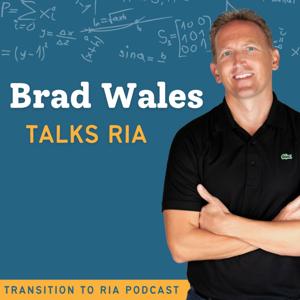
In this episode (#120) of the Transition To RIA question & answer series, I explain when platform fees exist in the RIA space.
Come take a listen!
P.S. Prefer video? You can find this entire series in video format on Youtube. Search for the TRANSITION TO RIA channel.
Show notes: https://TransitionToRIA.com/are-there-platform-fees-in-the-ria-model/
About Host: Brad Wales is the founder of Transition To RIA, where he helps financial advisors understand everything there is to know about WHY and HOW to transition their practice to the Registered Investment Advisor (RIA) model. Brad has 20+ years of industry experience, including direct RIA related roles in Compliance, Finance and Business Development. He has an MBA and has held the 4, 7, 24, 63 & 65 licenses. The Transition To RIA website (TransitionToRIA.com) has a large catalog of free videos, articles, whitepapers, as well as other resources to help advisors understand the RIA model and how it would apply to their unique circumstances.
If you are an advisor at a firm that utilizes deferred compensation as part of the comp plan, ask yourself why your firm is doing that.
If the value and resources they provide you are as superior as they claim to be, why would they need arbitrary barriers to keep you from leaving?
Wouldn’t you simply want to stay?
Regardless of the spin, deferred compensation is a retention tool to benefit the firm, not to benefit their advisors.
So how best can you manage this reality if you are considering transitioning to the RIA model?
In this episode (#119) of the Transition To RIA question and answer series I explain how to navigate the potential loss of deferred compensation.
Come take a listen!
P.S. Prefer video? You can find this entire series in video format on Youtube. Search for the TRANSITION TO RIA channel.
Show notes: https://TransitionToRIA.com/how-to-make-up-for-lost-deferred-comp-when-transitioning-to-the-ria-model/
About Host: Brad Wales is the founder of Transition To RIA, where he helps financial advisors understand everything there is to know about WHY and HOW to transition their practice to the Registered Investment Advisor (RIA) model. Brad has 20+ years of industry experience, including direct RIA related roles in Compliance, Finance and Business Development. He has an MBA and has held the 4, 7, 24, 63 & 65 licenses. The Transition To RIA website (TransitionToRIA.com) has a large catalog of free videos, articles, whitepapers, as well as other resources to help advisors understand the RIA model and how it would apply to their unique circumstances.
I am often asked, “How large a practice do I need, to have my own RIA?”
Equally important is the other end of the spectrum as well, “Is my practice too large to potentially join an existing RIA?”
There are three main pathways to transition your practice to the RIA model:
There are pros/cons to all three approaches.
But is there a point where you might be too large for one of them?
In this episode of the Transition To RIA question & answer series (#118), I explain if there is a point where you are too large to join an existing RIA solution.
Come take a listen!
P.S. Prefer video? You can find this entire series in video format on Youtube. Search for the TRANSITION TO RIA channel.
Show notes: https://transitiontoria.com/is-my-practice-too-large-to-join-an-ria/
About Host: Brad Wales is the founder of Transition To RIA, where he helps financial advisors understand everything there is to know about WHY and HOW to transition their practice to the Registered Investment Advisor (RIA) model. Brad has 20+ years of industry experience, including direct RIA related roles in Compliance, Finance and Business Development. He has an MBA and has held the 4, 7, 24, 63 & 65 licenses. The Transition To RIA website (TransitionToRIA.com) has a large catalog of free videos, articles, whitepapers, as well as other resources to help advisors understand the RIA model and how it would apply to their unique circumstances.
A common misconception about the RIA model is that you must be 100% fee-only with your practice.
While many RIAs are indeed 100% fee-only, and others aspire to eventually be, there is no requirement to do so.
Many RIAs operate under a hybrid arrangement, allowing them to continue servicing legacy and/or new brokerage relationships.
Other RIAs work to slowly transition their current fee/commission practice towards a fee-only structure.
In this episode (#117) of the Transition To RIA question and answer series, I discuss several approaches RIAs use to “solve” for their remaining commission assets.
Come take a listen!
P.S. Prefer video? You can find this entire series in video format on Youtube. Search for the TRANSITION TO RIA channel.
Show notes: https://TransitionToRIA.com/how-to-solve-for-your-remaining-commission-assets/
About Host: Brad Wales is the founder of Transition To RIA, where he helps financial advisors understand everything there is to know about WHY and HOW to transition their practice to the Registered Investment Advisor (RIA) model. Brad has 20+ years of industry experience, including direct RIA related roles in Compliance, Finance and Business Development. He has an MBA and has held the 4, 7, 24, 63 & 65 licenses. The Transition To RIA website (TransitionToRIA.com) has a large catalog of free videos, articles, whitepapers, as well as other resources to help advisors understand the RIA model and how it would apply to their unique circumstances.
You’ve spent months researching the RIA model.
Months performing due diligence.
Months planning for the actual transition.
The day to transition arrives.
You resign from your firm.
You pick up the phone and call your first client to tell them about your new plans.
But what do you say?
How should you say it?
What might your clients say?
In this episode of the Transition To RIA question and answer series, I provide 9 tips on how to explain to clients your transition to the RIA model.
Come take a listen!
P.S. Prefer video? You can find this entire series in video format on Youtube. Search for the TRANSITION TO RIA channel.
Show notes: https://TransitionToRIA.com/how-to-explain-to-clients-your-transition-to-the-ria-model/
About Host: Brad Wales is the founder of Transition To RIA, where he helps financial advisors understand everything there is to know about WHY and HOW to transition their practice to the Registered Investment Advisor (RIA) model. Brad has 20+ years of industry experience, including direct RIA related roles in Compliance, Finance and Business Development. He has an MBA and has held the 4, 7, 24, 63 & 65 licenses. The Transition To RIA website (TransitionToRIA.com) has a large catalog of free videos, articles, whitepapers, as well as other resources to help advisors understand the RIA model and how it would apply to their unique circumstances.
What is the payout in the RIA model?
Simple question, not so simple answer.
To perform an accurate comparison, you must:
In this episode of the Transition To RIA question and answer series, I expand on each of these variables.
Come take a listen!
P.S. Prefer video? You can find this entire series in video format on Youtube. Search for the TRANSITION TO RIA channel.
Show notes: https://TransitionToRIA.com/how-does-an-ria-payout-compare-to-a-broker-dealer-payout/
About Host: Brad Wales is the founder of Transition To RIA, where he helps financial advisors understand everything there is to know about WHY and HOW to transition their practice to the Registered Investment Advisor (RIA) model. Brad has 20+ years of industry experience, including direct RIA related roles in Compliance, Finance and Business Development. He has an MBA and has held the 4, 7, 24, 63 & 65 licenses. The Transition To RIA website (TransitionToRIA.com) has a large catalog of free videos, articles, whitepapers, as well as other resources to help advisors understand the RIA model and how it would apply to their unique circumstances.
Transitioning your practice to the RIA model involves a lot of work, and at times, a fair amount of stress.
But ask anyone that has made the transition, and they’ll tell you the destination is worth the journey.
You should prepare yourself, though, for what the journey will entail.
In this episode of the Transition To RIA question & answer series I explain what the most stressful parts of a transition are, and how to prepare for them.
Come take a listen!
P.S. Prefer video? You can find this entire series in video format on Youtube. Search for the TRANSITION TO RIA channel.
Show notes: https://TransitionToRIA.com/what-are-the-most-stressful-parts-of-starting-an-ria/
About Host: Brad Wales is the founder of Transition To RIA, where he helps financial advisors understand everything there is to know about WHY and HOW to transition their practice to the Registered Investment Advisor (RIA) model. Brad has 20+ years of industry experience, including direct RIA related roles in Compliance, Finance and Business Development. He has an MBA and has held the 4, 7, 24, 63 & 65 licenses. The Transition To RIA website (TransitionToRIA.com) has a large catalog of free videos, articles, whitepapers, as well as other resources to help advisors understand the RIA model and how it would apply to their unique circumstances.
If you start your own RIA, will you be able to participate in your custodian’s client referral program?
First starters, do you know what these programs are?
Or which custodians have them?
Or who is eligible, and likely to be able to participate in them?
In this episode of the Transition To RIA question & answer series I address these questions, and more!
Come take a listen!
P.S. Prefer video? You can find this entire series in video format on Youtube. Search for the TRANSITION TO RIA channel.
Show notes: https://TransitionToRIA.com/can-i-join-a-custodians-client-referral-program/
About Host: Brad Wales is the founder of Transition To RIA, where he helps financial advisors understand everything there is to know about WHY and HOW to transition their practice to the Registered Investment Advisor (RIA) model. Brad has 20+ years of industry experience, including direct RIA related roles in Compliance, Finance and Business Development. He has an MBA and has held the 4, 7, 24, 63 & 65 licenses. The Transition To RIA website (TransitionToRIA.com) has a large catalog of free videos, articles, whitepapers, as well as other resources to help advisors understand the RIA model and how it would apply to their unique circumstances.
Whether in our personal or professional lives, most everything in life revolves around motivations.
When financial advisors and teams reach out to me to explore the RIA model, I typically start by asking what has motivated them to do so.
Having asked hundreds of advisors this question, the answers typically revolve around a desire for more flexibility with their practice, and/or better economics.
In this episode of the Transition To RIA question and answer series I provide examples of what the specific motivations often are.
Come take a listen!
P.S. Prefer video? You can find this entire series in video format on Youtube. Search for the TRANSITION TO RIA channel.
Show notes: https://TransitionToRIA.com/what-motivates-advisors-to-transition-to-the-ria-model/
About Host: Brad Wales is the founder of Transition To RIA, where he helps financial advisors understand everything there is to know about WHY and HOW to transition their practice to the Registered Investment Advisor (RIA) model. Brad has 20+ years of industry experience, including direct RIA related roles in Compliance, Finance and Business Development. He has an MBA and has held the 4, 7, 24, 63 & 65 licenses. The Transition To RIA website (TransitionToRIA.com) has a large catalog of free videos, articles, whitepapers, as well as other resources to help advisors understand the RIA model and how it would apply to their unique circumstances.
How long does a transition to the RIA model take?
The time needed is impacted by variables such as the circumstances of the advisor/team, which pathway into the model is chosen, etc.
It is complicated further due to certain steps in the process being out of the control of the advisor/team as to how fast they can be completed.
In this episode of the Transition To RIA question & answer series I address which steps in the process are the most time consuming.
Come take a listen!
P.S. Prefer video? You can find this entire series in video format on Youtube. Search for the TRANSITION TO RIA channel.
Show notes: https://TransitionToRIA.com/what-is-the-most-time-consuming-part-of-transitioning-to-the-ria-model/
About Host: Brad Wales is the founder of Transition To RIA, where he helps financial advisors understand everything there is to know about WHY and HOW to transition their practice to the Registered Investment Advisor (RIA) model. Brad has 20+ years of industry experience, including direct RIA related roles in Compliance, Finance and Business Development. He has an MBA and has held the 4, 7, 24, 63 & 65 licenses. The Transition To RIA website (TransitionToRIA.com) has a large catalog of free videos, articles, whitepapers, as well as other resources to help advisors understand the RIA model and how it would apply to their unique circumstances.
From the publisher's feed
4,053 Listeners

2,170 Listeners

194 Listeners

2,023 Listeners
101 Listeners

462 Listeners

2,139 Listeners
243 Listeners

10,107 Listeners

1,556 Listeners
114 Listeners

420 Listeners

26 Listeners
136 Listeners

9 Listeners