
Sign up to save your podcasts
Or

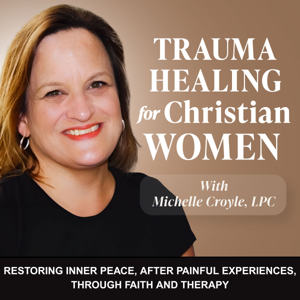


You might ask yourself, "How can I know if I have PTSD?"
Am I making more out of things than I need to, or should I seek out mental health therapy or counseling?
What are the signs and symptoms of trauma and PTSD?
In this episode, Michelle gives both the technical diagnostic guidelines and her own personal belief about why it isn't all there is to consider.
Listen in to Mental Health for Christian Women.
What is dissociation?
Why can't I remember parts of my childhood?
Why does my mind go blank in the middle of a conversation?
Do I dissociate because I have been traumatized?
When you zone out, it may not feel so good, but it may just be your friend.
When you have trauma, overwhelming anxiety, and overwhelming input, your system may dissociate to help you survive.
Listen in to learn more about trauma related dissociation.
Have you ever wondered, "Why can't I get past this?"
Have you ever wondered why you can't stop thinking about something, even when you know it's been over for a long time?
Trauma rewires the brain and sends us into fight or flight initially when there is a real danger but sends the chemicals the same after the danger is over, if the trauma is not processed effectively so that it can be stored as memory and not current threat.
Trauma, PTSD, C-PTSD, Anxiety need to know the threat to safety and survival is over.
Is anxiety stressing you out? Is your mental health affected by what's in the news or on social media? Do you think the world is horrible and wish it would be done already? You may be having a trauma response.
God has great purposes for you, and He isn't done yet. Don't let the enemy take you out of making the impact God has for you to make by keeping you bound in unprocessed and unhealed trauma responses.
Listen in for a new perspective.
What does Jesus say about rest?
What is His plan for the way we work and do life?
Hint: It isn't about having 125 open tabs on your iPhone like Michelle did this morning.
Listen in for the first Monday Motivation Meditation: The Unforced Rhythms of Grace...for His yoke is easy, and His burden is light for you.
Wouldn't it be great to be able to feel more present and calm when your mind, body, or emotions start to race?
What would it feel like to be able to relax your nervous system from fight-or-flight and get it into rest and digest mode?
These 7 grounding techniques can empower you to be able to better manage your body and mind when triggered to panic or anxiety, when you experience dissociation, or when you have difficult emotions that overwhelm you.
Anytime that you are ready to do some mindful focus and relaxation, these tools are great skills to have in your mental health toolkit.
As Christian women, being mentally healthy and sound is a benefit for ourselves, our families, and our relationship with God as well as living our the purposes He has created us to fulfill.
It's time for no more crazy, Lady!
Listen in.
What would it be like to be in control of you nervous system, your thoughts, and your body?
Wouldn't it be great to have some tools in your toolbox that can help you stay grounded in the present moment?
Whether you experience trigger, panic, anxiety, or worry, having a set of tools and the practiced skill to use them when needed gives you a sense of empowerment and mastery over your body and experience.
Listen in for these grounding tools to regulate from anxiety and learn more tips for Mental Health for Christian Women.
C-PTSD, PTSD and other experiences can cause dissociation. What is Dissociation? Why Does Dissociation Happen? You may wonder, "Am I Dissociating?"
Mental Health for Christian Women involves knowing how to manage dissociation so that trauma can be processed, as it can't be processed if the client is flooded or overwhelmed.
To learn more about dissociation, derealization, and depersonalization, listen in to Mental Health for Christian Women.
Would it surprise you to know that you have experienced trauma?
What qualifies as trauma? How do you know if you have experienced trauma? How do you know if what you have experienced is bad enough to be considered trauma?
The Signs and Symptoms of Trauma are many, and trauma affects people in different ways.
Listen in for more information on the signs and symptoms that might indicate you have experienced trauma, even if you never thought of your experience that way.
Have you ever been to therapy and felt that the counselor just sat there and expected you to talk without offering real, meaningful solutions?
Do you instinctively know that something deeper than talking is needed to heal what you feel in your system? You may be experiencing the effects of trauma.
Not only is the mind where memory is stored, but it is also stored in the emotions and physical sensations of the body. When trauma happens, memories aren't stored away all neat and easy like everyday things are.
Trauma overwhelms the nervous system and can even change your perception of time.
Trauma triggers can hijack your nervous system to believe that the threat is still happening, as it doesn't get filed away as a "past event."
If you've thought that there must be more to healing, today's episode will get you started on understanding why.
From the publisher's feed
Ranked by our users in the last 21 days

15,702 Listeners

10,765 Listeners
4,820 Listeners

4,764 Listeners
1,873 Listeners

24,234 Listeners

395 Listeners

319 Listeners

1,068 Listeners

909 Listeners

2,112 Listeners

3,902 Listeners

30 Listeners

3,097 Listeners