
Sign up to save your podcasts
Or

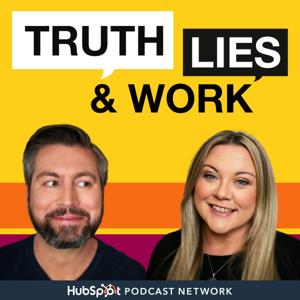


Welcome back to Truth, Lies & Work! This week, Leanne is joined by returning guest Rob Kalwarowsky, Executive Coach, Author, and Speaker, to discuss his book, Capitalizing on Chaos. In this crucial conversation, Rob argues that the world is experiencing an unprecedented level of chaos—87% higher than the peak of the pandemic.
This episode explores why our brains struggle with uncertainty, how to overcome the status quo bias, and the single most critical skill every leader needs to not just survive, but revolutionize their business in 2026 and beyond.
🧠 What We Cover: Master Your Inner System
Defining Chaos: For the brain, chaos is simply uncertainty. This triggers the stress responses (fight, flight, freeze, and fawn), which shut down our executive functioning, making it impossible to be a good, innovative leader.
The Internal Battle: Chaos is as much about our internal state as external events. Rob discusses the competing parts within leaders (e.g., start looking for a new job vs. stay motivated to innovate), and how to bring both parts to the table to find clarity.
Overcoming the Status Quo Bias: We stick to the status quo because our brain can predict a certain outcome, even if it's a terrible one. Rob shares his "Find Your Reason" tool to leverage the goals and future feelings of success against the pain and suffering of staying stuck.
The AI Disruption: AI is creating its own friction and non-sense within businesses (e.g., two people using AI to email each other back and forth). Leaders must create clear guidance on where AI adds value and where it poses risks, particularly around data privacy.
The Non-Negotiable Skill: The single most crucial skill for capitalizing on chaos is the leader having their own "shit together". This rock-solid inner confidence prevents them from transmitting fear and disruption to their teams.
The Power of Clarity: When leaders find inner clarity and confidence, they can double or triple their workforce without hiring a single person because they can finally care about, develop, and engage their team.
🎁 Exclusive Giveaway & Practical Resources
Rob is offering a generous giveaway to help you capitalize on chaos and set up your 2026 goals!
Grand Prize (1 Winner): A copy of Capitalizing on Chaos + a six-week coaching engagement with Rob (a high-value prize!).
Second Prize (10 Winners): A signed copy of Capitalizing on Chaos + one personal coaching session.
Everyone Wins: You'll receive the Find Your Reason tool just for entering.
To enter (must be within two weeks of the episode release date: 11th December 2025):
Go to: robkalwarowsky.com/reason
Connect with Rob Kalwarowsky (Guest):
Book: Capitalizing on Chaos
LinkedIn: https://www.linkedin.com/in/robkalwarowsky/
Website: https://robkalwarowsky.com/
📬 Connect with Al & Leanne (Truth, Lies & Work)
LinkedIn (Show): https://www.linkedin.com/company/truthlieswork
Al Elliott: https://www.linkedin.com/in/thisisalelliott
Leanne Elliott: https://www.linkedin.com/in/meetleanne
Email: [email protected]
Book a call: https://savvycal.com/meetleanne/chat
Podcast Website: https://truthliesandwork.com/
💚 Mental Health Support Resources
If you or someone you know is struggling, help is available. Please reach out to one of the following confidential services:
Samaritans (UK & Ireland) - Emotional support for anyone struggling to cope, available 24/7.
Call: 116 123 (Free, 24/7)
Mind (England & Wales) - Advice and support for mental health problems.
Phone: 0300 102 1234 (Mon-Fri, 9am-6pm)
988 Suicide & Crisis Lifeline (US-based) - Confidential, free, 24/7/365 support for those in crisis.
Call or Text: 988 (24/7)
Find A Helpline (Global) - Connects users to over 1,600 free and confidential support resources worldwide.
Website: https://findahelpline.com/
Welcome back to This Week in Work — the show where behavioural science meets workplace culture, brought to you by the HubSpot Podcast Network.
🔥 Stories Covered
1. Generation Alpha are coming (Benenden Health report)
A major new workforce study shows the 11–15 age group expect flexible careers, strong mental health support and employers who understand neurodiversity.
2. Starbucks faces its largest strike yet
Around 2,500 baristas across more than 120 US stores have walked out in the longest coordinated action in company history.
3. The rise of micro-joys (Forbes + The Progress Principle)
🔥 Truth or Lie
Can power posing actually increase confidence?
💬 Workplace Surgery
New coverage of Amabile and Kramer’s work highlights why small moments matter far more than big wins.
This week’s dilemmas:
• “Help — I pulled the CEO for Secret Santa.”
• “Can my employer challenge home-working adjustments already approved by occupational health?”
• “Where do I start with a competency model that’s genuinely useful?”
Referenced frameworks:
🎧 Coming Up Thursday
We’re welcoming back Rob Kalwarowsky, one of the world’s leading executive coaches. He’s sharing how to capitalise on chaos in 2026 — and offering a major giveaway to get you off to a flying start.
🧠 Support with Mental Health and Well-being
Mind UK: mind.org.uk/information-support
Samaritans: Call 116 123 or email [email protected]
📬 Connect with Al & Leanne
LinkedIn: linkedin.com/company/truthlieswork
Al: linkedin.com/in/thisisalelliott
Leanne: linkedin.com/in/meetleanne
Email: [email protected]
Book a call: savvycal.com/meetleanne/chat
Welcome back to Truth, Lies & Work, the award-winning podcast where behavioural science meets workplace culture.
This week, Al and Leanne sit down with Aoife O’Brien Founder of Happier at Work and host of the Happier at Work podcast — for a conversation about why so many people feel misaligned at work, and what leaders can do about it.
Aoife combines evidence, honesty and lived experience to break down the real drivers of engagement: values, fit, autonomy, fairness and meaning. It’s a grounded, practical discussion that cuts through surface-level “happiness initiatives” and focuses instead on the deeper psychological conditions that actually make work feel good.
Expect to learn:
Why values misalignment is one of the strongest predictors of disengagement
How to diagnose whether your team is missing autonomy, clarity or recognition
The role of data in understanding what employees really want
How senior leaders accidentally create the problems they’re trying to solve
What organisations can do to build cultures where people genuinely thrive
The biggest myths about “workplace happiness” (and how to avoid them)
Whether you're a founder, a manager or anyone rebuilding their relationship with work, this episode is full of practical, evidence-based ideas you can act on immediately.
🔗 Find Aoife O’Brien
Website: https://happieratwork.ie/
LinkedIn: https://www.linkedin.com/in/aoifemobrien/
Instagram: https://www.instagram.com/happieratwork.ie
TikTok: https://www.tiktok.com/@happieratwork
YouTube: https://www.youtube.com/@happieratworkhq
Happier at Work Podcast: https://happieratwork.ie/happier-at-work-podcast/
🧠 Support with Mental Health and Well-being
Mind UK: https://www.mind.org.uk/information-support/
Samaritans (UK): Call 116 123 or email [email protected]
📬 Connect with Al & Leanne
LinkedIn (podcast): https://www.linkedin.com/company/truthlieswork
Al Elliott: https://www.linkedin.com/in/thisisalelliott
Leanne Elliott: https://www.linkedin.com/in/meetleanne
Email: [email protected]
Book a call: https://savvycal.com/meetleanne/chat
Welcome to another edition of This Week in Work, where Chartered Occupational Psychologist Leanne Elliott and business owner Al Elliott break down the latest news on people, culture, and behavioral science.
This week, we look at the direct, measurable impact of toxic culture and unpack the new anxieties surrounding Artificial Intelligence. Plus, in our Truth or Lies segment, we dive deep into the science behind 'faking it 'til you make it'.
📰 The News Round-Up
The Brutal COVID Inquiry Report: The report found that the "toxic and chaotic" workplace culture inside Downing Street directly slowed the pandemic response.
Full Article: https://www.bbc.com/news/articles/c986821m604o
The Rise of AI Anxiety (AIA): A new report suggests that while C-Suite leaders have high expectations for AI boosting productivity, most employees (77%) feel it has added to their workload.
Sarah Bregel (Reporter) Profile: https://www.linkedin.com/in/sarah-bregel-032585/
Dreamers vs. Doers: Why do so many people dream of changing careers, but stay stuck? New research on temporal focus reveals that people most likely to move have a balanced temporal focus.
Original Study: doi.org/10.1111/joop.70064
💡 Truth or Lies: Can You Fake It Until You Make It?
We explore the famous mantra, fueled by high-profile stories of entrepreneurial bluffing.
The Question: Can you actually fake it until you make it? We test the evidence on whether confident performance buys you real career progress or if it's just a short-term illusion.
🩺 World-Famous Weekly Workplace Surgery
We take questions from listeners, including a young fan from our "Ask Old People" segment.
Should I be hiring people who think like me or challenge me?
Questioner's dilemma: "My boss prefers to hire and promote people who closely match how she thinks and works... I'm the opposite. I like it when my team brings new ideas, challenges, and pushes things in directions I wouldn't have considered. Is one approach better than the other?"
How honest should I be with my employer about my mental health?
Questioner's dilemma: "I'm finding things tough at the moment. It's starting to affect me at work. I really want to be honest with my employer, but I'm worried it could backfire or change how I'm treated. Is it better to be upfront or should I keep things to myself?"
Have you ever regretted not taking a risk when you were younger?
Questioner's dilemma: "I'm weighing up something quite big at the moment and I think I'm worried I'll look back and regret playing it safe, but at the same time, I don't wanna make a huge mistake. How do you know the difference between a smart risk and a reckless one?"
📬 Connect with Al & Leanne (Truth, Lies & Work)
LinkedIn (Show): https://www.linkedin.com/company/truthlieswork
Al Elliott: https://www.linkedin.com/in/thisisalelliott
Leanne Elliott: https://www.linkedin.com/in/meetleanne
Email: [email protected]
Book a call: https://savvycal.com/meetleanne/chat
Podcast Website: https://truthliesandwork.com/
💚 Mental Health Support Resources
If you or someone you know is struggling, help is available. Please reach out to one of the following confidential services:
Samaritans (UK & Ireland) - Emotional support for anyone struggling to cope, available 24/7.
Call: 116 123 (Free, 24/7)
Mind (England & Wales) - Advice and support for mental health problems.
Phone: 0300 102 1234 (Mon-Fri, 9am-6pm)
988 Suicide & Crisis Lifeline (US-based) - Confidential, free, 24/7/365 support for those in crisis.
Call or Text: 988 (24/7)
Find A Helpline (Global) - Connects users to over 1,600 free and confidential support resources worldwide.
Website: https://findahelpline.com/
Welcome back to Truth, Lies & Work, the show where behavioural science meets workplace culture, brought to you by the HubSpot Podcast Network.
This week, Leanne sits down with Christian Laing, co-founder of Stand Out Socks and one of the most compelling voices in ethical employment today. Christian’s story began with something simple: wanting his younger brother Ross, who has Down syndrome, to have meaningful, paid work. What followed became a movement that is challenging an entire system built on unpaid labour, tokenism and decades of “this is just how it works.”
In this conversation, Christian talks honestly and openly about the early days, the struggle to keep the business alive, the moment he realised paid roles were possible, and the wider question he wants every leader to consider: What assumptions am I making about who is capable?
Stand Out Socks isn’t just a company. It’s an example of what work can look like when we remove red tape, build roles around people, and refuse to exploit those who’ve been overlooked for too long. Christian shares the reality of navigating misconceptions about Down syndrome, the emotional weight families carry, and why representation matters far beyond the product.
This is a raw, unedited conversation — the pauses matter, the honesty matters, and the humanity matters. It’s a reminder that culture isn’t built with slogans; it’s built with decisions.
If you’re a leader, a business owner, a hiring manager or a parent of someone with learning disabilities, this episode will stay with you.
In this episode
How Christian went from “someone should hire Ross” to “I’ll do it myself.”
Why meaningful, paid work transforms confidence, purpose and community.
How Stand Out Socks grew from one family’s challenge into a national mission.
The emotional reality behind inclusion — from joy to grief to rebuilding.
What leaders misunderstand about capability, opportunity and potential.
Why “creating space for someone to shine” is not charity — it’s leadership.
Links from the episode
Stand Out Socks: https://www.standoutsocks.co.uk
Christian on LinkedIn: https://www.linkedin.com/in/cdlaing/
Stand Out Socks on Instagram: https://www.instagram.com/standoutsocksuk
Stand Out Socks on TikTok: https://www.tiktok.com/@standoutsocks
Find us
LinkedIn (Podcast): https://www.linkedin.com/company/truthlieswork
Al Elliott: https://www.linkedin.com/in/thisisalelliott
Leanne Elliott: https://www.linkedin.com/in/meetleanne
Email: [email protected]
Book a call: https://savvycal.com/meetleanne/chat
Wellbeing Support
Mind UK: https://www.mind.org.uk/information-support/
Samaritans: 116 123 or [email protected]
Welcome back to This Week in Work
This week: workplace confidence flips, QuitTok resurfaces, and LinkedIn shares its most chaotic interview stories. In Truth or Lie, we tackle the myth of the “four-hour sleeper.” And in the Workplace Surgery, we unpack micromanagement, occupational health, and senior-level flatness.
🔥 Stories Covered
1. QuitTok makes a comeback
Employees are once again filming their resignations and posting them online. It might look like drama, but it’s become a visible dataset for HR — real-time feedback on broken processes, toxic behaviours and unmet expectations. Instead of treating it as a PR problem, leaders can treat it as insight: what makes someone quit loudly is usually what made them feel unheard quietly.
2. Confidence rises at the bottom, falls at the top
Fast Company reports a surprising shift: entry-level workers are feeling more hopeful, while senior leaders’ confidence continues to slide. Younger employees have grown up adapting to chaos; leaders are carrying the load of uncertainty, hybrid tensions and AI-driven decision fatigue. Confidence is no longer about hierarchy — it’s about adaptability.
3. LinkedIn’s most unforgettable interview moments
Maria Healey’s viral post collected hundreds of wild interview stories — from karaoke auditions to panel interrogations. The thread shows how interviews reveal culture instantly: the respect, the pressure, the humour, the red flags.
🔥 Truth or Lie — Do high achievers sleep less?
This week we examine the long-standing myth popularised by Thatcher, Musk and the productivity world: can you really perform at your best on four hours of sleep? We break down what decades of sleep science actually shows — and why biological “short sleepers” are the rare exception, not the blueprint.
💬 Workplace Surgery — This Week’s Questions
“Am I wrong for calling out a micromanaging colleague?”
“Do I need to offer Occupational Health as a small UK employer?”
“I’ve reached the top but feel completely flat — what now?”
🎧 Coming Up Thursday
We're talking to Christian Laing, Co-founder & Director of Stand Out Socks and BBC's Dragons' Den Investment Winner 2024. Stand Out Socks is a social enterprise created after Christian saw his brother Ross, who has Down syndrome, repeatedly overlooked by employers.
🧠 Support with Mental Health & Well-being
Mind UK: https://www.mind.org.uk/information-support/
📬 Connect with Al & Leanne
LinkedIn (Show): https://www.linkedin.com/company/truthlieswork
Welcome back to Truth, Lies & Work, the award-winning podcast where behavioural science meets workplace culture.
Garry led WD-40 for more than two decades, taking it from a small American brand to a global organisation, all while maintaining engagement scores that most companies can only dream of. His belief is simple: “Leaders don’t manage people — they help them get to where they need to be.” And the results speak for themselves.
In this conversation, we go deep into what makes a great leader, why psychological safety drives performance, how to build a culture people genuinely want to belong to, and why treating mistakes as learning moments creates organisations that last.
Key Takeaways
1. Belonging isn’t soft — it’s strategic
Garry explains why the foundation of performance is a culture where people feel seen, valued and safe to contribute. When people feel they belong, they take risks, share ideas and collaborate without fear.
2. Leaders create the weather
Teams respond to the emotional climate set by their leaders. Garry breaks down how tone, behaviour and consistency shape trust more than any policy or engagement initiative.
3. Mistakes are learning moments
Instead of blame, Garry uses learning moments to build capability. This is how you grow confident, autonomous teams who solve problems instead of hiding them.
4. Clarity beats control
Garry’s leadership model centres on aligned expectations, adult-to-adult relationships and reducing friction. When people know what’s expected — and feel supported — performance takes care of itself.
5. The real job of a leader
Garry believes leaders are responsible for creating an environment where people can be brilliant. That means curiosity, empathy, consistency and genuine accountability (the kind that lifts people, not limits them).
Resources & Links
Connect with Garry Ridge
LinkedIn: https://www.linkedin.com/in/garryridge/
The Learning Moment: https://thelearningmoment.net/
Book: Any Dumb Ass Can Do a Multi-Billion Dollar Brand
https://www.amazon.com/Any-Dumb-Ass-Can-Do-Multi-Billion-Dollar/dp/1637746296
🧠 Support with Mental Health and Wellbeing
Mind UK: https://www.mind.org.uk/information-support/
Samaritans (UK): Call 116 123 or email [email protected]
📬 Connect with Al & Leanne
LinkedIn (Show): https://www.linkedin.com/company/truthlieswork
Al Elliott: https://www.linkedin.com/in/thisisalelliott
Leanne Elliott: https://www.linkedin.com/in/meetleanne
Email: [email protected]
Book a call: https://savvycal.com/meetleanne/chat
If you enjoyed this conversation, follow the show for more interviews every Thursday — and make sure you’re subscribed so you don’t miss next week.
Welcome back to This Week in Work, the show where behavioural science meets workplace culture — brought to you by the HubSpot Podcast Network.
This week, Al and Leanne unpack one of the darkest stories in British business — and what it reveals about organisational failure and human systems.
🔥 Stories Covered
1. Can the government really ‘Keep Britain Working’?
A major new review led by Sir Charlie Mayfield digs into why half a million more people have left work since 2019 due to long-term sickness, stress, or disability. The findings point to broken systems, poor coordination between the NHS and employers, and a lack of early support. The solution? A joined-up national programme that treats work and health as two sides of the same coin.
Read the report: https://www.gov.uk/government/publications/keep-britain-working-review-final-report/keep-britain-working-final-report
2. The Post Office scandal — how trust collapsed
A new MSc study from Charlotte Glading at the University of Leeds examines how the Post Office’s Horizon IT system caused one of the worst miscarriages of justice in modern history. The research reveals deep organisational flaws: a culture of fear, denial, and blind faith in technology that silenced whistleblowers and destroyed lives. The conclusion is sobering — this wasn’t a tech failure, it was a human one.
LinkedIn: https://www.linkedin.com/in/charlotteglading/
🧠 Truth or Lie
Does time really go faster as you get older?
It feels true — childhood summers lasted forever, but adulthood disappears in a blink. This week, Al and Leanne explore the neuroscience behind why time seems to speed up, and how novelty, memory, and emotion shape our perception of life’s pace.
💬 Workplace Surgery
1. How do you deal with imposter syndrome as a business owner?
2. What workplace adjustments can you expect after an ADHD diagnosis?
3. How do you re-engage a top performer who’s switched off?
🧠 Support with Mental Health and Wellbeing
Mind UK: https://www.mind.org.uk/information-support/
📬 Connect with Al & Leanne
LinkedIn: https://www.linkedin.com/company/truthlieswork
Welcome back to Truth, Lies & Work, the award-winning podcast where behavioural science meets workplace culture — brought to you by the HubSpot Podcast Network, the audio destination for business professionals.
This week, Al and Leanne sit down with Nick Power — senior marketing leader at The Noun Project and one of the most talked-about voices on LinkedIn. With more than 30 000 followers and millions of views, Nick has built a reputation for doing what most professionals won’t: calling out corporate nonsense, talking openly about burnout, and reminding us that being human is not unprofessional.
💡 Key Takeaways
In this episode, Nick shares the good, the bad, and the ugly of being honest online — from viral one-liners and “weird LinkedIn” to the backlash that comes with visibility. It’s a masterclass in authenticity, humour, and how to show up as yourself without burning bridges or your reputation.
🔗 Resources & Links
Honesty beats polish. Professionalism isn’t about perfection — it’s about skill, integrity and being easy to work with.
Short form wins. Think fortune-cookie insights, not essays. Nick’s rule: write something people can finish before they scroll.
Start conversations, not lectures. The goal isn’t likes; it’s dwell time, dialogue, and trust.
Authenticity ≠ oversharing. Show humanity, not your diary. Find your own line between personal and performative.
Expect the trolls. Nick opens up about LinkedIn Lunatics, the subreddit that mocks viral posts — and why bullying under the guise of humour says more about insecurity than content quality.
Above all, Nick argues that being real online doesn’t damage your brand — it defines it.
Follow Nick on LinkedIn: https://www.linkedin.com/in/nickcpower
🧠 Support with Mental Health and Well-being
– Mind UK: https://www.mind.org.uk/information-support/
📬 Connect with Al & Leanne
– LinkedIn: https://www.linkedin.com/company/truthlieswork
🎧 Coming up Tuesday
Don’t miss next week’s This Week in Work, where we unpack the biggest workplace headlines and another round of Truth or Lie. Subscribe wherever you get your podcasts.
Welcome back to This Week in Work, your Tuesday news round-up where workplace culture meets behavioural science. This week: political shockwaves for DEI, an unexpected quiet-quitting success story, retail workers pushed to the brink by Christmas music, a myth-busting Truth or Lie, and three big Workplace Surgery questions.
🔥 Stories Covered
1. Trump appoints DEI critic to lead the EEOC
The AP reports that Andrea Lucas is now chair of the US Equal Employment Opportunity Commission. Critics say she has already reduced protections for transgender workers and limited investigations into discriminatory practices. Supporters frame her appointment as a shift toward “merit-based, race-neutral equality.”
2. The quiet-quitter who rose to senior leadership
A mid-level manager shared how a decade of reduced overwork, firm boundaries and radical delegation lowered stress and unexpectedly accelerated both career progression and wealth. It raises practical questions about sustainability, workload design and the hidden rewards of saying no.
3. The impact of music misfit at work
New research shows that when background music doesn’t match what employees need, mood declines and mental fatigue increases. In retail and hospitality settings, “misfit” days also reduce cooperation and customer-facing helpfulness.
🧠 Truth or Lie: Can you really spot a liar by their body language?
Inspired by Celebrity Traitors UK, where confident guesses were almost always wrong, we look at what the evidence shows. Across decades of studies, accuracy rarely rises above chance. Common cues like eye contact, posture shifts or nervous gestures have no reliable link to dishonesty. Real insight comes from analysing story structure, consistency and detail, not fidgeting or facial expressions.
💬 Workplace Surgery
This week’s dilemmas:
🎧 Coming Up Thursday
A conversation with Nick Power, one of LinkedIn’s most distinctive voices and a leading figure in Weird LinkedIn, on authenticity, burnout and the changing face of professionalism.
🧠 Wellbeing Support
Mind UK: https://www.mind.org.uk/information-support/
📬 Connect with Al & Leanne
LinkedIn: https://www.linkedin.com/company/truthlieswork
From the publisher's feed
98 Listeners

1,905 Listeners
346 Listeners
285 Listeners

8,463 Listeners

3,612 Listeners

914 Listeners

1,207 Listeners

130 Listeners
315 Listeners

917 Listeners

54 Listeners

111 Listeners

339 Listeners