
Sign up to save your podcasts
Or

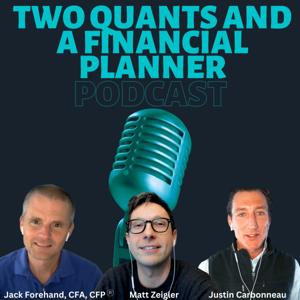


Finding a good investment and knowing how much to put into it are different problems. This week's Excess Returns Weekly Wrap connects overlooked AI opportunities, the risks of concentrated portfolios, and the position-sizing mistakes that can turn favorable odds into losses.
Jack Forehand and Matt Zeigler revisit conversations with Michael Baron, Eric Pachman and Kris Abdelmessih. Michael Baron explains why some apparent AI losers may have valuable data advantages and how his firm manages investments as they become large positions. Eric Pachman traces diesel costs into consumer inflation and shares a grocery-price study that challenged his own assumptions. Kris Abdelmessih explains why surviving long enough to benefit from an edge depends on how much you bet.
Topics covered:
Watch the full interviews:
Michael Baron: AI beneficiaries, Tesla, SpaceX and managing concentrated growth portfolios
https://www.youtube.com/watch?v=KVCgmorfy50
Eric Pachman: What headline economic data misses about jobs, diesel costs and grocery prices
https://www.youtube.com/watch?v=5bXUBAPRvr0
Kris Abdelmessih: The Kelly Criterion, bet sizing and staying in the game
https://www.youtube.com/watch?v=YlTPdaT-X6U
Chapters:
00:00 Introduction and Michael Baron on overlooked AI winners
09:24 Eric Pachman on diesel costs and inflation
17:28 Kris Abdelmessih on good odds and bad bet sizing
22:44 Michael Baron on concentration and letting winners run
28:35 Eric Pachman tests grocery prices against CPI
33:33 Your household's inflation versus the headline number
37:41 Kris Abdelmessih on why investors use fractional Kelly
43:39 Being honest about your edge and applying Kelly in real life
Learn more about the Excess Returns podcast network:
https://excessreturns.co
No information discussed in this podcast should be construed as investment advice. Securities discussed may be held by the hosts and guests, their firms or their clients.
Do you understand the risks in your portfolio, or just the labels on your investments? This week's Excess Returns Weekly Wrap explores how index concentration, changing bond yields, and lessons from great investors can challenge the assumptions behind your investing decisions.
Jack Forehand and Matt Zeigler revisit conversations with Andy Constan, Jason Hsu, Jack Raines, and Gary Mishuris. They discuss what Treasury buybacks can actually accomplish, why owning the S&P 500 may leave you exposed to a single dominant theme, what small losses can teach investors, and why learning from Warren Buffett requires more than copying him. They also explore China's energy infrastructure and its role in the AI race.
Topics covered:
Chapters:
00:00 Introduction and Andy Constan on Treasury buybacks
11:35 Jason Hsu on the risks hiding in the S&P 500
17:59 Jack Raines on learning from losses
23:37 Gary Mishuris on why copying Warren Buffett falls short
29:19 Andy Constan on how the case for bonds has changed
36:18 Jason Hsu on China's energy advantage in AI
41:09 Energy innovation and what could change next
Learn more about the Excess Returns podcast network:
https://excessreturns.co
No information discussed in this podcast should be construed as investment advice. Securities discussed may be held by the hosts and guests, their firms or their clients.
Are strong earnings and resilient consumer spending hiding a weaker economy underneath? In this Excess Returns Weekly Wrap, Jack Forehand and Matt Zeigler explore why that disconnect matters for stocks, bonds, and the risks investors take in their portfolios.
Featuring highlights from David Rosenberg, Jim Paulsen, Jenny Johnson, Bob Pozen, and Alex Edmans in conversation with Kai Wu, this week's discussion looks beyond headline numbers and familiar investing labels. From David Rosenberg's case for bonds to the lessons of Peter Lynch and Costco, the focus is on understanding what actually drives returns.
Topics covered:
- Why David Rosenberg is considering more bond duration and sees potential for a Treasury short-covering rally.
- How David Rosenberg's 50% stock allocation challenges the "permabear" label.
- Jim Paulsen's three-way earnings divide: technology, commodity-linked businesses, and the rest of the S&P 500.
- What could happen if AI spending and higher oil prices stop carrying earnings growth.
- Jenny Johnson's case for private-market access, and the hosts' concerns about retail investors becoming exit liquidity.
- Why liquidity needs and financial advice matter when investing in private assets.
- Bob Pozen's lessons from Peter Lynch: translating world events into company insights and buying when others retreat.
- How different investment vehicles shaped Peter Lynch's and Warren Buffett's strategies.
- Alex Edmans' research on employee satisfaction, Costco, and why valuable intangible assets may be overlooked.
- David Rosenberg's warning about spending supported by lower savings, credit cards, and stock-market wealth, and why the hosts see concern rather than an immediate recession signal.
Timestamps:
00:00 Welcome and this week's investing highlights
06:32 David Rosenberg's portfolio beyond the permabear label
11:22 Jim Paulsen: what headline earnings hide
17:45 Jenny Johnson: private markets and exit liquidity
25:33 Bob Pozen on Peter Lynch and Warren Buffett
30:29 Alex Edmans: Costco and employee satisfaction
37:52 David Rosenberg: what is sustaining consumer spending?
45:55 Why volatility attracts financial-media viewers
Learn more about the Excess Returns podcast network:
https://excessreturns.co
No information discussed in this podcast should be construed as investment advice. Securities discussed may be held by the hosts and guests, their firms or their clients.
Jack Forehand and Matt Zeigler explore portfolio diversification, hidden bond-fund risks, AI inflation and the competitive advantages that help great businesses compound. Drawing on conversations with Chris Mayer, Robert Hagstrom, Jared Dillian, John Kerschner and Michael Contopoulos, this Excess Returns Weekly Wrap examines how to build a portfolio you can stick with and why your investments should account for the risks in your working life.
Topics covered:
Chris Mayer's invisible moats: how culture and execution can sustain high returns on invested capital.
Why Robert Hagstrom sees potential mispricing in competitive advantages that are difficult to measure.
Jared Dillian's challenge to Charlie Munger's advice about enduring 50% drawdowns.
The Awesome Portfolio, risk tolerance and why comparing everything with the S&P 500 can undermine diversification.
How debt-weighted bond indexes can leave investors with more interest rate risk than they expect.
Understanding duration and the fixed income sectors that core bond funds can overlook.
The case that AI spending, energy demand, labor shortages and rising wealth are inflationary today.
How to judge whether AI threatens a business by tracking its most important operating metrics.
Why value investors hold losers too long and how a few big winners can carry a portfolio.
Dillian's life hedge: accounting for career risk, employer stock and human capital when investing.
Timestamps:
00:00 AI backlash and this week's investing lessons
05:03 Robert Hagstrom on invisible moats and mispricing
09:05 Jared Dillian challenges Munger on 50% drawdowns
13:05 Risk-adjusted returns and the benchmarking trap
17:15 The interest rate risk hiding in core bond funds
22:04 Understanding your bond fund's duration
28:23 Why AI's inflation costs can precede its benefits
33:25 Why value investors struggle to sell
37:53 The life hedge: when your job and stocks fall together
42:47 Investing alongside clients versus managing personal risk
Learn more about the Excess Returns podcast network:
https://excessreturns.co
No information discussed in this podcast should be construed as investment advice. Securities discussed may be held by the hosts and guests, their firms or their clients.
Jack Forehand and Matt Zeigler explore the AI investment boom, Federal Reserve credibility, accounting risks and the dangers of buying stocks to hold forever. Featuring clips from Dan Niles, Ben Hunt, Cameron Dawson and Dave Nadig, this Excess Returns Weekly Wrap connects rising AI adoption with questions about earnings quality, market narratives and the slow financial damage caused by gambling and overtrading.
Topics covered:
Why even the smartest technology companies can overinvest and misread demand
How agentic AI could drive another wave of adoption, computing demand and business returns
Ben Hunt's broken teacup analogy for reputation and Federal Reserve credibility
Why central bank actions matter more when investors stop believing the rhetoric
Cameron Dawson's concerns about Nvidia receivables, hyperscaler cash flow and AI accounting
How leases, special purpose vehicles and one-time investment gains complicate earnings analysis
Dan Niles on survivorship bias and the risks of assuming today's market leaders will win forever
How Ben Hunt measures narrative life cycles, bursts and shifts in common knowledge
The connection between declining trust in central banks and gold prices
Why sports betting, overtrading and repeated small losses can quietly undermine long-term wealth
Timestamps:
00:00 This week's lineup and Jack's unexpected action hero moment
04:09 Dan Niles on smart companies, AI bubbles and agentic demand
11:55 Ben Hunt on credibility and the Fed's broken teacup
19:46 Cameron Dawson on AI accounting and hidden cash flow pressures
28:13 Dan Niles challenges the buy-and-hold-forever mindset
32:51 Ben Hunt explains how to measure narrative life cycles
37:01 Connecting Fed credibility narratives to gold prices
41:04 Dave Nadig on the slow financial drain of sports betting
45:09 Gambling from income versus spending down your savings
Learn more about the Excess Returns podcast network:
https://excessreturns.co
No information discussed in this podcast should be construed as investment advice. Securities discussed may be held by the hosts and guests, their firms or their clients.
In this Weekly Wrap, Jack Forehand and Matt Zeigler break down why rising long-term bond yields may be justified by stronger nominal growth, large fiscal deficits and AI-driven capital spending, and why the bigger market risk may be an AI earnings bubble rather than a valuation bubble. Featuring Kevin Muir, Dan Rasmussen and Ian Cassel, the episode also explores private equity’s huge software bet, the traits of elite stock pickers, and how the worldview of AI leaders could be driving unusually aggressive capital spending and risk-taking.
Topics covered:
Why long-term bond yields may be more rational than alarming given stronger nominal GDP, inflation, deficits and heavy Treasury and corporate issuance
How global fiscal expansion and the AI infrastructure build-out are adding to bond supply and upward pressure on rates
Why suppressing market interest rates can distort an important economic signal and create unintended consequences
How private equity became a lagged momentum investor and built massive exposure to software and healthcare technology
Why recurring revenue does not make a business bulletproof, and how AI could challenge software economics that once looked untouchable
Ian Cassel’s benchmarks for good, great and GOAT stock pickers, from 10-year outperformance to 20% annualized returns
The five or six core investing skills elite stock pickers need, and why world-class investors become exceptional at one or two
How AI CapEx can boost current supplier earnings while the buyer’s expense is spread over years through depreciation
Why an AI earnings bubble could exist even if headline valuation multiples do not look extreme
How futurism, expected-value thinking and confidence in AGI may be encouraging AI leaders to take enormous capital spending risks
Timestamps:
00:00 Intro: Kevin Muir, Dan Rasmussen and Ian Cassel
05:09 Why suppressing bond yields could create new risks
09:54 Private equity as a lagged momentum investor
14:15 Why investment committees chase three- and five-year returns
19:00 The skills that separate good investors from great ones
23:11 Why elite stock picking takes a decade or more to judge
27:18 How AI CapEx is changing cash flow, buybacks and earnings
31:47 Price bubbles vs earnings bubbles
36:00 Why AI leaders may be taking massive CapEx risk
40:49 AI adoption bottlenecks and the need for skepticism
Learn more about the Excess Returns podcast network:
https://excessreturns.co
No information discussed in this podcast should be construed as investment advice. Securities discussed may be held by the hosts and guests, their firms or their clients.
This week on the Excess Returns Weekly Wrap, Jack Forehand and Matt Zeigler break down key investing lessons from recent conversations with Andy Constan, Liz Ann Sonders and Bob Robotti.
They examine why rising long-term interest rates can coexist with a strong stock market, how rolling recessions and the shift from labor income to corporate profits are shaping the economy, why AI's biggest beneficiaries may be in energy and old-economy materials, and whether the bond market can really lose control of long-term yields.
Topics covered:
Why higher long-term interest rates can be consistent with stronger economic growth and rising stock prices
How productivity growth, Treasury issuance and corporate bond supply can push real yields higher
Why the post-pandemic economy has experienced rolling sector recessions instead of a traditional synchronized business cycle
How stock market optimism can coexist with pessimism about unemployment, wages and the broader economy
Why labor compensation has fallen as a share of GDP while corporate profits have increased
What the labor-versus-capital shift may mean for inflation, investor sentiment and future policy
Why the AI capital spending boom creates demand for cement, aluminum, copper, natural gas and other physical inputs
How low-cost North American natural gas could support reindustrialization and give the U.S. a structural energy advantage
Why renewables and electrification still depend on traditional energy, commodities and industrial materials
How decades of underinvestment in energy and materials could create a long-duration capital cycle for value investors
Why deep natural demand for Treasuries makes a disorderly loss of control over the long end of the yield curve less likely
Timestamps:
02:15 Why rising rates and record-high stocks can coexist07:30 Rolling recessions and why the economy isn't moving in sync11:57 Labor vs. capital and the rise in corporate profit share17:39 Why the biggest AI beneficiaries may be cement, copper and natural gas25:26 Could the bond market really lose control of the long end?30:22 Where to find episode notes, transcripts and more
Learn more about the Excess Returns podcast network:
https://excessreturns.co
No information discussed in this podcast should be construed as investment advice. Securities discussed may be held by the hosts and guests, their firms or their clients.
In this week's Excess Returns Weekly Wrap, Jack Forehand and Matt Zeigler break down Jim Paulsen's warning that falling Treasury yields could become bad news for stocks if markets shift from inflation fears to growth fears, and Dom Rizzo's bullish case for AI productivity and frontier models. They also examine whether today's productivity boom is real, how AI coding tools like Claude Code and Codex could reshape white-collar work, and why recessions can create misleading spikes in measured productivity.
Topics covered
Why falling Treasury yields can be bullish when inflation is cooling but bearish when growth is weakening
Jim Paulsen's case that economic surprise data could be pointing toward lower 10-year Treasury yields
What the stock-bond correlation says about whether investors are more worried about inflation or recession
Dom Rizzo's bullish case for AI-driven coding productivity and the rapid growth of frontier AI models
How large the AI coding market could become and where OpenAI, Anthropic and other AI companies may capture value
Why open-source and lower-cost AI models could dominate token volume while frontier models capture most of the economics
Whether enterprise AI spending is evidence that companies are already seeing meaningful returns
The challenge of translating more code and faster knowledge work into measurable revenue, cost savings and economic productivity
Jim Paulsen's argument that recessions often create temporary spikes in measured productivity
Whether today's productivity gains reflect a genuine AI boom, economic weakness, or some combination of both
Timestamps
00:00 Why hearing the AI case you disagree with matters
04:47 When falling Treasury yields could become bad news for stocks
10:54 Dom Rizzo on AI coding productivity and who captures the value
16:49 Can we actually measure the economic payoff from AI?
22:52 Jim Paulsen on why recessions can create false productivity booms
27:00 What today's productivity data may be saying about the economy
Learn more about the Excess Returns podcast network:
https://excessreturns.co
No information discussed in this podcast should be construed as investment advice. Securities discussed may be held by the hosts and guests, their firms or their clients.
This week on the Excess Returns Weekly Wrap, Jack Forehand and Matt Zeigler break down the AI capital spending boom, the risk that data center investment is crowding out housing and other parts of the economy, and what that means for markets. Featuring Richard Bernstein, David Rosenberg, Tian Yang, and Brent Donnelly, the episode covers AI CapEx, GDP growth, inflation, the K-shaped economy, AI ROI, and why rationality and Bayesian thinking matter more than raw intelligence for investors and traders.
Topics covered
Why the AI and data center boom may be misallocating capital away from housing and infrastructure
What the dot-com bubble taught Richard Bernstein about investing where capital is scarce
Why AI related spending is approaching half of business CapEx while ex-AI investment is shrinking
How today's K-shaped economy differs from the broad economic boom of the late 1990s
The difference between AI's contribution to GDP growth and its share of total GDP
Tian Yang's Kalecki-Levy framework for understanding spending, savings, income, and economic resilience
Why a pullback in hyperscaler CapEx could weaken the spending and income loop
Why AI return on investment is so difficult to measure and how the profit pool could broaden beyond hardware
Brent Donnelly on why rationality and flexibility matter more than credentials or raw intelligence
Why persistent bearishness can become a major investing mistake
How Bayesian thinking, position sizing, and changing your mind help investors stay in the game
Timestamps
00:02 Rich Bernstein and David Rosenberg reunite and this week's lineup
04:10 The dot-com lesson: what happens when capital floods one sector
08:15 AI CapEx, inflation, and why today's economy is different from the 1990s
13:58 Kalecki-Levy: how spending and savings are keeping growth resilient
18:03 AI CapEx concentration, productivity, and the uncertainty around ROI
22:21 Brent Donnelly on why rationality beats intelligence
26:21 Strong opinions, flexibility, and Bayesian thinking
30:33 What traders and market makers can teach long-term investors
Learn more about the Excess Returns podcast network:
https://excessreturns.co
No information discussed in this podcast should be construed as investment advice. Securities discussed may be held by the hosts and guests, their firms or their clients.
On this episode of the Excess Returns Weekly Wrap, Jack Forehand and Matt Zeigler examine how the AI capital spending boom, an unpredictable Federal Reserve, reduced corporate reporting and factor investing are reshaping markets.
They break down Ben Hunt's warning about private credit and AI infrastructure, Cameron Dawson and Dave Nadig on the loss of Fed forward guidance, Wes Gray on why value may matter more than company size, and Rupert Mitchell on the rate hike that could end the cycle.
Topics covered:
Why the AI capital spending boom is forcing hyperscalers to borrow money and issue equity
How private credit and private equity are financing the AI infrastructure buildout
Why a slowdown in AI CapEx could create broader financial system risk
How government borrowing and AI investment are crowding out capital and pushing interest rates higher
The impact of data center electricity demand on consumers and the broader economy
How Kevin Warsh's no-forward-guidance policy changes Federal Reserve expectations
Why greater front-end interest rate volatility matters for floating-rate debt and private credit
The debate over replacing quarterly corporate reports with six-month reporting
Wes Gray's argument that value, not small-company size, is the real source of higher expected returns
Rupert Mitchell's death shot framework for how a final central bank rate hike can end a market cycle
Timestamps:
00:00 AI spending, Fed uncertainty and this week's market themes
05:07 How the AI buildout crowds out capital across the economy
10:44 No Fed forward guidance and a new era of policy uncertainty
15:48 Why six-month corporate reporting could hurt investors
20:30 Wes Gray on the small-cap premium
24:42 Why value matters more than company size
28:57 How a surprise rate hike could break risk assets
34:05 Global value investing and pairing different investor perspectives
Learn more about the Excess Returns podcast network:
https://excessreturns.co
No information discussed in this podcast should be construed as investment advice. Securities discussed may be held by the hosts and guests, their firms or their clients.
From the publisher's feed

3,326 Listeners

3,053 Listeners
2,179 Listeners

1,982 Listeners

949 Listeners

281 Listeners

203 Listeners

187 Listeners

2,139 Listeners
87 Listeners

1,344 Listeners

371 Listeners
263 Listeners
411 Listeners

152 Listeners