
Sign up to save your podcasts
Or


Sleep is one of the most common struggles in the CPTSD community, and one of the least understood. If you've tried the routines, the supplements, the magnesium, the blue light glasses, and you're still lying awake at midnight or waking up at 3am feeling like something is wrong, this episode is for you.
Today I break down why sleep is uniquely hard when you have complex trauma, what's actually happening in your nervous system at night, and what might actually help.
In this episode:
References:
Dana, D. (2018). The Polyvagal Theory in Therapy: Engaging the Rhythm of Regulation. Norton.
Balban, M. Y., Neri, E., Kogon, M. M., Weed, L., Nourski, B., Picard, M., ... & Huberman, A. D. (2023). Brief structured respiration practices enhance mood and reduce physiological arousal. Cell Reports Medicine, 4(1).
Southwick, S. M., Bremner, J. D., Rasmusson, A., Morgan, C. A., Arnsten, A., & Charney, D. S. (1999). Role of norepinephrine in the pathophysiology and treatment of posttraumatic stress disorder. Biological Psychiatry, 46(9), 1192–1204.
Yehuda, R. (2002). Post-traumatic stress disorder. New England Journal of Medicine, 346(2), 108–114.
Thanks for listening to The Complex Trauma Podcast!
Be sure to follow, share and give us a review on your favorite podcast platform.
Follow on Instagram: @sarahherstichlcsw
Follow on TikTok: @sarahherstichlcsw
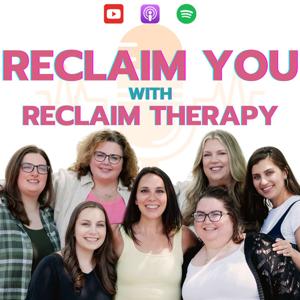
Learn more about EMDR & trauma therapy in Pennsylvania with Reclaim Therapy
This podcast is for educational and informational purposes only. It is not intended as a substitute for professional medical, psychological, or nutritional advice, diagnosis, or treatment.
Remember, I'm a therapist, but I'm not your therapist. Nothing in this podcast is meant to replace actual therapy or treatment. If you're in crisis or things feel really unsafe right now, please reach out to someone. You can call 988 for the Suicide and Crisis Lifeline, text them, or head to your nearest ER.
The views expressed by the host and guests are their own and do not represent the opinions of any organizations or institutions. Reliance on any information provided by this podcast is solely at your own risk.
 View all episodes
 By Sarah Herstich
5
1313 ratings
Sleep is one of the most common struggles in the CPTSD community, and one of the least understood. If you've tried the routines, the supplements, the magnesium, the blue light glasses, and you're still lying awake at midnight or waking up at 3am feeling like something is wrong, this episode is for you.
Today I break down why sleep is uniquely hard when you have complex trauma, what's actually happening in your nervous system at night, and what might actually help.
In this episode:
References:
Dana, D. (2018). The Polyvagal Theory in Therapy: Engaging the Rhythm of Regulation. Norton.
Balban, M. Y., Neri, E., Kogon, M. M., Weed, L., Nourski, B., Picard, M., ... & Huberman, A. D. (2023). Brief structured respiration practices enhance mood and reduce physiological arousal. Cell Reports Medicine, 4(1).
Southwick, S. M., Bremner, J. D., Rasmusson, A., Morgan, C. A., Arnsten, A., & Charney, D. S. (1999). Role of norepinephrine in the pathophysiology and treatment of posttraumatic stress disorder. Biological Psychiatry, 46(9), 1192–1204.
Yehuda, R. (2002). Post-traumatic stress disorder. New England Journal of Medicine, 346(2), 108–114.
Thanks for listening to The Complex Trauma Podcast!
Be sure to follow, share and give us a review on your favorite podcast platform.
Follow on Instagram: @sarahherstichlcsw
Follow on TikTok: @sarahherstichlcsw
Learn more about EMDR & trauma therapy in Pennsylvania with Reclaim Therapy
This podcast is for educational and informational purposes only. It is not intended as a substitute for professional medical, psychological, or nutritional advice, diagnosis, or treatment.
Remember, I'm a therapist, but I'm not your therapist. Nothing in this podcast is meant to replace actual therapy or treatment. If you're in crisis or things feel really unsafe right now, please reach out to someone. You can call 988 for the Suicide and Crisis Lifeline, text them, or head to your nearest ER.
The views expressed by the host and guests are their own and do not represent the opinions of any organizations or institutions. Reliance on any information provided by this podcast is solely at your own risk.

172,000 Listeners
11,865 Listeners
9,123 Listeners
2,529 Listeners
14,880 Listeners
902 Listeners
361 Listeners
7,117 Listeners

29,207 Listeners
1,852 Listeners

41,321 Listeners
1,068 Listeners

19,524 Listeners

344 Listeners

12,143 Listeners