
Sign up to save your podcasts
Or



20.10.23
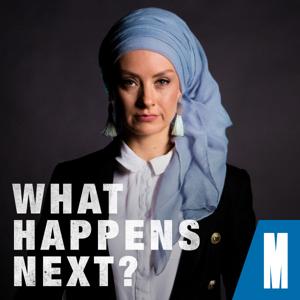
What Happens Next?
What Are We Trying to Escape? | 90
New this season: Subscribe to Monash’s YouTube channel to watch the video version of each full episode.
“What Happens Next?” returns with a new topic: escapism. From pseudo-nostalgia that transports us to imagined pasts, to the allure of live action role-play and video games, host Dr Susan Carland and her expert guests shed light on the power of escapism, the blurring of fiction and reality, and the fine line between healthy indulgence and potential addiction.
Escapism often involves seeking refuge in an alternative reality, be it through binge-watching TV shows, playing video games, or even live-action role-playing (LARPing).
But is it unhealthy to long for a place – or even a time – that you’ve never experienced? And what about the parasocial relationships we often create with fictional characters from our favourite media?
This week’s guest experts include Monash University Business School’s Associate Professor Davide Orazi, cultural critic Dr Clem Bastow, Monash’s School of Media, Film and Journalism lecturer Dr Whitney Monaghan and author Professor Michael W Clune.
Today’s episode raises questions about the balance between healthy escapism and excessive immersion, as well as the impact of escapism on individuals' ability to return to reality. Can the line become too blurred?
A full transcript of this episode is available on Monash Lens.
Learn more:
“What Happens Next?” will be back next week with part two of this series, ‘Can Escapism Be Good for Us?’.
If you’re enjoying the show, don’t forget to subscribe, or rate or review “What Happens Next?” to help listeners like yourself discover it.
See omnystudio.com/listener for privacy information.
13.10.23
What Happens Next?
What Can Influencers Teach Us About Women and Work? | 89
New this season: Subscribe to Monash’s YouTube channel to watch the video version of each full episode.
They’re in your social media feeds, on YouTube, and these they’re days even appearing in movies. The rise of influencer culture has been meteoric, but what’s going on behind the selfie stick? And what does it have to do with gender dynamics?
This episode of Monash University’s "What Happens Next?" podcast, hosted by Dr Susan Carland, features insightful discussions with experts in the field, including public relations academic Dr Kate Fitch; Jo Stanley, co-founder and CEO of Broad Radio; and content creator Olivia White, all of whom bring their unique perspectives to the table.
Being an influencer is not just a hobby or part-time gig – it's a billion-dollar industry primarily powered by women. Nevertheless, male influencers are paid about 30 per cent more than female influencers. Kate explains that the pay gap is only the tip of the iceberg of gender inequity in this precarious line of work.
Jo, a veteran broadcaster, highlights that content creation requires a high level of skill. Influencers and content creators are adept at understanding and conveying stories that resonate with their audiences, making it appear effortless to connect with followers.
She also points out that traditional media has been slow to include female voices, perhaps as a result of unconscious bias. The rise of the internet presented an opportunity for female creators to carve out digital spaces for themselves, democratising content creation.
Mommy-blogger-turned-social-media-influencer Olivia talks about the struggle to balance authenticity with privacy. She discusses the ethics of sharing information about her children online, as well as the threat of cancel culture and algorithm changes that all influencers face.
A full transcript of this episode is available on Monash Lens.
Learn more:
“What Happens Next?” will be back next week with an all-new topic.
If you’re enjoying the show, don’t forget to subscribe, or rate or review “What Happens Next?” to help listeners like yourself discover it.
See omnystudio.com/listener for privacy information.
06.10.23
What Happens Next?
Does Influencer Culture Have a Dark Side? | 88
New this season: Subscribe to Monash’s YouTube channel to watch the video version of each full episode.
This week on “What Happens Next?”, we’re kickstarting a new series on influencer culture.
Did you know roughly 70 per cent of influencers identify as female? Specific industry research indicates that this percentage can be even higher on certain platforms, for instance, 80 per cent of content monetisation influencers on Instagram are women.
In this new episode of Monash University’s podcast, “What Happens Next?”, Dr Susan Carland and expert guests look into the societal perceptions surrounding feminised labour. We delve into the influence of stereotypes on public perception of influencers. We also discuss the experience of living a life where every moment is an opportunity for content creation and the potential impact it may have on one's well-being.
Dr Kate Fitch from Monash University's School of Media, Film and Journalism, provides insight into the billions of dollars the influencer marketing industry creates. Based on findings by Ogilvy's research, its worth has surged from $1.7 billion to $16.4 billion over the past eight years.
Well-known influencer and content creator Olivia White gives us a first-hand account of the negative perceptions of the industry. She provides a fascinating behind-the-scenes insight into the life of a professional content creator.
Jo Stanley, the CEO of Broad Radio and a prominent broadcaster, delves into the profound influence of gender norms and stereotypes on the media landscape. She highlights how the internet has ushered in a new era of empowerment for women, enabling them to break into an area historically dominated by men.
Additionally, Jo explores the intriguing dynamics between the public and private spheres and delves into the captivating concept of parasocial relationships.
A full transcript of this episode is available on Monash Lens.
Learn more:
We'll be back next week with part two in this series, "What Can Influencers Teach Us About Women and Work?".
If you’re enjoying the show, don’t forget to subscribe, or rate or review “What Happens Next?” to help listeners like yourself discover it.
See omnystudio.com/listener for privacy information.
29.9.23
What Happens Next?
Can We Unlock Humans Full Potential? | 87
New this season: Subscribe to Monash’s YouTube channel to watch the video version of each full episode.
This week, Monash University's podcast, "What Happens Next?", concludes its series on transhumanism with conversations from leading experts in medicine, business, and design.
Monash graduate Alex Naoumidis, co-founder and co-CEO of MindsetHealth, discusses with our host, Dr Susan Carland, the untapped possibilities of new technologies to enhance cognitive and psychological abilities. He sees transhumanism as the next logical step in human evolution.
Founder and CEO of bioinformatics company EMOTIV, Monash alumna Tan Le, delves into the potential fusion of human biological capabilities and artificial intelligence to usher in a new realm of humanistic intelligence. Tan underscores the importance of inclusivity and diversity in the development, design, and deployment of emerging technologies.
Associate Professor Leah Heiss, from Monash University's Faculty of Art, Design, and Architecture, highlights the need for societal and regulatory frameworks in emerging technologies to ensure responsible implementation. Leah also discusses the potential of nano and micro-technologies to help restore capacity to people who have been through hardship.
Finally, cardiovascular engineer from the Victorian Heart Hospital Associate Professor Shaun Gregory guides us through the ventricular assist device that essentially functions as an artificial heart. He shares stories of his patients who have received these devices, highlighting how this technology has provided them with a second lease on life, without diminishing their sense of humanity in any manner.
A full transcript of this episode is available on Monash Lens.
Learn more:
“What Happens Next?” will be back next week with an all-new topic.
If you’re enjoying the show, don’t forget to subscribe, or rate or review “What Happens Next?” to help listeners like yourself discover it.
See omnystudio.com/listener for privacy information.
22.9.23
What Happens Next?
Are Humans About to Evolve? | 86
New this season: Subscribe to Monash’s YouTube channel to watch the video version of each full episode.
The latest episode of “What Happens Next?” takes you along for a ride through the fascinating – and frightening – world of transhumanism, a concept in which technology is harnessed to augment human abilities.
Monash alumna Tan Le, the founder and CEO of bioinformatics company EMOTIV, kicks off the conversation by providing host Dr Susan Carland with an insightful perspective on transhumanism. She defines it as an evolution of humanity itself, where we continuously explore new avenues of augmentation beyond historical methods.
Associate Professor Leah Heiss, from Monash University’s Faculty of Art, Design and Architecture, discusses our natural drive to create technologies that help us push beyond our biological limits.
Monash Law’s Associate Professor Karinne Ludlow considers the critical question of where to draw the line between medical assistance and enhancement, raising thought-provoking ethical dilemmas, such as the implications of gene editing and heritable genetic changes.
As human-enhancing technologies emerge, issues of access become another pressing ethical concern. Associate Professor Shaun Gregory, a cardiovascular engineer working out of the Victorian Heart Hospital, highlights the existing disparities in healthcare access, emphasising the need for a fairer distribution of life-altering tech.
Bioethicist Dr Julian Koplin helps listeners navigate the ethical minefield of transhumanism by discussing the importance of individual moral reflection, government regulation and the possibility of intellectual inertia.
A full transcript of this episode is available on Monash Lens.
Learn more:
“What Happens Next?” will be back next week with part two of this series, ‘Can Tech Unlock Humans’ Full Potential?’.
If you’re enjoying the show, don’t forget to subscribe, or rate or review “What Happens Next?” to help listeners like yourself discover it.
See omnystudio.com/listener for privacy information.
15 September 2023
What Happens Next?
Can Art Help Our Climate Anxiety? | 85
New this season: Subscribe to Monash’s YouTube channel to watch the video version of each full episode.
In the third episode of our exploration of climate anxiety, host Dr Susan Carland explores the shared experience of climate anxiety and how art can be used to reach the core of human emotions. Our expert guests create and study music and fiction that can evoke empathy and foster a sense of community among audiences who may be grappling with climate anxiety.
Dr Anna McMichael and Dr Louise Devenish, from Monash University's Sir Zelman Cowan School of Music and Performing Arts, introduce “Climate Notes”. This unique project combines letters from climate scientists and ordinary people, which discuss how climate change makes them feel, with original musical compositions. These “musical letters” provide a moving outlet for expressing the emotional and psychological impacts of climate change.
The episode also features literary scholar Professor Adeline Johns-Putra, head of the School of Arts and Social Sciences at Monash University Malaysia, who specialises in climate fiction, or “cli-fi.” Climate fiction includes novels, stories, and films that grapple with the impact of climate change on our world. These narratives can serve as a powerful tool for processing the emotional toll of climate anxiety, offering readers a chance to explore various perspectives on climate change and its consequences, fostering empathy and awareness.
Don’t miss a moment of Season 8 of “What Happens Next?” – subscribe now on your favourite podcast app.
Already a subscriber? You can help other listeners find the show by giving “What Happens Next?” a rating and review.
A full transcript of this episode is available on Monash Lens.
Learn more:
“What Happens Next?” will be back next week with an all-new topic.
If you’re enjoying the show, don’t forget to subscribe, or rate or review “What Happens Next?” to help listeners like yourself discover it.
See omnystudio.com/listener for privacy information.
7 September 2023
What Happens Next?
How Can We Conquer Climate Anxiety? | 84
New this season: Subscribe to Monash’s YouTube channel to watch the video version of each full episode.
The climate anxiety you may be feeling isn't an isolated problem. It's a shared experience and one that can be addressed through empowerment and action.
The emotional toll of climate change often leaves us feeling paralysed. But as today’s expert guests tell host Dr Susan Carland, we can’t fix the climate crisis alone – and we don't have to face climate anxiety alone, either.
It's normal to feel overwhelmed by the complexity of climate change and its implications. But you don’t need to become a climate expert to make a difference. Dr Rhona Garad, from Monash University’s Centre for Health Research and Implementation, and Faculty of Education Professor Alan Reid discuss the science literacy barriers that often stand in the way of engaging with the issues, and how we can overcome them.
Dr Rebecca Huntley, author of “How to Talk About Climate Change In a Way That Makes A Difference”, says it’s crucial to remember that choosing to see hope and potential where others see despair can provide the motivation to keep going.
Moving from anxiety to action involves taking practical steps. Climate Council CEO Amanda McKenzie suggests three practical areas where individuals can make meaningful change.
You can amplify your voice by connecting with like-minded individuals and joining environmental groups, says Kelly O’Shanassy, CEO of the Australian Conservation Foundation. When we find the right people, we gain the confidence to engage in conversations and become agents of change.
Climate anxiety’s a natural response to the climate crisis, but it doesn't have to paralyse us. The future’s not set in stone – it's shaped by the actions we take today.
A full transcript of this episode is available on Monash Lens.
Learn more:
“What Happens Next?” will be back next week with part three of this series, ‘Can Art Help Our Climate Anxiety?’.
If you’re enjoying the show, don’t forget to subscribe, or rate or review “What Happens Next?” to help listeners like yourself discover it.
See omnystudio.com/listener for privacy information.
1.9.23
What Happens Next?
Why Are We So Anxious About Earth? | 83
New this season: Subscribe to Monash’s YouTube channel to watch full episodes.
The world’s heating up, and so is our anxiety.
Climate anxiety, or eco-anxiety, is an unprecedented and growing mental health crisis. How do we wrestle with a planet-sized problem?
This week, host Dr Susan Carland begins a three-part exploration of climate anxiety. She’s joined by Climate Council CEO Amanda McKenzie, who defines climate anxiety as a rational concern about our future – or the lack of one.
Monash University’s Dr Rhonda Garad has found that climate anxiety’s impact on young people is especially pronounced, leading them to make major life decisions early.
Dr Susie Ho, a regular attendee of the UN’s Conference of the Parties, is concerned about young people’s avenues for advocacy. She discusses their feelings of powerlessness and anger stemming from the lack of effective action, which has led to a surge in climate activism.
Although there are parallels between previous global existential threats and the dangers of climate change, Professor Alan Reid believes climate anxiety is distinct due to its long-term nature and lack of government and corporate action.
These entities play a significant role in addressing climate anxiety. Unfortunately, as Australian Conservation Foundation CEO Kelly O'Shanassy points out, they’ve failed to address the challenge, exacerbating our fears.
A full transcript of this episode is available on Monash Lens.
Learn more:
“What Happens Next?” will be back next week with part two of this series, ‘How Can We Conquer Climate Anxiety?’.
Enjoying the show? Don’t forget to subscribe, rate and review “What Happens Next?” to help listeners like yourself discover it.
See omnystudio.com/listener for privacy information.
25.8.23
What Happens Next?
How Can We Balance Work and Play? | 82
New this season: Subscribe to Monash’s YouTube channel to watch the video version of each full episode.
Last week on Monash University’s podcast, “What Happens Next?”, host Dr Susan Carland and her expert guests uncovered how neglecting play in adulthood can lead to decreased creativity and escalated burnout rates. This week, the podcast explores the future of play and offers some realistic suggestions for injecting a little more fun into our busy schedules.
Take a trip to the Conceptual PlayLab, guided by Laureate Professor Marilyn Fleer from Monash University's Faculty of Education. This living laboratory is pioneering play-based methodologies to instil complex STEM principles in young children, changing early childhood education and encouraging tomorrow’s scientists, engineers and innovative thinkers.
Play’s benefits don’t end after primary school. Professor Margaret S Barrett, Head of Monash University's Sir Zelman Cowen School of Music and Performance, reveals the profound connection between music and creativity. Her research shows how a music-rich environment can fortify cognitive skills and nurture confidence and connection in learners of all ages.
As adults, we often sideline play in favour of our to-do list. Dr Mike Rucker, author of “The Fun Habit”, explains how engaging in playful activities rejuvenates our minds, cultivating vitality, innovation and resilience.
Rob Walker, author of “The Art of Noticing”, adds his insights, highlighting that play is a form of focused attention, honing our creative abilities and even creating a gateway to mindfulness practices.
A full transcript of this episode is available on Monash Lens.
Learn more:
“What Happens Next?” will be back next week with an all-new topic.
If you’re enjoying the show, don’t forget to subscribe, or rate or review “What Happens Next?” to help listeners like yourself discover it.
See omnystudio.com/listener for privacy information.
From the publisher's feed
The Handmaid’s Tale. Brave New World. Mad Max. Fictional dystopias have never seemed so close to becoming reality. Is it too late to change our course?
What Happens Next?, a podcast from Monash University, examines some of the biggest challenges facing our world and asks the experts, what will happen if we don't change? And what can we do to create a better future? Learn from leaders, listen to the people making a difference, and discover how you can help drive change.
99 Listeners
770 Listeners
759 Listeners
13 Listeners
63 Listeners
10 Listeners

235 Listeners

149 Listeners

27 Listeners

127 Listeners
25 Listeners

113 Listeners

65 Listeners

17 Listeners

4 Listeners