
Sign up to save your podcasts
Or



18.11.22
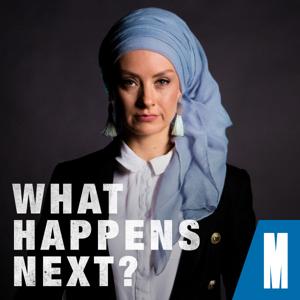
‘What Happens Next?’
Hear Her Roar: Women’s Safety & Gender Equality | 74
“Hear me now”: 2021 Australian of the Year Grace Tame's acceptance speech was a rally cry that reverberated across the nation. Thousands of women marched for safety in their homes, schools, workplaces and public spaces.
The recent federal election clearly demonstrated that what matters to women voters should not be ignored. In a live, bonus episode of Monash University's ‘What Happens Next?’ podcast, a panel of experts unpacks women’s safety and gender equality in the wake of COVID-19.
Today's guests are Professor Jacqui True, Director of Monash’s Centre for Gender, Peace and Security; Dr Siru Tan, a research fellow at the Monash University Gender and Family Violence Prevention Centre; and Australian political scientist Dr Blair Williams.
A full transcript of this episode is available on Monash Lens.
Learn more:
This is a special, one-part episode of “What Happens Next?”. We'll be back next week with an all-new topic.
If you’re enjoying the show, don’t forget to subscribe, or rate or review “What Happens Next?” to help listeners like yourself discover it.
See omnystudio.com/listener for privacy information.
11.4.22
What Happens Next?
“Can Australia Become a Green Energy Superpower?” | 73
Green mining is a dirty business, but our sustainable future depends on it. As we begin to transition to a decarbonised future, we need to put in the work to ensure it's a just one that keeps the planet and all its people in mind.
Monash University’s podcast, “What Happens Next?”, wraps up its series on critical minerals by considering how we can get the shift from coal mining to critical mineral mining right, positioning Australia as a green energy powerhouse on the global stage.
Mining engineer Dr Mohan Yellishetty, an Associate Professor at Monash University, discusses Australia’s potential to turn mainstream mining waste into wealth, and the ability of our existing mining workforce to adapt from mainstream mining to green mining.
Dr Paris Hadfield, a research fellow at the Monash Sustainable Development Institute, tells host Dr Susan Carland about what we can learn from the past to ensure our decarbonisation evolution is considerate of all the affected communities by taking a place-based approach.
Finally, Professor Susan Park, Professor of Global Governance at the University of Sydney, outlines the environmental impact of extraction mining – weighing up whether or not it’s worth it in the big picture.
A full transcript of this episode is available on Monash Lens.
Learn more:
Sources:
“What Happens Next?” will be back next week with a new topic.
If you’re enjoying the show, don’t forget to subscribe, or rate or review “What Happens Next?” to help listeners like yourself discover it.
See omnystudio.com/listener for privacy information.
04.11.22
What Happens Next?
Is Australia Behind in the Critical Minerals Race? | 72
This week on What Happens Next?, we’re kickstarting a new series on critical minerals. As we transition to a decarbonised future, away from oil and coal, our technology will run on ores such as lithium, cobalt, and rare earth minerals. How will this cause global politics to shift? Can mining and sustainability go hand-in-hand? And how can we ensure a just transition for all?
In this new episode of Monash University’s podcast, “What Happens Next?”, our guests discuss the challenges and opportunities critical minerals can play in transitioning society away from fossil fuels to a more sustainable future. Can Australia be a leader in the critical minerals race?
Host Dr Susan Carland is joined this week by Professor Susan Park, professor of global governance at the University of Sydney; Dr Mohan Yellishetty, Associate Professor in the Department of Civil Engineering at Monash University and Dr Paris Hadfield, research fellow at the Monash Sustainable Development Institute.
A full transcript of this episode is available on Monash Lens.
We'll be back next week with part two in this series, “Can Australia Become a Green Energy Superpower?”.
If you’re enjoying the show, don’t forget to subscribe, or rate or review “What Happens Next?” to help listeners like yourself discover it.
See omnystudio.com/listener for privacy information.
28.10.22
“What Happens Next?”
Can We Save Endangered Languages? | 71
Soon after the first British ships arrived in Australia, Indigenous people were removed from their traditional lands and families, and were discouraged – often violently – from dancing, singing, or even speaking in their own languages.
In a new episode of Monash University’s podcast, “What Happens Next?”, Dr Susan Carland’s guests discuss how the languages of the most ancient continual civilisation on Earth are being preserved or revived in the face of tremendous odds.
Inala Cooper, Director of Murrup Barak, the Melbourne Institute for Indigenous Development at the University of Melbourne, discusses the importance of language for young First Nations activists, and the ways new technologies are reintroducing local languages back to Australia.
Associate Professor Dr John Bradley, Acting Director of the Monash Indigenous Studies Centre, is a co-creator of Wunungu Awara, an interdisciplinary effort to preserve First Nations stories, songs and cultures. He talks about ownership of languages, and what it means to “grow ears”.
Finally, Karen Yin, creator of “Conscious Style Guide”, helps listeners understand how we can create a more inclusive society by listening to the preferences of and boundaries set by marginalised communities.
Grow ears and settle in for a new episode of “What Happens Next?”.
A full transcript of this episode is available on Monash Lens.
Learn more:
“What Happens Next?” will be back next week with a new topic.
If you’re enjoying the show, don’t forget to subscribe, or rate or review “What Happens Next?” to help listeners like yourself discover it.
See omnystudio.com/listener for privacy information.
21.10.22
What Happens Next?
What Do We Lose When Languages Die? | 70
When we travel through Europe, we expect to experience a wide array of culture and customs – in each country, different foods, different views, and different languages.
That’s not the expectation visitors to Australia have, but perhaps they should. Before British colonisation, this land was home to nearly 300 distinct Indigenous languages.
But frontier violence, years of harmful policies, and entrenched, systemic racism against the Traditional Owners of the land stamped many of those languages out entirely, and those remaining have struggled to survive, spoken in secret or kept alive only in the memories of Elders. Today, just 10 Indigenous Australian languages are considered strong.
In a new episode of Monash University’s podcast, “What Happens Next?”, linguists and Indigenous human rights advocates discuss how we lost these languages, what it means when a language is sleeping, and the lengths communities are going to to wake them up again.
Host Dr Susan Carland is joined this week by Associate Professor John Bradley, Acting Deputy Director of Monash University’s Indigenous Studies Centre; Associate Professor Alice Gaby, Deputy Chair of the Board of Living Languages; and Monash alumna Inala Cooper, Director of Murrup Barak, the Melbourne Institute for Indigenous Development at the University of Melbourne.
A full transcript of this episode is available on Monash Lens.
Learn more:
“What Happens Next?” will be back next week with part two of this series, “Can We Save Endangered Languages?”.
If you’re enjoying the show, don’t forget to subscribe, or rate or review “What Happens Next?” to help listeners like yourself discover it.
See omnystudio.com/listener for privacy information.
14.10.2022
“What Happens Next?”
Can We Sharpen Our Focus? | 69
Between social media content, notifications pinging away on our phones, countless streaming options, and even watches with all the bells and whistles of a computer, our attention’s pulled in more directions than ever. Can we regain our focus?
This week, Monash University’s podcast, “What Happens Next?”, concludes its series on focus with conversations with leading experts in neuroscience, psychology and mindfulness.
Host Dr Susan Carland talks to Dr Hannah Kirk about how digital technology can be harnessed to help children build their attention skills.
Professor Mark Bellgrove’s team recently released landmark guidelines for the assessment, diagnosis and treatment of ADHD, establishing the world’s most up-to-date protocols over the past two years. He discusses the individual nature of attention – and what you need to know about yours to hone your focus.
Professor Craig Hassed OAM, co-creator of one of the world’s highest-rated massive open online courses of all time, weighs in on the day-to-day changes we can make to improve our attentiveness.
Finally, bestselling author Timber Hawkeye, writer of “Buddhist Boot Camp”, discusses the mental training that can help us live with intention – whether it’s making a choice on where to focus, what we should eat, or even who we should date.
A full transcript of this episode is available on Monash Lens.
Learn more:
“What Happens Next?” will be back next week with a new topic.
If you’re enjoying the show, don’t forget to subscribe, or rate or review “What Happens Next?” to help listeners like yourself discover it.
See omnystudio.com/listener for privacy information.
7.10.2022
“What Happens Next?”
Is Our Attention Slipping? | 68
Having trouble focusing lately? You’re not alone – and you probably already know it.
From TikTok to ‘The Times’, it seems everyone’s paying attention to, well, attention. During the pandemic lockdowns, many of us took up practices such as mindfulness and meditation, while others discovered that their struggles juggling tasks might be the result of attention-deficit/hyperactivity disorder, (ADHD).
Season seven of Monash University’s podcast, “What Happens Next?”, kicks off with a focus on focus. Has the average attention span dropped in the age of social media and smartphones? What's causing us to lose our focus? And why has there been a recent uptick in ADHD diagnoses among children and adults alike?
To answer these questions and more, host Dr Susan Carland sits down with a range of expert guests, including Monash University Turner Institute for Brain and Mental Health neuroscientists Professor Mark Bellgrove and Dr Hannah Kirk; Professor Craig Hassed OAM, Director of Education at the University’s Centre for Consciousness and Contemplative Studies; and Timber Hawkeye, author of the bestselling book “Buddhist Boot Camp”.
So while we have your attention, sit back, relax, and find out what happens next.
A full transcript of this episode is available on Monash Lens.
Learn more:
“What Happens Next?” will be back next week with part two of this series, ‘Can We Sharpen Our Focus?’.
If you’re enjoying the show, don’t forget to subscribe, or rate or review “What Happens Next?” to help listeners like yourself discover it.
See omnystudio.com/listener for privacy information.
Monash University’s multi-award-nominated podcast, What Happens Next?, is back with an all-new season of tough challenges and expert guests. New episodes of What Happens Next? will be released weekly from Friday, 7 October.
This season on the show, your host, Dr Susan Carland, addresses a new set of topics looking at the future we’re facing if we don’t change, the future we could have if we do, and how to get the kind of future we all want. World-leading experts share their insights and research on the future of food, focus, language, critical minerals, reproductive health, NFTs and more.
Don’t miss an episode of this exciting new season – subscribe now on your favourite podcast app.
Already a subscriber? You can help other listeners find the show by rating and reviewing it on your preferred app.
See you soon, when you’ll find out what happens next. Can’t wait until then? Explore our back catalogue.
A full transcript of this trailer is available on Monash Lens.
See omnystudio.com/listener for privacy information.
“This is one of the single biggest and particular attacks on the rights of women, and girls in particular, that we've seen in a long, long time.”
– Natasha Stott Despoja
Last week, our guests told the story of a tense escape from Afghanistan, arranged in the hours after the Taliban took its capital city of Kabul.
For the women and girls left behind, daily life is bleak. Their freedom of movement and right to education have been curtailed by the fundamentalist government with no end in sight.
But by removing all opportunities for women, the new regime has undermined itself. Research shows again and again that women’s involvement in community-building and peace-brokering activities results in tremendous benefits for nation-states.
In countries around the world – even in Australia – women are underrepresented in decision-making processes, unable to bring their strengths and unique viewpoints into the conversation. What skills do women bring to peacebuilding? And why, in 2022, are they still so marginalised in the halls of power?
Today, on the final episode of season six of ‘What Happens Next?’, Dr Susan Carland is joined by Professor Sharon Pickering, Monash’s Deputy Vice-Chancellor, Education, and Vice-President; and former Australian senator Natasha Stott Despoja AO, the country’s Ambassador for Women and Girls from 2013–16, now an independent expert on the UN Committee on the Elimination of Discrimination against Women.
A full transcript of this episode is available on Monash Lens.
Thank you for joining us for season six of ‘What Happens Next?’. We’ll be back in a few short months with a new series investigating new challenges. In the meantime, be sure to explore our back catalogue of episodes, such as right-wing extremism, hustle culture, the future of comedy, and psychedelics for mental health.
You can also dig deeper into many of the topics we've covered in this season by visiting Monash Lens at lens.monash.edu.
Do you have a topic you'd like us to examine? Email [email protected] with your idea.
You can also leave us feedback by rating and reviewing ‘What Happens Next?’ on your preferred podcast platform. It helps us improve, and it helps listeners like you discover the show.
See omnystudio.com/listener for privacy information.
“I hope one day, again we will have what we had. Again, our women can raise their voice. Again we could see women leaders, women political leaders, women in universities, in schools, who have the right to dream. Again, we could see and feel the women in Afghanistan, their voice, their knowledge, their skills. And I’m hoping to see, one day again, that Afghanistan is living again.” — Parisa Sekandari
When the Taliban resumed their brutal control over Afghanistan in August 2021, the world was left reeling.
The future of human rights in the country was bleak – especially for women and girls, who suffered under the oppressive regime of the militant political movement in the ’90s. Afghan women and women’s rights advocates suddenly found themselves in a deadly situation, with two dangerous choices before them: To risk remaining in the country under Taliban rule, or to attempt to evacuate and seek refuge far from home.
Monash University students and staff had a strong relationship with a number of Afghan scholars thanks to an ongoing debate series focused on human rights. When Afghanistan’s capital city of Kabul fell, a group from the University moved swiftly to remove these students and their families from danger and provide them with a safe place to call home.
Today on ‘What Happens Next?’, you’ll hear the harrowing story from the people involved in this incredible undertaking, including its leaders and organisers, and one of the scholars who fled Afghanistan for Australia.
Today’s guests are Professor Jacqui True, director of the Monash Gender, Peace and Security Centre; Professor Sharon Pickering, Monash’s Deputy Vice-Chancellor, Education, and Vice-President; and Parisa Sekandari, one of the evacuees.
A full transcript of this episode is available on Monash Lens.
‘What Happens Next?’ will be back next week with part two of this series, “Where Are Women in Peacebuilding?”.
In the meantime, read one family’s story of escape from the Taliban in the early 1990s, and learn how you can support asylum seekers at Monash University.
If you’re enjoying the show, don’t forget to subscribe and rate or review ‘What Happens Next?’ to help listeners like yourself discover it.
See omnystudio.com/listener for privacy information.
From the publisher's feed
The Handmaid’s Tale. Brave New World. Mad Max. Fictional dystopias have never seemed so close to becoming reality. Is it too late to change our course?
What Happens Next?, a podcast from Monash University, examines some of the biggest challenges facing our world and asks the experts, what will happen if we don't change? And what can we do to create a better future? Learn from leaders, listen to the people making a difference, and discover how you can help drive change.
99 Listeners
770 Listeners
759 Listeners
13 Listeners
63 Listeners

10 Listeners

235 Listeners

149 Listeners
27 Listeners

127 Listeners
25 Listeners

113 Listeners

65 Listeners

17 Listeners
4 Listeners