
Sign up to save your podcasts
Or



Ask an artificial intelligence to play you in a game of chess, and chances are, you’ll lose.
Ask an artificial intelligence to make you a cup of coffee, however, and prepare to be disappointed.
While robotics, autonomous systems and artificial intelligence, collectively known as RAS-AI, represent the bleeding edge of innovation and are often the villains in science fiction, the technology has a long way to go before it will replace humans in day-to-day tasks – and that includes on the battlefield.
In last week’s episode of ‘What Happens Next?’, expert guests warned of the dangers of removing humans from war and replacing them with robots – the consequences could quickly become catastrophic. The good news? That’s not likely to happen any time soon.
Although it will never replace human soldiers, RAS-AI does have some surprising effects on them – including on their mental health, and in shaping society’s views on valour and what it means to be a member of the military.
This week, host Dr Susan Carland is joined by expert guests who outline the state of RAS-AI today, its tremendous potential benefits to humanity, and how emerging technologies are changing the way we think about soldiers, and the way soldiers think about their jobs.
Today’s guests are Monash alumnus and veteran Dr Josh Roose; Dr Kate Devitt, Chief Scientist of Trusted Autonomous Systems, CRC; former SAS Commanding Officer Ben Pronk DSC; and Paul Scharre, a former US Army Ranger and the author of ‘Army of None: Autonomous Weapons and the Future of War’.
Take the Resilience Survey here.
A full transcript of this episode is available on Monash Lens.
‘What Happens Next?’ will be back next week with an all-new topic. In the meantime, listen to our Season 5 episode to learn how psychedelics could help treat post-traumatic stress disorder.
If you’re enjoying the show, don’t forget to subscribe and rate or review ‘What Happens Next?’ to help listeners like yourself discover it.
See omnystudio.com/listener for privacy information.
Artificial intelligence and autonomous systems are poised to change the battlefield, and with it, soldiers themselves. Today, the human cost of war is high. Will that be true of tomorrow’s wars, or will humans be removed from the front lines, left to orchestrate surgical drone strikes and autonomous technology behind the scenes?
And what about the soldiers themselves? Today, pilots are operating drones from the other side of the world, but they’re still reporting high levels of trauma. Will reducing the humans involved in combat also reduce the humanity that should govern it? Can modern soldiers be both ethical and effective? And how will emerging technologies such as AI and robotics affect human soldiering?
This week, ‘What Happens Next?’ examines a new topic this week: the future of soldiering. Join Dr Susan Carland as she talks to veterans and experts in ethics; robotics, autonomous systems, and artificial intelligence; resilience; and military conduct to discover what the future we face looks like if we fail to consider the moral and ethical quandaries presented by new technologies on the battlefield.
This week’s guests are philosophy professor Dr Rob Sparrow; alumnus and veteran Dr Josh Roose; Dr Kate Devitt, Chief Scientist of Trusted Autonomous Systems, CRC; former SAS Commanding Officer Ben Pronk DSC; and Paul Scharre, a former US Army Ranger and the author of ‘Army of None: Autonomous Weapons and the Future of War’.
A full transcript of this episode is available on Monash Lens.
‘What Happens Next?’ will be back next week with part two of this series, “Will AI Change the Future of Soldiering?”. In the meantime, check out this short documentary on how robotics and AI are changing civilians’ lives, too.
If you’re enjoying the show, don’t forget to subscribe and rate or review ‘What Happens Next?’ to help listeners like yourself discover it.
See omnystudio.com/listener for privacy information.
In last week’s episode of ‘What Happens Next?’, Monash University’s podcast, Dr Susan Carland’s expert guests explained why a loneliness crisis is sweeping the globe, and what its knock-on effects are. Isolation is connected to issues including addiction, violence, and anxiety and depression. It impacts the whole of sufferer’s lives, from their health and wellbeing, to their capacity to work.
And it’s not just lonely individuals who are struggling. Those same effects have a measurable impact on society, affecting everything from our sense of social cohesion to the economy.
In today’s episode, you’ll discover why loneliness must be regarded as a public health priority. Find out some of the surprising ways we can tackle it, ranging from urban design, to government policy and support that includes every community member.
You’ll also meet some of the changemakers working to destigmatise mental health issues, advocate for greater preventative measures to stop loneliness before it takes root, and encourage the infrastructural changes we need to facilitate better connection.
In part two of the ‘What Happens Next?’ series on loneliness, Susan’s joined by life-course epidemiologist Dr Rosanne Freak-Poli; federal MP Andrew Giles; Dr Suzi Nielsen, Deputy Director of the Monash Addiction Research Centre; and mental health communicator David Pearce, founder of On the Low Down.
A full transcript of this episode is available on Monash Lens.
‘What Happens Next?’ will be back next week with a new topic. In the meantime, learn more about the economics of loneliness in Australia.
If you’re enjoying the show, don’t forget to subscribe on your favourite podcast app, and rate or review What Happens Next?’ to help listeners like yourself discover it.
See omnystudio.com/listener for privacy information.
The pandemic certainly exacerbated feelings of social isolation, but even before lockdown became the name of the game, global reports of loneliness were creeping up at an alarming rate. Both Japan and the United Kingdom established government positions dedicated to its relief, and little wonder – the cost of loneliness is high.
Social isolation affects us individually and as a society. Its detrimental health effects – including an increased risk of cardiovascular disease – are well-documented. Feelings of loneliness are high among patients with chronic pain, so it’s also strongly associated with opioid abuse. And in 2021, a study from Monash Business School’s Centre of Health Economics found that the effects of loneliness represent a major economic burden as well.
In an age of digital connection, why is humanity feeling more lonely than ever? What are the modern roots of loneliness? What are its hidden costs? And can we address the issue without upending society as we know it?
In part one of a new series of Monash University’s ‘What Happens Next?’, host Dr Susan Carland is joined by sociologist Dr Alan Petersen, life-course epidemiologist Dr Rosanne Freak-Poli, federal MP Andrew Giles, and Dr Suzi Nielsen, Deputy Director of the Monash Addiction Research Centre.
A full transcript of this episode is available on Monash Lens.
‘What Happens Next?’ will be back next week with part two of this series, “Can We End Loneliness?”. In the meantime, learn how one collaboration is using literature to enhance our understanding of loneliness, especially in old age.
If you’re enjoying the show, don’t forget to subscribe and rate or review ‘What Happens Next?’ to help listeners like yourself discover it.
See omnystudio.com/listener for privacy information.
Happy Earth Day! If last week’s episode of ‘What Happens Next?’ caused you to reconsider your wardrobe or sent you on a donation run to your local op shop, you won’t want to miss part two of our investigation into the sustainability and ethics of fashion.
This week, our expert guests focus on the future we can look forward to if we slow down and make a conscious effort to value our clothes, rather than seeing them as expendable or faddish. The news is good – in response to fast fashion, the slow fashion movement is gaining momentum among Instagram influencers and the average consumer alike, and most labels are taking steps to keep up with that demand.
Host Dr Susan Carland is joined by MSDI’s Aleasha McCallion and Julie Boulton; Dr Eloise Zoppos, an applied researcher at the Australian Consumer and Retail Studies Unit in the Monash Business School; fashion editor Janice Breen Burns; and designer and Instagram influencer Nicole McLaughlin.
Nicole’s Instagram account
A full transcription of this episode is available on Monash Lens.
‘What Happens Next?’ will be back next week with an all-new topic. Want to dig deeper into the challenges of the supply chain? Revisit our season 1 episode, “Swipe Right for Slavery”.
If you’re enjoying the show, don’t forget to subscribe on your favourite podcast app, and rate or review ‘What Happens Next?’ to help listeners like yourself discover it.
See omnystudio.com/listener for privacy information.
You take the bus to work, you turn off the lights when you’re not using them, and you’ve embraced meatless Mondays. You’re doing your part to save the planet. But there’s one massive issue that many of us overlook, even though it surrounds us – textile waste.
From furniture and home decor to toy manufacturing, medical supplies and more, textiles are literally the fabric of our lives. Unless you’re a dedicated nudist, you’re covered in them from head to toe. And when it comes to truly making a difference for the planet on an individual level, our wardrobes are a great place to start.
Consider your t-shirts, for example. More than 15 billion t-shirts are produced worldwide each year. More than half of these are disposed of in under 12 months, contributing to more than 315,000 tonnes of textile waste per year in Australia. When the entire supply chain of a single item of clothing is taken into account, including supplies, labour, and eventual disposal, our casual attitude towards clothing is truly shocking. It's time to reconsider our relationship with clothing.
‘What Happens Next?’ returns this week with a new topic – slow fashion. How is the way we currently consume fashion pressuring the environment and supply chain? Where will we find ourselves in 50 years if our behaviours don’t change? And importantly… what will we wear?
This week on Monash University’s podcast, host Dr Susan Carland is joined by MSDI’s Aleasha McCallion and Julie Boulton; Dr Eloise Zoppos, an applied researcher at the Australian Consumer and Retail Studies Unit in the Monash Business School; fashion editor Janice Breen Burns; and designer and Instagram influencer Nicole McLaughlin.
Nicole’s Instagram account
A full transcription of this episode is available on Monash Lens.
‘What Happens Next?’ will be back next Friday with part two of this series, “Can We Put the Brakes on Fast Fashion?”. In the meantime, go on an interactive journey with a circular fashion-friendly t-shirt.
If you’re enjoying the show, don’t forget to subscribe on your favourite podcast app, and rate or review ‘What Happens Next?’ to help listeners like yourself discover it.
See omnystudio.com/listener for privacy information.
‘Wanted’ posters. Your local neighbourhood watch. CrimeStoppers. There’s a long tradition of citizens assisting law enforcement in reporting illegal activities and identifying criminals.
In part one of the ‘What Happens Next?’ podcast’s investigation into digital vigilantism, host Dr Susan Carland and her expert guests examined the ways that behaviour can go awry, sometimes even translating into real-world violence. In part two of this series, you’ll learn whether or not digital vigilantism can be used for good – and what you should do if you encounter it.
Join Monash University Criminologist Dr Lennon Chang; Monash Dr Mark Howard, a philosopher working in the Monash Data Futures Institute; Monash alumnus and violent extremism expert Dr Josh Roose; and journalist Ginger Gorman, author of ‘Troll Hunting’.
Wondering if the concept of “an eye for an eye” still has a place in our changing world? Check out our short documentary: “A Different Lens: The Question of Retaliation”.
‘What Happens Next?’ will be back next week with a new topic.
If you’re enjoying the show, don’t forget to subscribe on your favourite podcast app, and rate or review ‘What Happens Next?’ to help listeners like yourself discover it.
See omnystudio.com/listener for privacy information.
It’s easy to see why the concept of vigilante justice resonates with so many people. In the last few years, social movements from #MeToo to BLM have made us very aware of the wrongdoers who’ve escaped accountability, and the victims who’ve been let down, or even wrongly targeted, by existing systems and laws.
But when internet users take matters into their own hands, problems can arise. Across the political spectrum, groups are enacting digital vigilantism to try to right perceived wrongs, and even to exact their own forms of justice.
Host Dr Susan Carland is joined by journalist Ginger Gorman, author of 'Troll Hunting'; criminologist Dr Lennon Chang, philosopher Dr Mark Howard, and violent extremism expert and Monash alumnus Dr Josh Roose. They’ll discuss the dark side of digital vigilantism, and answer the question: Does it really work?
A full transcription of this episode is available on Monash Lens.
'What Happens Next?' will be back next week with part two of this series: "Are There Good Trolls?".
In the meantime, check out Dr Mark Howard’s take on the Caped Crusader, and Batman’s changing approach to vigilante justice.
If you’re enjoying the show, don’t forget to subscribe and leave 'What Happens Next?' a rating or review to help listeners like yourself discover it.
See omnystudio.com/listener for privacy information.
Last week on ‘What Happens Next?’, our guest experts served up some unappetising truths about weight loss. Ultimately, our body types are not necessarily dictated by the foods we eat or the amount of exercise we do – it’s all about our genetic makeup. And once we begin to put on weight, getting it off again in a permanent way is almost impossible.
In today’s episode, host Dr Susan Carland continues the conversation by asking the things you’ve always wanted to know about weight but have been too afraid to ask. Is there power in using the word fat? Is it possible to be “healthy at any size”, or is that merely a social media-driven pipe dream? Is real weight loss achievable at all, or are we expecting the impossible of our own bodies?
Today’s guests are Dr Michael Cowley, founding director of the Monash Obesity and Diabetes Institute; bariatric surgeon Mr Ahmad Aly; psychiatrist and psychoanalyst Dr Hilary Offman; and celebrity personal trainer Michelle Bridges, of Biggest Loser fame.
A full transcript of this episode is available on Monash Lens.
‘What Happens Next?’ will return next week with part one of a new topic.
In the meantime, learn about a research breakthrough that could help you control your appetite with a nasal spray.
If you’re enjoying the show, don’t forget to subscribe on your favourite podcast app, and rate or review ‘What Happens Next?’ to help listeners like yourself discover it.
See omnystudio.com/listener for privacy information.
Welcome to season six of 'What Happens Next?'.
You can’t go anywhere without hearing about the latest fad diet or workout, which often promise miraculously quick – and permanent – results. Does science support them? Is losing weight as simple as exercising more and eating less, or is there more to it? How has our understanding of obesity changed as our grasp on genetics and environmental factors grows stronger? And what’s going on with the way we talk about fat?
This season of Monash University’s 'What Happens Next?' kicks off with a conversation about weight loss. What does science really have to say about it? Should we change how we think about – and therefore talk about – diet, exercise and wellness?
Dr Susan Carland sits down with Dr Michael Cowley, founding director of the Monash Obesity and Diabetes Institute; bariatric surgeon Mr Ahmad Aly; psychiatrist and psychoanalyst Dr Hilary Offman; and celebrity personal trainer Michelle Bridges.
A full transcription of this episode is available on Monash Lens.
'What Happens Next?' will return next week with part two of this series, “Should We Change How We Think About Fat?”.
In the meantime, take a deeper dive into Dr Cowley’s research and rethink what it means to be fat or skinny.
If you’re enjoying the show, don’t forget to subscribe on your favourite podcast app, and rate or review 'What Happens Next?' to help listeners like yourself discover it.
See omnystudio.com/listener for privacy information.
From the publisher's feed
The Handmaid’s Tale. Brave New World. Mad Max. Fictional dystopias have never seemed so close to becoming reality. Is it too late to change our course?
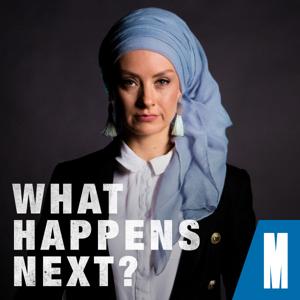
What Happens Next?, a podcast from Monash University, examines some of the biggest challenges facing our world and asks the experts, what will happen if we don't change? And what can we do to create a better future? Learn from leaders, listen to the people making a difference, and discover how you can help drive change.

99 Listeners
770 Listeners
759 Listeners
13 Listeners
63 Listeners
10 Listeners

235 Listeners

149 Listeners
27 Listeners

127 Listeners
25 Listeners

113 Listeners

65 Listeners

17 Listeners

4 Listeners