
Sign up to save your podcasts
Or

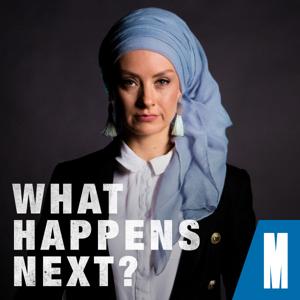


Introducing ‘What Happens Next?’ season six
Monash University’s multi-award nominated podcast, What Happens Next?, is back with an all-new season of tough challenges and expert guests. New episodes of What Happens Next? will be released weekly from Friday, 18 March, 2022. Enjoy this preview of the season!
This season on the show, your host, Dr Susan Carland, addresses a new set of topics looking at the future we’re facing if we don’t change, the future we could have if we do, and how to get the kind of future we all want. World-leading experts share their insights and research on the future of soldiering, digital vigilantism, slow fashion, weight loss, loneliness, and women’s role in peacekeeping as explored through the lens of the crisis in Afghanistan.
Don’t miss an episode of this exciting new season – subscribe now on your favourite podcast app.
Already a subscriber? You can help other listeners find the show by rating and reviewing it on your preferred app.
See you next week, when you’ll find out… what happens next. Can’t wait until then? Explore our back catalogue on Monash Lens.
See omnystudio.com/listener for privacy information.
We’re wrapping up this season of What Happens Next? with some hope.
The 2020 murder of George Floyd by former Minneapolis police officer Derek Chauvin sparked the embers of a long-smouldering conflict centred around racial injustice. The issues of systemic and institutionalised racism that have been brought to light in the wake of the movements that followed this incident can seem overwhelming. As an individual, it’s difficult to know where to start, and to believe it’s possible to make a difference.
The Monash University Migration and Inclusion Centre, in collaboration with Welcoming Australia, recently hosted a panel discussion entitled “Racism: It Stops With…?”. Comprised of some of the foremost leaders working for equality in Australia and moderated by Dr Susan Carland, the panel focused on progressive, inclusive ways to eliminate racism within the community and the workplace, in the education sector, and in society at large.
In part two of the discussion, which was recorded live for What Happens Next?, panellists Nyadol Nyuon, Div Pillay, Pro Vice-Chancellor (Indigenous) Professor Jacinta Elston and Emeritus Professor Andrew Markus identified steps each of us can take to stop racism in its tracks. They also shared the initiatives and developments they’ve come across in their work that are giving them hope for the future.
If you enjoyed this season of What Happens Next?, don’t forget to rate the podcast and leave a review on your favourite listening app. Dr Susan Carland will be back with an all-new selection of topics soon. In the meantime, why not explore our back catalogue?
See omnystudio.com/listener for privacy information.
Understanding racism is the key to positive social change. The ‘Racism: It stops with…..?’ panel discussion, moderated by Dr Susan Carland, focused on progressive, positive and inclusive ways to eliminate racism within the community and the workplace, in the education sector, and in our communities.
Panelists:
Nyadol Nyuon, Chair, Harmony Alliance Australia, lawyer and human rights advocate
Professor Jacinta Elston, Pro Vice Chancellor (Indigenous), Monash University
Div Pillay, CEO, MindTribes and Monash Alumna
Emeritus Professor Andrew Markus, Monash University
This webinar panel event was in partnership between the Monash Migration and Inclusion Centre and Welcoming Australia for National Unity Week, which encourages all Australians to join together and celebrate cultural diversity.
See omnystudio.com/listener for privacy information.
What are some of the ways we are making our cities more welcoming and how can we as individuals encourage a more diverse and inclusive society?
In this episode, Dr Susan Carland asks some of Australia’s most knowledgeable and sought-after commentators on migration and inclusion about the policies and attitudes shaping society’s approach to immigration. Our guests are Bel Schenk, coordinator at Welcoming Cities Victoria, Rebecca Wickes and Marie Segrave of the Monash Migration and Inclusion Centre.
See omnystudio.com/listener for privacy information.
There’s no doubt about it: Migration has shaped and changed Australia. The country’s history is marked by a series of migrations – the British, the Chinese, the Greeks, the Italians. We’re a nation largely built on the shoulders of those who came here seeking a better life, but we’re still wrestling with what that means for our modern identity.
In the first of this two-part series, Dr Susan Carland asks some of Australia’s most knowledgeable and sought-after commentators on migration and inclusion about the policies and attitudes shaping society’s approach to immigration. Our guests today are Sharon Pickering, Monash University’s Deputy Vice-Chancellor (Education) & Senior Vice President; labour economist Claudio Labanca; and criminologists Rebecca Wickes and Marie Segrave of the Monash Migration and Inclusion Centre.
See omnystudio.com/listener for privacy information.
Class inequality is not inevitable, and it’s not too late to change things here in Australia to promote a better experience for all.
In our second episode exploring class inequality, Dr Susan Carland asks the experts: How can we change things? How can we ensure that a diverse range of voices occupies equal weight in the halls of power and the rooms where decisions are made?
Hear from the Monash University Sustainable Development Institute’s John Thwaites AM about the political and economic decisions that must be made if we’re going to remedy class inequality for good.
Historian Tony Moore provides some additional context into Australia’s past relationship with the working class – a connection that informs the country to this day and may provide the key to a more equal tomorrow.
Journalist Rick Morton and author Bri Lee also return with insights into how improving the accessibility of resources like education, housing, and other necessities will have a positive knock-on effect for generations to come.
See omnystudio.com/listener for privacy information.
Who holds the power in Australia?
In this two-episode arc, Dr Susan Carland seeks to answer that question – and understand how we got here.
Over the past several decades, Australia’s social stratification has become more pronounced. It’s partially the result of economic trends such as trickle-down theory and the increasing casualisation of employment in the gig economy, but there are other factors at play here.
In this series, host Dr Susan Carland sits down with John Thwaites, chair of the Monash Sustainable Development Institute and ClimateWorks Australia; Bri Lee, author of the book Who Gets to Be Smart?, Rick Morton, senior reporter for The Saturday Paper, and Monash Arts Associate Professor of Communications & Media Studies Dr Tony Moore.
Find out how privilege and disparate levels of access to basic resources such as education are contributing to an imbalance of power and influence in the land of the ‘fair go’ – threatening the egalitarian ideals Australia’s striven to model for the world.
See omnystudio.com/listener for privacy information.
Attitudes towards psychoactive drugs for the treatment of PTSD are changing, and for good reason – it’s hard to disagree with the evidence of the therapeutic benefits of psychedelic medicines for the treatment of mental illness. Compelling studies are being conducted around the world, several of them here at Monash. And it won’t be long until you see the results of these studies for yourself – experts suggest health care providers could begin prescribing psychedelic drugs for PTSD patients as soon as 2023.
In this episode of “What Happens Next?”, Dr Susan Carland talks to Dr Paul Liknaitzky, the principal investigator on a number of Australia’s first clinical psychedelic trials. She’s also joined by Dr Meaghan O’Donnell, head of research at Phoenix Australia and professor in the Department of Psychiatry at the University of Melbourne.
Learn how psychedelic drugs, in concert with more traditional therapies, can help trauma survivors shift their perceptions, and about some of the upcoming research that will revolutionise psychiatry and change the lives of millions of people suffering from mental illness.
To be added to Monash University’s notification list for psychedelic drug trial recruitment, email [email protected].
See omnystudio.com/listener for privacy information.
After years of very little pharmaceutical innovation in the treatment of mental illness, psychiatry is on the verge of something big: Psychedelic medicine is emerging as a game-changer.
The evidence of the efficacy of drugs like psilocybin (also known as magic mushrooms) and MDMA, used in conjunction with therapy for illnesses such as depression, anxiety and post-traumatic stress disorder, is astounding. And society could use the help – the 2017-18 National Health Survey estimated that 1 in 5, or 4.8 million Australians reported having a mental or behavioural condition, and the impact of the pandemic has only exacerbated the issue.
But the sociopolitical atmosphere surrounding illegal drugs – including psychedelics – has made research and development a difficult proposition.
On a new episode of “What Happens Next?”, Susan Carland considers the political landscape surrounding drug legalisation, the cultural context of drug use, the science behind the mental health medication we already have – and what things will look like if we fail to engage in the “psychedelic renaissance.”
Today’s guests are Dan Lubman, Turning Point Director and Monash University Professor of Addiction Studies; Andrea Whittaker, Convenor of Anthropology in the Monash School of Social Sciences; Paul Liknaitsky, head of Monash University’s Clinical Psychedelic Research Lab; and Arthur Christopoulos, Dean of Monash University Faculty of Pharmacy and Pharmaceutical Sciences.
See omnystudio.com/listener for privacy information.
Growth comes with growing pains, and as we work to create a more inclusive, welcoming society, we see that reflected in how audiences respond to art. Artists and entertainers alike have been ostracised from social media and have even lost work for offensive conduct.
But what if it’s your job to shock and satirise? Comedians go where the rest of us can’t – occasionally crossing lines and causing offense. In recent years, we’ve seen a number of comedians come under intense public scrutiny after saying something objectionable.
In the second and final episode on the future of comedy and cancel culture, Dr Susan Carland talks to comedians about walking the fine line between humour and offense, the responsibility of the comedian, and which jokes they think we’ll cringe over in the coming years.
Our guests today on the What Happens Next? podcast are Peter Helliar, presenter of The Project on Network 10; TV personality and activist Nazeem Hussain; 2020 RAW Comedy winner Prue Blake; and Michael Shafar, stand-up comic and writer for The Project.
See omnystudio.com/listener for privacy information.
From the publisher's feed
The Handmaid’s Tale. Brave New World. Mad Max. Fictional dystopias have never seemed so close to becoming reality. Is it too late to change our course?
What Happens Next?, a podcast from Monash University, examines some of the biggest challenges facing our world and asks the experts, what will happen if we don't change? And what can we do to create a better future? Learn from leaders, listen to the people making a difference, and discover how you can help drive change.
99 Listeners
770 Listeners
759 Listeners
13 Listeners
63 Listeners
10 Listeners

235 Listeners

149 Listeners
27 Listeners

127 Listeners
25 Listeners

113 Listeners

65 Listeners

17 Listeners

4 Listeners