
Sign up to save your podcasts
Or

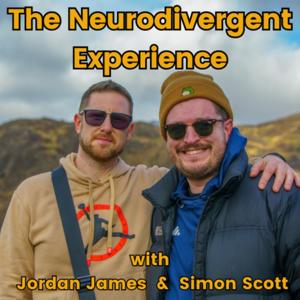

In this episode of The Neurodivergent Experience, Jordan James and Simon Scott explore why neurodivergent people can be more vulnerable to negative influence.
Growing up feeling different often leads to masking, people-pleasing, and a fragile sense of identity. When belonging has felt conditional, it can become easier to agree, adapt, and absorb the views of others just to avoid rejection.
Jordan shares a recent experience of being let down by someone he trusted, while Simon reflects on a past friendship that crossed into manipulation and exploitation. They unpack how loneliness, burnout, justice sensitivity, and the need for certainty can leave neurodivergent people more susceptible to toxic dynamics.
The conversation also dives into social media, echo chambers, and algorithm-driven radicalisation, and how validation, moral clarity, and belonging can feel regulating even when the influence itself is harmful.
In this episode, we discuss:
An honest episode about influence, autonomy, and learning to protect yourself without losing your openness.
Our Sponsors:
🧘♀️ Ashley Bentley – Integrative Coaching, Breathwork & Hypnotherapy
🔗 Stay Connected
❤️ Support the Show
If this episode resonated with you:
✅ Follow or Subscribe to The Neurodivergent Experience
⭐ Leave a quick review on Apple Podcasts or Spotify
🔔 Turn on notifications for new weekly episodes
Hosted on Acast. See acast.com/privacy for more information.
 View all episodes
 By Jordan James and Simon Scott
5
2525 ratings
In this episode of The Neurodivergent Experience, Jordan James and Simon Scott explore why neurodivergent people can be more vulnerable to negative influence.
Growing up feeling different often leads to masking, people-pleasing, and a fragile sense of identity. When belonging has felt conditional, it can become easier to agree, adapt, and absorb the views of others just to avoid rejection.
Jordan shares a recent experience of being let down by someone he trusted, while Simon reflects on a past friendship that crossed into manipulation and exploitation. They unpack how loneliness, burnout, justice sensitivity, and the need for certainty can leave neurodivergent people more susceptible to toxic dynamics.
The conversation also dives into social media, echo chambers, and algorithm-driven radicalisation, and how validation, moral clarity, and belonging can feel regulating even when the influence itself is harmful.
In this episode, we discuss:
An honest episode about influence, autonomy, and learning to protect yourself without losing your openness.
Our Sponsors:
🧘♀️ Ashley Bentley – Integrative Coaching, Breathwork & Hypnotherapy
🔗 Stay Connected
❤️ Support the Show
If this episode resonated with you:
✅ Follow or Subscribe to The Neurodivergent Experience
⭐ Leave a quick review on Apple Podcasts or Spotify
🔔 Turn on notifications for new weekly episodes
Hosted on Acast. See acast.com/privacy for more information.

3,767 Listeners
420 Listeners
942 Listeners
47 Listeners
715 Listeners
428 Listeners
309 Listeners
178 Listeners
290 Listeners
51 Listeners
596 Listeners
111 Listeners
26 Listeners

283 Listeners