
Sign up to save your podcasts
Or



Based on Podcast App listening data
Send us Fan Mail
Heat shimmers above the Santa Fe tracks as Newton, Kansas splits in two: polished mahogany and temperance to the north, canvas alleys and all-night revelry to the south. We guide you through the second act of a borderland drama where the railroad doesn’t just deliver cattle and cash—it redraws morals, loyalties, and the limits of law. Perry Tuttle’s roaring dancehall, the Gold Room’s careful smiles, and a fiddler-reporter named Allegro weave a soundscape where stories pay better than truth and reputation is coin.
At the heart of the conflict stand two badges that should have kept the peace and instead crack it open. Mike McCluskey, the unyielding Yankee enforcer, and Billy Bailey, a Texan gambler pinned with borrowed authority, become emblems for bigger wars: North versus South, rail versus range, progress versus pride. When election day whiskey greases ballots for railroad bonds, tempers boil. A public humiliation spills into sunlight, and a gut shot renders a verdict no courtroom can soften. The town fractures along the rails and along the story each side needs to survive—self-defense for the railroad men, cold-blood for the Texans.
Hovering at the edge is James Riley, a frail eighteen-year-old with consumption and no fear left to spend. His quiet loyalty to McCluskey changes the odds in ways bluster never could, turning a feud into a fuse. As McCluskey flees, hears he’s cleared, and boards the return train, the badge feels like a shield, but the grass by the tracks says otherwise. We stop at the moment before the ambush, the air heavy with lead that hasn’t flown yet, and a town holding its breath.
If you’re drawn to Old West history, railroad town politics, true crime on the frontier, and the anatomy of honor cultures colliding with new power, this chapter delivers vivid storytelling, textured context, and a cliff that promises a hard landing. Subscribe, share with a friend who loves gritty Western lore, and leave a review to tell us: was it justice or revenge?
Support the show
If you'd like to buy one or more of our fully illustrated dime novel publications, you can click the link I've included.
Send us Fan Mail
A town can rise on paper before it stands in wood and stone. We follow Wilburn, a near-forgotten settlement in south central Ford County, from the bright moment it earned a federal post office in 1885 to the slow fade that followed when the railroad curved away. With clear eyes and a storyteller’s care, we piece together how a petition by Charles P. Brown and the steady hands of postmaster Lewis P. Horton briefly stitched Wilburne to the national fabric—and how one routing decision redirected commerce, families, and memory itself.
We explore why a post office meant power on the frontier, serving as the seal of legitimacy for prairie communities across Kansas. Mail linked people to markets, news, and each other, turning crossroads into communities and hope into plans. Then we pull back to the larger map: the iron rails that chose Meade and Minneola over Wilburn, the unforgiving calculus of grades and costs, and the ripple effects that followed. Stores thinned, expectations ebbed, and by 1914 the post office closed and its duties moved to Fowler, leaving only traces of a once-confident future in the dust.
Along the way, we challenge how we define history and who earns a place in it. For every Dodge City that looms large in legend, there are countless Wilburns’ that shaped daily life, agriculture, and migration but slipped from view when the trains didn’t stop. By centering the lives and choices of Brown and Horton, we honor the people who wagered on geography and grit, and we read their story as a guide to present-day infrastructure decisions—whether rails, highways, or broadband—that still decide which towns thrive and which fade. Subscribe, share with a history-loving friend, and leave a review to keep these quiet stories alive.
Support the show
If you'd like to buy one or more of our fully illustrated dime novel publications, you can click the link I've included.
Send us Fan Mail
Smoke curls over the Kansas plains as a newborn railhead meets a river of longhorns and the town of Newton explodes into life. We follow the ATSF’s breakneck push toward land grants, Boston capital’s cold calculations, and the way a 300-foot stockyard turned steers into hard cash while turning streets into a pressure cooker. Along the boardwalks and within twenty-seven saloons, gamblers, speculators, and trailworn drovers create a marketplace where whiskey, pharaoh, and risk drive the night.
We unpack the deeper collision shaping 1871: the industrial North’s telegraphs, timetables, and municipal bonds grinding against the open-range economy of the defeated South. For Texans limping home from Reconstruction, the Chisholm Trail promised redemption at thirty dollars a head; for Kansans investing in wheat and churches, that same promise arrived coated in dust and danger. Through Judge R. W. P. Mews’ accounts, Joseph McCoy’s logistics, and the Gold Room’s bright lure, we map how Newton’s soul split between extraction and settlement—and why the ledger would be settled in blood.
Beneath the hoofbeats lies a quieter villain: Texas fever, the tick-borne disease that spared longhorns but slaughtered local shorthorns. As herds grazed the blue stem, parasites spread, farms withered, and quarantine lines appeared on paper while law leaked away at dusk. The result is a city under siege, where farmers shoulder shotguns, drovers clutch Colts, and a teenage cowboy named James Riley carries frail lungs and fierce loyalties into a fate none can escape. This is the prelude to Bloody Newton, where progress, public health, and pride intersect with catastrophic force.
Ride with us into the heart of the Kansas frontier. If the story moves you, follow the show, share it with a friend who loves Western history, and leave a review so others can find these untold truths of the American West.
Support the show
If you'd like to buy one or more of our fully illustrated dime novel publications, you can click the link I've included.
Send us Fan Mail
A county can be born without a single shot fired. We travel back to February 26, 1867, when lawmakers in Topeka drew the first boundaries of Ford County and set a quiet revolution in motion. Out on the wind-cut Kansas prairie, the scene looked unchanged—buffalo grass, open sky, no fences—but a pen stroke had already begun to rearrange lives, routes, and destinies.
We unpack why the county took the name of Colonel James H. Ford, a 2nd Colorado Cavalry veteran whose influence stretched beyond the Civil War. The story pivots on Fort Dodge, the hard-won foothold guarding the Santa Fe Trail. That fort didn’t just symbolize order; it created the conditions for settlement, trade, and a sense of safety that maps alone could not provide. For years, Ford County existed in a strange in-between—boundaries on paper, no functioning local government—until growth and grit pushed the region toward structure.
Everything changes in 1873 when Governor Thomas Osborne formally organizes the county and Dodge City becomes the seat. Overnight, a rough hunting camp begins its transformation into an administrative and judicial hub. We explore how that shift redefined power from rifles and rumors to records and rulings—and how lines drawn in quiet rooms can ripple into courthouses, classrooms, and communities. Along the way, we reflect on the hidden engines of the American West: boundary-making, fort-building, and the steady work of turning space into a place.
If stories like this spark your curiosity, subscribe, share the show with a history-loving friend, and leave a quick review to help more listeners find our deep dives into Ford County’s past.
Support the show
If you'd like to buy one or more of our fully illustrated dime novel publications, you can click the link I've included.
Send us Fan Mail
A county’s name hides a better story than any barroom legend. We pull back the curtain on Colonel James Hobart Ford—the Union officer whose grit, speed, and stubborn discipline shaped the ground beneath Dodge City long before gunfighters made it famous. From Ohio roots to the Colorado Territory, Ford rose fast, helped raise the 2nd Colorado Infantry, and proved himself at Glorieta Pass, where Union forces stopped Confederate designs on the Southwest. Then came the crucible: the Kansas–Missouri border, where guerrilla raids and burned homes defined the fight and where Ford’s aggressive command went head-to-head with bushwhackers like Quantrill.
We follow Ford into the decisive sweep of 1864, where his leadership mattered at the Battle of Westport and across the pursuit of Sterling Price, driving Confederate hopes out of Kansas and back into Arkansas. As the Civil War shifted to the plains, Ford took command of the District of the Upper Arkansas, often working from a tent under open sky. Here the mission changed: protect the Santa Fe Trail, balance settler pressure against Cheyenne, Arapaho, and Kiowa resistance, and hold a fragile peace along a corridor that powered trade and migration. Out of this work rose a modest sod outpost that later became Fort Dodge, a linchpin for the region and a seed for Dodge City’s explosive future.
Ford died at 38, never seeing the cowboy capital take shape. Yet five years later, Kansas named Ford County in his honor—a recognition not of legend, but of logistics, patrols, and hard choices made along a dangerous border. We share archival insights from the Ford County Historical Society and the Ford County Legacy Center to bring his story to life: a portrait of a commander who traded romance for results and left a county that still bears his name. If you’re ready to rethink Dodge City’s origin story through the eyes of the soldier who secured it, press play, subscribe for more frontier deep dives, and leave a review sharing the detail that surprised you most.
Support the show
If you'd like to buy one or more of our fully illustrated dime novel publications, you can click the link I've included.
Send us Fan Mail
Cold bites, a promise binds, and a furnace roars—this is the Yukon at human scale. We start with a candid look at why facing reality beats denial, then follow the trail into Robert Service’s world, where men who moil for gold wrestle with fear, loyalty, and the math of survival. Our reading of The Cremation of Sam McGee sets the pace: a vow made on a brutal Christmas run, a body lashed to a sleigh, and a punchline so warm it melts the dread.
We unpack the craft that makes this ballad unforgettable. The rolling meter pulls like a dog team, the imagery flips from ice-burn to furnace blaze, and the narrative beats keep tension taut until humor snaps it. Along the way, we trace Service’s journey from British Columbia to Whitehorse, and the Gold Rush context that fed his voice—rough camps, frozen rivers, and the stern code that says a promise made is a debt unpaid. The poem’s twist—Sam smiling in the heat—lands as both macabre and merciful, reminding us that stories help carry loads the trail alone cannot.
Grounded in history, we connect the ballad to a likely source: Dr. Leonard Sedgeon’s account of cremating a miner aboard a frozen steamer, transformed into the Alice May for poetic rhythm. That detail anchors the legend in real Yukon logistics—when the ground is iron, fire becomes grace. If you care about frontier ethics, narrative poetry, or how humor redeems hardship, this journey offers rich terrain. Listen, share with a friend who loves a good yarn, and leave a quick review to help more listeners find the show.
Support the show
If you'd like to buy one or more of our fully illustrated dime novel publications, you can click the link I've included.
Send us Fan Mail
A cold morning, a fortified town, and a scaffold placed just out of earshot—Charleston, Virginia tried to choreograph John Brown’s end and, with it, the story the country would remember. What they could not contain was a single handwritten note that slipped past the rope and into the bloodstream of a nation already splitting at the seams.
We walk the final hours with four witnesses whose perspectives refract the moment: Thomas J. Jackson, the meticulous VMI professor whose faith and discipline frame the state’s show of force; Edmund Ruffin, the fire-eater who turns pikes into propaganda and sees opportunity in the gallows; David Hunter Strother, the conflicted journalist caught between honesty and editorial fear; and a young John Wilkes Booth, reading the scene as theater and quietly rehearsing a darker role. Alongside them, Brown tends his will, thanks his jailer, hands coins to his men, and chooses silence over spectacle—saving his last words for paper, not the crowd.
The procession becomes public theater, the pause on the trapdoor stretches time, and the drop turns a man into a symbol. From controlled access to censored sketches, from church bells in the North to militia drills in the South, we trace how a state-managed execution became a catalyst. Keywords that matter here—John Brown, Harper’s Ferry, Bleeding Kansas, Stonewall Jackson, Edmund Ruffin, John Wilkes Booth, abolition, secession, Fort Sumter—aren’t just tags; they’re threads that stitch a straight line from a quiet cell to a continent at war.
Listen for the details that history often blurs: the bronze guns on the field, the black box that is also a coffin, the exact phrasing of a prophecy that predicted blood. Stay for the larger question that lingers long after the body is cut down: can power manage meaning when memory prefers to travel light and fast? If this story moves you, follow the show, share it with a friend who loves American history, and leave a review telling us what single moment changed your view.
Support the show
If you'd like to buy one or more of our fully illustrated dime novel publications, you can click the link I've included.
Send us Fan Mail
A single word—fire—ripped through a quiet winter night and changed Dodge City forever. We travel back to late 1885 as flames burst from the Junction Saloon, raced down Front Street, and turned landmark businesses into a corridor of embers. With no pressurized water system and winter winds pushing the blaze, neighbors hacked at ice for bucket brigades while heat made even brick buildings fail. The Long Branch Saloon, Delmonico’s, Zinnerman’s hardware, and more fell in hours, and embers leapt the tracks to ignite warehouses and strain the town’s last defenses.
Amid chaos, Marshal Bill Tilghman and the fire brigade made a stark choice: blast a firebreak with gunpowder to stop the advance. By dawn, roughly 14 businesses were gone and losses neared $150,000—staggering in 1885. Yet the ashes carried a blueprint. The second major fire of that year forced Dodge City to abandon the fragile speed of wood construction and invest in brick, stone, and a modern waterworks. What began as catastrophe became a civic turning point, ending the bucket brigade era and setting the foundation for a safer, more durable city.
We unpack how disasters reshape policy and place, why fireproof materials and infrastructure mark the shift from boomtown myth to municipal staying power, and how memory and rebuilding can coexist in the same streets. If you’re drawn to Western history, urban resilience, or the untold decisions behind a city’s survival, this story offers vivid detail and lasting lessons. Subscribe, share with a history-loving friend, and send us a local event from Ford County we should investigate next—your story might be the next page we bring to life.
Support the show
If you'd like to buy one or more of our fully illustrated dime novel publications, you can click the link I've included.
Send us Fan Mail
A coffin rattles into a mining camp and turns out to be a piano—an unlikely miracle for a saloon that runs on cards, noise, and stubborn pride. We set the scene in a winter-struck gulch where 300 miners live by the hour and try not to think about the lives they left behind. Goskin, the gambler who owns the hall, wants one thing for Christmas: someone brave enough to bring that silent instrument to life.
What follows is a story about fear, longing, and the strange ways grace finds a way in. A half-frozen stranger steps out of the storm, warms his hands by the fire, and admits he used to play. When he touches the keys, the room stops moving. Imperfect chords swell into old ballads and familiar carols that carry the men back to apple blossoms, Scottish heather, and candlelit aisles. Even the toughest faces fold when Home Sweet Home lands. The gambling halts, glasses lower, and hardened men drift out to write letters they’ve owed for years.
Then comes the twist that only the frontier could provide. The player asks for a brother named Driscoll, vanishes before dawn, and leaves an empty till and a trail that dies in the snow. The white hair? A wig. The musician? The three-card man who watched the piano like a starving wolf watching a door. Yet the con can’t erase the truth of what happened. Music worked where bullets and bravado never could. It made space for memory, tenderness, and the kind of Christmas that holds time together, even in a place built on luck.
If this tale moved you, follow the show, share it with a friend, and leave a review with the song that takes you home.
Support the show
If you'd like to buy one or more of our fully illustrated dime novel publications, you can click the link I've included.
Send us Fan Mail
Snow that bites, winds that snap, and a cabin lit by a single candle—yet the room still fills with carols and the smell of plum pudding. We journey across the Old West to uncover how pioneers forged the Christmas we recognize today, transforming scarcity into ritual and distance into community. From homestead kitchens humming weeks in advance to stockings hung by a hard‑won fire, we explore the customs that stitched a shaken nation back together after the Civil War and blossomed into a national holiday by 1870.
We share first‑hand accounts that feel close to the skin: a family pushing through storms to reach a new life in Oregon Territory, neighbors snowshoeing through four feet of powder for a frontier feast, and Dodge City’s Christmas Eve council where civic ambition briefly overshadowed goodwill. These vignettes reveal the texture of the season on the prairie—homemade ornaments from evergreens and ribbon, popcorn garlands, cookie‑dough keepsakes, and gifts carved, knitted, and stitched over months. Each detail reminds us that meaning grows where hands work and hearts wait.
Midway, we read Robert W. Service’s “The Christmas Tree,” a moving tale of a discarded fir that becomes a beacon for a child in pain. The poem echoes the frontier ethic: rescue what the world overlooks, turn it into light, and let hope do the rest. By the close, we reflect on hospitality and charity as the enduring core of the holiday—values that carried pioneers through savage winters and still kindle warmth in ours. If these stories deepen your own traditions, share the episode with someone you love, leave a quick review, and subscribe so you never miss the next journey west.
Support the show
If you'd like to buy one or more of our fully illustrated dime novel publications, you can click the link I've included.
From the publisher's feed
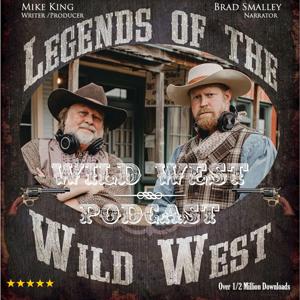
Welcome to the Wild West Podcast, winner of the 2026 Best of Western Podcast award, where fact and legend merge. We present the true accounts of individuals who settled in towns built out of hunger…
Ranked by our users in the last 21 days
44,984 Listeners
4,711 Listeners
1,785 Listeners

1,677 Listeners

2,772 Listeners

1,498 Listeners

3,986 Listeners

6,174 Listeners

19,147 Listeners

3,637 Listeners

19,093 Listeners

2,936 Listeners
777 Listeners
927 Listeners

1,592 Listeners