
Sign up to save your podcasts
Or



Based on Podcast App listening data
Send us Fan Mail
The wind on the Kansas plains doesn’t just rattle old storefronts; it carries the names we’ve let disappear. We retrace the final patrol of City Marshal Ed Masterson, shot along Dodge City’s infamous deadline in 1878, and follow the paper-thin trail of his remains from Fort Dodge to the overgrown ruins of Prairie Grove to the tidy rows of Maple Grove. What starts as a gripping frontier shootout turns into a forensic hunt for a missing grave, a meditation on how towns expand, and a reckoning with what gets erased when progress moves faster than memory.
Together we navigate saloon-lit streets, the split-second decision that may or may not have dropped Jack Wagner, and the ache of not knowing whether Ed’s last act delivered justice or if Bat Masterson’s gun wrote the final line. Along the way we listen to the whispers of other displaced souls—the card sharp shuffled like a deck of cards, the cowboy lost in the paperwork, the woman buried beneath a schoolhouse—and confront a stark civic question: what do we owe the dead when our cities grow over their bones?
This story blends archival curiosity with ghostly lore to surface practical lessons. We talk about responsible reinterments, the value of meticulous records, and how tools like ground-penetrating radar, historical maps, and community memory can restore names to the map. Ed’s presence lingers not to frighten but to remind: a headstone is more than stone; it is a promise to keep faith with those who stood the line before us. If a hero can be forgotten, any of us can. Press play, share this with someone who loves Western history and city lore, and tell us: how should communities mark the graves they’ve moved? If the story moved you, subscribe, leave a review, and help keep these names on the wind.
Support the show
If you'd like to buy one or more of our fully illustrated dime novel publications, you can click the link I've included.
Send us Fan Mail
A single vow set against a hostile sky can bend the shape of history. When Charles Goodnight lashed his partner’s tin-lined casket to a wagon and steered across the Pecos, he wasn’t chasing myth—he was keeping a promise. That journey threads through everything that defined the West: the hard schooling of frontier life, the ruthless math of cattle markets, the invention that held trail crews together, and the uneasy line between conquest and survival.
We trace Goodnight from a boyhood spent learning the land’s language to his years as a Texas Ranger, where a bloody raid at Pease River foreshadowed decades of conflict and reconciliation. The partnership with Oliver Loving fuses savvy markets with grit, carving a path to Fort Sumner and birthing the chuck wagon—a simple, brilliant machine that turned chaos into a moving camp. Profit follows, but so do consequences: the Goodnight–Loving Trail becomes a corridor of expansion that feeds armies, stocks northern ranges, and reshapes Native homelands. When Loving falls to an ambush and whispers a final request, duty becomes destiny, and the long ride home becomes legend.
Alongside the public feats stands Molly Goodnight—teacher, ranch leader, and the quiet force who heard orphaned bison calves cry and insisted on mercy. Her plea leads to a pure Southern Plains herd that survives to this day. And in a turn few could have predicted, Goodnight and Quanah Parker turn from enemies into friends, striking a pragmatic peace and later returning Cynthia Ann Parker to Comanche ground. The result is a portrait of a man and a moment: inventive and ruthless, loyal and changeable, capable of harm and repair. Ride with us through heat, storm, and open country, and decide for yourself what it means to keep faith—with the dead, with the land, and with those once called enemies. If the story moves you, follow, share, and leave a review to help others find the trail.
Listen on: Apple Podcasts Spotify
Support the show
If you'd like to buy one or more of our fully illustrated dime novel publications, you can click the link I've included.
Send us Fan Mail
A whispered promise in a dark adobe room turns into one of the West’s most unforgettable journeys. We open on Fort Sumner in 1867, where Oliver Loving lies dying from gangrene and Charles Goodnight—trail boss, Ranger, problem‑solver—makes a vow to carry his partner home to Texas soil. From that moment, the story stretches backward into a life built on risk and forward into a 700‑mile funeral procession that defines what honor meant on the high plains.
We trace Loving’s rise from Kentucky farmer to the “Dean of Texas Trail Drivers,” his market savvy shaped by years freighting goods and reading the needs of frontier forts. The Civil War wipes out his fortune, pushing him into a bold partnership with Goodnight, a younger scout whose field sense matches Loving’s business mind. Together they sidestep hostile Missouri routes and blaze west to Fort Sumner, feeding Army contracts and inventing the chuck wagon to tame chaos on the trail. The price is brutal: a ninety‑six‑mile dry drive across the Llano Estacado, stampedes into the Pecos, and constant tension as Comanche riders guard a homeland the cattle herds now scar.
When spring floods slow their third drive, impatience meets pride. Loving rides ahead with a single scout and is ambushed on the Pecos. What follows is survival by inches—Wilson’s barefoot escape through cactus, Comancheros hauling Loving to the fort—and then the quiet horror of frontier medicine that cannot amputate in time. Goodnight arrives to find his friend alive but fading, hears the fear of a foreign grave, and answers it with action: finish the contracts, secure the family’s future, return in winter, and carry Loving home in a tin casket packed with charcoal. The slow cavalcade across 700 miles becomes a moving testament to the cowboy code: a word kept when it costs everything.
This episode blends hard history with human stakes: the economics of the postwar cattle boom, the invention that changed trail life, the conflicts in Comancheria, and the origins of a legend that inspired Lonesome Dove. Ride with us through dust, duty, and the choices that make a name last. If this story moved you, follow the show, share it with a friend, and leave a quick review—what promise would you cross a desert to keep?
Support the show
If you'd like to buy one or more of our fully illustrated dime novel publications, you can click the link I've included.
Send us Fan Mail
A contract to feed a frontier post shouldn’t have ended at a river cave, but the Pecos has a way of bending plans. We head out with Oliver Loving and W.J. Wilson on a night-run mission to Fort Sumner that turns into a standoff against a swelling war party, where ground, grit, and a few feet of brush decide the line between life and legend. When a parley sign flickers on the plains and a hidden shot rips through Loving’s wrist and side, the story snaps from strategy to survival, and the cave on the bluff becomes a cramped theater where fear, fever, and resolve fight for the lead.
From there, the path forks. Wilson crawls into the night to fetch river water in his boots, then makes the hardest choice a partner can make: leave a wounded friend to swim for help. He slips down the Pecos past a mounted sentinel, abandons his rifle to the sandy current, and staggers barefoot across a country of thorns with a scavenged TP pole, waking to wolves every time sleep threatens. Starved and sunburned, he reaches the trail and flags down Charles Goodnight, who pieces together the fight from Wilson’s rough map and rides back to recover what the river didn’t take—including Loving’s Henry rifle.
Loving’s path is its own test of will. He crawls out after days, arm shattered, side wound mending, and survives on the last oils of roasted leather gloves before striking a deal with Mexican farmers to haul him to Fort Sumner. Army surgeons battle infection, a late amputation becomes the final gamble, and a quiet agreement is sealed between partners: debts will be paid, promises kept. When Loving dies that September, Goodnight carries the work for two years and brings his friend home 700 miles to Weatherford, Texas—closing a loop the plains tried to cut in half.
If you’re drawn to true frontier history, cattle trail lore, and the human code that held partnerships together when the land tore everything else apart, press play and ride with us. Subscribe, share this story with a friend who loves Western history, and leave a review to tell us which moment stayed with you.
Support the show
If you'd like to buy one or more of our fully illustrated dime novel publications, you can click the link I've included.
Send us Fan Mail
A limestone mansion built to defy the prairie became a vessel for sorrow—and then a sanctuary. We take you inside Dodge City’s Home of Stone, from John Mueller’s audacious rise and the black walnut staircase that flaunted prosperity, to the winter they called the White Death that buried a cattle empire under ice. Amid ruin, another story took hold: Caroline’s quiet grief, a nursery that never warmed, a rocking chair that swayed without wind, and a whisper that sounded like a child who didn’t get to grow up.
When the Schmidts moved in, the house learned new rhythms—electric light, hot bread, children’s laughter—until a visiting boy tumbled down the staircase and said another child pushed him. Instead of fleeing, Elizabeth Schmidt opened the town’s memory, reading county ledgers and finding the Mueller graves that numbers can’t account for. Elma saw the silent boy in the wavering lamplight, pointing to the nursery, to his heart, and out across the endless plains—a pantomime of loss that didn’t need words.
The answer wasn’t force; it was recognition. In the basement, a trunk with faded initials held a small carved wooden horse, smooth from a child’s hands. Placed on the parlor mantel—the warm center of the home—the toy changed the house’s weather. The chill lifted. Doors stilled. What remained felt like a guardian more than a ghost. Across decades, the Home of Stone became a living museum of Dodge City’s true legacy: not just gun smoke and cattle drives, but the durable courage of pioneer mothers and the quiet rituals that heal places.
If this story moved you, follow the show, share it with a friend who loves haunted history, and leave a review telling us the object you’d place on your mantel to honor a forgotten story.
Support the show
If you'd like to buy one or more of our fully illustrated dime novel publications, you can click the link I've included.
Send us Fan Mail
November 29, 1864 dawned cold on the Colorado plains as Cheyenne and Arapaho families slept peacefully under an American flag—a gift promising protection. By nightfall, over 200 Native Americans lay dead in what would become one of the most shameful episodes in American history.
The Sand Creek Massacre didn't happen in isolation. It grew from a toxic brew of broken treaties, gold rush fever, and political ambition. Once respected Cheyenne and Arapaho territories, recognized in the 1851 Treaty of Fort Laramie, were systematically stripped away as miners and settlers poured into Colorado. When tribes resisted this invasion, territorial officials seized their opportunity. Governor John Evans issued proclamations essentially authorizing the killing of any Native Americans, while Colonel John Chivington—a Methodist minister with political aspirations—assembled a regiment specifically to confront the "Indian problem."
What makes this story particularly heartbreaking is that Chief Black Kettle and other peace-seeking leaders had been actively working with authorities, believing they were under military protection at Sand Creek. Instead, Chivington's troops unleashed unspeakable violence: women and children shot as they fled, bodies mutilated, scalps and body parts taken as souvenirs to be displayed in Denver theaters. As one witness testified: "It was hard to see little children on their knees have their brains beat out by men professing to be civilized."
Though three federal investigations condemned the massacre in the strongest terms, justice remained elusive. Chivington escaped punishment by resigning his commission, while brave whistleblowers like Captain Silas Soule paid with their lives for speaking truth. The massacre transformed the American frontier, shattering trust between Native peoples and the government and igniting decades of intensified conflict across the plains.
By exploring this difficult history, we confront uncomfortable truths about our nation's past and the human capacity for both cruelty and courage. Join us for Dr. Jeff Broom's upcoming presentation at the Dodge City Library on October 4th, where he'll examine the complex narratives surrounding this pivotal event through rigorous historical research and primary sources.
Support the show
If you'd like to buy one or more of our fully illustrated dime novel publications, you can click the link I've included.
Send us a text
Uncover the chilling mystery that lurks beneath Dodge City's storied past. While gunfighters and cattle drives typically dominate Wild West lore, a different kind of legend has quietly persisted for generations – the haunting of the Mueller Schmidt house.
The Stone House stands as an architectural anomaly on the Kansas plains. Built in 1881 with imposing two-foot-thick limestone walls, it was designed to last forever in a town where everything else seemed temporary. But according to countless witnesses over the decades, something else has remained permanent within those walls. Disembodied footsteps echo on the grand staircase. Lights flicker on and off in rooms known to be empty. Most haunting of all, a woman's silhouette appears regularly at an upper window, eternally waiting for someone who never returned.
What tragedy befell this imposing structure? Was it a heartbroken bride who perished during a merciless Kansas winter? Or does the haunting stem from darker origins – perhaps connected to the violence that earned Dodge City its reputation as "the wickedest little city in America"? Could there be secrets literally buried beneath the foundation?
This October, join hosts Michael King and Brad Smalley as they meticulously investigate this enduring mystery, combining rigorous historical research with firsthand accounts to separate chilling folklore from historical fact. They'll unlock the heavy oak door and cross the threshold that generations of Dodge City residents have approached with trepidation. Whether you're a history buff, paranormal enthusiast, or simply love a good mystery, "The Secret of the Stone House" promises to be our most captivating exploration yet of the supernatural side of the Wild West. Find us wherever you get your podcasts – if you dare to listen.
Support the show
If you'd like to buy one or more of our fully illustrated dime novel publications, you can click the link I've included.
Send us Fan Mail
Have you ever considered that the weathered saddle in your barn might be telling stories you've never fully heard? The Wild West Podcast invites you to listen more carefully to the language of leather and silver that defines cowboy culture.
We journey into the soul of western heritage through the lens of a remarkable new book, "A Cowboy's Tale of Words, the Meaning of Saddles and Spurs." This thoughtful exploration goes beyond the surface of cowboy equipment to reveal how these tools are actually vessels of history, carriers of tradition, and expressions of the frontier spirit. As we discuss in this episode, every tooled piece of leather and hand-forged spur contains narratives as rich as any written page.
The centerpiece of our discussion features a reading of "Roundup," a powerful poem that transports listeners to the sun-cracked plains where "each creak of leather tells a story, old, of sweat and labor, brave and bought and sold." Through vivid imagery that captures both the harshness and beauty of cowboy life, the poem exemplifies the book's approach to western etymology—revealing how the language of the West grew naturally from the work, the land, and the people who shaped it.
Whether you're a working rancher who understands the practical value of good tack, a collector of western memorabilia, or simply someone fascinated by American cultural heritage, this episode offers fresh insights into objects we might otherwise take for granted. The saddle becomes more than a seat, the spur more than a signal to the horse—they become chronicles of the American experience.
Ready to deepen your appreciation for western heritage? Search for "A Cowboy's Tale of Words, the Meaning of Saddles and Spurs" online or on Amazon, and discover the stories hidden in plain sight throughout cowboy country. Until then, happy trails, partners.
Support the show
If you'd like to buy one or more of our fully illustrated dime novel publications, you can click the link I've included.
Send us Fan Mail
Gold rushes change landscapes—both physical and human. When 100,000 settlers poured into Colorado Territory following the 1858 discovery of gold, they unknowingly set in motion a chain of events that would culminate in one of America's most controversial military actions. The newcomers' wagons followed water sources critical to both buffalo herds and the nomadic Plains Indians who depended on them for survival. As these resources vanished, tensions escalated into violence.
Historian Jeff Broome takes us deep into the complexities of the Sand Creek Massacre, challenging simplified narratives through meticulous primary source research. His account traces the growing conflict through 1864—from the killing of Cheyenne Chief Lean Bear to the Hungate family murders to the failed Camp Weld peace conference. Each incident represents a thread in a complex tapestry of cultural misunderstanding, economic pressure, and political maneuvering.
What makes Broome's perspective particularly valuable is his commitment to evidence over preconception. Despite discovering his own great-great-uncle fought with the 3rd Colorado Cavalry at Sand Creek, Broome maintains his dedication to letting archaeological findings and primary documents guide his conclusions. His willingness to revise established stories when evidence contradicts them—as with his discoveries at the Hungate massacre site—demonstrates true historical integrity. Most poignantly, Broome finds common ground with Native perspectives by acknowledging the profound cultural trauma of boarding schools that severed Indigenous peoples' connections to their ancestors by prohibiting their languages.
Don't miss Dr. Broome's upcoming presentation on October 4th at the Dodge City Library, where he'll continue exploring these complex historical narratives. For more on the American West, subscribe to our podcast on iTunes or visit wildwestpodcastbuzzsprout.com. Questions or comments? Reach us at [email protected].
Support the show
If you'd like to buy one or more of our fully illustrated dime novel publications, you can click the link I've included.
Send us Fan Mail
Charlie Bassett may be the most important Wild West lawman you've never heard of. Before Wyatt Earp and Bat Masterson became household names, they wore their first badges under his leadership in Dodge City, Kansas—a place so notoriously lawless it earned the nickname "the wickedest little town in America."
Born in Massachusetts in 1847, Bassett's journey took him from Civil War battlefields to the heart of frontier chaos. Standing only five feet four inches tall, what he lacked in physical stature he more than compensated for with quiet resolve and unwavering integrity. As Dodge City's first Marshal and Ford County's first Sheriff, he faced down the wildest elements of the American frontier—rampaging cowboys, professional gamblers, and ruthless outlaws—while establishing the foundations of law and order that would allow civilization to take root.
Unlike his more famous protégés, Bassett didn't build his reputation on spectacular gunfights or self-promotion. His authority came from competence, calm judgment, and moral courage. When a man was lynched by vigilantes, Bassett conducted a thorough investigation and boldly declared to the governor that the victim had been innocent. When the notorious Sam Bass gang robbed a train of $60,000 in gold, Bassett led the posse that pursued them across the Kansas prairie. And when the deadly tension between two rivals erupted in gunfire at the Long Branch Saloon, it was Bassett who restored order in the aftermath.
Perhaps most telling was his role in the famous "Dodge City War" of 1883. When his friend Luke Short was unfairly driven from town, Bassett helped assemble a formidable group of frontier legends—including Earp and Masterson—whose mere presence forced town officials to back down without a shot being fired. Their gathering, immortalized in the famous "Dodge City Peace Commission" photograph, marked one of the last great moments of the Wild West era.
Bassett died in 1896 at just 48 years old, seeking treatment for Bright's disease in Hot Springs, Arkansas. His passing, like much of his life, was quiet and dignified—a stark contrast to the outsized legends that would grow around many of his contemporaries.
This episode pulls back the curtain on the forgotten lawman who mentored legends, revealing how true courage often comes wrapped in quiet authority rather than gunsmoke and bravado. Discover the untold story of the lawman's lawman—Charles Bassett, the steady hand who truly tamed the West.
Support the show
If you'd like to buy one or more of our fully illustrated dime novel publications, you can click the link I've included.
From the publisher's feed
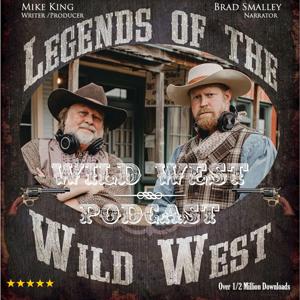
Welcome to the Wild West Podcast, winner of the 2026 Best of Western Podcast award, where fact and legend merge. We present the true accounts of individuals who settled in towns built out of hunger…
Ranked by our users in the last 21 days

44,984 Listeners
4,711 Listeners
1,785 Listeners

1,677 Listeners

2,772 Listeners

1,498 Listeners

3,986 Listeners

6,174 Listeners

19,147 Listeners

3,637 Listeners

19,093 Listeners

2,936 Listeners
777 Listeners
927 Listeners

1,592 Listeners