
Sign up to save your podcasts
Or



Based on Podcast App listening data
Send us Fan Mail
Forget the postcard version of Dodge City. We open the door to the Great Western Hotel and step into a town intent on trading dust for dignity, noise for order, and short-term profits for a longer arc of respectability. The surprise is in the name itself: Great Western wasn’t a nod to cattle drives; it was a bid to borrow the prestige of Brunel’s railway and steamship, the Victorian shorthand for speed, reliability, and modern life. That branding choice tells us more about ambition on the plains than any staged gunfight ever could.
We follow the transformation from the unpolished Western House to a hotel with plate glass, private rooms, and a no-whiskey policy under Dr. Samuel Galland, a German immigrant who believed Dodge City could be sober and civilized. Along the way, we separate trail reality from tourist memory: drovers called it the Western or the Dodge City Trail, while the phrase Great Western Trail arrived decades later through scholarship and heritage markers that retconned the landscape. The evidence runs through ledgers, newspapers, and the lived language of the men who drove the herds.
The human stories make the stakes tangible. A silk-top-hatted dentist walks Front Street on principle and learns the cost of standing out before earning respect. Fires scorch the business district, owners come and go, the hotel changes names and survives the Dust Bowl, then vanishes in 1942—only to reappear as a museum gateway that sits near modern trail markers, inviting a tempting but false connection. What remains is the real takeaway: the West wasn’t just won by grit; it was branded into being by people who knew that names can move minds as surely as rails move trains.
If this reframe challenged a myth you held, share the episode, leave a rating, and tell us which Western “truth” you want us to unpack next. Subscribe for more history with receipts and a clear eye.
Support the show
If you'd like to buy one or more of our fully illustrated dime novel publications, you can click the link I've included.
Send us Fan Mail
A single whistle split the prairie air—and with it, the future of two rival towns. We revisit November 25, 1887, when the Arkansas, Kansas, and Colorado Railroad rolled into Ford, Kansas and turned isolation into opportunity, commerce into momentum, and a bitter rivalry into a clear verdict. What looks like a short stretch of track becomes a story about how infrastructure decides who thrives, who moves, and who fades from the map.
We set the stage with Dodge City’s fifteen-year boom as a cattle and railroad capital, then zoom into the quieter but consequential struggles of southern Ford County’s farmers. Without rail access, every mile to market was risk: spoilage, delays, and thin margins. The new line changed that overnight. With Ford connected to Dodge City and eastern markets, exports grew, schedules stabilized, and investment finally made sense. The town stepped into a broader economy where grain, livestock, and goods could move with dependable speed.
The rivalry with Ryansville brings the stakes to life. Routes are power, and when the tracks chose Ford, merchants in Ryansville made a dramatic decision—lift entire buildings onto rollers and move their livelihoods across the prairie. It’s a vivid moment of Great Plains history that illustrates a lasting truth: when the path to markets shifts, communities shift with it. We explore how rails replaced wagon trails, how a spur line closes a local frontier, and how a map can be redrawn by timetables, grain elevators, and the steady rhythm of freight.
If you’re drawn to stories where technology meets human grit—railroad history, frontier towns, agriculture, and the economics of access—you’ll find this tale both vivid and timely. Subscribe for more sharply drawn moments from Ford County’s past, share the episode with a history lover, and leave a review to help others discover these hidden turning points.
Support the show
If you'd like to buy one or more of our fully illustrated dime novel publications, you can click the link I've included.
Send us Fan Mail
A quiet click in a digital archive set off a bigger question: how did a tidy tale about the “Western Trail” in 1873 outrun the dusty, documented truth of 1874? We follow the breadcrumb trail from a glossy magazine headline to the rail-choked streets of Dodge City, where buffalo hides, not longhorns, drove the economy. From there, we trace John T. Lytle’s government contract to feed the Sioux, the mapped river crossings, and the August 1, 1874 deadline that defined the first verified drive.
Along the way, we meet J. Frank Dobie—ranch-born, campus-bound, and unapologetically devoted to story over footnote. Dobie prized living voices more than ledgers, and he found a perfect partner in Frank Collinson, an Englishman turned cowboy who wrote his memories decades after the fact. Collinson likely helped gather cattle in late 1873 and later fused that groundwork with the 1874 trailblazing into one clean narrative. It’s a classic compression: a roundup becomes a “first drive,” and a modern brand name—“Great Western Trail”—is retrofitted to the past until it feels original.
We don’t stop at debunking. We explore why these stories endure, how civic branding amplified a legend, and what’s at stake when heritage tourism, folklore, and archival history collide. The lesson isn’t to toss out the campfire tale. It’s to read it alongside the map: let the archive keep the dates straight while the storytellers keep the culture alive. By the end, you’ll see how a name, a narrative, and a single year can redirect the memory of the West—and why holding fact and fable in tension gives us a richer, more honest past.
If this journey changed how you think about Western history, follow the show, leave a review, and share it with a friend who loves a good trail story.
Support the show
If you'd like to buy one or more of our fully illustrated dime novel publications, you can click the link I've included.
Send us Fan Mail
A trail’s name shouldn’t be a marketing plan, yet that’s exactly how the West’s most traveled cattle route got mislabeled. We follow the evidence from a fresh historiographical review back to 1874, when John T. Lytle cut a new path north after the Chisholm route jammed, and forward to the moment Dodge City exploded into the greatest cattle market on earth. Along the way, we sit with the drovers’ own words—the functional names they used at the time—and weigh them against monuments, brochures, and a 1960s academic phrase that grew into a modern myth.
We break down how the Western Trail took shape: the 7D steers headed for the Red Cloud Agency, the push through Cow Gap, and the pivot to the Santa Fe railhead at Dodge. Then we zoom out to the forces that ended the era—barbed wire tightening across the plains and Kansas quarantine laws that shut the gate on Texas herds. The numbers are staggering: millions of cattle and horses moved along this single route, reshaping the national diet and remaking a frontier town. Yet the cultural heartbeat remains in small details: a two‑bits bath, a new shirt from the general store, a night at the Long Branch.
The naming controversy ties past to present. We recount the 1931 granite marker that enraged George W. Saunders by blending rival trails, track the 1965 origin of “Great Western Trail,” and examine why later citations fall apart under close reading. Our case for Western Cattle Trail isn’t just pedantry—it’s about honoring the people who built the route, avoiding confusion with a modern recreational trail, and keeping the historical record clean. If you care about what really happened—and what we choose to call it—this story gives you the tools to spot folklore dressed up as fact.
If this deep dive sharpened your view of Western history, follow the show, share it with a friend who loves the cattle trails, and leave a review telling us which piece of evidence changed your mind.
Support the show
If you'd like to buy one or more of our fully illustrated dime novel publications, you can click the link I've included.
Send us Fan Mail
A cold wind skims the Potomac, the town sleeps, and nineteen men step toward a federal armory believing they can change the course of a nation. We pull you inside the hour-by-hour chaos of Harper’s Ferry—bridges taken in the dark, telegraph alarms racing east, hostages herded into a small engine house, and a plan that tightens into a steel trap. No tidy hindsight, just the immediacy of crackling dispatches and the raw choices that turned a local raid into a national reckoning.
We trace John Brown’s long arc from Calvinist vows to Kansas bloodshed, and the radical choice to build an integrated force with a provisional constitution promising full equality. Harper’s Ferry offered rail lines, rivers, and a mountain corridor for guerrilla war—and it offered symbolism Brown could not resist. He seized Colonel Lewis Washington and lifted the sword of the first president, claiming the Revolution’s legacy for abolition even as the town armed itself from windows and alleyways. The first man to die was Hayward Shepherd, a free Black railroad worker, and his death became a battlefield of stories that still echo.
Order arrived with United States Marines under Robert E. Lee and J. E. B. Stuart, a moment layered with historic irony. A final demand for surrender, a battering ram, and three minutes of controlled violence ended the siege, but not the argument. Brown’s failure on the ground grew into power in the courtroom and at the gallows, where his words cut through decades of compromise. We follow the people at the center—Dangerfield Newby fighting for his family, young idealists from Oberlin, veterans from Bleeding Kansas—and examine how a single night forced the country to face the cost of its contradictions.
Listen for a vivid reconstruction of the raid’s timeline, the tactical mistakes that doomed it, and the ideas that made it unforgettable. If this story moved you or taught you something new, follow the show, share the episode with a friend, and leave a review so others can find it.
Listen on: Apple Podcasts Spotify
Support the show
If you'd like to buy one or more of our fully illustrated dime novel publications, you can click the link I've included.
Send us Fan Mail
Halloween in Dodge City is posted once a year during the month of October. The podcast tells the story of some of the characters who lived in Dodge City, Kansas, during the early frontier days. The story takes place on October 31, when a fictitious character named Luke McGlue visits a resting site known as Boot Hill. While waiting to administer the Kelly Cure, Luke visits and tells the stories of individual characters buried at Boot Hill. These long-lost souls include Lizzy Palmer, a local prostitute, McGill, who is tracked down and killed by James Hanrahn, and the shooting of Essington, a carpenter who built the first hotel in Dodge City. But the most infamous story told here is about Billy Brooks, the first unofficial marshal of Dodge City. To learn more about the Luke McGlue stories you can visit The Machiavellian of Dodge City.
Support the show
If you'd like to buy one or more of our fully illustrated dime novel publications, you can click the link I've included.
Send us Fan Mail
Step into the roar of 1859 as we stage a real-time radio reenactment of John Brown’s raid on Harper’s Ferry. We don’t narrate from a safe distance; we drop you into the town as telegraph wires snap, church bells turn to alarms, and the first shots streak over the Potomac. The result is a tense, immersive experience that reveals how a desperate plan by 21 men pulled a divided nation closer to civil war.
We follow Brown’s radical vision to seize the federal armory, arm the enslaved, and trigger an uprising, then measure it against the cold reality of Marines assembling under a colonel named Robert E. Lee. You’ll hear the clatter of boots outside the engine house, feel the helplessness of hostages, and sense the moral heat that pushed abolition from prayer to powder. By simulating breaking news, we capture uncertainty as it happened—before verdicts, before myth, while choices still splintered by the minute. That immediacy surfaces questions that echo now: when is force justified, what does courage cost, and how do tactics reshape a cause?
Beyond the drama, we unpack why a failed raid could still rewrite the nation’s timetable. The operation collapses within 48 hours, but its shock travels farther than any telegram. Trials transform into platforms, newspapers harden into trenches, and compromise gives way to confrontation. Through layered sound design and focused storytelling, we show how communication, logistics, and conviction collided at Harper’s Ferry—and why the blast wave still ripples through debates on resistance and justice today.
Cue up the episode, put on your headphones, and walk into the engine house with us. If this journey moves you, follow the show, leave a rating or review, and share it with someone who loves bold history told with cinematic detail.
Support the show
If you'd like to buy one or more of our fully illustrated dime novel publications, you can click the link I've included.
Send us Fan Mail
The prairie doesn’t forget—and it won’t let us forget either. We follow a chilling thread from a 96-mile irrigation scheme called the Eureka Canal to a vanished laborer whose story was buried in snow, silence, and someone else’s balance sheet. What begins as a Halloween ghost story widens into a study of hubris, place, and the quiet power of naming the lost.
We unpack Asa T. Soule’s rise from hop bitters fortune to Western empire building, and how the canal promised a new Eden but ran headlong into the Arkansas River’s fickle flow, upstream diversions, and soils that drank hope dry. Cimarron’s resistance to Soule’s political muscle frames the stakes: when capital treats geography and democracy as obstacles, the land and its people push back. Alongside the spectral sightings at the ditch, we track records, letters, and courthouse files to a name—Silas Croft—whose ruined farm in New York and final steps into the 1886 blizzard turn rumor into history.
When the storm returns and a haunted rage rattles the Cimarron Hotel, brute force proves useless. Truth does what bullets can’t: we write the obituary Silas never received and publish an expose that rebalances the ledger. The wails fade, the canal goes quiet, and a simple cross on the prairie replaces fear with remembrance. From there, the story pivots to legacy and choice: fame back East or roots in a town that values ground truth. We choose the pressroom over the spotlight, because progress isn’t measured in ditches or dollars—it’s measured in decency, accountability, and the names we refuse to lose.
If you believe stories can right old wrongs and that journalism still matters when the wind starts to howl, hit play, follow the show, and share this episode with a friend. Then tell us: whose name needs to be spoken next?
Support the show
If you'd like to buy one or more of our fully illustrated dime novel publications, you can click the link I've included.
Send us a text
A storm-torn trench. A vanished name. And a legend that clings to the Cimarron plains like dust to a boot. We follow the rise and ruin of Soule’s Eureka Canal—hailed as progress, mocked as folly—and the night the sky split open and swallowed a worker named Silas Croft. What started as an audacious plan to force water through stubborn Kansas earth becomes a ghost story that refuses to settle, stirring questions about pride, loss, and the memories the land won’t release.
We trace the arc from Asa T. Soule’s grand decree to the shovel-scarred ditch that cracked under weather and will. Along the way, we sit with the unsettling details of that gale, the mud-choked banks at dawn, and the whisper that Silas never left. The tale opens a wider window on Western folklore, where frontier ghost stories double as cautionary tales—reminding us that ambition has a cost and landscapes have their own laws. Whether you hear a restless spirit on the canal’s edge or see only wind teasing the reeds, the mystery pulls you back to the same question: what truly happened when the ditch took its due?
If frontier history, haunted legends, and eerie prairie nights are your kind of campfire, this Halloween special delivers a chill with a heartbeat. Press play for a tightly told story, rich atmosphere, and a few goosebumps, then tell us what you believe. You can subscribe to more Western ghost stories, share them with a friend who loves good haunting, and leave a review with your theory about the Phantom Canal. Click Here
Support the show
If you'd like to buy one or more of our fully illustrated dime novel publications, you can click the link I've included.
Send us a text
"Howdy, partners! Gather 'round the campfire because The Wild West Podcast is taking you on a haunting adventure this Halloween with our special episode, "Ghost Stories of the Wild West!"
Prepare for chilling tales of spectral gunslingers and lost souls echoing across the plains. Discover legends and true encounters from this untamed land, like a phantom marshal searching for his grave under the desert moon.
Dim the lights and get ready for thrills and unforgettable stories! Don’t miss out on the Wild West Podcast: Halloween Ghost Stories of the Wild West, available now at https://www.westerncattletrailassoc.com/ghost-stories.html."
Support the show
If you'd like to buy one or more of our fully illustrated dime novel publications, you can click the link I've included.
From the publisher's feed
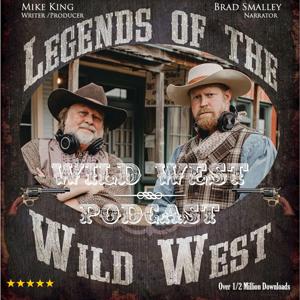
Welcome to the Wild West Podcast, winner of the 2026 Best of Western Podcast award, where fact and legend merge. We present the true accounts of individuals who settled in towns built out of hunger…
Ranked by our users in the last 21 days
44,984 Listeners
4,711 Listeners
1,785 Listeners

1,677 Listeners

2,772 Listeners

1,498 Listeners

3,986 Listeners

6,174 Listeners

19,147 Listeners

3,637 Listeners

19,093 Listeners

2,936 Listeners
777 Listeners
927 Listeners

1,592 Listeners