
Sign up to save your podcasts
Or

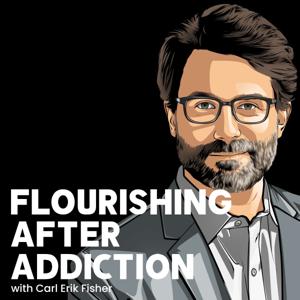

Owen Flanagan is a philosopher who has long studied topics like consciousness, neuroscience, morality, and responsibility. But early in his career, even while racking up accolades for his pathbreaking work, drinking was already taking hold of his life. Things took a dramatic turn in the 1990s when a brain tumor and a medication reaction sent him over the edge.
Today, Owen is a distinguished philosopher at Duke who is also in recovery. For the past decade or so, he’s been writing about his experience with addiction and connecting it to his long-running work on philosophy of mind and ethics. I’m grateful that he agreed to meet with me and share so openly about his personal history of addiction and recovery, including how he had to work with shame in order to overcome his addiction. We also discuss his latest book, in which he argues that shame has a crucial function in moral development, and that there are ways of working with healthy and mature forms of shame to promote positive values and flourishing—an idea with significant relevance to addiction.
Owen Flanagan, Ph.D., is James B. Duke University Professor of Philosophy at Duke University, where he also holds appointments in psychology and neurobiology, is a Faculty Fellow in Cognitive Neuroscience, and a steering committee member of the "Philosophy, Arts, and Literature" program. He studies philosophy of mind, cognitive science, contemporary ethical theory, moral psychology, as well as Buddhist and Hindu conceptions of the self. He is author of many articles and books, most recently How to Do Things With Emotions.
In this episode:
- One of Owen’s key articles about addiction: The Shame of Addiction
- For more on Owen’s story, see this great chapter by the writer John Horgan
- Books on the history of AA: Not-God, and Writing the Big Book
- Some perspectives on addiction we mention: Intertemporal bargaining in addiction, George Ainslie; Gene Heyman: Addiction: A Disorder of Choice; Hanna Pickard's work.
- The classic piece What is it like to be a bat, by Thomas Nagel
Sign up for my newsletter for regular updates on new interviews, material, and other writings.
 View all episodes
 By Carl Erik Fisher
5
6262 ratings
Owen Flanagan is a philosopher who has long studied topics like consciousness, neuroscience, morality, and responsibility. But early in his career, even while racking up accolades for his pathbreaking work, drinking was already taking hold of his life. Things took a dramatic turn in the 1990s when a brain tumor and a medication reaction sent him over the edge.
Today, Owen is a distinguished philosopher at Duke who is also in recovery. For the past decade or so, he’s been writing about his experience with addiction and connecting it to his long-running work on philosophy of mind and ethics. I’m grateful that he agreed to meet with me and share so openly about his personal history of addiction and recovery, including how he had to work with shame in order to overcome his addiction. We also discuss his latest book, in which he argues that shame has a crucial function in moral development, and that there are ways of working with healthy and mature forms of shame to promote positive values and flourishing—an idea with significant relevance to addiction.
Owen Flanagan, Ph.D., is James B. Duke University Professor of Philosophy at Duke University, where he also holds appointments in psychology and neurobiology, is a Faculty Fellow in Cognitive Neuroscience, and a steering committee member of the "Philosophy, Arts, and Literature" program. He studies philosophy of mind, cognitive science, contemporary ethical theory, moral psychology, as well as Buddhist and Hindu conceptions of the self. He is author of many articles and books, most recently How to Do Things With Emotions.
In this episode:
- One of Owen’s key articles about addiction: The Shame of Addiction
- For more on Owen’s story, see this great chapter by the writer John Horgan
- Books on the history of AA: Not-God, and Writing the Big Book
- Some perspectives on addiction we mention: Intertemporal bargaining in addiction, George Ainslie; Gene Heyman: Addiction: A Disorder of Choice; Hanna Pickard's work.
- The classic piece What is it like to be a bat, by Thomas Nagel
Sign up for my newsletter for regular updates on new interviews, material, and other writings.

43,582 Listeners
10,543 Listeners
385 Listeners
11,879 Listeners
14,921 Listeners
2,573 Listeners
472 Listeners

1,644 Listeners
2,041 Listeners
1,247 Listeners

15,931 Listeners

41,566 Listeners

425 Listeners

1,593 Listeners

19,745 Listeners