
Sign up to save your podcasts
Or

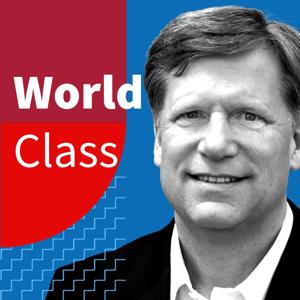


What causes civil wars and what can we do about it? Michael McFaul introduces a panel of some of FSI’s most distinguished scholars, who tackle this complex topic in a special two-volume issue of Daedalus, the journal of the American Academy of Arts and Sciences. Karl Eikenberry, the former US ambassador to Afghanistan, and Stephen Krasner, former State Dept. director of policy planning, are co-editors of this volume; they are joined by FSI senior fellows Francis Fukuyama, Stephen Stedman, Michele Barry, James Fearon, and Paul Wise.
If you like what you hear, you can get additional content from scholars at the Freeman Spogli Institute for International Studies by following us on X, Facebook, LinkedIn, Instagram, and YouTube, and by subscribing to our newsletters and updates.
On the ground in Mosul, FSI senior fellow Paul Wise joined a small team to evaluate the World Health Organization (WHO)'s efforts to treat civilian casualties of war. What he found was a city destroyed but also a remarkable resilience as Iraqis begin to rebuild.
The fighting in Mosul is only one example of how war is changing, and humanitarian organizations are working to alter their tactics. Wise leads a group of researchers at Stanford that is evaluating how modern warfare affects civilians and plans to work with humanitarian organizations to adjust their responses.
Wise is the Richard E. Behrman Professor of Child Health and Society at Stanford Health Policy.
If you like what you hear, you can get additional content from scholars at the Freeman Spogli Institute for International Studies by following us on X, Facebook, LinkedIn, Instagram, and YouTube, and by subscribing to our newsletters and updates.
Democracy is in jeopardy. Dictatorships are on the rise. What can we do to change the political landscape? In Stanford Reunion's "Classes without Quizzes" series, FSI scholars explain why populism is on the rise in the United States, Europe, and the rest of the world and how it relates to the decline of democracies. FSI Director Michael McFaul moderates the panel which includes Francis Fukuyama, the Olivier Nomellini Senior Fellow at FSI and the Mosbacher Director at the Center on Democracy, Development and the Rule of Law; Anna Grzymala-Busse, an FSI senior fellow and Director of the Global Populisms Project; and Didi Kuo, the Academic Research and Program Manager for the Program on American Democracy in Comparative Perspectives.
If you like what you hear, you can get additional content from scholars at the Freeman Spogli Institute for International Studies by following us on X, Facebook, LinkedIn, Instagram, and YouTube, and by subscribing to our newsletters and updates.
As the President of Estonia, Toomas Hendrik Ilves witnessed firsthand a devastating cyberattack — a series of 2007 attacks that comprise one of the largest instances of state-sponsored cyberwarfare in the modern era. Now a distinguished visiting fellow at the Hoover Institution, he talks here with Herbert Lin, a senior research scholar for cyber policy and security at the Center for International Security and Cooperation. They discuss how ubiquitous information technology has become in our everyday lives and what that means for our security. They answer questions about the tradeoff between privacy and safety and ultimately urge for a change in mindset with our approach to cyber issues.
If you like what you hear, you can get additional content from scholars at the Freeman Spogli Institute for International Studies by following us on X, Facebook, LinkedIn, Instagram, and YouTube, and by subscribing to our newsletters and updates.
Not many people can say they've held North Korea's plutonium in their hands, but Siegfried Hecker has toured North Korea's nuclear facilities four times. He was the director of the Los Alamos National Laboratory and has advised several U.S. presidents on nuclear security. Hecker tells us about North Korea's weapons capabilities and whether we're heading toward the world's first nuclear war. He is currently a senior fellow at the Freeman Spogli Institute for International Studies. For more on North Korea from Hecker and our other nuclear scholars, visit https://fsi.stanford.edu/content/north-korea-nuclear-situation.
Faculty views do not necessarily represent those of the Freeman Spogli Institute for International Studies or Stanford University, both of which are nonpartisan institutions.
If you like what you hear, you can get additional content from scholars at the Freeman Spogli Institute for International Studies by following us on X, Facebook, LinkedIn, Instagram, and YouTube, and by subscribing to our newsletters and updates.
The Political History of American Food Aid: An Uneasy Benevolence is the first book to tell the history of U.S. food aid. From early discussions with James Madison to large-scale programs in the Cold War, author Barry Riley, a visiting scholar at FSI's Center on Food Security and the Environment, explores how food aid programs developed in America and what we can expect in the coming years. Learn more about the book at https://global.oup.com/academic/product/the-political-history-of-american-food-aid-9780190228873?cc=us&lang=en&.
If you like what you hear, you can get additional content from scholars at the Freeman Spogli Institute for International Studies by following us on X, Facebook, LinkedIn, Instagram, and YouTube, and by subscribing to our newsletters and updates.
Hoi Trinh was born in South Vietnam. After the war ended, his family was forced to flee to Australia. Trinh rose from refugee to hot shot lawyer, but he wasn't satisfied. He wanted to understand where he came from and to help the people who were left behind. He returned to Vietnam to work with refugees but was again cast out. In 2005, he co-founded VOICE, the Vietnamese Overseas Initiative for Conscience Empowerment, and now advocates for democracy and civil society development in Vietnam. In 2017, he came to Stanford as a Draper Hills fellow to learn from faculty across campus about ways to promote democracy.
Learn more about VOICE at vietnamvoice.org. To help with their work, email Hoi Trinh at [email protected].
If you like what you hear, you can get additional content from scholars at the Freeman Spogli Institute for International Studies by following us on X, Facebook, LinkedIn, Instagram, and YouTube, and by subscribing to our newsletters and updates.
New York Times editor Philip Taubman met General Michael Hayden while investigating NSA eavesdropping operations that began after 9/11. As the director of both the NSA and the CIA, Hayden experienced every facet of cybersecurity. Here, he and Taubman discuss responses to events like Russian hacking during the last U.S. election and leaked NSA tools shared by the Shadow Brokers.
Stanford University is a nonpartisan institution, as is the Freeman Spogli Institute for International Studies. The opinions of the commentators are not necessarily aligned with the views of either institution.
If you like what you hear, you can get additional content from scholars at the Freeman Spogli Institute for International Studies by following us on X, Facebook, LinkedIn, Instagram, and YouTube, and by subscribing to our newsletters and updates.
The term "radicalization" has become linked to Islamic terrorism, but what does it really mean? Are all terrorists radicalized? How do people become terrorists, and how has terrorism changed since the Cold War? Terrorism expert Martha Crenshaw, Senior Fellow at the Freeman Spogli Institute for International Studies (FSI) and Professor of Political Science, answers these questions and more, speaking with FSI Director Michael McFaul.
To see how militant organizations have changed over time, view Mapping Militant Organizations at https://web.stanford.edu/group/mappingmilitants/cgi-bin/. To learn more about Professor Crenshaw's work on terrorism, check out her most recent book, Countering Terrorism, at http://cisac.fsi.stanford.edu/publication/countering-terrorism.
If you like what you hear, you can get additional content from scholars at the Freeman Spogli Institute for International Studies by following us on X, Facebook, LinkedIn, Instagram, and YouTube, and by subscribing to our newsletters and updates.
In 1972, President Nixon famously visited China, moving away from a bilateral relationship with the Soviet Union and toward a more inclusive global conversation. Could the United States enhance its negotiating position with Russia today by improving relations with China? Experts from the Freeman Spogli Institute for International Studies (FSI) convened at the Nixon Foundation to discuss relations between these three countries. Are Russia and China building a relationship in opposition to the United States? How important are relations between these three countries? How has the rise of populism and autocracy changed the relationship? FSI deputy director and senior fellow Kathryn Stoner asks these questions and more to the panel: FSI senior fellow David Holloway, the Raymond A. Spruance Professor of International History at CISAC; Thomas Fingar, a Shorenstein APARC fellow; and Karl Eikenberry, the Oksenberg-Rohlen Fellow at Shorenstein APARC. A video of the panel can also be viewed at http://cisac.fsi.stanford.edu/news/holloway-us-china-and-russia.
If you like what you hear, you can get additional content from scholars at the Freeman Spogli Institute for International Studies by following us on X, Facebook, LinkedIn, Instagram, and YouTube, and by subscribing to our newsletters and updates.
From the publisher's feed
6,743 Listeners
9,185 Listeners
4,062 Listeners
1,376 Listeners
601 Listeners
1,944 Listeners
6,280 Listeners
717 Listeners
2,392 Listeners
32,240 Listeners

800 Listeners
20 Listeners
153 Listeners

15,904 Listeners
470 Listeners