
Sign up to save your podcasts
Or

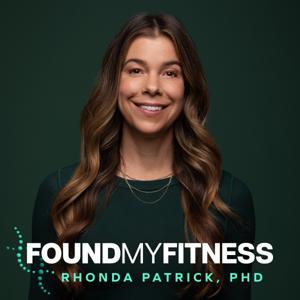

Dr. Gordon Lithgow of the Buck Institute for Research on Aging tells us about worms!
This unassuming scientific model has a lot of important advantages for science: they can be frozen and subsequently thawed and retain viability, they are extremely well understood down to the precise number of cells in their body and the wiring of their nervous system, known as the connectome. Additionally, they have a short lifespan and are cheap to work with. Why would that be advantageous, you may ask?
This is where Dr. Lithgow's work on the Caenorhabditis Intervention Testing Program comes in. Short-lived organisms give Dr. Lithgow and his colleagues the opportunity to see how their biology responds to compounds in different contexts and to do so cheaply and rapidly. Think a vitamin, pharmaceutical or one of any number of other compounds may have a broad effect on longevity? Try it on Caenorhabditis first! Taking this approach allows the broad screening of compounds that might not otherwise get its chance in the limelight if science were limited to only working with rodents, for example.
In this episode, you'll discover:
If you're interested in learning more, you can read the full show notes here.
Join over 300,000 people and get the latest distilled information straight to your inbox weekly: https://www.foundmyfitness.com/newsletter
Become a FoundMyFitness premium member to get access to exclusive episodes, emails, live Q+A's with Rhonda and more: https://www.foundmyfitness.com/crowdsponsor
 View all episodes
 By Rhonda Patrick, Ph.D.

4.8
52935,293 ratings
Dr. Gordon Lithgow of the Buck Institute for Research on Aging tells us about worms!
This unassuming scientific model has a lot of important advantages for science: they can be frozen and subsequently thawed and retain viability, they are extremely well understood down to the precise number of cells in their body and the wiring of their nervous system, known as the connectome. Additionally, they have a short lifespan and are cheap to work with. Why would that be advantageous, you may ask?
This is where Dr. Lithgow's work on the Caenorhabditis Intervention Testing Program comes in. Short-lived organisms give Dr. Lithgow and his colleagues the opportunity to see how their biology responds to compounds in different contexts and to do so cheaply and rapidly. Think a vitamin, pharmaceutical or one of any number of other compounds may have a broad effect on longevity? Try it on Caenorhabditis first! Taking this approach allows the broad screening of compounds that might not otherwise get its chance in the limelight if science were limited to only working with rodents, for example.
In this episode, you'll discover:
If you're interested in learning more, you can read the full show notes here.
Join over 300,000 people and get the latest distilled information straight to your inbox weekly: https://www.foundmyfitness.com/newsletter
Become a FoundMyFitness premium member to get access to exclusive episodes, emails, live Q+A's with Rhonda and more: https://www.foundmyfitness.com/crowdsponsor

16,174 Listeners
7,216 Listeners

5,007 Listeners

11,904 Listeners
2,032 Listeners
439 Listeners

2,638 Listeners

4,946 Listeners

3,470 Listeners
9,194 Listeners

8,043 Listeners
150 Listeners

29,272 Listeners
245 Listeners

50 Listeners

1,246 Listeners