
Sign up to save your podcasts
Or

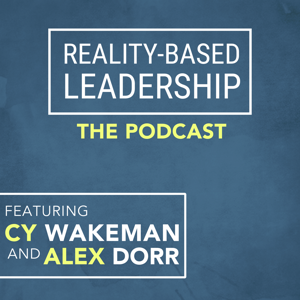

In this episode, Alex Dorr explores a powerful and often overlooked leadership question: does drama have an even bigger impact than we think? Building on Reality-Based Leadership's well-known 3X drama multiplier, Alex breaks down how drama doesn't just affect individual performance—it compounds across teams, cultures, and especially leadership levels.
He introduces a simple but revealing equation for understanding the total value someone brings to a team: current performance + future potential – drama quotient. Through real-world examples, Alex highlights the danger of the "toxic high performer" and why technical skill alone isn't enough to define value. The conversation takes a deeper turn as he challenges leaders to consider how their own behavior—especially at higher levels—can amplify drama far beyond a 3X effect. Ultimately, this episode is a call to greater awareness: how leaders show up, respond, and communicate has a ripple effect that shapes the entire organization.
For more information on the SBAR tool, check out Alex's YouTube video:https://youtu.be/wLBUIVTzVIE
Episode Highlights with Timestamps00:00:00 — Introducing the question: does drama have a bigger impact than the 3X multiplier suggests?
00:01:45 — The reality of workplace drama increasing to 2.5 hours per day per employee.
00:03:10 — The disconnect between high performance ratings and actual team results.
00:06:40 — The "toxic high performer" problem: high skill, high drama, low overall value.
00:07:50 — Breaking down the value equation: performance + potential – drama quotient.
00:10:30 — Why drama carries a 3X negative multiplier in team environments.
00:14:50 — Comparing two high performers: skill alone vs. attitude and adaptability.
00:18:30 — Why a "zero" (balanced performance and low drama) is the ideal sustainable target.
00:20:40 — How leadership amplifies drama—why higher roles may carry an even greater multiplier.
00:22:50 — Simple leadership responses ("Wow, good to know") that create space and reduce reactive drama.
 View all episodes
 By Alex Dorr

4.7
350350 ratings
In this episode, Alex Dorr explores a powerful and often overlooked leadership question: does drama have an even bigger impact than we think? Building on Reality-Based Leadership's well-known 3X drama multiplier, Alex breaks down how drama doesn't just affect individual performance—it compounds across teams, cultures, and especially leadership levels.
He introduces a simple but revealing equation for understanding the total value someone brings to a team: current performance + future potential – drama quotient. Through real-world examples, Alex highlights the danger of the "toxic high performer" and why technical skill alone isn't enough to define value. The conversation takes a deeper turn as he challenges leaders to consider how their own behavior—especially at higher levels—can amplify drama far beyond a 3X effect. Ultimately, this episode is a call to greater awareness: how leaders show up, respond, and communicate has a ripple effect that shapes the entire organization.
For more information on the SBAR tool, check out Alex's YouTube video:https://youtu.be/wLBUIVTzVIE
Episode Highlights with Timestamps00:00:00 — Introducing the question: does drama have a bigger impact than the 3X multiplier suggests?
00:01:45 — The reality of workplace drama increasing to 2.5 hours per day per employee.
00:03:10 — The disconnect between high performance ratings and actual team results.
00:06:40 — The "toxic high performer" problem: high skill, high drama, low overall value.
00:07:50 — Breaking down the value equation: performance + potential – drama quotient.
00:10:30 — Why drama carries a 3X negative multiplier in team environments.
00:14:50 — Comparing two high performers: skill alone vs. attitude and adaptability.
00:18:30 — Why a "zero" (balanced performance and low drama) is the ideal sustainable target.
00:20:40 — How leadership amplifies drama—why higher roles may carry an even greater multiplier.
00:22:50 — Simple leadership responses ("Wow, good to know") that create space and reduce reactive drama.

842 Listeners
12,767 Listeners

705 Listeners

31,726 Listeners

27,507 Listeners
572 Listeners

2,220 Listeners

58,248 Listeners

29,303 Listeners

702 Listeners
667 Listeners

19,755 Listeners

580 Listeners

449 Listeners

8,481 Listeners