
Sign up to save your podcasts
Or

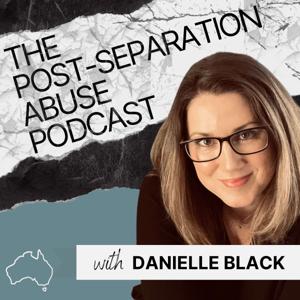

If you have been quietly noticing that you struggle to accept other people's boundaries with you - that their no’s, their unavailability, their limits land in you as evidence of your own worth rather than as data about their life - this episode is naming what that actually is.
Part 3 of The Good Girl Contract starts with Danielle reflecting on a conversation from part one - the tropes in our favourite movies and novels - and then moves on to name 'the mirror problem', which is the observation that the same nervous system that cannot hold its own boundaries also cannot receive them. Not because women trained by the Contract are hypocritical or demanding or entitled. But rather because both are the same underlying pattern showing up in two directions - a nervous system that has been trained to read all social responses as data about her worth, and that cannot distinguish between someone else's limit or boundaries and someone else's rejection.
Danielle walks through the specific mechanism, drawn from what she sees constantly in her coaching practice. The multiple-messages pattern - sending another message when the first one has not been answered in the timeframe you wanted, because the silence itself has become unbearable.
Reading the boundaries of others as a personal statement about your importance or worth, or lack thereof, rather than as information about what's going on in their world.
Replaying the words of a colleague who was abrupt with you in a meeting, wondering if the friend who has not texted back is upset with you, mentally cataloguing why your partner was quiet at dinner, stressing about why your child is quiet. All of which is the personalisation reflex. All of which is the specific cost of a nervous system trained to read other people's emotional states as evidence about you.
This episode also opens a careful, respectful question about how the somatic imprint of the Contract can sometimes resemble or overlap with neurodivergence. Not as a challenge to anyone's diagnosis. As inquiry - because a growing number of women in this population are being diagnosed with ADHD or autism in adulthood, and some of what those diagnoses capture (hypervigilance, difficulty resting, cycles of overfunction and collapse, extraordinary capacity to read other people) is also what happens to a nervous system trained by early danger.
Danielle names the two errors currently being made in the cultural moment - assuming trauma explains everything, or assuming a woman with a trauma history cannot also be genuinely neurodivergent - and holds the question open for listeners to work with in their own lives.
The episode closes on the reframe: interrupting the personalisation reflex - the mirror problem - is not about becoming someone who doesn't care what other people think. It’s about becoming someone who can hold both truths at once - that other people's responses are information about them, and that you can still care about the connection that you have with them even when you don't make their boundaries mean something about you.
A content note: this episode includes a careful, respectful question about how the somatic imprint of childhood trauma can sometimes resemble or overlap with neurodivergence. It is not a challenge to any listener's diagnosis.
Support: If you are in Australia and need to talk to someone, 1800RESPECT (1800 737 732) is available 24/7. In an emergency, call 000.
Explore the supports offered by Danielle Black Coaching
The Post-Separation Parenting Blueprint™
👉 https://www.danielleblackcoaching.com.au/the-post-separation-parenting-blueprint-1
AI Danielle - Your 24/7 Digital Coach
👉 https://www.danielleblackcoaching.com.au/meet-ai-danielle
1:1 Coaching
👉 https://www.danielleblackcoaching.com.au/1-1-coaching
The music you hear in this outro is 'Calm is Credible' - an original track created exclusively for the Post-Separation Abuse Podcast and Danielle Black Coaching. You can listen to this song, or download free, by visiting danielleblackcoaching.com.au
About Danielle Black Coaching:
Danielle Black is a respected authority in child-focused post-separation parenting in Australia. With over twenty years’ experience across education, counselling and coaching - alongside her own lived experience navigating a complex separation and family court journey - she supports parents to think strategically, build capacity, and protect their children’s safety and wellbeing within complex legal and relational systems.
Through Danielle Black Coaching, she leads a growing team of specialist coaches and a structured support ecosystem designed to provide professionally held, evidence-informed guidance for parents navigating high-conflict separation and family court processes.
Learn more at danielleblackcoaching.com.au
This podcast is for educational purposes only and not legal advice. Please seek independent legal, medical, financial, or mental health advice for your situation.
 View all episodes
 By Danielle Black

4.5
22 ratings
If you have been quietly noticing that you struggle to accept other people's boundaries with you - that their no’s, their unavailability, their limits land in you as evidence of your own worth rather than as data about their life - this episode is naming what that actually is.
Part 3 of The Good Girl Contract starts with Danielle reflecting on a conversation from part one - the tropes in our favourite movies and novels - and then moves on to name 'the mirror problem', which is the observation that the same nervous system that cannot hold its own boundaries also cannot receive them. Not because women trained by the Contract are hypocritical or demanding or entitled. But rather because both are the same underlying pattern showing up in two directions - a nervous system that has been trained to read all social responses as data about her worth, and that cannot distinguish between someone else's limit or boundaries and someone else's rejection.
Danielle walks through the specific mechanism, drawn from what she sees constantly in her coaching practice. The multiple-messages pattern - sending another message when the first one has not been answered in the timeframe you wanted, because the silence itself has become unbearable.
Reading the boundaries of others as a personal statement about your importance or worth, or lack thereof, rather than as information about what's going on in their world.
Replaying the words of a colleague who was abrupt with you in a meeting, wondering if the friend who has not texted back is upset with you, mentally cataloguing why your partner was quiet at dinner, stressing about why your child is quiet. All of which is the personalisation reflex. All of which is the specific cost of a nervous system trained to read other people's emotional states as evidence about you.
This episode also opens a careful, respectful question about how the somatic imprint of the Contract can sometimes resemble or overlap with neurodivergence. Not as a challenge to anyone's diagnosis. As inquiry - because a growing number of women in this population are being diagnosed with ADHD or autism in adulthood, and some of what those diagnoses capture (hypervigilance, difficulty resting, cycles of overfunction and collapse, extraordinary capacity to read other people) is also what happens to a nervous system trained by early danger.
Danielle names the two errors currently being made in the cultural moment - assuming trauma explains everything, or assuming a woman with a trauma history cannot also be genuinely neurodivergent - and holds the question open for listeners to work with in their own lives.
The episode closes on the reframe: interrupting the personalisation reflex - the mirror problem - is not about becoming someone who doesn't care what other people think. It’s about becoming someone who can hold both truths at once - that other people's responses are information about them, and that you can still care about the connection that you have with them even when you don't make their boundaries mean something about you.
A content note: this episode includes a careful, respectful question about how the somatic imprint of childhood trauma can sometimes resemble or overlap with neurodivergence. It is not a challenge to any listener's diagnosis.
Support: If you are in Australia and need to talk to someone, 1800RESPECT (1800 737 732) is available 24/7. In an emergency, call 000.
Explore the supports offered by Danielle Black Coaching
The Post-Separation Parenting Blueprint™
👉 https://www.danielleblackcoaching.com.au/the-post-separation-parenting-blueprint-1
AI Danielle - Your 24/7 Digital Coach
👉 https://www.danielleblackcoaching.com.au/meet-ai-danielle
1:1 Coaching
👉 https://www.danielleblackcoaching.com.au/1-1-coaching
The music you hear in this outro is 'Calm is Credible' - an original track created exclusively for the Post-Separation Abuse Podcast and Danielle Black Coaching. You can listen to this song, or download free, by visiting danielleblackcoaching.com.au
About Danielle Black Coaching:
Danielle Black is a respected authority in child-focused post-separation parenting in Australia. With over twenty years’ experience across education, counselling and coaching - alongside her own lived experience navigating a complex separation and family court journey - she supports parents to think strategically, build capacity, and protect their children’s safety and wellbeing within complex legal and relational systems.
Through Danielle Black Coaching, she leads a growing team of specialist coaches and a structured support ecosystem designed to provide professionally held, evidence-informed guidance for parents navigating high-conflict separation and family court processes.
Learn more at danielleblackcoaching.com.au
This podcast is for educational purposes only and not legal advice. Please seek independent legal, medical, financial, or mental health advice for your situation.

637 Listeners

14,880 Listeners

8,748 Listeners

136 Listeners

1,732 Listeners

19,524 Listeners

9,431 Listeners

56 Listeners
291 Listeners

38 Listeners

61 Listeners

128 Listeners

32 Listeners