
Sign up to save your podcasts
Or



Based on Podcast App listening data
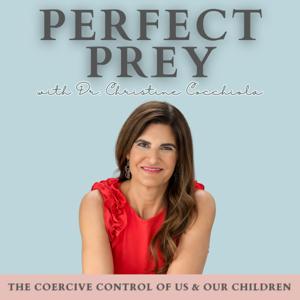
Welcome back to Perfect Prey.
In this episode, I’m honored to speak with Dr. Lenore E. Walker, a pioneering psychologist known for her work on Battered Woman Syndrome and the cycle of abuse.
With more than 50 years of experience in this field, Dr. Walker shares her journey into domestic abuse research and discusses why survivors and protective mothers continue to face blame instead of support.
We explore the cycle of abuse, coercive control, the challenges of protecting children exposed to domestic violence, and why leaving an abusive relationship can be so difficult. Dr. Walker also explains how abusive behavior can be reinforced when it gets a person what they want, while moments of affection can keep survivors hoping things will change.
Together, we discuss the importance of recognizing patterns of abuse, supporting survivors without judgment, and building communities where people feel safe asking for help.
WHAT WE COVER- Dr. Walker’s journey into domestic abuse research
- Battered Woman Syndrome and the cycle of abuse
- Why survivors and protective mothers are often blamed
- How coercive control can maintain power in abusive relationships
- Why loving moments can make leaving more difficult
- The challenges of protecting children exposed to domestic violence
- Why leaving can be the most dangerous time in an abusive relationship
- How to support survivors without judgment or pressure
- The importance of friendship, compassion, and community support
WHY LISTENUnderstanding abuse requires us to look beyond individual incidents and recognize the patterns that keep people trapped. Dr. Walker’s work reminds us that survivors need support, not blame, and that every person’s circumstances are different.
We can help by listening without judgment, respecting each survivor’s decisions, and creating communities where people know they are not alone.
ABOUT DR. LENORE E. WALKERDr. Lenore E. Walker is a psychologist known for her pioneering work on Battered Woman Syndrome and the cycle of abuse. Her research has contributed to the understanding of domestic violence and the experiences of survivors. She is also a fiction author.
CONNECT WITH DR. LENORE E. WALKERWebsite: https://www.drlenoreewalker.com/
YouTube:https://www.youtube.com/@drlenorewalker
Instagram:https://www.instagram.com/drlenorewalker/Books: https://www.drlenoreewalker.com/books/
Linktree: https://linktr.ee/lenoreewalker?utm_source=linktree_profile_share
CONNECT WITH DR. CHRISTINE COCCHIOLALinktree: https://linktr.ee/dr.cocchiola_coercivecontrol?utm_source=linktree_profile_share
TEDx Talk — “It is ALL Coercive Control”:https://youtu.be/gp2qByKOue4?si=U0Csy-kPrRmrB950
BOOKS BY DR. CHRISTINE COCCHIOLAEvery Moment of Every Day
FRAMED: Women in the Family Court Underworld
If this conversation resonates with you, please subscribe, share the episode, and leave a review. Thank you for helping us continue these important conversations.
#PerfectPrey #LenoreWalker #BatteredWomanSyndrome #CycleOfAbuse #CoerciveControl #DomesticViolence
What happens when family court becomes another arena for ongoing conflict and abuse? And how can survivors distinguish coercive control from what the legal system may label as high-conflict behavior?
In this episode of Perfect Prey, Dr. Christine Cocchiola is joined by Esther Rosenfeld, family law attorney, divorce coach, and author of Transformative Divorce: From Broken to Blessed. Drawing on nearly 20 years of family law experience, Esther shares insights from her research into high-conflict personalities and the challenges they create within family court.
Together, they explore how litigation can fuel ongoing conflict, how financial resources and power can influence legal battles, and why survivors' trauma responses may be misunderstood. They also discuss the impact of custody disputes on children, the importance of secure attachment, and why stepping away from the fight can sometimes be a path toward greater peace.
What We Cover
High-conflict personalities and family court dynamics
How coercive control can be mistaken for mutual conflict
The role of money, power, and prolonged litigation
Why trauma responses may be misunderstood by legal professionals
Manipulation, entitlement, and harmful personality traits
Custody disputes and the importance of protecting children's attachment
Knowing when to step away from litigation
Why This Conversation Matters
For survivors, protective parents, attorneys, clinicians, and advocates, understanding the dynamics of coercive control is essential. This conversation explores how abuse can be overlooked when harmful behavior is framed as ordinary conflict, and why children's well-being must remain central to difficult family court decisions.
Dr. Christine and Esther also reflect on the emotional exhaustion of prolonged legal battles and the possibility of finding peace, personal growth, and transformation beyond the courtroom.
About Esther Rosenfeld
Esther Rosenfeld, is a family law attorney experienced in divorce, child custody, timeshare, relocation, property settlement, and support matters. She co-authored Confronting the Challenge of High Conflict Personality in Family Court, an article examining the challenges high-conflict personalities can present within the legal system.
Esther is also developing her divorce coaching practice and is the author of Transformative Divorce: From Broken to Blessed.
Connect with Esther
📧 Family Law: [email protected]
📸 Instagram: https://www.instagram.com/thetransformative_divorce/
📘 Book: Transformative Divorce: From Broken to Blessed
Connect with Dr. Christine Cocchiola
🌐 Official Website:
https://www.coercivecontrolconsulting.com/
🩵 Protective Parenting Program:
https://www.coercivecontrolconsulting.com/services/for-parents/
▶️ YouTube:
https://www.youtube.com/@DrCocchiola-coercivecontrol/videos
📱 TikTok:
https://www.tiktok.com/@dr.c_coercivecontrol
📸 Instagram:
https://www.instagram.com/dr.cocchiola_coercivecontrol/
🎤 TEDx — “It Is ALL Coercive Control”:
https://www.youtube.com/watch?v=gp2qByKOue4&t=24s
📚 Books:
FRAMED: Women in the Family Court Underworld
https://url-shortener.me/c/FramedBook
Every Moment of Every Day
https://url-shortener.me/c/EveryMomentOfEveryDay
If this episode resonated with you, please like, subscribe, and share it with someone who needs to hear this conversation. Together, we can continue raising awareness about coercive control and supporting survivors and protective parents.
— Dr. Christine Cocchiola and Esther Rosenfeld
In this episode of Perfect Prey, Dr. Christine is joined by Kitty Mayo, child advocate and founder of Georgia Protective Parents, for an important conversation about reunification camps, family court, coercive control, and the experiences of protective parents.
Kitty shares her family’s experience with the family court system and how her children were ordered into a reunification program following allegations of abuse. She describes what happened during that process and why she believes these programs can be deeply harmful to children and families.
Kitty also discusses her advocacy work with Georgia Protective Parents, a nonprofit focused on child safety and legislation affecting children and protective parents. The organization works across political lines and advocates for legislation it believes protects children.
Together, Dr. Christine and Kitty explore what reunification programs can look like in practice, the importance of attachment, the use of isolation and coercion, and the lack of transparency and regulation that Kitty says exists within some of these programs.
What We Cover
• Kitty’s family court experience
• Reunification camps and “repair” therapy
• The impact of separation on children and attachment
• Allegations of abuse and retaliation
• Isolation, intimidation, and coercion
• The experiences of protective parents
• The lack of transparency and regulation surrounding some programs
• The financial costs associated with reunification programs
• Ethan’s Law and efforts to strengthen protections for children
• Grassroots advocacy and contacting legislators
• The importance of speaking up and creating systemic change
Why This Conversation Matters
For protective parents and survivors navigating family court, understanding how reunification programs operate and how children experience these interventions can be incredibly important.
Kitty’s story also highlights how advocacy can move beyond individual cases. Through Georgia Protective Parents, she is working with other advocates to raise awareness, support child-safety legislation, and encourage protective parents to use their voices.
As Dr. Christine and Kitty discuss throughout the episode, advocacy does not always mean being publicly visible. Sometimes it can be as simple as writing an email, contacting a representative, or sharing your story.
About Kitty Mayo
Kitty Mayo is a child advocate and founder of Georgia Protective Parents, a nonprofit organization advocating for legislation and policies focused on child safety. The organization works with both mothers and fathers and describes itself as bipartisan, with a focus on supporting legislation based on its impact on children rather than political party.
Connect with Georgia Protective Parents
Georgia Protective Parents:
Instagram & Facebook: Search Georgia Protective Parents
Connect with Dr. Christine Cocchiola
Protective Parenting Program:
Protective Parenting Program
Website:
Coercive Control Consulting
YouTube:
Dr. Christine Cocchiola on YouTube
TikTok:
Dr. Christine Cocchiola on TikTok
Instagram:
Dr. Christine Cocchiola on Instagram
TEDx:
Dr. Christine Cocchiola’s TEDx Talk
Books:
FRAMED: Women in the Family Court Underworld
Every Moment of Every Day
If this episode resonated with you, please share it with someone who needs to hear this conversation.
— Dr. Christine Cocchiola & Kitty Mayo 🩵
In this episode of Perfect Prey, Dr. Christine is joined by Hope Hooton, child safety advocate and mother, for a deeply important conversation about coercive control, domestic violence, family court, and the urgent need to prioritize child safety.
Hope shares the heartbreaking story of her children, Alec and Lydia, and the devastating circumstances surrounding their deaths. She discusses the coercive control, domestic violence, and mental health concerns involved, as well as the warning signs and risk factors that she believes were not adequately recognized by the systems responsible for protecting her children.
The conversation also explores how temporary custody decisions can have life-altering consequences when courts fail to fully examine allegations of domestic violence and coercive control. Hope explains what happened in her case and how her experience has shaped the advocacy work she does today.
Rather than allowing her grief to be the end of Alec and Lydia’s story, Hope has turned it into a mission to help protect other children and families. She discusses the Alec and Lydia Act, her work with other protective and bereaved mothers, and the changes she believes are necessary to make child safety a true priority in family court.
What We Cover
• Hope’s story and the loss of Alec and Lydia
• Coercive control and domestic violence
• Warning signs and lethality risks in custody cases
• The role of mental illness, psychosis, and perpetrator behavior
• Family court failures and temporary custody orders
• Why protective parents’ concerns can be minimized
• The importance of recognizing patterns rather than isolated incidents
• The Alec and Lydia Act and its focus on child safety
• Hope’s advocacy and work alongside other mothers
• Turning grief into meaningful systemic change
Why This Conversation Matters
Child safety should always be at the center of custody decisions. Hope’s experience raises important questions about how family courts assess risk, how coercive control is recognized, and what happens when serious concerns raised by protective parents are dismissed or minimized.
This conversation is for survivors, protective parents, advocates, attorneys, clinicians, and anyone working toward safer outcomes for children navigating family court.
About Hope Hooton
Hope Hooton is a child safety advocate and mother dedicated to protecting children and advocating for family court reform. Following the deaths of her children, Alec and Lydia, Hope has devoted herself to educating others, supporting fellow mothers, and working toward legislation that strengthens protections for children and holds systems accountable.
Connect with Hope Hooton
📖 Book: Hope Hooton’s Book on Amazon
🎙️ Podcast — Voices Against Filicide: Listen on Apple Podcasts
🌐 Linktree: Hope Hooton’s Linktree
▶️ YouTube: Hope Hooton on YouTube
📸 Instagram: Hope Hooton on Instagram
📘 Facebook: Hope Hooton on Facebook
🎵 TikTok: Hope Hooton on TikTok
Connect with Dr. Christine Cocchiola
Protective Parenting Program: Protective Parenting Program
Website: Coercive Control Consulting
YouTube: Dr. Christine Cocchiola on YouTube
TikTok: Dr. Christine Cocchiola on TikTok
Instagram: Dr. Christine Cocchiola on Instagram
TEDx: Dr. Christine Cocchiola’s TEDx Talk
Books: FRAMED: Women in the Family Court Underworld | Every Moment of Every Day
If this episode resonated with you, please share it with someone who needs to hear this conversation.
— Dr. Christine Cocchiola & Hope Hooton 🩵
In this episode of Perfect Prey, I’m joined by award-winning journalist and author Jess Hill for an important conversation about coercive control, domestic abuse, victim-survivors, children, and post-separation abuse.
We explore what coercive control looks like, why it can be difficult to recognize, and how perpetrators maintain power through psychological, emotional, financial, and other forms of abuse. We also discuss how abuse can continue after separation through stalking, harassment, legal systems, and family court.
Jess and I examine the impact on children, the importance of recognizing coercive control when assessing risk, and her work toward criminalizing coercive control in Australia—while emphasizing that legal reform is only one part of creating meaningful change for victim-survivors.
What we cover
• What coercive control actually is—and why it is often misunderstood
• How coercive control can be difficult to recognize while you are experiencing it
• The psychological and emotional impact of living under coercive control
• Why leaving an abusive relationship does not necessarily mean the abuse ends
• Post-separation abuse, stalking, harassment, and continued control
• How children experience and are affected by coercive control
• The ways children can become part of an abusive dynamic
• Family court and the challenges faced by victim-survivors navigating legal systems
• Why understanding patterns of behavior matters when assessing risk
• The importance of listening to victim-survivors and taking coercive control seriously
• Jess’s work toward criminalizing coercive control in Australia
• Law reform, prevention, and creating meaningful systemic change
Why listen
Coercive control is often misunderstood because it does not always look like what people expect abuse to look like. There may be no single incident that explains what is happening. Instead, control can develop through patterns of behavior that gradually restrict a person’s autonomy, freedom, relationships, and sense of self.
This conversation is also about what happens after a victim-survivor leaves. Separation can become another stage of control, particularly when perpetrators use legal systems, children, stalking, or other mechanisms to maintain power.
For survivors, protective parents, clinicians, attorneys, advocates, researchers, and anyone trying to better understand coercive control, this episode offers an important conversation about recognizing patterns, understanding risk, and creating systems that better protect victims and children.
Guest bio
Jess Hill is an award-winning Australian journalist and author focused on domestic abuse, coercive control, and gender-based violence. She is the author of See What You Made Me Do, a groundbreaking examination of domestic abuse and coercive control. Through her journalism, research, and advocacy, Jess has helped shape conversations around domestic violence, prevention, and law reform in Australia.
Connect with Jess Hill:
Instagram: @jessicahelenhill
Website: www.jesshill.com.au
Book: See What You Made Me Do available on Amazon
Podcast: www.vwt.org.au/thetrap
Connect with Dr. Christine:
Protective Parenting Program: Protective Parenting Program
Official site: www.coercivecontrolconsulting.com
YouTube: www.
TikTok: @dr.c_coercivecontrol
Instagram: www.youtube.com/@DrCocchiola-coercivecontrol
TEDxTalk: https://youtu.be/gp2qByKOue4?si=jJpjpRewxHD9JdYg
Books:
FRAMED: Women in the Family Court Underworld
Every Moment of Every Day
Available on Amazon.
If this episode resonated with you, please share it with someone who needs to hear it, subscribe for more trauma-informed conversations, and consider leaving a review. Your support helps other survivors and protective parents find information, validation, and community.
— Dr. Christine Cocchiola & guest Jess Hill
Description
In this episode of Perfect Prey, I’m joined by Jayden Posen, a survivor and advocate who shares her powerful story of coercive control, grooming, sexual violence, trafficking, and systemic failure.
Jayden discusses how abuse can begin through manipulation and trust, how perpetrators use psychological tactics to gain control, and what happens when survivors speak up but the systems meant to protect them fail to listen.
This conversation is a reminder of why we need to recognize grooming, understand coercive control, and take survivors seriously.
What we cover
• Jayden’s experiences of sexual violence and systemic failure beginning at age 14
• How “boys will be boys” normalizes harmful behavior and prevents accountability
• The connection between coercive control, sexual violence, and power
• How threats of self-harm can be used as a coercive control tactic
• Social media, pornography, misogyny, and the influence of online personalities
• Human trafficking, exploitation, and the vulnerabilities within nightlife environments
• Why survivors are so often asked the wrong questions
• Victim-blaming, silence, and the pressure to protect institutions and reputations
• The role of bystanders and the importance of accountability
• Why young people need better education around consent, boundaries, power, and healthy relationships
• Jayden’s work toward the Nightlife Safety and Accountability Act
Why listen
Jayden’s story is a powerful reminder that abuse does not always begin with violence. It can begin with grooming, attention, manipulation, threats, and the gradual erosion of a person’s autonomy.
This conversation also asks us to look beyond individual incidents and examine the systems, cultural messages, technology, and institutions that can allow abuse to continue.
For parents, educators, advocates, clinicians, survivors, and anyone working with young people, this episode offers an important conversation about recognizing coercive control, challenging victim-blaming, and creating environments where accountability matters.
Guest bio
Jayden Posen is a survivor, advocate, and public speaker who uses her lived experience to raise awareness about sexual violence, exploitation, attempted trafficking, coercive control, and systemic failure. After experiencing repeated harm from a young age, Jayden now speaks publicly about survivor advocacy, nightlife safety, accountability, and the need for stronger protections for vulnerable people.
She is also developing the Nightlife Safety and Accountability Act, a policy initiative focused on prevention, accountability, trafficking prevention, public safety, and protecting vulnerable people in nightlife environments.
Connect with Jayden
Instagram: @jaydenposen on Instagram
Website: JaydenPosen.info
Email: [email protected]
Learn more about Jayden’s advocacy and the Nightlife Safety and Accountability Act through her website and social media.
Connect with Dr. Christine:
Protective Parenting Program: Protective Parenting Program
Official site: Coercive Control Consulting
YouTube: Dr. Christine Cocchiola on YouTube
TikTok: Dr. Christine Cocchiola on TikTok
Instagram: Dr. Christine Cocchiola on Instagram
TEDxTalk: It is ALL Coercive Control — TEDx
Books:
Framed
Every Moment of Every Day
If this episode resonated with you, please share it with someone who needs to hear it, subscribe for more trauma-informed conversations, and consider leaving a review. Your support helps other survivors and protective parents find information, validation, and community.
— Dr. Christine Cocchiola & guest Jayden Posen
In this episode of Perfect Prey, I'm joined by Richard Grannon, author of A Cult of One, psychology educator, and internationally recognized voice on narcissistic abuse recovery.
Together, we explore one of the most misunderstood questions surrounding coercive control: Why do victims stay? Richard offers a thought-provoking perspective on trauma, attachment, power, and the psychological mechanisms that keep people trapped in abusive relationships. We also discuss how these same dynamics impact children growing up in coercively controlling family systems and why healing requires far more than simply "walking away."
This conversation challenges traditional ideas about codependency, explores the concept of the "cult of one," and examines how coercive control creates an environment where victims gradually lose trust in themselves while becoming increasingly dependent on the abuser.
What we cover
•The psychology behind coercive control
•Why victims stay in abusive relationships
•The "Cult of One" concept
•Trauma bonding and attachment
•Codependency versus subjugation
•Why children align with abusive parents
•Power dynamics in coercively controlling families
•Ego resilience and recovery
•Betrayal by family court and legal systems
•Why understanding abuse is essential for healing
Why listen
Whether you're a survivor, protective parent, therapist, attorney, or advocate, this episode offers a deeper understanding of why coercive control is so difficult to recognize—and even harder to escape. Richard Grannon provides a fresh perspective on recovery while challenging long-held assumptions about abuse, trauma, and victimization.
Guest Bio
Richard Grannon is the author of A Cult of One, a psychology educator, speaker, and internationally recognized expert on narcissistic abuse recovery and complex trauma. With a background in behavioral psychology and over a decade of educating survivors worldwide, Richard helps people understand coercive control, establish healthy boundaries, and rebuild their lives after psychological abuse.
Connect with Richard Grannon
Website
https://richardgrannon.com/
YouTube
https://www.youtube.com/@RichardGrannon
https://www.instagram.com/richard.grannon/
https://www.facebook.com/RICHARDGRANNON/
X (Twitter)
https://x.com/RichardGrannon
Connect with Dr. Christine
🩵 Protective Parenting Program
https://www.coercivecontrolconsulting.com/services/for-parents/
Official Website
https://www.coercivecontrolconsulting.com/
YouTube
https://www.youtube.com/@DrCocchiola-coercivecontrol/videos
TikTok
https://www.tiktok.com/@dr.c_coercivecontrol
https://www.instagram.com/dr.cocchiola_coercivecontrol/
TEDx Talk
https://www.youtube.com/watch?v=gp2qByKOue4&t=24s
Books
Framed
https://url-shortener.me/c/FramedBook
Every Moment of Every Day
https://url-shortener.me/c/EveryMomentOfEveryDay
If this episode resonated with you, please subscribe, share it with someone who may benefit, and leave a review. Your support helps bring trauma-informed conversations about coercive control to more survivors, professionals, and protective parents.
—
Dr. Christine Cocchiola & Richard Grannon
In this episode of Perfect Prey, I’m joined by Professor Sonja Ayeb-Karlsson, Professor of Intersectional Justice at University College London (UCL), whose research examines coercive control, legal entrapment, institutional abuse, migration, and human rights.
Together, we explore how coercive control extends beyond intimate relationships and into family court systems, why protective mothers and children often experience institutional betrayal, and how legal systems can unintentionally reinforce abuse rather than prevent it. We also discuss the Hague Convention, children's voices in family court, and why meaningful reform must begin by listening to survivors.
What we cover•Coercive control beyond intimate relationships
•Family court as a form of institutional abuse
•The Hague Convention and international custody cases
•Legal entrapment and human rights
•Why children's voices are often misunderstood
•Joan Meier's research on child abuse allegations
•The misuse of parental alienation allegations
•Why systemic reform is urgently needed
Why listenIf you're a survivor, protective parent, clinician, attorney, researcher, or advocate, this episode offers a powerful human rights perspective on coercive control and family court abuse. Professor Ayeb-Karlsson shares how research can help expose institutional failures and create meaningful change for women and children.
Guest bioProfessor Sonja Ayeb-Karlsson is Professor of Intersectional Justice at University College London (UCL). Her research focuses on legal entrapment, intersectionality, coercive control, migration, human trafficking, exploitation, and mental wellbeing.
She has published more than 100 academic works, including over 50 peer-reviewed articles, with more than 17,000 citations. Professor Ayeb-Karlsson leads the Everyday Disasters and Violences Research Group at UCL and previously served as a Senior Researcher with the United Nations University's Migration Section. She also leads the mental health and intersectionality work for the Lancet Countdown, is a core member of Hague Mothers and the Council of Europe's Network of Specialised Lawyers and NGOs Assisting Women Victims of Violence, and serves on several international editorial boards.
Connect with Professor Sonja Ayeb-KarlssonUCL Profile: https://profiles.ucl.ac.uk/87069-sonja-ayebkarlsson
Google Scholar: https://scholar.google.com/citations?user=kM8LTfkAAAAJ&hl=en
Instagram: https://www.instagram.com/profayebkarlsson
LinkedIn: https://www.linkedin.com/in/prof-sonja-ayeb-karlsson-67692676/
Facebook ; https://www.facebook.com/profayebkarlsson/
TikTok: https://www.tiktok.com/@profayebkarlsson
Blueskyhttps://bsky.app/profile/profayebkarlsson.bsky.social
Most of Professor Sonja's research articles are available free of charge. She regularly shares free article downloads on her Instagram, including papers that cannot otherwise be made open access due to journal restrictions.
Connect with Dr. Christine🩵 Protective Parenting Program:https://www.coercivecontrolconsulting.com/services/for-parents/Official Website:https://www.coercivecontrolconsulting.com/YouTube:https://www.youtube.com/@DrCocchiola-coercivecontrol/videosTikTok:https://www.tiktok.com/@dr.c_coercivecontrolInstagram:https://www.instagram.com/dr.cocchiola_coercivecontrol/TEDx Talk:https://www.youtube.com/watch?v=gp2qByKOue4&t=24sBooks:Framedhttps://url-shortener.me/c/FramedBookEvery Moment of Every Dayhttps://url-shortener.me/c/EveryMomentOfEveryDayIf this episode resonated with you, please subscribe, share it with someone who may benefit, and leave a review. Your support helps more survivors, professionals, and protective parents find these conversations.
—
Dr. Christine Cocchiola & Professor Sonja Ayeb-Karlsson
In this episode of Perfect Prey, I’m joined by Jeremy Indika, child sexual abuse educator, survivor, speaker, and advocate. Jeremy shares his own experience of childhood sexual abuse and explains why understanding grooming, coercive control, and child exploitation has never been more urgent.Together, we explore how perpetrators identify vulnerable children, the similarities between child sexual predators and coercive controllers, and why abuse is so often hidden in plain sight. Jeremy explains how grooming happens both offline and online, why "stranger danger" misses the mark, and what parents can do to empower children without taking away their innocence. We also discuss the rise of online exploitation, the importance of body autonomy education, role-playing safety skills with children, and why creating confident, educated children makes them far less attractive targets for predators.This conversation is both deeply personal and incredibly practical—offering parents, caregivers, educators, and professionals the tools to better understand how abuse happens and, more importantly, how we can prevent it.What we cover•Jeremy Indika's story as a survivor of childhood sexual abuse•The connection between coercive control and child sexual abuse•The stages of grooming and how predators build trust•Why children are "perfect prey" for abusers•The dangers of online grooming, pornography, and sextortion•Why "stranger danger" is no longer enough•Body autonomy and age-appropriate abuse prevention•Teaching children confidence, boundaries, and safe disclosure•Why role-playing difficult situations helps protect children•Supporting children without creating fear•Why education—not shame—is the key to preventionWhy listenIf you're a parent, educator, clinician, advocate, or simply someone who wants to better understand how child sexual abuse happens, this episode provides practical, trauma-informed guidance that could help protect a child.Jeremy reminds us that abuse is rarely about force in the beginning—it's about grooming, trust, and manipulation. By understanding these tactics, adults can create safer environments where children are empowered to speak up and predators lose their greatest advantage.Guest BioJeremy Indika is a child sexual abuse educator, speaker, survivor, and advocate dedicated to preventing child sexual exploitation through education and awareness.Drawing from both his lived experience and years of advocacy, Jeremy works with schools, parents, law enforcement, and organizations to teach practical strategies for recognizing grooming behaviors, empowering children, and preventing abuse before it occurs. Through workshops, social media, YouTube, and his podcast, Jeremy is helping make conversations about child protection more accessible, practical, and impactful.Connect with JeremyWebsite: https://www.jeremyindika.comYouTube: / @jeremyindika Instagram: / jeremyindika TikTok: / jeremyindika Podcast: https://www.jeremyindika.com/podcastConnect with Dr. Christine:Protective Parenting Program: https://www.coercivecontrolconsulting...Dr. C's Community: https://go.drcocchiola.com/innercircl...Official site: https://www.coercivecontrolconsulting...YouTube: / @drcocchiola-coercivecontrol TikTok: / dr.c_coercivecontrol Instagram: / dr.cocchiola_coercivecontrol TEDxTalks: • It’s All Coercive Control | Christine Cocc... Books:https://url-shortener.me/c/FramedBookhttps://url-shortener.me/c/EveryMomen...If this episode landed for you, please share it with someone who needs to hear it, subscribe for more trauma-informed conversations, and consider leaving a review—it helps other survivors find validation and safety.— Dr. Christine Cocchiola & Jeremy Indika
Description
In this episode of Perfect Prey, I’m joined by Ann Burgess, pioneering forensic nurse, researcher, educator, and author of Expert Witness. Ann’s groundbreaking work transformed how professionals understand trauma, victimization, sexual violence, and offender behavior. Her research has influenced criminal investigations, forensic psychology, victim advocacy, and some of the most well-known criminal cases in modern history.
Together, we explore the long-term impact of trauma, why victims are so often disbelieved, and how systems continue to fail those who come forward. Ann shares insights from decades of work studying victims, offenders, serial violence, child abuse, and the psychology of coercion and control. We also discuss institutional betrayal, trauma responses in children and adults, family court failures, pornography, grooming, and what it takes to create meaningful change within systems that were never designed to fully protect victims.
What we cover
Ann Burgess’s pioneering work in victimology and forensic nursing
How trauma impacts behavior across the lifespan
Why victims are often disbelieved by systems and institutions
Institutional betrayal and systemic failures
Coercive control, fear, and psychological abuse
Trauma responses in children and adolescents
Child sexual abuse and delayed disclosure
Family court, victim credibility, and expert testimony
The role of pornography and grooming in abusive behavior
The Menendez case and evolving understandings of trauma
Why trauma-informed education is critical for professionals
How offender thinking patterns develop and escalate
Why listen
If you are a survivor, clinician, attorney, advocate, educator, or protective parent, this episode offers a rare opportunity to hear from one of the most influential voices in trauma and victim research.
Ann Burgess’s work helped shape how we understand trauma today. Her insights illuminate why victims respond the way they do, why systems often misunderstand those responses, and why meaningful reform requires us to listen more closely to survivors’ experiences.
Guest Bio
Ann Burgess, DNSc, APRN, FAAN is an internationally recognized forensic nurse, researcher, educator, and author. She is a professor at Boston College and has spent decades studying trauma, victimization, sexual violence, serial offenders, and forensic mental health.
Ann's groundbreaking research on rape trauma syndrome helped transform the understanding of victim responses to sexual assault. She has consulted with the FBI's Behavioral Science Unit, contributed to offender profiling research, and served as an expert witness in numerous high-profile cases.
She is the author of several books, including Expert Witness, which chronicles her work at the intersection of trauma, criminal behavior, and justice.
Connect with Ann Burgess
Book: Expert Witnesshttps://www.amazon.com/stores/Ann-W.-Burgess/author/B0H13DQXPP?ref=sr_ntt_srch_lnk_3&qid=1780604748&sr=1-3&shoppingPortalEnabled=true&ccs_id=9489809f-1ae4-4998-b8db-a0cbcc536d23
Boston College Faculty Profile: https://www.bc.edu
Connect with Dr. Christine
Protective Parenting Program: https://www.coercivecontrolconsulting.com/services/for-parents/
Dr. C’s Community: https://go.drcocchiola.com/innercirclecommunity
Official site: https://www.coercivecontrolconsulting.com/
YouTube: https://www.youtube.com/@DrCocchiola-coercivecontrol/videos
TikTok: https://www.tiktok.com/@dr.c_coercivecontrol
Instagram: https://www.instagram.com/dr.cocchiola_coercivecontrol/
TEDxTalks: https://www.youtube.com/watch?v=gp2qByKOue4&t=24s
Books:
https://url-shortener.me/c/FramedBook
https://url-shortener.me/c/EveryMomentOfEveryDay
If this episode landed for you, please share it with someone who needs to hear it, subscribe for more trauma-informed conversations, and consider leaving a review — it helps other survivors find validation and safety.
— Dr. Christine Cocchiola & Ann Burgess
From the publisher's feed
Ranked by our users in the last 21 days
1,410 Listeners

654 Listeners
428 Listeners
851 Listeners
754 Listeners

569 Listeners
782 Listeners

222 Listeners
364 Listeners
35 Listeners
1,740 Listeners
293 Listeners

83 Listeners

2,095 Listeners