
Sign up to save your podcasts
Or

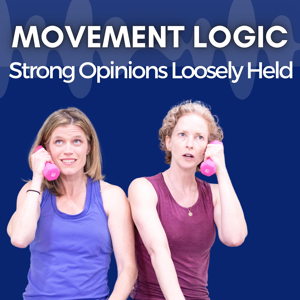

What is balance, really? In this episode of the Movement Logic Podcast, Laurel and Sarah unpack why “balance” is much more than standing on one foot, not falling, or having a strong core.
Using the motor control concept of postural control, they explore balance as a dynamic, emergent process shaped by sensory input, motor responses, cognition, confidence, fear, environment, prior experience, and social context. They discuss center of mass, base of support, stability, perturbations, sensory reweighting, and why balance is deeply context specific.
You’ll learn why steady-state, reactive, and anticipatory balance are different biological problems, why yoga may train some balance skills better than others, why strength and power matter for fall recovery, and why no single “balance exercise” prepares you for every balance challenge life throws at you.
SIGN UP Free Barbell Mini Course
ABOUT Power Play
FOLLOW @TheMovementLogic on Instagram
WATCH Movement Logic on YouTube
LEARN MORE on the Movement Logic website
FOLDABLE HOME BARBELL RACK by Verse, use coupon code MovementLogic10%OFF at checkout
RESOURCES
BOOK: Motor Control: Translating Research into Clinical Practice by Anne Shumway-Cook and Marjorie Woollacott
EPISODES
128: Does 'Balance Training' Prevent Falls, or Just Improve Balance?
129: Sarcopenia Redefined: Loss of Strength and Power Matter More Than Muscle Mass
On motor learning - 29: The Cues We Use Pt. 1, 31: The Cues We Use Pt. 2, 34: The Cues We Use Pt. 3
Our interview on the Capable and Worthy Podcast
 View all episodes
 By Dr. Sarah Court, PT, DPT and Laurel Beversdorf

4.7
106106 ratings
What is balance, really? In this episode of the Movement Logic Podcast, Laurel and Sarah unpack why “balance” is much more than standing on one foot, not falling, or having a strong core.
Using the motor control concept of postural control, they explore balance as a dynamic, emergent process shaped by sensory input, motor responses, cognition, confidence, fear, environment, prior experience, and social context. They discuss center of mass, base of support, stability, perturbations, sensory reweighting, and why balance is deeply context specific.
You’ll learn why steady-state, reactive, and anticipatory balance are different biological problems, why yoga may train some balance skills better than others, why strength and power matter for fall recovery, and why no single “balance exercise” prepares you for every balance challenge life throws at you.
SIGN UP Free Barbell Mini Course
ABOUT Power Play
FOLLOW @TheMovementLogic on Instagram
WATCH Movement Logic on YouTube
LEARN MORE on the Movement Logic website
FOLDABLE HOME BARBELL RACK by Verse, use coupon code MovementLogic10%OFF at checkout
RESOURCES
BOOK: Motor Control: Translating Research into Clinical Practice by Anne Shumway-Cook and Marjorie Woollacott
EPISODES
128: Does 'Balance Training' Prevent Falls, or Just Improve Balance?
129: Sarcopenia Redefined: Loss of Strength and Power Matter More Than Muscle Mass
On motor learning - 29: The Cues We Use Pt. 1, 31: The Cues We Use Pt. 2, 34: The Cues We Use Pt. 3
Our interview on the Capable and Worthy Podcast
611 Listeners
1,260 Listeners
1,190 Listeners
2,025 Listeners
496 Listeners
2,628 Listeners

3,457 Listeners

7,995 Listeners

628 Listeners

1,130 Listeners
543 Listeners

729 Listeners

425 Listeners

354 Listeners

301 Listeners