
Sign up to save your podcasts
Or

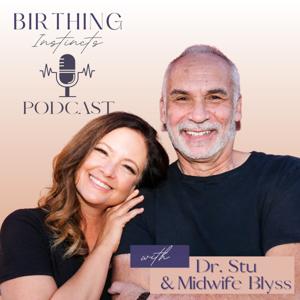

This week, Blyss and Stu take a deep dive into the increasingly popular recommendation of inducing labor at 38 weeks for suspected “big babies”.
Prompted by a recent social media post from a prominent obstetric influencer, they examine two studies being used to justify earlier inductions for "big babies" and ask an important question: do the data actually support the conclusions being promoted?
Along the way, Blyss and Stu challenge listeners to look beyond headlines and social media summaries, examine how studies are designed, and consider whether interventions are being recommended based on meaningful risk reduction, or simply because they can be.
The episode emphasizes the importance of respecting nature's design, individualizing care, and helping families understand the difference between relative risk, absolute risk, and true informed choice.
References:
AJOG MFM Article: Induction at 38 weeks for large-for-gestational-age or macrosomic fetuses decreases the incidence of cesarean delivery: meta-analysis of randomized controlled trials
https://www.ajogmfm.org/article/S2589-9333(26)00008-X/fulltext
The Lancet Article: Induction of labour versus standard care to prevent shoulder
dystocia in fetuses suspected to be large for gestational age in the UK (the Big Baby trial): a multicentre, open-label, randomised controlled trial
https://www.thelancet.com/action/showPdf?pii=S0140-6736%2825%2900162-X
Birthing Instincts Podcast #431: "Hold Your Beer" It's Fetal Macrosomia Guidelines
https://open.spotify.com/episode/1MJg92Du4WLUn7P8ypPBVc?si=SJ6YtH6CRMKClgCDGdXXqw
Discussed in This Episode
Analysis of the BIG BABY Trial
Why statistical significance does not always equal clinical significance
What shoulder dystocia rates actually mean
Large-for-gestational-age (LGA) v true macrosomia
Accuracy limitations of estimated fetal weight
How labels like "big baby" often trigger cascades of intervention
Differences between physiologic birth and hospital management
What informed consent should actually look like when discussing risks
The often-overlooked downstream consequences of routine induction
Podcast Produced by: Raquel Hernandez, Pride and Joy Doula Care
This show is supported by
Connect with Dr. Stu and Blyss
 View all episodes
 By Dr. Stuart Fischbein + Midwife Blyss Young

4.9
651651 ratings
This week, Blyss and Stu take a deep dive into the increasingly popular recommendation of inducing labor at 38 weeks for suspected “big babies”.
Prompted by a recent social media post from a prominent obstetric influencer, they examine two studies being used to justify earlier inductions for "big babies" and ask an important question: do the data actually support the conclusions being promoted?
Along the way, Blyss and Stu challenge listeners to look beyond headlines and social media summaries, examine how studies are designed, and consider whether interventions are being recommended based on meaningful risk reduction, or simply because they can be.
The episode emphasizes the importance of respecting nature's design, individualizing care, and helping families understand the difference between relative risk, absolute risk, and true informed choice.
References:
AJOG MFM Article: Induction at 38 weeks for large-for-gestational-age or macrosomic fetuses decreases the incidence of cesarean delivery: meta-analysis of randomized controlled trials
https://www.ajogmfm.org/article/S2589-9333(26)00008-X/fulltext
The Lancet Article: Induction of labour versus standard care to prevent shoulder
dystocia in fetuses suspected to be large for gestational age in the UK (the Big Baby trial): a multicentre, open-label, randomised controlled trial
https://www.thelancet.com/action/showPdf?pii=S0140-6736%2825%2900162-X
Birthing Instincts Podcast #431: "Hold Your Beer" It's Fetal Macrosomia Guidelines
https://open.spotify.com/episode/1MJg92Du4WLUn7P8ypPBVc?si=SJ6YtH6CRMKClgCDGdXXqw
Discussed in This Episode
Analysis of the BIG BABY Trial
Why statistical significance does not always equal clinical significance
What shoulder dystocia rates actually mean
Large-for-gestational-age (LGA) v true macrosomia
Accuracy limitations of estimated fetal weight
How labels like "big baby" often trigger cascades of intervention
Differences between physiologic birth and hospital management
What informed consent should actually look like when discussing risks
The often-overlooked downstream consequences of routine induction
Podcast Produced by: Raquel Hernandez, Pride and Joy Doula Care
This show is supported by
Connect with Dr. Stu and Blyss

2,324 Listeners
2,174 Listeners
1,222 Listeners
1,035 Listeners

729 Listeners

1,297 Listeners
554 Listeners

2,013 Listeners

14,693 Listeners
815 Listeners

1,256 Listeners

210 Listeners
164 Listeners
88 Listeners

72 Listeners