
Sign up to save your podcasts
Or

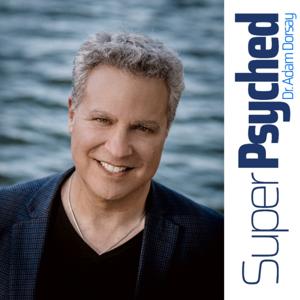

An artifact of our brains is a default mode that may nudge us toward being bystanders and toward conforming. While that feature may have been important to our survival at one point, it inhibits us from standing up for justice. Social psychology experiments that look at conformity and the bystander effect provide stark reminders of these facts.
To override our brain’s tendency to stay quiet in the face of injustice and, instead, to choose to be an ally and an upstander may require thought, preparation, and education. Speaking to the importance of standing up for our fellow humans, Holocaust Survivor, Eli Wiesel once said, “The opposite of love is not hate, it's indifference.” He also said, “Silence encourages the tormentor, never the tormented.”
And that is why I feel compelled to discuss this important topic to better understand the experiences of being Asian American, the subtle and covert racism they face, and how we can all be better allies. This is a topic that understandably incurs anger, sadness, and urgency, and you can hear these throughout the interview.
And, my guest, Dr. Sherry Wang is a great person to help us know what we need to know on this topic. She is a licensed psychologist, researcher, an anti-racist educator, and a professor of psychology at Santa Clara University. Since the start of COVID-19, she has been featured, cited, and interviewed in the media on the topic of anti-Asian racism, xenophobia, and cross-racial coalition-building.
So, join Dr. Wang and me as we talk about being allies to our Asian American brothers and sisters.
 View all episodes
 By SuperPsyched ©

4.9
167167 ratings
An artifact of our brains is a default mode that may nudge us toward being bystanders and toward conforming. While that feature may have been important to our survival at one point, it inhibits us from standing up for justice. Social psychology experiments that look at conformity and the bystander effect provide stark reminders of these facts.
To override our brain’s tendency to stay quiet in the face of injustice and, instead, to choose to be an ally and an upstander may require thought, preparation, and education. Speaking to the importance of standing up for our fellow humans, Holocaust Survivor, Eli Wiesel once said, “The opposite of love is not hate, it's indifference.” He also said, “Silence encourages the tormentor, never the tormented.”
And that is why I feel compelled to discuss this important topic to better understand the experiences of being Asian American, the subtle and covert racism they face, and how we can all be better allies. This is a topic that understandably incurs anger, sadness, and urgency, and you can hear these throughout the interview.
And, my guest, Dr. Sherry Wang is a great person to help us know what we need to know on this topic. She is a licensed psychologist, researcher, an anti-racist educator, and a professor of psychology at Santa Clara University. Since the start of COVID-19, she has been featured, cited, and interviewed in the media on the topic of anti-Asian racism, xenophobia, and cross-racial coalition-building.
So, join Dr. Wang and me as we talk about being allies to our Asian American brothers and sisters.
10,573 Listeners

3,375 Listeners
12,730 Listeners
2,528 Listeners

8,043 Listeners
285 Listeners
14,324 Listeners
8,238 Listeners
2,230 Listeners

29,272 Listeners
645 Listeners

2,118 Listeners
1,105 Listeners

20,222 Listeners

2,038 Listeners