
Sign up to save your podcasts
Or



Based on Podcast App listening data
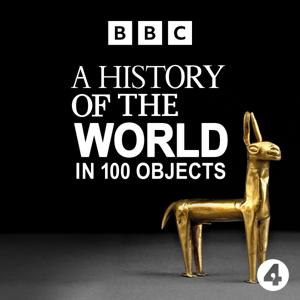
In 2010, A History of the World in 100 Objects, hosted by Neil MacGregor, premiered on BBC Radio 4 to great acclaim. It was a groundbreaking series that told a complex and interconnected history of the world through 100 objects housed in the British Museum collection. Now, as America marks the 250th anniversary of the Declaration of Independence, BBC Studios is partnering with 99% Invisible’s Roman Mars to reimagine the landmark series for the United States— A History of the U.S. in 100 Objects. In this special episode, Roman sits down with Neil MacGregor to talk about how the original series came together and how to curate a collection of American objects.
Ten years on from the ground-breaking Radio 4 series, "A History of The World in 100 Objects", former director of the British Museum Neil MacGregor looks back at the impact of the series, on how storytelling in museums has changed over a turbulent decade and asks which object from 2020 would best encapsulate our modern age.
Producer: Paul Kobrak
The very last episode in Neil MacGregor's history of humanity as told through the things that time has left behind. The director of the British Museum in London has spent the past year choosing objects from the museum's vast collection to represent a two million year story of humanity.
Producer: Anthony Denselow
Neil MacGregor's history of the world as told through things. Throughout this week he is examining objects that speak of the great shifts in human organisation and thinking in the modern world - objects that raise questions about human lives, the environment and global resources. So far this week he has chosen things that deal with political and sexual revolution and that confront the disaster of global arms proliferation. In today's episode he considers the morality of modern global finance and its implication for the future. He tells the story with a credit card that is compliant with Islamic Sharia law - what does that mean and how does it work? He talks to the Governor of the Bank of England, Mervyn King, and to Razi Fakih of the HSBC bank.
Producer: Anthony Denselow
The history of humanity, as told through one hundred objects from the British Museum in London, is drawing to an end.
Throughout this week, Neil MacGregor, the director of the British Museum in London, has been with things that help explain the modern world. He has explored political and sexual politics and freedoms, and now reflects on the impact of guns and weapons in the modern world - especially in Africa where thousands of children have been participants in brutal conflicts.
He tells the story through a work of art - a sculptured throne made from decommissioned guns like the ubiquitous AK47. We hear from Kester, the artist from Mozambique who created theThrone of Weapons and test the reaction to the piece of Kofi Annan, the former Secretary-General of the United Nations.
Producer: Anthony Denselow
This week Neil MacGregor's history of the world is examining the forces that helped shape our way of life and ways of thinking today. He began with the political revolution that exploded In Russia in the 1920s and today he moves on to the sexual revolution of the 1960s. He explores the emergence of legally enshrined human rights and the status of sexuality around the world. He tells the story with the aid of a David Hockney print, one of a series that was made in 1966 as the decriminalisation of homosexuality was being planned, at least in Britain. We hear from David Hockney on the spirit of the decade and from Shami Chakrabarti, the director of the human rights group Liberty
Producer: Anthony Denselow
Neil MacGregor's history of the world as told through things that time has left behind. Throughout this closing week he is examining some of the major social and political movements that have helped shape our contemporary landscape. Today he tells the remarkable story of a Russian plate. It was made in 1901 in the Imperial Porcelain Factory in St Petersburg. Twenty years later it was painted over as a propaganda tool for the new Communist Revolution - decorated in the same factory that had become the State Porcelain Factory and in a city renamed as Petrograd. The director of the State Hermitage Museum in St Petersburg, Mikhail Piotrovsky, and the great historian of modern Russia, Eric Hobsbawn, help piece together this momentous history.
Producer: Anthony Denselow
Neil MacGregor's world history told through objects from the British Museum in London. The objects he has chosen this week have reflected on mass production and mass consumption in the 19th century. Today' he is with the first object from the 20th century, a coin that leads Neil to consider the rise of mass political engagement in Britain and the dramatic emergence of suffragette power. It's a penny coin from 1903 on which the image of King Edward V11 has been stamped with the words "Votes for Women". The programme explores the rise of women's suffrage and the implications of the notorious suffragette protests. The human rights lawyer and reformer Helena Kennedy and the artist Felicity Powell react to this defaced penny coin.
Producer: Anthony Denselow
Neil MacGregor's history of the world as told through things. Throughout this week he is examining the great shifts in the global economy and in imperial power in the 19th century. Today he is with a large wooden drum that the legendary Kitchener of Khartoum brought from Sudan for Queen Victoria, just after his army had killed 11000 Sudanese soldiers in battle. The drum takes Neil back to the extraordinary history that has played out along the Nile and to the great internal power struggles of the period. The writer Dominic Green and the broadcaster Zeinab Badawi reflect on the meaning of the drum and its place in Sudanese history.
Producer: Anthony Denselow
The history of humanity - as told through one hundred objects from the British Museum in London - is once again in Japan. This week Neil MacGregor, the museum's director, is looking at the global economy in the 19th century - at mass production and mass consumption.
Today he is with an image that rapidly made its way around the world - Hokusai's print, The Great Wave, the now familiar seascape with a snow topped Mount Fuji in the background that became emblematic of the newly emerging Japan. Neil explores the conditions that produced this famous image - with help from Japan watchers Donald Keene and Christine Guth.
Producer: Anthony Denselow
From the publisher's feed
Director of the British Museum, Neil MacGregor, narrates 100 programmes that retell humanity's history through the objects we have made.
Ranked by our users in the last 21 days

7,582 Listeners

524 Listeners

1,040 Listeners

286 Listeners

5,510 Listeners
3,178 Listeners

953 Listeners
1,872 Listeners
865 Listeners
607 Listeners
726 Listeners
587 Listeners
284 Listeners

300 Listeners

2,100 Listeners
961 Listeners

404 Listeners
237 Listeners

329 Listeners
360 Listeners

345 Listeners

233 Listeners
310 Listeners

3,223 Listeners
15,603 Listeners

76 Listeners

799 Listeners

522 Listeners
627 Listeners

380 Listeners

233 Listeners
60 Listeners
73 Listeners

34 Listeners