
Sign up to save your podcasts
Or

By BBC Radio 4
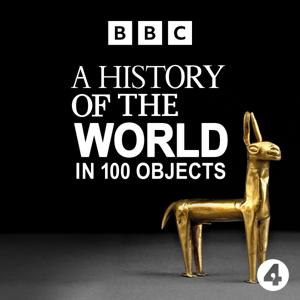
Director of the British Museum, Neil MacGregor, narrates 100 programmes that retell humanity's history through the objects we have made.
... more

4.4
11611,161 ratings


The podcast currently has 102 episodes available.
The most played episodes among Podcast App listeners.
Neil MacGregor concludes the first week of the second part of his global history as told through objects from the British Museum. This week he has been exploring the lives and methods of powerful rulers around the world about 2000 years ago, from Alexander the Great in Egypt to Asoka in India. Today he introduces us to the great Roman emperor Augustus, whose powerful, God-like status is brilliantly enshrined in a larger than life bronze head with striking eyes. Neil MacGregor describes how Augustus dramatically enlarged the Roman Empire, establishing his image as one of its most familiar objects. The historian Susan Walker and the politician Boris Johnson help explain the power and methodology of Augustus. Producer: Anthony Denselow

Neil MacGregor's history of the world as told through things. Throughout this week he is examining the global economy of the 19th century - of mass production and mass consumption. Today he is with an instrument that first helped Europeans to navigate with precision around the world - a marine chronometer. The one Neil has chosen actually accompanied Darwin on his great voyage to South America and the Galapagos Islands - a journey that was to help lead him to his revolutionary theories on evolution. The geographer Nigel Thrift and the geneticist Steve Jones celebrate the chronometer and the profound changes it prompted. Producer: Anthony Denselow
This week Neil MacGregor is exploring life in the great royal courts across the world during Europe's medieval period, from the heart of Europe to Mexico and Sri Lanka. Today he is in China of the Tang Dynasty around 700 AD. He tells how the elite of the time chose to leave their mark on the world by writing or commissioning their own obituaries. He is with a curious troupe of ceramic figures that were found in the tomb of a Tang general along with a stone tablet proclaiming his achievements. The China scholar Oliver Moore explains the growing ambitions of the dynasty and journalist Anthony Howard describes the enduring power of the obituary. Producer: Anthony Denselow
The history of humanity as told through one hundred objects from the British Museum in London is back in India. This week Neil MacGregor is with the gods - exploring the sophistication of religious art in the 14th and 15th centuries, as people around the world sought ways of finding physical expression for devotion and for representing the divine. Today Neil is with a magnificent stone sculpture showing the powerful deity Shiva with his consort Parvati seated on his knee - two of the most beloved and familiar figures of Hinduism. The vehicles of the deities, a bull and a lion, and their children sit at their feet, while a host of supporting musicians and attendants swirl around their heads. Neil considers how images like this help cement the relationship between deity and devotee. The writer Karen Armstrong considers the special relationship between male and female aspects in spiritual practice while the Hindu cleric Shaunaka Rishi Das explores the particular characteristics of Shiva and Parvati and considers the religious significance of their union. Producer: Anthony Denselow
This week Neil MacGregor's world history as told through objects is describing how people expressed devotion and connection with the divine in the 14th and 15th centuries. Today he is with an icon from Constantinople that looks back in history to celebrate the overthrow of iconoclasm and the restoration of holy images in AD 843 - a moment of triumph for the Orthodox branch of the Christian Church. This icon shows the annual festival of orthodoxy celebrated on the first Sunday of Lent, with historical figures of that time and a famous depiction of the Virgin Mary. The American artist Bill Viola responds to the icon and describes the special characteristics of religious painting. And the historian Diarmaid MacCulloch describes the often troubled relationship between the Church and the images it has produced. Producer: Anthony Denselow
The podcast currently has 102 episodes available.

7,615 Listeners

521 Listeners

1,062 Listeners

292 Listeners

5,525 Listeners

3,213 Listeners

952 Listeners
1,882 Listeners
864 Listeners
608 Listeners
724 Listeners

590 Listeners
280 Listeners
293 Listeners

2,113 Listeners
964 Listeners

427 Listeners
221 Listeners

328 Listeners

365 Listeners

350 Listeners

232 Listeners

316 Listeners
3,228 Listeners
16,153 Listeners

76 Listeners

667 Listeners

547 Listeners
630 Listeners

389 Listeners

244 Listeners
65 Listeners
78 Listeners

35 Listeners