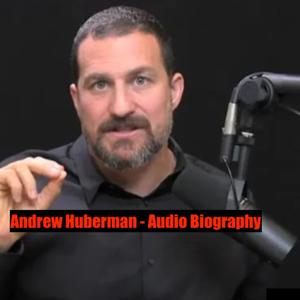
Andrew Huberman - Biography Flash

Andrew Huberman - Biography Flash

Download on the App Store
  • Ranking

    3rd

    on Animation & Manga

  • Favorites

    701

    Followers

  • Typical duration

    3 min

    per episode

Based on Podcast App listening data

Andrew Huberman - Biography Flash episodes

  • Huberman Lab: Neuroplasticity, Protocols Book, and Expanding Influence | Biosnap AI Report
    Andrew Humberman BioSnap a weekly updated Biography.
    This is Biosnap AI. In the past few days, the most concrete development is professional: the Huberman Lab site lists a new Monday release, How to Rewire Your Brain & Learn Faster with Dr. Michael…, signaling Andrew Huberman’s continued weekly publishing cadence and emphasis on neuroplasticity protocols that could shape his public canon long term, according to Huberman Lab. Separately, the site is now prominently marketing his forthcoming book Protocols as an essential guide to brain, mood, energy and performance tools, which points to an ongoing business push beyond the podcast, per Huberman Lab. On social, a pair of Instagram posts tag Andrew Huberman in Stanford, California, crediting a photo by Andrew Huberman, Ph.D., which indicates a recent presence on set or behind the camera rather than a personal appearance; these are third‑party posts and should be treated as light confirmation only, via Instagram. Another reel promotes It was wonderful to finally sit down with my friend Andrew Huberman on his fantastic podcast, suggesting a newly recorded interview; this is promotional language from a guest and not a formal episode listing, so consider it pending until it appears on Huberman Lab or major podcast feeds, via Instagram.
    There is chatter about his personal life in recent days, but the sources driving it are low‑credibility blogs recycling speculation about a girlfriend or wife reveal without verifiable documentation or first‑party confirmation. Those pieces are not supported by reputable outlets or Huberman himself and should be considered unconfirmed and likely speculative.
    No major mainstream headlines or verified reporting in the last few days indicate new controversies, institutional roles, or legal matters tied to Huberman. No SEC‑style filings or credible business press items surfaced about new financings or corporate transactions involving Huberman Lab, his supplement collaborations, or platform deals. Public appearances on the calendar were not newly announced via his official channels in this window; any references to sit‑downs or appearances are either prerecorded podcast content in the release queue or guest‑driven social teases, which remain unverified until they post on his official feeds.
    Weighting for significance: the ongoing weekly episode cadence and the Protocols commercialization track are the developments most likely to have durable biographical impact, as they expand his body of work and revenue footprint. Social tags and guest teasers are minor signals. Personal‑life rumors currently lack verification and should not be treated as fact.
    Get the best deals https://amzn.to/3ODvOta
    This content was created in partnership and with the help of Artificial Intelligence AI.
    3 min
  • Huberman's Hype: Cool Protocols, Hot Takes, and Sizzling Speculation
    Andrew Humberman BioSnap a weekly updated Biography.
    Andrew Huberman has remained at the forefront of neuroscience in the public eye this week, consistently capturing attention with both substance and style. Just days ago on August 7th, his top-rated Huberman Lab podcast released a highly anticipated episode featuring Dr. Craig Heller, the Stanford biologist renowned for his research on targeted cooling and athletic performance. The episode Essentials Increase Strength and Endurance with Cooling Protocols quickly amassed downloads and social chatter as it broke down cutting-edge protocols for core body temperature regulation, solidifying Huberman’s role as the go-to for science-backed wellness, as reported by the official Huberman Lab podcast platform. In an unexpected crossover, Huberman’s video segment How to Focus to Change Your Brain reemerged through educational channels, surfacing in advocacy webinars and training programs in early August, reflecting his growing footprint beyond just listeners and into health advocacy and mentoring spaces, according to MENTOR’s Advocacy August Kickoff Webinar.
    Further fueling discourse, Huberman’s all-business approach to self-improvement and neuroplasticity got a viral nudge on August 8th with the YouTube release of Why Comfort is Stunting Your Growth, which garnered over a million views in the first day, sparking threads across X, Instagram, and wellness subreddits about the merits of discomfort for mental growth. Meanwhile, social media continues to break down Huberman’s tips, with an Instagram post dated August 5th from neurosciencenew highlighting fresh research on how the brain registers rewards, with several comments riffing on Andrew’s past deep-dives and tagging the Lab podcast.
    Business news is percolating beneath the surface. Rumors that the Huberman Lab team is in talks with major streaming and education platforms about expanded content syndication have circulated but remain unconfirmed by any official outlet, leaving insiders and fans monitoring his channels for any sign of an announcement. In the academic world, Wilmington University News spotlighted Huberman’s latest commentary on strategies to quit tobacco, further cementing his dual identity as both mainstream motivator and tenured professor.
    On the public appearance circuit, online audiences were treated to a keynote-style panel at GBCC2025, where Huberman reportedly addressed the psychology of deep, lasting relationships, a clip now trending among education influencers and relationship counselors. In summary, Andrew Huberman’s past few days have demonstrated both sustained influence and dynamic evolution—simultaneously advancing physiological science, shaping public discourse, and fanning speculation about his next strategic moves.
    Get the best deals https://amzn.to/3ODvOta
    This content was created in partnership and with the help of Artificial Intelligence AI.
    3 min
  • Huberman's Influence: From Neuroscience to Public Safety and Beyond
    Andrew Humberman BioSnap a weekly updated Biography.
    Andrew Huberman has been everywhere the past few days from his signature podcast, to a brush with controversy on social media, to a notable mention in top health journalism. On August 1, an Instagram reel exploded in engagement after Huberman himself recorded what he described as people lighting fires in downtown Los Angeles, offering his platform to draw attention to public safety concerns. That video was promptly shared by multiple accounts, sparking conversation around civic engagement and the responsibilities of influencers. At nearly the same time, the Instagram business community was abuzz with Huberman’s latest neuroscience tidbit he revealed that the classic introvert versus extrovert debate is rooted in differing dopamine receptor patterns, not personality labels per se, leading to fresh debate about work culture and leadership strategies.
    Huberman’s flagship Huberman Lab podcast continues at full throttle. The July 28 episode delved into practical essentials of his research, distilling key takeaways on behavior change and mental health a formula that has kept his listenership in the millions. The series’ recent guests included preeminent thinkers from Michael Easter to Dr. Marc Berman, whose discussion about nature’s effects on cognition generated both scholarly citations and viral snackable clips. His media exposure also surged, with KFF Health News on August 1 specifically quoting him in discussions about the sweeping staff cuts impacting community health care programs—a rare crossover of a neuroscience educator being pulled into systems-level health policy discourse. Some outlets like KFF went further, naming Huberman as a leading podcaster who brings “real-world” relevance to high-level debates, extending his influence beyond standard academic circles.
    In terms of public appearances, he is slated as a keynote for several major entrepreneurship events throughout September and October, including the EO Powerhouse gathering in Chicago and EO Nerve in Atlanta, where his blend of cerebral science and business-savvy rhetoric has generated early buzz among founders and VC circles. While he has not confirmed any new business ventures or product launches in the days since August began, speculation persists about an impending collaboration with a large fitness technology brand—chatter unconfirmed by Huberman’s team but amplified by fitness insiders.
    Finally, YouTube and podcast platforms report strong engagement with Huberman’s segment on how sprinting can boost both strength and longevity, an episode widely shared by athletes and biohackers alike in the last 72 hours. Through a confluence of science, storytelling, and an uncanny ability to spark conversation, Andrew Huberman continues to shape the neuroscience landscape—and, increasingly, drive mainstream discourse on health and human potential.
    Get the best deals https://amzn.to/3ODvOta
    This content was created in partnership and with the help of Artificial Intelligence AI.
    4 min
  • Huberman Fans Remain Loyal
    Huberman fans aren't leaving the show behind, despite the recent revelations about his personal life in the New York Magazine article. The piece, which spanned 8,000 words, delved into Huberman's complicated romantic relationships, alleging that he maintained multiple relationships simultaneously and deceived the women he was seeing. It also questioned his expertise on wellness topics.
    However, the article seems to have had little impact on his overall listenership. Huberman's podcast continues to rank in the top 15 on both Apple Podcasts and Spotify, indicating that his audience remains loyal. Among the readers of this newsletter, who are likely more engaged with the podcasting industry, the responses have been more varied.
    Some readers have come to Huberman's defense, particularly regarding his approach to scientific subjects. Ioakim Boutakidis, a professor of child and adolescent studies at California State University at Fullerton, emphasized that Huberman's training as a research scientist at the PhD level has equipped him with valuable skills that are transferable to other fields within his discipline. Boutakidis noted that Huberman's apparent narrow research focus doesn't negate his ability to digest scientific literature, evaluate its rigor, and explain it to others better than most people.
    Other readers, pointed out that Huberman doesn't claim to know everything and often invites experts or knowledgeable individuals to discuss topics on his podcast. it is up to the listeners to decide what to take away from the information provided and Huberman's personal flaws should not be the focus of attention, given the many people who benefit from his podcast.
    Others argued against the notion that Huberman attempts to influence his audience's behaviors, stating that he merely relays scientific information and its relation to the human experience. Huberman has explicitly stated multiple times that he does not intend to recommend protocols or tell people how to behave.
    On the other hand, some readers found Huberman's personal conduct troubling. Some Think that all celebrities are fair game and that Huberman would definitely lose listeners, particularly women. One Reader pointed out the discrepancy between Huberman's pursuit of excellence in his personal journey, which he shares on the podcast and his treatment of women in his life. One couple even decided to stop following Huberman, stating that they had no time for liars and misogynists.
    Despite the mixed reactions among newsletter readers, the overall impact on Huberman's podcast seems minimal. The majority of his audience appears to be sticking with the show, focusing on the value they derive from the content rather than Huberman's personal life. As the podcast continues to rank highly on major platforms, it is evident that Huberman's fans are not abandoning him en masse, even in the face of the New York Magazine article's revelations. Thanks for listening to Quiet Please. Remember to like an
    This content was created in partnership and with the help of Artificial Intelligence AI.
    3 min
  • Huberman Scandal
    Andrew Huberman, a renowned neuroscientist, popular podcaster, and influential health guru based at Stanford University, has recently been embroiled in a controversy surrounding his personal life. A scathing report by New York magazine has shed light on allegations of womanizing and sexually irresponsible behavior, including claims that he dated five women simultaneously and may have even transmitted a sexually transmitted infection (STI) to one of them.
    Huberman, who boasts an impressive following of six million on Instagram and 5.2 million subscribers on his YouTube channel, Huberman Lab, is well-known for his macho attitude and self-improvement videos tailored to a male audience. He is considered one of the leading 'bro science' influencers, a category of science-themed social media content aimed at men. However, the recent revelations about his personal life have cast a shadow over his public persona.
    The New York magazine investigation features testimonies from five women who paint a disturbing picture of Huberman as a promiscuous 'serial dater' who subjected his romantic partners to aggressive outbursts, betrayal, and infidelity. The victims eventually discovered each other's existence and formed an unlikely friendship, confronting Huberman about his actions.
    One of the most damning accounts comes from Huberman's former partner of five years, referred to as "Sarah" (not her real name). Sarah claims that Huberman had affairs with multiple women, sometimes even arranging dates with different women on the same day. She also alleges that he made derogatory comments about her, including likening dating her to "bobbing for apples in feces," an accusation that Huberman has denied.
    According to Sarah, she caught Huberman cheating on her with five other women and allegedly contracted human papillomavirus (HPV), a cancer-causing STI, as a result of his infidelity. "I experienced his rage," Sarah told New York magazine, describing Huberman's behavior as "two to three days of yelling in a row" and claiming that he would continue his verbal abuse late into the night and sometimes start again in the early hours of the morning.
    Huberman, 48, an associate professor of neurology and ophthalmology at the Stanford University School of Medicine, rose to prominence due to his obsession with optimizing one's health. He became involved with Sarah after the pair began messaging on Instagram in February 2018, before his rise to fame. As their relationship progressed, Sarah claims that Huberman became "obsessed" with her past, particularly the two children she had from a previous relationship.
    In 2021, Sarah tested positive for a high-risk form of HPV, which is most commonly contracted through sexual activity and is linked to 99 percent of cervical cancers. Despite getting tested regularly for ten years, Sarah says she had never tested positive for the STI before her relationship with Huberman.
    The web of deception unraveled further when, in 2022, Sarah disco
    This content was created in partnership and with the help of Artificial Intelligence AI.
    9 min
  • Huberman and Sun
    Let's dive into the importance of getting sunlight exposure, especially in the morning, as emphasized by Andrew Huberman, a neuroscientist and tenured professor in the Department of Neurobiology at the Stanford University School of Medicine. Huberman stresses that consistency plays a crucial role in maintaining a healthy biological clock.
    The Power of Morning Sunlight Andrew Huberman has extensively researched the impact of light on human physiology and behavior. He explains that exposure to sunlight, particularly in the morning, has numerous positive effects on both physical and mental well-being. Even a brief 10-minute exposure to natural light can make a significant difference in regulating your body's internal clock, also known as the circadian rhythm.
    The circadian rhythm is a 24-hour cycle that governs various physiological processes, such as sleep-wake patterns, hormone production, and body temperature regulation. Huberman emphasizes that when exposed to sunlight, specifically the blue light spectrum, the body suppresses the production of melatonin, a hormone that promotes sleep, and increases the production of cortisol, a hormone associated with wakefulness and alertness.
    By getting sunlight exposure in the morning, Huberman explains, you are essentially sending a signal to your body that it's time to start the day. This helps to synchronize your internal clock with the external environment, leading to improved sleep quality, better mood, and increased energy levels throughout the day.
    The Benefits of Consistent Sunlight Exposure While getting some sunlight exposure is better than none at all, Andrew Huberman stresses that the key to maximizing its benefits lies in consistency. He emphasizes that the biological clock thrives on regularity, and making sure to get sunlight at roughly the same time every day can help to reinforce the circadian rhythm.
    When your body becomes accustomed to a regular schedule of sunlight exposure, Huberman explains, it can more effectively regulate the production of hormones and neurotransmitters that influence sleep, mood, and overall well-being. Consistent exposure to morning sunlight has been linked to:
    1. Improved Sleep Quality By aligning your internal clock with the natural light-dark cycle, consistent morning sunlight exposure can help to regulate your sleep-wake patterns. Huberman notes that this can lead to more restful and restorative sleep at night, as well as reduced symptoms of insomnia and other sleep disorders.
    2. Enhanced Mood and Reduced Stress Sunlight exposure has been shown to increase the production of serotonin, a neurotransmitter that plays a key role in regulating mood, anxiety, and happiness. Huberman highlights that consistent exposure to morning sunlight can help to elevate and stabilize mood, reducing the risk of depression and other mood disorders.
    Additionally, Huberman discusses the stress-reducing effects of sunlight, which have been well-documented. Regular exposure to n
    This content was created in partnership and with the help of Artificial Intelligence AI.

    9 min
  • Huberman on Praising Kids
    Of course, parents want to shower their kids with praise, highlighting their intelligence, talent, and athletic prowess. However, research suggests that simply labeling children as gifted and talented may not be the most effective approach. In fact, certain types of praise can inadvertently hinder a child's performance. Andrew Huberman, a professor of neurobiology and ophthalmology at Stanford School of Medicine and host of the Huberman Lab podcast, explores the intricate connection between performance, grit, and the praise we receive and give ourselves. He also delves into the concept of a growth mindset and whether it can be learned and adopted. "It turns out that the kind of praise or feedback that we receive that attaches our identity to performance can actually undermine our performance," Huberman explains in the podcast episode focused on enhancing performance. From a young age, we often internalize beliefs about our strengths and weaknesses, Huberman notes. For instance, I've consistently told myself (and continue to do so) that I'm terrible at drawing—I could never create a proportional figure in art class. Conversely, I used to tell myself (but no longer do) that I was skilled at playing the piano, learning covers of popular songs in my spare time. "We tend to decide if we are good or bad at things, and we tend to integrate those beliefs with our identity to varying degrees, depending on whether we're professionals, amateurs, or how much we engage in an activity," Huberman says. Interestingly, being praised for our talent or intelligence in a specific area can actually limit our potential. As cliché as it may sound, emphasizing and commending the journey rather than the destination is the key to optimizing our performance. As renowned author Glennon Doyle's podcast title suggests, we can indeed do hard things.
    How to praise your child the 'right' way Huberman references the work of Carol Dweck, a psychologist at Stanford University and author of "Mindset: How You Can Fulfill Your Potential." Dweck's 1998 research laid the groundwork for understanding the importance of effort-based praise over intelligence-based praise in improving performance. Children who were told they were great or smart after completing a task tended to gravitate toward easier activities that bolstered their sense of achievement. "They are likely to go with the least amount of challenge so that they can continue to receive that praise or feedback," Huberman explains. On the other hand, children who were praised for their effort and the process of diligently working on a problem were more inclined to seek out increasingly challenging tasks. Moreover, those praised for their effort actively sought out more challenges in general, aiming to capitalize on and enhance their effort. Paradoxically, telling someone they are a great athlete may lead them to play conservatively, as being good is tied to their identity, and they fear the consequences of losing. "If you're a par
    This content was created in partnership and with the help of Artificial Intelligence AI.
    6 min
  • Huberman Live! What to Expect
    Andrew Huberman, Ph.D., the host of the immensely popular Huberman Lab podcast, has become a household name for his engaging and informative discussions on the latest scientific findings. With 172 episodes under his belt, Huberman has inspired countless listeners to adopt his protocols, from getting morning sunlight to optimize their daily energy to trying AG1 for their daily supplement fix and investing in an Oura ring to track their sleep. When I learned that Huberman would be sharing exclusive insights not available in his podcasts at one of his rare live events, I made sure to secure a spot at the sold-out Chicago Theatre, which seats an impressive 3,600 people. As he took the stage, Huberman exuded a natural charisma, pacing around in his signature all-black ensemble while sharing personal anecdotes and occasionally poking fun at himself. One particularly memorable moment was when Huberman shared a story about a back problem he had faced. He revealed that the single most effective exercise he did to alleviate the issue was to "hump the wall," which involves facing a wall while flexing and extending the lower back. The audience erupted in laughter, and Huberman nearly demonstrated the exercise right then and there. Throughout the evening, I discovered that Huberman, with his conversational style and straightforward, scientific approach, is remarkably relatable. Here are some of the key takeaways from his Chicago presentation: Firstly, Huberman practices what he preaches—well, most of the time. Despite his emphasis on optimizing his schedule for good sleep, he admitted to occasionally staying up past 11 to binge-watch Chimp Empire, potentially disrupting his sleep cycle. This serves as a reminder that even the most dedicated individuals are only human, and it's okay to cut ourselves some slack from time to time. Secondly, Huberman's passion for science is truly contagious. As he shared stories from his life and childhood, including his fascination with cuttlefish and their shapeshifting abilities, his love for biology shone through. His anecdote about discovering the cuttlefish's intelligence after initially doubting their camouflage skills hammered home the incredible nature of other species and his deep appreciation for the quirks of the natural world. Thirdly, Huberman is exploring the concept of stillness as a means to foster creativity. He recounted a conversation with record producer Rick Rubin, who shared that he felt most creative when his body was completely still. Huberman noted that this idea is supported by the example of Albert Einstein, who was known to abruptly stop mid-walk to think. According to Huberman, stillness allows the mind to expand and ideas to find us, much like the vivid dreams experienced during REM sleep. Fourthly, Huberman believes in the importance of delight, particularly the "early moments of delight" experienced during our pre-sexual stage. He suggests that these moments reveal something about our individual
    This content was created in partnership and with the help of Artificial Intelligence AI.
    5 min
  • Huberman Says Sun Equals Testosterone
    Soaking Up Rays May Give Your Testosterone a Boost
    Could catching some rays give your testosterone levels a boost? According to neuroscientist Andrew Huberman, the answer is yes.
    Huberman, a professor at Stanford School of Medicine, recently posted on Instagram that sunlight exposure can increase testosterone and estrogen levels. As he put it: “Sunlight on skin (mid-late day) = increased testosterone & estrogen. Don’t burn!”
    Chief Medical Officer Dr. Jack Jeng confirms Huberman’s claim. “Exposure to ultraviolet light from the sun has been shown to increase sex steroid levels in men, including total testosterone,” he explains. This sunlight-testosterone connection may even explain why men’s testosterone peaks in the summer and drops in the winter.
    Previously, Huberman covered this phenomenon on his podcast while discussing research on how ultraviolet B rays (UVB) – the rays that cause sunburns – impact hormones. In one 2021 study, men who got 20-30 minutes of midday sun exposure 2-3 times per week saw noticeable testosterone level spikes.
    Huberman explains that the skin plays a key role in this chain reaction. When UVB rays hit skin cells called keratinocytes, they activate the pituitary gland, which then releases hormones that trigger the testes to produce more testosterone. It’s a skin cell signaling cascade resulting in a surge of male sex hormones.
    Sunshine also boosts vitamin D levels, which themselves correlate strongly with testosterone levels. Some research suggests UV rays may prompt the liver to convert vitamin D into forms that increase usable testosterone. But Dr. Jeng cautions too much sun carries skin cancer risks, so vitamin D supplements can safely achieve similar testosterone perks.
    The takeaway? Carefully catching some midday rays may give your testosterone a healthy hike. But don’t ditch the sunscreen – absorbing sunlight in moderation while protecting skin remains key. Thanks for listening to Quiet Please. Remember to like and share wherever you get your podcasts. And Hey! History buffs, buckle up! Talking Time Machine isn't your dusty textbook lecture. It's where cutting-edge AI throws wild interview parties with history's iconic figures. In the Talking Time Machine podcast: History Gets a High-Tech Twist, Imagine: Napoleon Bonaparte talking French Politics with Louis the 14th! This podcast is futuristically insightful. Our AI host grills historical legends with questions based on real historical context, leading to surprising, thought-provoking, and often mind-blowing answers. Whether you're a history geek, a tech junkie, or just love a good interview, Talking Time Machine has something for you. Talking Time Machine: search, subscribe and (Listen Now!)
    This content was created in partnership and with the help of Artificial Intelligence AI.

    3 min
  • Andrew Huberman's Science-Backed Diet- Fuel Your Body and Mind
    Andrew Huberman's Science-Backed Diet: Fuel Your Body and Mind Unlocking Peak Performance Through Evidence-Based Nutrition Intrigued by Andrew Huberman's high-achieving lifestyle? Wondering what fuels his success? Look no further than his science-backed approach to diet. This article delves into the core principles that guide his choices, offering valuable insights for optimizing your own health and performance. The Science Behind the Plate: Huberman's diet isn't about fad trends; it's about strategic nutrition with a focus on:
    - Nutrient-dense whole foods: Minimally processed protein (eggs, grass-fed meat, fish), complex carbohydrates, and diverse vegetables form the foundation.
    - Macronutrient balance: Protein for muscle building, healthy fats for satiety, and controlled carbohydrates for sustained energy.
    - Micronutrient support: Fruits, vegetables, and strategic supplements like AG1 ensure a full spectrum of essential vitamins and minerals.
    Intermittent Fasting: A Powerful Tool: Huberman incorporates time-restricted eating, typically fasting for 16 hours and eating within an 8-hour window. This practice has been linked to various benefits, including:
    - Improved blood sugar control
    - Enhanced cognitive function
    - Potential for weight management
    Beyond Food: The Role of Supplements: While whole foods are prioritized, Huberman acknowledges the complementary role of supplements. He uses specific options to target:
    - Immune function
    - Testosterone levels
    - Sleep quality
    - Cognitive function
    Remember: Supplements are not a magic bullet. A healthy lifestyle with proper sleep, exercise, and stress management is crucial for optimal well-being. Exercise and Diet: A Synergistic Duo: Huberman's workout routine is intricately linked to his diet. Post-workout meals prioritize nutrients for muscle recovery and protein synthesis. Sleep and Recovery: Huberman finishes his last meal 3 hours before bedtime to allow for proper digestion and promote restorative sleep. This aligns with research highlighting the negative impacts of late-night eating on sleep quality and metabolism. Stress Management and Dietary Choices: Certain foods and nutrients can impact stress levels. Huberman incorporates adaptogens like ashwagandha and Rhodiola rosea to support his body's stress response. Personalize Your Approach: While Huberman's diet offers valuable insights, it's crucial to adapt it to your unique needs. Consider your:
    - Health goals
    - Lifestyle factors
    - Dietary preferences
    - Existing health conditions
    Listen to your body and experiment to find the right balance of foods, eating patterns, and supplements that optimize your energy, sleep, and cognitive function. Key Takeaways:
    - Huberman's diet prioritizes evidence-based strategies for maximizing energy, sleep, and cognitive function.
    - Nutrient-rich foods, intermittent fasting, and targeted supplements form the core principles.
    - Personalization is key – adapt these strategies to your unique needs and preferences.
    By un
    This content was created in partnership and with the help of Artificial Intelligence AI.

    4 min

About Andrew Huberman - Biography Flash

From the publisher's feed

Andrew Huberman is one of the most influential neuroscientists of his generation, known for his groundbreaking research at Stanford University School of Medicine and his massively popular Huberman Lab podcast. This podcast delivers a comprehensive biography of Andrew Huberman alongside regular updates covering the latest news, events, and developments in his career, giving you the complete picture of the man behind the science.

Best of Andrew Huberman - Biography Flash

Ranked by our users in the last 21 days

More shows like Andrew Huberman - Biography Flash

The Joe Rogan Experience by Joe Rogan

The Joe Rogan Experience

227,440 Listeners

Global News Podcast by BBC World Service

Global News Podcast

7,570 Listeners

This Past Weekend w/ Theo Von by Theo Von

This Past Weekend w/ Theo Von

28,100 Listeners

The Daily by The New York Times

The Daily

111,767 Listeners

The Diary Of A CEO with Steven Bartlett by DOAC

The Diary Of A CEO with Steven Bartlett

8,337 Listeners

Modern Wisdom by Chris Williamson

Modern Wisdom

4,050 Listeners

The Peter Attia Drive by Peter Attia, MD

The Peter Attia Drive

7,913 Listeners

The Intelligence from The Economist by The Economist

The Intelligence from The Economist

2,540 Listeners

On Purpose with Jay Shetty by Perfect Strangers

On Purpose with Jay Shetty

27,872 Listeners

Naval by Naval

Naval

2,121 Listeners

The Shawn Ryan Show by Shawn Ryan

The Shawn Ryan Show

46,057 Listeners

Huberman Lab by Scicomm Media

Huberman Lab

29,014 Listeners

The Mel Robbins Podcast by Mel Robbins

The Mel Robbins Podcast

18,897 Listeners

Build with Leila Hormozi by Leila Hormozi

Build with Leila Hormozi

958 Listeners

The Loonie Hour by Steve Saretsky

The Loonie Hour

13 Listeners

Caravaggio - Audio Biography by Inception Point AI

Caravaggio - Audio Biography

0 Listeners

Norman Lear Audio Biography by Inception Point AI

Norman Lear Audio Biography

2 Listeners

Pope Francis - Audio Biography by Inception Point AI

Pope Francis - Audio Biography

5 Listeners

Margot Robbie - Audio Biography by Inception Point AI

Margot Robbie - Audio Biography

0 Listeners

Jim Harbaugh by Inception Point AI

Jim Harbaugh

4 Listeners

Richard Simmons - Audio Biography by Inception Point AI

Richard Simmons - Audio Biography

0 Listeners

Kim Kardashian - Biography Flash by Liquid Studios

Kim Kardashian - Biography Flash

3 Listeners

Pablo Picasso - Audio Biography by Inception Point AI

Pablo Picasso - Audio Biography

2 Listeners

Cleopatra - Audio Biography by Inception Point AI

Cleopatra - Audio Biography

0 Listeners

Chris Pine - Biography Flash by Inception Point Ai

Chris Pine - Biography Flash

0 Listeners

Vincent Price - Audio Biography by Inception Point AI

Vincent Price - Audio Biography

0 Listeners

Gérard Depardieu - Audio Biography by Inception Point AI

Gérard Depardieu - Audio Biography

0 Listeners

Steffi Graf - Audio Biography by Inception Point AI

Steffi Graf - Audio Biography

0 Listeners

Babe Ruth - Audio Biography by Inception Point AI

Babe Ruth - Audio Biography

0 Listeners

Eric Roberts - Audio Biography by Inception Point AI

Eric Roberts - Audio Biography

1 Listeners

Tom Cruise - Biography Flash by Inception Point AI

Tom Cruise - Biography Flash

0 Listeners