
Sign up to save your podcasts
Or


The default state for most humans - to varying degrees - is for the brain to launch into inward thinking and inner dialogue when there's nothing else to pay attention to. If you're struggling with chronic or disordered anxiety, this can become a real issue and a major struggle.
This week we're looking at the inward compulsion. That fear-driven habit of not only having thoughts, but answering them, engaging with them, checking in on them, and inviting them in for lengthy conversations that go on endlessly and drive anxiety and more discomfort.
Can you stop the inward compulsion? Well, that's complicated. You can't stop your brain from making thoughts. That's just what brains do. But you can work on building a new relationship with those thoughts and refusing to engage with them or feel them with the attention they so crave when your brain thinks it needs to keep you safe.
Over time, the inward compulsion stops being a compulsion and your regular, non-anxious relationship with your thoughts and inner dialogue (which will vary from person to person) goes back to a "regular" state where even a highly active inner dialogue simply exists without posing an obstacle in your life or causing significant struggle or disruption.
---
Want to pre-order Josh’s book, “And How Does That Make You Feel?”
https://geni.us/JoshFletcher
----
If you love Disordered and think you might benefit from spending 30 full days in an everyday intensive small group recovery support group led by Josh and Drew, check out Disordered Boost at https://disordered.fm/boost
-----
Want to ask us questions, share your wins, or get more information about Josh, Drew, and the Disordered podcast?
Visit us on the web at https://disordered.fm
Disclaimer: Disordered is not therapy or a replacement for therapy. Listening to Disordered does not create a therapeutic relationship between you and the hosts of the podcast. Information here is provided for psychoeducational purposes. As always, when you have questions about your well-being, please consult your mental health and/or medical care providers. If you are having a mental health crisis, always reach out immediately for in-person help.
 View all episodes
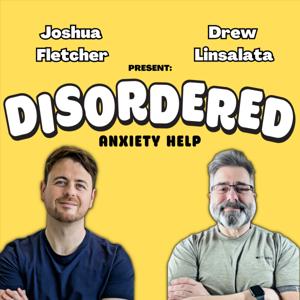
 By Josh Fletcher and Drew Linsalata

4.9
415415 ratings
The default state for most humans - to varying degrees - is for the brain to launch into inward thinking and inner dialogue when there's nothing else to pay attention to. If you're struggling with chronic or disordered anxiety, this can become a real issue and a major struggle.
This week we're looking at the inward compulsion. That fear-driven habit of not only having thoughts, but answering them, engaging with them, checking in on them, and inviting them in for lengthy conversations that go on endlessly and drive anxiety and more discomfort.
Can you stop the inward compulsion? Well, that's complicated. You can't stop your brain from making thoughts. That's just what brains do. But you can work on building a new relationship with those thoughts and refusing to engage with them or feel them with the attention they so crave when your brain thinks it needs to keep you safe.
Over time, the inward compulsion stops being a compulsion and your regular, non-anxious relationship with your thoughts and inner dialogue (which will vary from person to person) goes back to a "regular" state where even a highly active inner dialogue simply exists without posing an obstacle in your life or causing significant struggle or disruption.
---
Want to pre-order Josh’s book, “And How Does That Make You Feel?”
https://geni.us/JoshFletcher
----
If you love Disordered and think you might benefit from spending 30 full days in an everyday intensive small group recovery support group led by Josh and Drew, check out Disordered Boost at https://disordered.fm/boost
-----
Want to ask us questions, share your wins, or get more information about Josh, Drew, and the Disordered podcast?
Visit us on the web at https://disordered.fm
Disclaimer: Disordered is not therapy or a replacement for therapy. Listening to Disordered does not create a therapeutic relationship between you and the hosts of the podcast. Information here is provided for psychoeducational purposes. As always, when you have questions about your well-being, please consult your mental health and/or medical care providers. If you are having a mental health crisis, always reach out immediately for in-person help.

2,565 Listeners
1,808 Listeners
1,435 Listeners
1,227 Listeners
824 Listeners
759 Listeners
2,534 Listeners
1,387 Listeners

3,808 Listeners
431 Listeners
585 Listeners
359 Listeners
363 Listeners

19,736 Listeners
204 Listeners