
Sign up to save your podcasts
Or



Based on Podcast App listening data
Join the Next FREE Death Doula Global Training: https://www.doulagivers.com/monthly-f...
What if we haven’t forgotten how to care for one another at the end of life—we simply need to remember?
For generations, families and communities gathered around people who were dying. They offered comfort, shared rituals, and understood death as a natural part of life. Today, many families reach the end of life feeling afraid and unprepared.
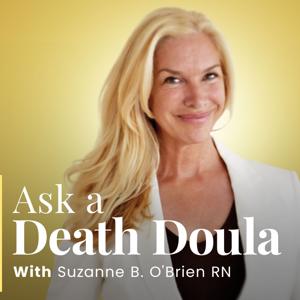
In this episode of Ask a Death Doula, Suzanne B. O’Brien shares what more than 25 years as a hospice and oncology nurse and death doula have taught her: the end of life can be a profound, sacred experience. Sacred does not mean perfect or free from sadness. It means honoring the person, their beliefs, and the love that surrounds them.
Suzanne explores how we lost many of the skills once passed down through families, why that loss can add to suffering and grief, and how learning about death can teach us to live more fully now.
In this episode, you’ll hear about:
You do not need to have all the answers to show up for someone you love. You can begin by listening, learning, and remembering that we were never meant to do this alone.
Take the next step: Join Doulagivers Institute’s free Level 1 Death Doula Global and Family Caregiver Training to learn practical ways to support someone at the end of life. Then share the training with someone you love. Together, we can bring this knowledge back—one family and one community at a time.
[Register for the free Level 1 training]
Inspired by “How Did We Get Here?” and “Death as a Sacred Experience” in Suzanne’s book, The Good Death.
Join the Next FREE Death Doula Global Training: https://www.doulagivers.com/monthly-f...
I’m honored that Doulagivers and I are featured in Grandma Stand, a documentary available on PBS. In New York City’s Central Park, grandmothers sit at a stand and offer something many people are longing for: a listening ear, honest conversation, and wisdom earned through living.
In this episode of Ask a Death Doula, I reflect on a question the film raises for me: What happens when we make room for our elder women to be heard?
For generations, grandmothers and elder women have helped families navigate life, loss, caregiving, and change. Their wisdom still lives among us. We need to honor it, listen to it, and invite it back into the heart of our communities.
This is also an invitation to the women who feel called to step forward. So many Doulagivers are in what I lovingly call the dessert phase of life. They know what has worked, what hasn’t, and what kind of legacy they want to leave. Today, they’re helping create compassionate communities for aging and end of life through education, connection, and support.
In this episode, we explore:
What can you do? Reach out to an elder woman in your life. Ask her what she has learned. Listen without rushing. Honor what she shares.
And if you’re a woman who knows you’re meant to help heal this world, I’m asking you to step forward. Join us on November 21 for our one-day event, The Power of the Doulagiver Specialist, and discover how you can help create a compassionate community for aging and end of life.
Watch Grandma Stand: Stream on PBS
Please share this episode with a woman whose wisdom deserves to be heard.
Join the Next FREE Death Doula Global Training: https://www.doulagivers.com/monthly-free-class-register
When someone we love stops eating and drinking, families often panic. Are they starving? Are they thirsty? Should I try to get just one more sip into them?
I understand that fear. After more than 20 years at the bedside, I’ve seen how quickly this moment can change the way a family feels. That is why I want to tell you plainly what I teach: when someone is in the transition phase of dying, their body knows how to shut down. Eating and drinking stop. Swallowing becomes difficult or is no longer possible. The person sleeps more deeply. This can be a natural part of the end-of-life journey.
In this episode of Ask a Death Doula, I share what I have witnessed with more than 1,000 people at the bedside—and what I want every family to know before they reach this moment.
We’ll talk about:
Most of all, I want you to know that you do not have to respond from fear. Call your hospice nurse or care team when you see these changes. Let them assess your loved one and help you keep them comfortable. If your loved one is awake, wants something, and can swallow safely, follow their lead. If they cannot swallow, there are still loving, important things you can do—especially caring for their mouth and simply being with them.
The more we understand the natural end-of-life process, the more grounded we can be for the people we love.
Take the free Level 1 Family Caregiver Training: If you are caring for someone now—or want to be prepared before the day comes—join our free 90-minute training. I’ll teach you the Doulagivers framework for understanding what is happening, why it matters, and what you can do to bring comfort and confidence to your loved one’s care.
Register for the free Level 1 Family Caregiver Training: Join the Next FREE Death Doula Global Training: https://www.doulagivers.com/monthly-free-class-register
Join the Next FREE Death Doula Global Training: https://www.doulagivers.com/monthly-f...
What do the dying know that the rest of us have forgotten?
After more than 25 years accompanying people at the end of life, I’ve been with over 1,000 people as they approached death. Again and again, I heard remarkably similar insights about love, connection, forgiveness, and what matters most.
In June, I shared some of those teachings in my course The Wisdom of the Dying. The conversations were life-changing, and the responses reminded me how deeply people are longing for a place to explore these questions. One student shared:
“Suzanne’s emphasis that dying patients say there is no death ~ has changed my entire life.”
That is why I’m beginning Death as a Spiritual Experience: a new series on Ask a Death Doula, with more to explore through blogs and conversations in our Life Café community. This first episode is an invitation to listen to the wisdom of those crossing the veil—and consider how it might change the way we live now.
In future conversations, we’ll also make room for end-of-life experiences, grief, sudden and traumatic death, and the death of children. We’ll approach these tender subjects with care and an open heart, and the truth of them as shared by the dying.
You don’t need to have all the answers to join me. Bring your questions, your experiences, and your willingness to listen. Perhaps one idea will plant a seed. Perhaps one story will heal a wound. Perhaps the wisdom of the dying will change your perspective and help you live more fully today.
Join the LIFE CAFE Community here: Here
Download your {ULM} Universal Life Mastery Guide here: Here
Follow Ask a Death Doula for the series, share this episode with someone who may need it, and join us in Life Café to continue the conversation.
YOU ARE LOVED!!
Xo Suzanne
Join the Next FREE Death Doula Global Training: https://www.doulagivers.com/monthly-f...
For the last hundred years, we have slowly moved away from one of our most important human responsibilities: community taking care of community.
Today, millions of family caregivers are expected to carry an enormous responsibility almost entirely alone. They are overwhelmed, overburdened, exhausted, lonely, and scared. Many are forced to put their own health, relationships, careers, and basic needs aside while caring for someone they love.
This cannot—and should not—be done by one person.
In this deeply heartfelt episode of Ask a Death Doula, Suzanne shares a new way forward for supporting family caregivers, inspired by Dolly Parton’s honesty about caring for her beloved husband and allowing her own health needs to go unattended.
Suzanne hears this same story from caregivers every day:
“I don’t have time to go to my own doctor.”
“I can’t leave my loved one alone.”
“I haven’t slept through the night in months.”
“No one understands how hard this is.”
Caregiving has become a silent crisis—but it does not have to remain this way.
For generations, caregiving was shared. Families, friends, neighbors, and communities understood that everyone had a role to play.
It is time to return to that understanding.
Through Doulagivers Communities for Aging and End of Life, certified Doulagivers are creating local hubs where caregivers and families can come to:
These community hubs represent a new—and deeply familiar—way forward: people caring for one another at the local level.
Do not wait for the caregiver to ask for help. Most caregivers are too overwhelmed to identify what they need, coordinate assistance, or reach out.
Simply show up.
You can:
Small acts become powerful when they are shared across a community.
Download and print the Doulagivers Support System Scheduler linked below. Invite family members, friends, neighbors, coworkers, and members of your faith or community groups to each choose one way they can help.
When many people do a little, no one person has to carry everything.
Dolly has given so much love, joy, and generosity to the world. By courageously sharing the reality of caregiving—and the ways caregivers can neglect their own needs—she has helped shine a light on a crisis that has remained invisible for far too long.
Thank you, Dolly, for raising awareness.
Let this be another beautiful gift: a reminder that caregivers need care, too.
Let’s honor Dolly by changing how we support the caregivers in our own lives. Let’s see them. Let’s hear them. Let’s show up for them.
Let’s bring back community taking care of community.
And let’s do it for Dolly.
Caregiving should never be carried by one person alone.
Supporting caregivers is not merely a kind gesture. It is our shared human responsibility.
Join the Next FREE Death Doula Global Training:
In This Free Training, You’ll Learn:
1) The 3 Phases of End of Life How to recognize the Shock, Stabilization, and Transition phases and what each one needs.
2) What Families Can Expect Common physical, emotional, and spiritual changes as someone approaches death.
3) How to Provide Real Comfort & Support Simple, non‑medical comfort measures and how to be a steady, calm presence.
What would you want if, one day, dementia took away your ability to recognize your loved ones, communicate your wishes or make your own healthcare decisions?
It is a painful question—but avoiding it does not protect us or our families.
In this deeply important episode of Ask a Death Doula, Suzanne B. O’Brien, RN, welcomes back Lisa Pahl, LCSW, creator of The Dementia Deck, for an honest and compassionate conversation about dementia, caregiving and the importance of planning ahead.
Dementia is not one specific disease. It is an umbrella term describing symptoms that affect memory, thinking, behavior and a person’s ability to manage everyday life. Alzheimer’s disease is the most common cause of dementia.
The number of people affected is growing rapidly as our population ages. In 2026, an estimated 7.4 million Americans age 65 and older are living with Alzheimer’s dementia. Nearly 13 million family members and friends are providing unpaid dementia care.
That care can be relentless—physically, emotionally, psychologically and financially. It may eventually require supervision 24 hours a day and can continue for many years. Although someone with Alzheimer’s lives an average of four to eight years following diagnosis, some people live as long as 20 years.
Suzanne and Lisa explore the two urgent challenges before us.
When a family is already living through dementia, we must show up.
One person cannot—and should not—be expected to carry this responsibility alone. Families need to “share the care” by bringing together relatives, friends, neighbors, community organizations and professional resources.
Support may include:
We often tell caregivers to ask for help. But overwhelmed caregivers may not have the energy to identify what they need, organize everyone or repeatedly make requests. Sometimes the most compassionate response is to offer something specific:
“I can stay with your mother on Tuesday from 1:00 to 4:00 so you can rest. Would that help?”
Caregiving cannot be sustained by one exhausted person. It requires a community.
The second challenge is more sensitive—but equally important:
What have we learned from today’s dementia experiences about the choices we would want for ourselves?
Dementia can eventually take away the cognitive capacity required to make and communicate healthcare decisions. By the time a crisis occurs, it may be too late for the person to explain what quality of life means to them or which interventions they would—or would not—want.
That is why these decisions should be considered while we are healthy and able to make informed choices.
Questions to consider include:
There is no single answer that is right for everyone. The right decision is the one that reflects your own informed values, beliefs and definition of quality of life.
VSED stands for voluntarily stopping eating and drinking. It is a decision by a person with decision-making capacity to stop taking food and fluids with the understanding that this will hasten death.
Because it must be voluntary, a person considering VSED generally needs to have the capacity to understand and make the decision at the time it begins. Requests concerning assisted feeding after capacity has been lost are more legally and ethically complex and may be treated differently depending on state law, the wording of the directive and the policies of the care facility.
This is why anyone considering these choices should speak with their healthcare provider, chosen healthcare representative and an elder-law or healthcare attorney familiar with the laws in their state.
A revealing study surveyed long-term-care practitioners, primarily medical directors and clinicians. Among the 69 respondents who answered questions about their own future care, 81.16% said they would be somewhat or very willing to consider VSED for themselves in the event of late-stage dementia. However, the same study found less support for honoring this choice for patients—demonstrating a meaningful gap between what some practitioners might consider for themselves and what systems may be prepared to support.
A standard advance directive may not address the complicated realities of dementia.
A dementia-specific directive allows you to describe your wishes in much greater detail, including your personal quality-of-life thresholds, preferences for medical treatment and thoughts regarding assisted eating and drinking.
But completing a form is only the beginning.
Your wishes should be:
A video explaining your wishes, in your own words, may provide additional clarity for your family—but it should supplement, not replace, properly completed legal documents.
Lisa’s Dementia Deck offers a compassionate way to begin these conversations. Its questions help individuals and families explore the values, fears, preferences and practical decisions that can otherwise feel too difficult to discuss.
Suzanne and Lisa both share that they have made their wishes known: if they were ever living with advanced dementia and had reached their personally defined threshold of no acceptable quality of life, they would not want unwanted medical interventions to prolong that state.
This is not a judgment about the worth of anyone living with dementia. Every person remains worthy of dignity, comfort, connection and compassionate care.
It is a statement about personal autonomy—and the right of every informed person to decide what quality of life means to them.
Planning ahead is one of the most loving gifts we can give ourselves and our families. When we document our wishes and explain the values behind them, we reduce the possibility that the people we love will someday be forced to guess.
The conversation is difficult.
The consequences of never having it can be far more difficult.
This episode is intended for education and conversation. It is not individual medical or legal advice. Laws and facility policies concerning advance directives, assisted feeding and VSED vary. Please consult qualified medical and legal professionals in your state.
When a family hears the words “hospice care,” they often believe hospice will come into the home and provide all the daily, hands-on care their loved one needs.
Sadly, that is not how home hospice usually works.
The word care means providing what someone needs for their health, comfort, safety, and well-being. It sounds like someone will be there doing the caregiving.
The word consulting means giving expert advice, teaching, guidance, and support.
That is much closer to how routine home hospice works.
The hospice team checks on the patient, manages symptoms, orders equipment and medications, answers questions, and teaches the family what to do. But in most cases, the family provides the daily care between hospice visits.
In this episode of Ask a Death Doula, Suzanne B. O’Brien, RN, shares what she learned while caring for more than 1,000 patients at the end of life.
As a former hospice nurse, Suzanne often had about one hour in a patient’s home. During that visit, she had to assess the patient, review medications, manage symptoms, teach the family, answer questions, calm fears, and explain what might happen next.
Then she had to leave.
The family stayed—and they were often frightened, overwhelmed, and unprepared for the care they were expected to provide.
This is not a criticism of the caring nurses, aides, social workers, chaplains, and other professionals working in hospice. They are doing important and sacred work. This is about a healthcare model that families often do not understand until they are already in a crisis.
A person can qualify for Medicare hospice when a doctor believes they may have six months or less to live if the illness follows its normal path.
Yet the median hospice stay was only 19 days in 2024. This means half of hospice patients received hospice services for 19 days or fewer.
In 2024, hospice patients received an average of 3.9 in-person visits per week. Those visits totaled about 3½ hours of hospice staff time each week.
There are 168 hours in a week.
Who is present during the remaining hours?
Usually, it is the family caregiver.
Hospice is a vital part of the care team—but hospice alone is not a complete caregiving plan.
One hundred years ago, caring for someone at the end of life was a skill passed down from grandmother to grandchild.
Families understood how the body changed. They knew how to provide comfort, gather support, sit with someone who was dying, and create meaningful rituals.
Death was not carried by one person. It was held by the family and the community.
We have not lost our ability to care. We have lost the education and community support that once showed us how.
Doulagivers Institute was created to fill this education gap.
The free Level 1 Family Caregiver Training teaches the three phases of end of life in clear, simple language. It helps families understand:
This education can reduce fear, build confidence, support healthier grief, and help families understand that the natural dying process is not a medical failure.
The training is free and available in 15 languages because every family deserves access to this knowledge.
Do not wait until someone you love is actively dying. Learn these skills now—and share them with your family and community.
Every one of us will someday be called to show up for someone we love. Knowing what to do changes everything.
Take the Free Level 1 Family Caregiver Training:
Register for the Next Live Training:
October 23, 2026
7:00 PM ET
https://www.doulagivers.com/monthly-free-class-register
Get The Doulagivers Institute Support System Scheduler
Learn More About Doulagivers Institute:
Get The Good Death by Suzanne B. O’Brien:
MedPAC: March 2026 Report to Congress—Hospice Services
Medicare: Hospice Care Coverage
There is a better way. We can learn before a crisis, support one another, and return the end of life to the sacred.
What if creating a better future isn’t about continuing to build more—but about regenerating what we have lost?
In this inspiring episode of Ask a Death Doula, Suzanne B. O’Brien welcomes visionary community builder, regenerative placemaker, and author Tony Cho for a powerful conversation about the growing movement to restore balance between people, community, and the planet.
Tony’s book, Generation Regeneration: Codesigning the Future of Cities Through Regenerative Placemaking, invites us to rethink how we live, build, and belong. Regeneration asks us to move beyond simply sustaining systems that are no longer working and begin creating communities that actively restore life, deepen human connection, honor nature, and help both people and the planet flourish.
Suzanne and Tony explore the profound connection between regeneration and what Suzanne calls the Great Remembering: our return to the timeless understanding that we belong to one another, that community is essential to our well-being, and that caring for people and caring for the Earth cannot be separated.
For generations, communities knew how to care for their elders, support their caregivers, honor the dying, protect the land, and gather around those experiencing life’s greatest transitions. Much of that wisdom has been forgotten—but it has not been lost.
This conversation is an invitation to remember.
It is also a hopeful reminder that regeneration does not begin somewhere far away or require us to wait for someone else to lead it. It begins locally—with the places we create, the choices we make, the relationships we nurture, and our willingness to become active participants in the healing of our communities.
Tony Cho is a purpose-driven entrepreneur, author, visionary community builder, and leading voice in regenerative placemaking. He is the founder of Future of Cities and the author of Generation Regeneration: Codesigning the Future of Cities Through Regenerative Placemaking. Through his work, Tony is helping communities reimagine the built environment so that people, culture, nature, and purpose can flourish together.
Part manifesto and part field guide, Generation Regeneration presents a hopeful new vision for our cities and communities—one rooted in balance, belonging, ecological restoration, and shared well-being.
The book invites policymakers, developers, cultural leaders, and everyday citizens to become co-creators of communities that do more than survive. It asks us to create places that actively heal, nourish, connect, and regenerate life for generations to come.
We do not have to invent an entirely new way forward.
In many ways, we are being asked to remember what humanity has always known: that we need one another, that nature is not separate from us, and that healthy communities are built through relationship, reciprocity, service, and care.
Regeneration begins when we stop asking, “What can I take from this place?” and begin asking, “What can I restore, contribute, and leave better for those who come after me?”
This is the Great Remembering.
This is community taking care of community again.
And every one of us has a role to play.
If this conversation inspires you, please share the episode with someone who believes it is possible to create a more compassionate, connected, and regenerative world.
☀️Join Me For The DEATH DOULA BOOTCAMP August 27th-29th
https://www.deathdoulabootcamp.com
What if the greatest solution to our aging and end-of-life crisis isn't building another system—but remembering what we've forgotten?
For generations, communities naturally cared for one another through illness, caregiving, dying, and grief. Today, many families face these experiences feeling isolated, overwhelmed, and unprepared. But it doesn't have to be this way.
In this episode of Ask a Death Doula, Suzanne B. O'Brien shares a simple yet powerful framework for rebuilding compassionate communities—one neighborhood, one conversation, and one person at a time.
Together, we'll explore the three pillars that can help transform fear into confidence, isolation into connection, and communities into places where people once again know how to care for one another.
This is how movements begin.
Not with thousands of people.
With one person deciding to care.
Doulagivers offers free education, caregiver resources, checklists, conversation guides, and community tools designed to help individuals and communities feel confident supporting one another through aging and end of life.
Together, we can return community to community again.
If today's episode inspired you and you've ever felt called to make a meaningful difference in the lives of others, I invite you to join us for our live Death Doula Business Bootcamp, happening August 27–29. Claim your space here
Over three transformational days, you'll discover what it truly takes to become a successful death doula—how to serve with confidence, build trust in your community, create a sustainable and fulfilling career, and become part of the growing movement to bring compassionate end-of-life care back where it belongs.
Not quite ready yet?
Join my free Death Doula Secrets Webinar LIVE on August 13th at 7pm EST, where I'll share the three secrets to becoming a successful death doula with both impact and income. It's the perfect place to explore whether this calling is right for you and learn how this work can transform not only the lives of others—but your own. https://event.webinarjam.com/4kv5v/register/18n4napz?webinar_id=38
Thank you for being part of this movement to return the sacredness to aging, dying, grieving, and living.
Together, we are creating compassionate communities—one conversation, one family, and one community at a time.
☀️Join Me For The DEATH DOULA BOOTCAMP August 27th-29th
https://www.deathdoulabootcamp.com
What if the work you're meant to do has been quietly calling you all along?
Across the world, families are caring for loved ones through aging, serious illness, and the end of life with very little preparation or support. Most people don't realize that family caregivers provide the vast majority of end-of-life care, yet few have ever been taught the practical skills or emotional support needed for one of life's most sacred experiences.
This isn't just a healthcare issue.
It's an education issue.
In this episode, Suzanne O'Brien, RN, Founder and CEO of Doulagivers Institute, shares why the Death Doula Business Bootcamp was created—and why this moment in history is calling for a new generation of compassionate community leaders.
This isn't another certification program or a weekend filled with information.
It's a three-day live implementation experience where you'll learn exactly how to build a meaningful, sustainable death doula practice rooted in service, education, and community impact.
Whether you're simply exploring this path or ready to begin building your practice, this episode will help you discover if this work is calling you.
You've been researching, reading books, watching videos, or exploring different training programs and wondering:
"Could I really do this?"
In this Bootcamp, you'll receive a realistic roadmap for what it takes to build a meaningful and sustainable practice so you can confidently decide whether this calling is right for you.
You have the heart.
You have the education.
But no one taught you how to build a successful practice.
Suzanne shares the exact community education model that has helped Doulagivers grow into a global institute—without expensive marketing, complicated funnels, or high-pressure sales tactics.
Perhaps you've cared for a parent, spouse, sibling, child, or close friend and experienced firsthand the enormous gaps in caregiving support.
That experience changed you.
Now you're wondering how to transform your own journey into meaningful service for others.
This work offers a pathway to turn pain into purpose while ensuring other families feel more prepared, supported, and empowered.
You've built the career.
You've achieved the success.
You've checked all the boxes.
Yet something inside keeps asking,
"Is this really what I'm here to do?"
If you're longing for work filled with purpose, connection, and lasting impact, this episode may be exactly the invitation you've been waiting for.
Perhaps you're a nurse, social worker, therapist, physician, chaplain, or another healthcare professional who entered healthcare to make a difference.
Instead, you've found yourself working within a system that often feels fragmented, rushed, and disconnected from the very reason you entered the profession.
This work offers the opportunity to return to what matters most: spending meaningful time with patients and families, providing holistic support, and rediscovering the fulfillment that first inspired you to serve.
During this live three-day experience, you'll learn how to:
You'll leave with far more than inspiration.
You'll leave with clarity.
A roadmap.
A completed outreach plan.
The confidence to begin serving your community immediately.
Suzanne's vision extends far beyond training death doulas.
Her mission is to help create compassionate communities for aging and end-of-life care by empowering local educators who bring practical skills, confidence, and hope back into neighborhoods around the world.
Imagine every family caregiver having access to the education they need before they ever need it.
Imagine every community having a trusted guide to help families navigate aging, caregiving, grief, and the end of life with compassion instead of fear.
That's the movement.
And perhaps it's your invitation to become part of it.
🎓 Join the Death Doula Business Bootcamp and spend three transformational days building your roadmap for impact, purpose, and a sustainable practice.
☀️Join Me For The DEATH DOULA BOOTCAMP August 27th-29th
https://www.deathdoulabootcamp.com
Or...
💻 Attend Suzanne's next Death Doula Secrets Webinar on August 5 at 7:00 p.m. Eastern Time, where she'll share the three biggest secrets to building a meaningful, service-based death doula practice and help you determine whether this calling is the right next step for you.
https://event.webinarjam.com/4kv5v/register/q0y3ya6y?webinar_id=37
If this episode inspired you, please subscribe, leave a review, and share it with someone who feels called to make a difference in the lives of others.
Together, we can return the sacredness to aging, caregiving, dying, grieving—and ultimately, to living.
From the publisher's feed

90,729 Listeners

37,899 Listeners
26,815 Listeners
2,582 Listeners
10,522 Listeners
809 Listeners
3,333 Listeners

7,640 Listeners
12,668 Listeners
14,344 Listeners
437 Listeners
865 Listeners

455 Listeners

18,907 Listeners

8,814 Listeners