
Sign up to save your podcasts
Or

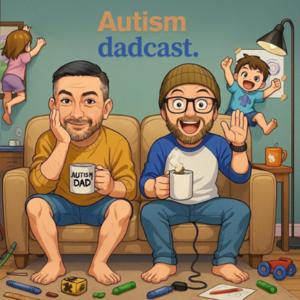


Luke has four children. Three of them are autistic. His youngest, Oscar, is non-verbal with PICA — he'll eat anything, including sand and his own faeces.
For years, Luke and his wife managed. He gave up his job as an HGV driver because the phone calls from home couldn't wait two hours for him to get back from Hereford. His parents were their only support network — his dad had worked with disabled children his whole life.
Then his dad died unexpectedly. And his mum said the words no one wants to hear: "I can't do it on my own anymore."
Support workers came on weekends. Some were good. Others turned up 45 minutes late, by which point Oscar had stripped naked and was too dis-regulated to leave. One time, staff at a soft play centre had to tell the support workers that Oscar was naked — because they hadn't noticed.
Eventually, Luke and his wife had to say the hardest thing a parent can say: we can't meet his needs anymore.
They explored residential care. The council's response? They wanted to explore foster care first — because it was cheaper. No support systems. No respite for the foster family. Just school. Luke asked them directly: "Why do you think complete strangers are going to do a better job than we did for eight years?"
They won. Oscar is now in a specialist residential setting with speech and language therapy, 24-hour support, and a chance at communication. Luke still has full parental responsibility. They see him every fortnight. They can bring him home whenever they want.
But it doesn't sit right. It never will.
Luke also shares the fight for his middle son's EHCP — tribunal, legal battles, a previous school that sent nothing but a date of birth when asked for evidence. That education costs £120,000 a year. Half a million pounds by the time he finishes secondary school.
And he says something most parents won't say out loud: "I hate autism."
Not everyone's autism. His autism. The one that means his family can't go to Christmas gatherings. The one that meant handing his son over. The one that doesn't fit the "superpower" narrative.
This is what the system doesn't want you to see.
At 10 years old, during lockdown, Charlotte watched a BBC series about autism. She saw herself in it. So she did what most adults wouldn't — she researched it, gathered the evidence, and presented it to her parents.They didn't believe her at first. She didn't fit the stereotype. She wasn't a boy obsessed with trains.She was put on the pathway. She waited 3 years. She went through half of secondary school undiagnosed, unsupported, and struggling.When the diagnosis finally came, it wasn't a surprise. She already knew. It was just clarity — recognition from the outside.But the years without support took their toll. Charlotte developed functional neurological disorder. She had seizures. She ended up in hospital. She left secondary education with no GCSEs.And that's when she started her Instagram account.From a hospital bed, she began sharing her story. She found community. She found purpose. She started speaking out — first online, then at youth parliament, then at Westminster.When Gaz and Andy met her at a rally outside Parliament, she was 16. It was her first ever public speech. She'd never even put her hand up in class before.Now she attends youth parliament every week, sits with councillors and decision-makers, and advocates for the changes she never had.Her mom watches from the sidelines, proud of the daughter who diagnosed herself and fought her own corner when no one else would.This is what's possible when someone finally listens.
On this episode, we're joined by Sean for our first ever live Christmas special recorded in front of our community.
We talk about what Christmas actually looks like with autistic kids — the pressure to make it magical, the year we realised they didn't care about presents, and why one parent picks up McDonald's on Christmas Eve to reheat the next day.
Sean shares the moment his girls stood up and delivered speaking parts in their school play after years of sitting in the corner with a tablet. We get into schools that actually meet kids where they are, the ones that don't, and a story about a boy who got cut from his nativity because he's autistic.
Plus — the spitting mystery that had everyone stumped until someone checked her back teeth.
This week we're talking about the stuff that keeps you up at night. Gaz shares the story of Thomas falling out of a window and the absolute terror of those few seconds. Andy talks about Lydia choking on a Remembrance Day pin and the chaos of trying to keep these kids safe when danger comes out of nowhere.
We get into the freezing weather, the battle to get hats and gloves on kids who hate anything on their heads, and why play barns are basically combat zones for autistic kids trying to navigate neurotypical chaos.
Christmas is coming and we're both in different places this year. Andy and Selena are going in with lower expectations and higher acceptance. Gaz is cautiously optimistic that Thomas might actually get what Christmas is this year after spelling Santa and reindeer on his iPad.
We talk about teeth brushing struggles, Caesar salad obsessions, school routines that actually work, and why showing a countdown number out loud can ruin a morning. There's also a bit on helping other dads through messages, the importance of reading your kid's notes before appointments, and why some politicians need to shut up about ear defenders.
Plus we're gearing up for the Christmas special at Henry Tudor House and marathon training starts soon. If you've been through any of this, you'll recognize every word.
Gaz and Andy sit down for one of the most open chats they’ve ever had. It’s been a long few weeks, and with Christmas creeping up, the lads talk about the heavy stuff that comes when things finally go quiet — the late-night fears about the future, the weight of responsibility, and that nagging thought every SEND parent has but never says out loud: what happens when we’re gone?
They dive into what it really means to be “strong” as an autism dad — not in the gym sense (though that comes up), but mentally and emotionally. How patience has replaced pride, how autism strips away ego, and how much you change when your world revolves around a child who needs you in ways you can’t explain to anyone else.
There’s reflection on how far their kids have come, what progress actually looks like, and why the little moments — eye contact, a word, a shared laugh — feel bigger than any milestone the world measures.
They also talk about physical health, mental fatigue, and the quiet importance of keeping your body strong enough to handle what’s ahead. Because being a SEND parent isn’t a sprint — it’s a marathon you didn’t sign up for, and you can’t afford to sit it out.
Heavy, hopeful, and funny in all the right places. Exactly what Dadcast does best.
#AutismDadcast #AutismAwareness #SENDParenting #AutismParents #AutismDads #Neurodiversity #AutismAcceptance #SpecialNeedsParenting #AutismCommunity #AutismJourney #MentalHealth #FuturePlanning #Resilience #DadLife #ParentingPodcast
It’s been a few weeks, but Gaz and Andy are back — catching up on life, work, and the chaos of raising autistic kids through the madness of Q4.
Andy shares a massive update on Lydia’s first term at her new specialist school — the highs, the progress, and the tough bit where safeguarding got real. From the shock of being asked about a bruise to understanding how vital those systems actually are, the lads unpack what every SEND parent eventually learns the hard way.
Then it’s on to a “SEND-friendly” soft play that went completely off the rails — a supposed quiet session that turned into total chaos. They talk honestly about how these things should work, the frustration of token “inclusive” marketing, and how one bad experience sparked an idea: a not-for-profit, parent-run SEND centre in Shropshire where every family actually feels understood.
Plus, Thomas’s new AAC device, the “Grid” app, and how tech is transforming communication for non-verbal kids. It’s funny, raw, emotional — classic Dadcast.
#AutismDadcast #AutismAwareness #SENDParenting #AutismParents #Neurodiversity #SpecialNeedsParenting #AutismAcceptance #AutismJourney #NonVerbalAutism #ParentingPodcast #AutismCommunity #AutismDads #Safeguarding #SENDSupport #Shropshire
Gaz and Andy sit down with Jamie Jewitt, a dad of three navigating life in the public eye while raising his autistic daughter, Nora.
Jamie opens up about spotting the early signs, getting the diagnosis, and how it completely changed how he sees life, parenting, and success. He talks about the pressure of being in the public eye, dealing with trolls, the emotional rollercoaster of acceptance, and why he’s stopped worrying about milestones and started celebrating the little wins.
The lads dive deep into the raw stuff, guilt, fear, self-preservation, and those late-night “what if we’re not here one day” thoughts that every autism parent quietly wrestles with. But there’s plenty of laughter too, from Baby Shark sing-alongs to spelling “car” on the bedroom floor.
This one’s heavy, funny, and properly real. Exactly what Dadcast’s all about.
#AutismDadcast #AutismAwareness #AutisticChildren #ParentingInPublic #Neurodiversity #AutismAcceptance #Dadcast #AutismCommunity #ParentingPodcast #AutismDads #SEND #SpecialNeedsParenting #JamieJewitt #AutismJourney
This week we’ve got another dad on the mic — Daniel, a Shrewsbury local with two kids, one of whom is nonverbal and highly autistic. He takes us through their journey: spotting the signs early, navigating endless assessments, fighting councils for schooling, and the daily realities of sleep battles, food quirks, stims, and meltdowns.
We talk about the little wins that keep you going, why applying early for support is crucial, and how families juggle siblings, relationships, and money when the system drags its feet. Daniel shares brutally honest stories — from crayons, makeup, and deodorant snacks, to the joy of Disney films, hammocks, and Saturday-night dips.
There’s a lot in here for parents on the same road: the entitlements you might not know exist, how communication devices are changing lives, and why no two autistic kids — or families — look the same.
Raw, funny, heavy, and hopeful. Exactly what you’d expect from Dadcast.
We’re back after a messy week. We headed to London for the Fight for Ordinary rally in Parliament Square, stood with hundreds of parents and carers, and heard a few politicians actually sound like they get it. Ed Davey included. Met loads of you too which was class.
Then we get into the headline everyone’s shouting about. Trump and RFK Jr linking Tylenol in pregnancy to autism. We unpack the claims, the weak evidence, the fallout for mums, and why the whole “cure autism” thing hits very differently across the spectrum.
We finish with your Q&As on fitness and self care. How to find time when you’re wrecked, why steps beat excuses, and Andy’s big weight loss update.
Heads up on the video. It’s only on Andy this week because Gaz’s camera SD card got corrupted. Tech gremlins had us. Audio’s all good.
Raw, a bit funny, a bit heavy. Standard Dadcast.
In this episode, Gaz and Andy dive into the Telepathy Tapes — the podcast that claims some non-verbal autistic kids can communicate telepathically. Sounds mad, but could there be something in it? The lads weigh up the hype, the hope, and the science.They also share a shocking story from the park when Andy’s daughter Lydia was cruelly targeted by strangers — and how that ties into the toxic rhetoric creeping into politics and SEND reform. On top of that, they talk EHCP battles, the Fight for Ordinary rally in London, and what all this means for families like ours.It’s raw, emotional, and unfiltered — with a bit of Joe Rogan, aliens, and quantum physics thrown in too.
From the publisher's feed

334 Listeners

915 Listeners
920 Listeners

25 Listeners
249 Listeners
326 Listeners
84 Listeners
25 Listeners
7 Listeners
27 Listeners
575 Listeners
88 Listeners
10 Listeners
26 Listeners