
Sign up to save your podcasts
Or

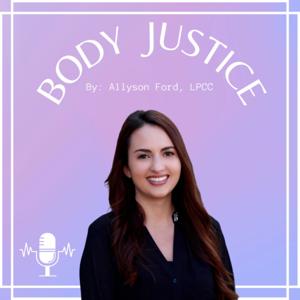


In this solo episode, we're talking about what to do when the urge to pursue weight loss creeps back in during eating disorder recovery- especially in today's cultural climate of GLP-1s, skinnytok, and amped-up diet culture. I share four reflection questions to help you slow down, sit with the urge, and make values-aligned decisions for your body.
Topics covered:
Connect with Allyson:
Disclaimer: This podcast is not individual therapy, nutrition, or medical advice, and is for educational purposes only.
In this episode of Body Justice Podcast, Allyson sits down with Raina LeGrand, LCSW, a therapist and somatic practitioner to talk about the intersection of mixed race identity and body image.
Allyson & Raina dig into how growing up without language for mixed race experiences shapes body image, the role of monoracism and belonging wounds, and how building critical mixed race consciousness supports healing.
Raina shares her personal journey through disordered eating, body image struggles and explains how somatic therapy helped her reconnect with her body and her relationships.
Allyson & Raina also explore the power of community and mirroring for mixed race folks, the historical trauma tied to racial purity and colonial violence, and practical somatic tools for tracking sensation and building a felt sense of safety in the body.
Episode Breakdown:
Connect:
https://www.mixedracebelonging.com/collective
Disclaimer: This podcast is for educational and informational purposes only and is not a substitute for professional medical or mental health advice, diagnosis or treatment. Always seek the guidance of a qualified healthcare provider with any questions you may have regarding a medical or mental health condition.
In this deeply personal and powerful episode of Body Justice Podcast, Allyson sits down with Dr. Han Ren, licensed psychologist, author, and children of immigrants specialist, to explore one of the most complex emotional landscapes many of us are facing right now: maintaining relationships with family members whose values have fundamentally shifted, particularly within immigrant and collectivist family systems.
In this episode, we discuss:
Resources & Links:
Host: Allyson Inez Ford, LPCC📸 Instagram: @bodyjustice.therapist🌐 Website: www.eatingdisorderocdtherapy.com
Guest: Dr. Han Ren, Licensed Psychologist & Author📸 Instagram: @drhanren📖 Book: The Hyphenated Life, out now!
Body Justice is a podcast exploring the intersection of social justice and eating disorders. New episodes drop regularly. Subscribe, leave a review, and share with someone who needs to hear this. Available on all major podcasting platforms!
Disclaimer: Please note that this podcast is meant for educational purposes only- it is not a substitute for 1-1 therapy or medical advice. Listening to this podcast does not constitute a provider-patient relationship. Please seek the help of a local therapist or emergency room if you are in crisis or in need of 1-1 support!
In this powerful episode, Allyson sits down with Dr. Giulia Suro, a clinical psychologist and Senior Director of Research at Monte Nido, a national eating disorder treatment company. Giulia shares recent findings from one of the largest naturalistic eating disorder research datasets in the country and what the data reveals about the undeniable link between sexual trauma and eating disorders.
What We Cover
Key Takeaways
Resources & Links
Disclaimer
The content of this podcast is for educational and informational purposes only and is not a substitute for professional mental health treatment or medical advice. Nothing discussed in this episode constitutes a therapeutic relationship between the hosts, guests, and listeners.
If you've ever been in eating disorder recovery and felt like your body was fighting you every time you tried to eat, this episode is for you. Host Allyson Inez Ford, LPCC sits down with Dr. Sarah Lowenthal, MD, CEDS-S, a board-certified family physician and eating disorder specialist based in Mill Valley, CA, for a candid, validating and genuinely eye-opening conversation about gastrointestinal issues in eating disorder recovery.
What we cover in this episode:
Allyson opens up about her own experience with GI symptoms in recovery and why she's so passionate about getting this information out there- because nobody talked to her about it when she needed it most.
Dr. Lowenthal breaks down the most common GI complications she sees in her practice, including:
Gastroparesis: Often called "stomach paralysis," this slowing of gastric emptying happens when the body conserves energy in response to restriction. It occurs in people of all body sizes and shapes, not just those who are visibly underweight, and can make eating feel physically impossible even when you're trying to recover.
Upper GI complications from purging: including parotid gland enlargement, esophagitis, acid reflux, gastritis, ulcers, and in serious cases, esophageal tears that require immediate medical attention.
SIBO and IBS: Dr. Lowenthal explains the significant overlap between these conditions and eating disorders, including how a well-intentioned IBS diagnosis and restrictive dietary guidance (like FODMAPs) can actually trigger an eating disorder in someone with a genetic predisposition.
The GLP-1 problem: This is where the conversation gets particularly important. Dr. Lowenthal explains that GLP-1 medications essentially induce the same GI symptoms as anorexia nervosa: gastroparesis, constipation, diarrhea and profound discomfort from chronic undereating and malnourishment. She's seeing patients develop full-blown eating disorders after being started on them. For people with preexisting eating disorders, the risks are even more serious, including dangerous hypoglycemia. Dr. Lowenthal's clinical position: if you've ever had an eating disorder, GLP-1s should be contraindicated.
You don't have to white-knuckle it. One of the most important takeaways from this conversation is that there are medical interventions that can help with GI symptoms in recovery. Medications for gastroparesis, treatment for SIBO and proper medical monitoring can make the difference between someone being able to eat and someone continuing to restrict because the physical pain feels unbearable. Suffering through it isn't a healing and there are options available to make this process more bearable.
Dr. Lowenthal also shares guidance on how to know when GI symptoms warrant further medical workup and why these symptoms so often get dismissed by providers and what it means for recovery when they are.
Connect with Dr. Sarah Lowenthal, MD, CEDS-S:
Website: www.sarahlowenthalmd.com
Email: [email protected]
Dr. Lowenthal sees patients in person in Mill Valley, CA and virtually throughout California and New York.
Disclaimer: This episode is for educational and informational purposes only and does not constitute medical advice. Please consult with a qualified healthcare provider regarding any medical concerns or symptoms you may be experiencing. If you are struggling with an eating disorder or disordered eating, please seek support from a licensed professional.
Looking for an eating disorder therapist and interested in working with Allyson and her team?
Visit www.eatingdisorderocdtherapy.com to learn about our services and schedule a free 15-minute intro call. We work with clients in California, Washington, Utah, Tennessee, Maryland, and Florida.
Episode 84 of Body Justice is all about Jen Caspari's lived experience navigating cerebral palsy and how being disabled impacted her body image over the course of her life. She discusses various insights and strategies that have helped her build a more peaceful relationship to her body despite living in a world that is often not accommodating. Jenn also has professional experience as a psychologist supporting many clients living with chronic illness, chronic pain and disabilities- she is a wealth of knowledge!
More about Jenn: Jennifer Caspari, PhD, is a licensed clinical psychologist currently working in Vancouver, BC, who specializes in general and health psychology. She is passionate about helping clients live full and meaningful lives, including those living with acute or chronic illness and chronic pain. She lives with cerebral palsy, and when not meeting with clients, greatly enjoys writing, including a Psychology Today blog, Living Well When Your Body Doesn't Cooperate, and for The Globe and Mail column, Ask A Therapist. Dr. Caspari also values providing training to health professionals and is the creator and instructor of a chronic pain course with PESI, a national leader in continuing education to mental health professionals.
In her free time, Dr. Caspari enjoys spending time with loved ones, feeling the sun on her face, listening to audiobooks while moving her body, watching cooking and baking shows, and eating delicious food. You can find her on social media @moxie_mindset.
Jenn's Book: You Are More Than Your Body.
Disclaimer: this podcast is intended for informational and educational purposes only. This is not a replacement for individual therapy or medical advice.
As always, you can find the host of this podcast, Allyson, on her website: www.eatingdisorderocdtherapy.com or IG: @bodyjustice.therapist.
Episode 83 of Body Justice Podcast is something we all need to hear. There are not enough stories of people going through recovery from an eating disorder while food insecure- despite food insecurity being a top reason for eating disorder development. Elizabeth shares her powerful story and how her experience led her to founding a virtual food pantry- grounded in dignity and choice.
About Elizabeth Ayiku:
Elizabeth is a filmmaker, food justice organizer, and founder of Me Little Me Foundation, a nonprofit advancing food equity and providing free, culturally competent support to historically marginalized communities. Based in Los Angeles, she works to dismantle systemic barriers to mental health and well being, with a focus on meeting basic needs first.
She founded the Me Little Me Foundation in response to her own lived experience with food insecurity, racial inequity, and a deep understanding of the gaps in support for marginalized communities. Her personal journey fuels her unwavering commitment to social justice and community care.
Links to resources discussed:
Me Little Me Foundation
Me Little Me Narrative Feature film, based on Elizabeths journey recovering from an eating disorder.
Disclaimer: this podcast is intended for informational and educational purposes only. This is not a replacement for individual therapy or medical advice.
As always, you can find the host of this podcast, Allyson, on her website: www.eatingdisorderocdtherapy.com or IG: @bodyjustice.therapist.
Episode 82 of Body Justice Podcast is a follow up conversation with Deb Benfield, a registered dietitian and author of Aging Body Liberation, about the intersection of diet culture and ageism; as well as the covert ways disordered eating is becoming embedded into policy in the U.S.
We discuss our thoughts on: ultra-processed foods, seed oils, longevity medication and more.
More about Deb:
Deb Benfield, M.Ed., RDN, LDN, RYT, is a Registered Dietitian, nutrition therapist, and body image coach with 40 years of experience helping people heal their relationship with food, movement, and their bodies. Her work sits at the intersection of anti-ageism, body liberation, and trauma-informed care, offering a radically compassionate alternative to anti-aging, diet, and wellness culture, especially for those in midlife and beyond.
After turning 60, Deb began questioning the dominant narratives around aging, vitality, and beauty—and quickly realized how many resources still centered weight loss and youthful appearance as ultimate goals. In response, she created what she couldn’t find: a framework for nourishing the body that honors inner wisdom, prioritizes quality of life, and embraces the full spectrum of aging.
She’s the author of Unapologetic Aging: How to Mend and Nourish Your Relationship with Your Body and offers individual and group coaching to help others age unapologetically—on their own terms.
Disclaimer: this podcast is intended for informational and educational purposes only. This is not a replacement for individual therapy or medical advice.
As always, you can find the host of this podcast, Allyson, on her website: www.eatingdisorderocdtherapy.com or IG: @bodyjustice.therapist.
Educational resources mentioned:
Maintenance Phase- Ultra Processed Foods Episodes
Emily Oster- Seed Oils
Emily Oster- Microplastics
Episode 81 of Body Justice Podcast is all about the intersection of diet culture and ageism. We discuss how these systems impact our relationship to food and body, especially as we age. We explore how the skincare industry has emerged as the new diet culture and how it is rooted in a socialized fear of aging. Deb shares her own lived experience as a woman in her late 60s, a professional in the eating disorder field with decades of experience- and how she aims to challenge these harmful systems in her work with clients and anyone who follows her work.
More about Deb:
Deb Benfield, M.Ed., RDN, LDN, RYT, is a Registered Dietitian, nutrition therapist, and body image coach with 40 years of experience helping people heal their relationship with food, movement, and their bodies. Her work sits at the intersection of anti-ageism, body liberation, and trauma-informed care, offering a radically compassionate alternative to anti-aging, diet, and wellness culture, especially for those in midlife and beyond.
After turning 60, Deb began questioning the dominant narratives around aging, vitality, and beauty—and quickly realized how many resources still centered weight loss and youthful appearance as ultimate goals. In response, she created what she couldn’t find: a framework for nourishing the body that honors inner wisdom, prioritizes quality of life, and embraces the full spectrum of aging.
She’s the author of Unapologetic Aging: How to Mend and Nourish Your Relationship with Your Body and offers individual and group coaching to help others age unapologetically—on their own terms.
Disclaimer: this podcast is intended for informational and educational purposes only. This is not a replacement for individual therapy or medical advice.
As always, you can find the host of this podcast, Allyson, on her website: www.eatingdisorderocdtherapy.com or IG: @bodyjustice.therapist.
Episode 80 of Body Justice podcast is a compassionate and honest exploration of one person's journey of unlearning Zionism. Our guest is Natalie Katz, a Jewish eating disorder dietitian. In this episode we cover:
About Natalie:
Natalie is a registered dietitian and the founder of Feeding Your Soul Nutrition an outpatient insurance-based nutrition group practice specializing in eating disorder and non-diet nutrition care. Since 2017, she has grown the practice into a team of registered dietitians who provide compassionate, weight-inclusive support to clients of all ages, both virtually and in person. Natalie also provides clinical and business consultation to fellow clinicians in hopes of increasing eating disorder informed and inclusive care.
Visit Natalie's website here: https://feedingyoursoulnutrition.com/
_______________________________________________________________
Disclaimer: this podcast is intended for informational and educational purposes only. This is not a replacement for individual therapy or medical advice.
As always, you can find the host of this podcast, Allyson, on her website: www.eatingdisorderocdtherapy.com or IG: @bodyjustice.therapist.
From the publisher's feed

56,435 Listeners

4,772 Listeners
107 Listeners
735 Listeners
16 Listeners
439 Listeners

1,773 Listeners
13,624 Listeners
155 Listeners

106 Listeners

120 Listeners
81 Listeners
157 Listeners

12,495 Listeners