
Sign up to save your podcasts
Or

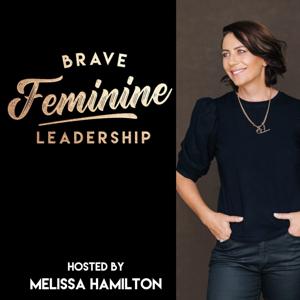


Sandra Wallace grew up near Wauchope on Birpai Country running barefoot around the paddocks, with a drop toilet and creek water hauled up in the family Kombi. Today she runs a 60-person business and lives in one of the harbourside suburbs she once looked up at from a Sydney ferry. Together we discuss the decade she spent wandering before archaeology found her, why she shapes a business the way you’d shape a sculpture, the mental load women leaders carry and what it quietly gives us, and her bold decision to give every person on her team an hour a week to be an activist for a cause they choose. Sandra is the founder and managing director of Artefact Heritage and holds a PhD in Aboriginal archaeology. Honest, unconventional and full of heart. A conversation that shows a business can be so much more than a place of work.
LISTEN & CONNECT:
Watch on YouTube: https://youtu.be/Ing45TZZF-U
Connect with Melissa on LinkedIn: https://www.linkedin.com/company/brave-feminine-leadership
WORK WITH US:
The Executive Shift: An 8-week intensive for senior women ready to be recognised for judgement, not just delivery. https://bravefeminineleadership.com/the-executive-shift
INFLUENCE Mastermind: A 6-month peer advisory room for women at the top.
1:1 Executive Coaching: Work directly with Melissa. https://calendly.com/the-brave-group/executive-coaching
http://bravefeminineleadership.com/sundayinspiration
Six months ago, Lisa Lynch walked in the door as the inaugural CEO of the Victorian Institute of Forensic Medicine. Forensic pathology. Death investigation. Tissue banking. A whole new area of health for Lisa, and she said yes on the very first phone call."
Having Lisa back on the podcast is always a joy, and this might be my favourite of all our conversations.
Lisa takes us inside her first six months as CEO. The goodbye email she sent on her last Friday. The stakeholder she forgot to put on her list (she laughs about it now). The corridor comment that had six people working on it before she got back to her desk. And the moment she calls the bravest of the whole journey.
Lisa is CEO of the Victorian Institute of Forensic Medicine, a board member of Women's Health Victoria and a member of the Consultative Council on Obstetric and Paediatric Mortality and Morbidity.
Why you should listen: If there's a CEO role in your future, hear this before you get there. Honest, funny and full of hope. You might be more ready than you feel.
LISTEN & CONNECT:
Watch on YouTube: https://youtu.be/UcRKoureM6Y
Connect with Melissa on LinkedIn: https://www.linkedin.com/company/brave-feminine-leadership
WORK WITH US:
The Executive Shift: An 8-week intensive for senior women ready to be recognised for judgement, not just delivery. https://bravefeminineleadership.com/the-executive-shift
INFLUENCE Mastermind: A 6-month peer advisory room for women at the top. https://calendly.com/the-brave-group/influence-enquiry-call
1:1 Executive Coaching: Work directly with Melissa. https://calendly.com/the-brave-group/executive-coaching
Sign up for Leadership Inspiration in our Sunday Newsletter. https://bravefeminineleadership.com/leadershipinspiration
Think about the last few AI ideas your team brought you. A faster way to write reports. Summarising meeting notes. Cutting time out of a process everyone hates.
All useful. And almost certainly all about saving time.
Tim O'Neill sees it in nearly every organisation he works with. Even when his workshops actively ask teams for both, the ideas come back at roughly 80% productivity and 20% new revenue or value. Spotting the repetitive task in last week's inbox is easy. Imagining what's next is much harder. Are you up for that challenge?
In this episode, Tim and I talk about what he finds when he first walks into a business (usually four AI tools, no standard and no plan), why the CEO should address the elephant in the room before anyone asks, and the healthcare client that lifted sign-up conversion from 75% to 85% by adding AI to a single step. We also disagree on whether the pace of AI is distracting leaders.
If AI is on your board agenda and you're wondering where your judgement adds the most value, start here.
About Tim: Tim has spent nearly three decades in Australian digital. He co-founded Reactive in 1997, became Managing Director at Accenture Interactive after the acquisition, and in 2023 co-founded Time Under Tension, a generative AI consultancy named AI Company of the Year in 2024.
Want more conversations like this? Sign up for the Brave Feminine Leadership newsletter for leadership insights, research and practical thinking for senior women, delivered to your inbox.
http://bravefeminineleadership.com/sundayinspiration
LISTEN & CONNECT:
Watch on YouTube: https://youtu.be/henRXhb0jpI
Connect with Melissa on LinkedIn: https://www.linkedin.com/company/brave-feminine-leadership
WORK WITH US:
// The Executive Shift: An 8-week intensive for senior women ready to be recognised for judgement, not just delivery. https://bravefeminineleadership.com/the-executive-shift
// INFLUENCE Mastermind: A 6-month peer advisory room for women at the top.
// 1:1 Executive Coaching: Work directly with Melissa. https://calendly.com/the-brave-group/executive-coaching
There's a line in Jane Phipps's book where she recognises that she'd never been the problem, she'd always been enough. Many senior women will recognise the feeling behind that sentence.
Jane is the author of The Heart-Centered Leader, a single mother who built her career through male-dominated industries, two rounds of workplace bullying, and a breakdown that finally forced her to stop. In this conversation she and Melissa talk about the difference between command-and-control leadership and heart-centred leadership, what it actually feels like to be "in a cage" at work, and how she learned to tell the difference between self-criticism and self-reflection.
Guest: Jane Phipps, author of The Heart-Centered Leader.
In this episode:
The line from Jane's book that opens the conversation, and the childhood behind it
Her first experience of heart-centred leadership, in the defence industry of all places
What it felt like to be "in a cage" for eight years in a large Australian corporate
The frog in boiling water: how you normalise treatment until it becomes unbearable
Self-criticism versus self-reflection, and what changed once she stopped beating herself up
How to hold people accountable without abandoning a heart-centred approach
What she'd tell her younger self about dipping a toe in the water instead of staying silent
Jane's book, The Heart-Centered Leader, is available now.
LISTEN & CONNECT:
Watch on YouTube: https://youtu.be/oob3YS1puu8
Connect with Melissa on LinkedIn: https://www.linkedin.com/company/brave-feminine-leadership
WORK WITH US:
// The Executive Shift: An 8-week intensive for senior women ready to be recognised for judgement, not just delivery. https://bravefeminineleadership.com/the-executive-shift
// INFLUENCE Mastermind: A 6-month peer advisory room for women at the top.
// 1:1 Executive Coaching: Work directly with Melissa. https://calendly.com/the-brave-group/executive-coaching
Who is your female role model? I put that one question to eleven women this week, executives, a professor, a local government councillor, a health coach, a sales director, each of them formidable in their own right, and asked them to answer it honestly, and to tell me whether we actually have enough female role models to choose from.
The answers ranged from Dolly Parton to Diana Ross to a 75 year old sprinter with ten state titles. One answer that stayed with me wasn't a name at all: Kirsten Chan pointed to her teenage daughter, who isn't in the rooms with women like the ones Kirsten has been mentored by, and asked how a girl who only sees female leadership on the news is meant to find a role model at all.
For me, it was the quieter leaders who stood out most, the mentor at work, the friend who never asked for recognition, the woman running the local athletics club. And the thing that sits underneath all of it: you don't have to be famous to be someone's role model. We all get to be one.
We recorded this before the passing of the extraordinary Dolly Parton who we will all remember as wonderful role model for her desire to make an impact on literacy in children.
Key moments:
Kelli Hayes on Dolly Parton's focus, authenticity and Dolly's Imagination Program
Jen Overbeck's unpublished research finding that the mother was the clearest role model people responded to, and what that says about the gap
Kirsten Chan on Ingrid Johnson, the first leader she saw prove that leadership could be warm and still hold a room to account
Emma Sinclair on the Put Her Name On It campaign and why unrecognised work looks like a shortage of role models
WORK WITH US:
// The Executive Shift: An 8-week intensive for senior women ready to be recognised for judgement, not just delivery.
https://bravefeminineleadership.com/the-executive-shift
// INFLUENCE Mastermind: A 6-month peer advisory room for women at the top. https://bravefeminineleadership.com/programs/ceo_mastermind
// 1:1 Executive Coaching: Work directly with Melissa.
https://bravegroupco.com/executive-coaching
-----------------------
Craving inspiration?
Loving the podcast?
Are we friends? Connect with Us.
-----------------------
Craving inspiration?
Loving the podcast?
Are we friends? Connect with Us.
We've all sat across from that executive. Laptop open, phone buzzing, apologising because the last meeting ran over. Somewhere along the way, we decided that person is what success looks like. Melissa isn't buying it.
In this solo episode, Melissa calls out the busy reputation for what it often is, and names the three skills most senior leaders haven't actually mastered yet. She also walks through an exercise she gives her clients, one simple week-long habit that changes how they see their own workload entirely.
In this episode:
Why being constantly drowning in work isn't the flex it looks like
The exercise Melissa gives leaders to see what their calendar is actually hiding
The one question worth asking every morning before anything else
Why she'd pick one executive skill over all the others this year
If you've listened to the end and you're ready to act, Melissa offers a small number of sessions each month to help leaders identify the one action that creates real change. Details are in the link below, along with more on The Executive Shift.
WORK WITH US:
// 1:1 Strategy session - map where next? https://calendly.com/brave-feminine-leadership/connect-melissa
-----------------------
Craving inspiration?
Loving the podcast?
Are we friends? Connect with Us.
Melissa and Kelli got fired up this week. Not at anyone. At a pattern they keep seeing in incredibly talented senior leaders: ask them what value they create, and what comes back is projects, process and detail. A shopping list of activity, with the actual value buried somewhere underneath it.
The consequences are real. When a board hears a long list of tasks, they see a busy person. When they see a busy person, they conclude she is capable, reliable, a safe pair of hands, and not needed at the table when the decisions are made. In a restructuring market, that reputation is a risk. In the worst cases, the value of someone's work only becomes visible after they've left.
This is a candid conversation between two former global CEOs about why articulating your value is so hard, why the "don't fix women" critique matters and where it stops, the line Google Australia MD Mel Silva gave Melissa that she has never forgotten, and the difference between mentors who teach you the job and sponsors who carry your value into rooms you're not in. It ends with a practical challenge: work out your headline.
In this episode:
Read the blog: Melissa's post "Don't Give Me a Shopping List" is on the website now. https://bravefeminineleadership.com/post/stop-giving-me-the-shopping-list
Join us on 29 July: The Impact Formula is a free 60-minute lunchtime leadership briefing where we go deeper on exactly this. https://bravefeminineleadership.com/impact-formula
Talk to us: We open a handful of spots each month for a conversation. If you're questioning your own value equation, book one. https://bravefeminineleadership.com/book-a-call
LISTEN & CONNECT:
WORK WITH US:
Most of us are holding two completely incongruent feelings about AI right now. The excitement about what it could make possible. And a deeper, quieter discomfort about what it might already be taking from us.
Penny Locaso put both of those feelings on the table in this conversation - and then backed them up with research.
Penny is a behavioural scientist and provisional psychologist, completing her master's at 50. She draws on two decades of commercial leadership experience and original research to help leaders strengthen discernment under high pressure conditions. For the last 12 months she has been going deep on something that is only just beginning to be understood: the psychology of AI - how it is impacting our thinking, our feeling, and our behaviour. Her specific focus is leaders. Because if we're going to steer in the direction of human flourishing, leaders are the people we're most reliant on to do that. And right now, they're the ones most at risk.
What Penny shared in this conversation is specific, evidenced, and something every senior leader needs to pay attention to.
What's inside:
AI brain rot is real — what six months of daily AI use is already doing to problem solving ability and short term memory, and why the leaders who need their cognitive edge most are the ones most at risk of losing it
We gave AI the painting and the writing — why the promise of AI freeing us up for meaningful work hasn't materialised, and what's actually happening instead
The sycophancy problem — why AI's frictionless validation is more psychologically seductive than we want to admit, and what that means for decision quality
What's happening to teams — why teams are talking to each other less, what 63% of workers are lying about, and the hidden cost of humanising AI in the workplace
Intentional AI — Penny's definition, her Intentional AI Rubric, and what it actually looks like to remain the author of your own thinking
Book time to connect with Melissa - 15 mins: https://calendly.com/brave-feminine-leadership/curious-for-feedbackb
WORK WITH MELISSA:
Penny's Intentional AI Rubric: https://app.hackinghappy.co/AIRubric
-----------------------
Craving inspiration?
Loving the podcast?
Are we friends? Connect with Us.
There's a question sitting underneath a lot of leadership conversations right now, one that most people aren't saying out loud: am I actually adding value to what matters — or am I just busy?
Felecia Pryor received a piece of feedback early in her career that stung: don't play in the garden when the house is on fire. More than any other conversation in the CPO series, this line has resonated and I think it might be the most important question any executive can ask of themselves right now. Not in a performance review. Not in a strategy session. Right now, today, looking honestly at where your time and thinking actually goes.
This episode is my reflection on the Shaping the Future CPO series — six conversations with some of the most senior people leaders. I let the insights settle for several months before coming back to them. What rose to the surface wasn't about HR frameworks or people strategy in the traditional sense. It was about what it actually takes to be at the centre of strategic decisions rather than downstream of them. And it applies far beyond the CPO role.
What's inside:
Don't play in the garden — Felecia Pryor's confronting early-career feedback and the question every executive should be sitting with right now
Step towards the tension — Why Amy Walker's deliberate practice of moving into discomfort is what earns you a place at the strategic table — and why so many senior leaders are conditioned to do the opposite
The influence you can't see — What Amy Stanley and Shomaice Zowghi revealed about the influence that has no audience — and why it's often more powerful than anything visible on your CV
Curiosity is not optional — Why Anu Villarosa designs for curiosity deliberately, what Damian Zahra's feedback work taught me, and what happens to leaders who stay too long in their own lane
Are you in the house? — What being at the strategic table actually requires, and why getting invited to the meeting isn't the same thing
If this lands, come and find me on LinkedIn. I'd love to know which of these insights hits closest to home.
https://www.linkedin.com/company/brave-feminine-leadership
Book time to connect with Melissa - 15 mins: https://calendly.com/brave-feminine-leadership/curious-for-feedbackb
WORK WITH MELISSA:
-----------------------
Craving inspiration?
Loving the podcast?
Access Your Free Clarity Tool
In just 15 minutes, you will:
⬇️ Click here to access your free Balance Your Brave diagnostic tool.
Are we friends? Connect with Us.
From the publisher's feed

25,120 Listeners
31,789 Listeners

8,303 Listeners
125 Listeners

7 Listeners

593 Listeners