
Sign up to save your podcasts
Or



Connect with us at:
Rosemay Webster on LinkedIn
Elizabeth Amorino on LinkedIn
We'd LOVE to hear from you.
Episode Summary:
For many working women, this is one of the biggest communication challenges especially in moments that matter most. You know what needs to be said, but instead of being direct, you soften your message, over-explain, or hedge your words.
And the result?
In this episode, we break down why being direct feels so uncomfortable, how communication anxiety and people-pleasing habits affect your delivery, and how to speak clearly at work and in your relationships without damaging trust or connection.
You’ll learn 3 simple shifts that help you communicate with clarity and confidence, so you can be both direct and respectful in real conversations.
What You’ll Learn:
Why working women struggle to be direct in conversations and feedback
How fear of sounding harsh leads to unclear communication
The difference between clarity and tone (and why they matter)
3 simple communication shifts to help you speak clearly and confidently
How to stop overexplaining and say what you mean in fewer words
Practical phrases to help you be direct without feeling rude
Who This Episode Is For:
Hold back from speaking clearly because they don’t want to sound harsh
Struggle with people-pleasing, overexplaining, or softening their message
Want to improve communication skills at work and in relationships
Are navigating leadership, feedback conversations, or difficult discussions
Want to feel more confident, respected, and understood when they speak
Key Takeaways:
1. Clarity, not harshness, is what creates strong communication
When your message is unclear, people feel it and that’s what creates tension in conversations.
2. Lead with clarity instead of cushioning your message
👉 Try:
“I want to be direct…”
“I noticed something I want to address.”
“Here’s what I’m seeing.”
Clear communication is respectful communication.
3. Separate what you say from how you say it
👉 Try:
“I’d like us to try a different approach here.”
“I have a concern I want to talk through.”
Keep the message clear and let your tone carry warmth and respect.
4. Say less and trust your message
👉 Try:
“This approach isn’t working.”
“We need to change direction here.”
Then pause.
The Core Shift:
Being unclear does.
When you speak clearly without overexplaining or softening you create trust, reduce confusion, and build confidence in how you communicate.
You don’t need to say it perfectly.
Action Step:
👉 “I want to be direct…”
No cushioning.
Go-To Phrases:
“I want to be direct…”
“I noticed something I want to address.”
“Here’s what I’m seeing.”
“This approach isn’t working.”
“We need to change direction here.”
Connect & Share:
Leaving a review helps more working women build communication confidence and learn how to express themselves clearly in the relationships that matter most.
Closing Thought:
Connect with us at:
Rosemay Webster on LinkedIn
Elizabeth Amorino on LinkedIn
We'd LOVE to hear from you.
Episode Summary:
For many working women especially those navigating career transitions, leadership growth, or evolving relationships the frustration isn’t a lack of good ideas. It’s that your ideas are being overlooked, dismissed, or not fully heard in meetings and important conversations.
And over time, that leads to something deeper: communication anxiety, second-guessing, and overthinking every interaction.
In this episode, we break down what we call the Communication Gap the space between what you’re thinking and how you actually speak up in the moment.
You’ll learn why people don’t listen even when you’re saying the right thing, how overexplaining and people-pleasing habits weaken your message, and what to do differently so you can speak clearly, build communication confidence, and be heard at work and in your relationships.
What You’ll Learn:
Why working women often feel unheard in meetings and everyday conversations
How communication anxiety and overthinking impact how others respond to you
What creates the gap between your ideas and how they’re received
3 common communication habits that cause your ideas to be ignored
How to speak clearly at work without overexplaining or softening your message
Practical ways to build communication confidence and stop second-guessing yourself
Who This Episode Is For:
Feel like people don’t listen or take their ideas seriously
Want to improve communication skills in both work and relationships
Are navigating career transitions, leadership roles, or personal growth
Struggle with overthinking, overexplaining, or people-pleasing communication patterns
Want to feel more confident speaking up and being heard in meetings and important conversations
Key Takeaways:
1. The problem isn’t your ideas it’s how they come across in the moment
2. Stop burying your point lead with clarity
“Here’s my recommendation.”
“The key issue is…”
Leading clearly is one of the most important communication skills for being heard at work.
3. Remove language that weakens your message
“I think we should…”
“This isn’t working.”
Clear, direct language builds trust and helps others respond to what you’re actually saying.
4. Say it once then let it land
“That’s my recommendation.”
“That’s the main point.”
Then pause. This is where being heard actually happens.
The Core Shift:
It’s because overthinking, communication anxiety, and people-pleasing are changing how your message is delivered in real time.
When you learn to speak clearly without overexplaining or softening you close the Communication Gap.
And that’s how you move from feeling ignored… to being heard, respected, and understood in both your work and your relationships.
Action Step:
👉 Say your point in one clear sentence:
“Here’s my recommendation…”
Then stop.
No overexplaining.
This is how you begin building real communication confidence—and start getting your ideas heard.
Connect & Share:
Leaving a review helps more working women learn how to speak up, reduce overthinking, and be heard in the conversations that matter most.
Closing Thought:
Connect with us at:
Rosemay Webster on LinkedIn
Elizabeth Amorino on LinkedIn
We'd LOVE to hear from you.
Episode Summary:
For many working women navigating life and career transitions, this pattern of overthinking can feel constant. It shows up after meetings, difficult conversations, or even everyday interactions leaving you feeling anxious, uncertain, and emotionally drained.
In this episode, we break down why your brain replays conversations, what’s really driving that anxiety, and how to stop the Overthinking Loop in the moment. You’ll learn simple, practical tools to help you move from second-guessing yourself to feeling clear, grounded, and confident in your communication.
What You’ll Learn:
Why women overthink conversations especially during stressful transitions
How anxiety impacts communication in relationships and at work
The difference between reflection and the “Overthinking Loop”
Why your brain replays conversations to manage perception and acceptance
A simple 3-step process to stop overthinking in real time
How to build self-trust and emotional clarity after difficult conversations
This episode is for working women who:
Replay conversations and struggle to “turn off” their thoughts
Feel anxious about how they’re perceived in relationships or at work
Are navigating a transition (career shift, leadership growth, family changes)
Tend to overthink, people-please, or second-guess themselves
Want more peace, clarity, and confidence in their communication
Key Takeaways:
1. Overthinking is about perceived acceptance not clarity
2. Name the Overthinking Loop to interrupt it
“This is the Overthinking Loop.”
“I’m replaying, not problem-solving.”
3. Separate facts from the story your brain is telling
“What do I actually know happened?”
“That’s a story not a fact.”
4. Close the loop instead of waiting to feel done
“I’ve thought about this enough.”
“There’s nothing else to solve.”
“I’m choosing to move on.”
The Core Shift:
But what you actually need is closure not more analysis.
When you learn to stop the loop, you reduce anxiety, strengthen self-trust, and show up more confidently in your relationships and workplace.
Action Step:
👉 “This is the Overthinking Loop.”
👉 “What do I actually know happened?”
👉 “I’m done thinking about this.”
Then intentionally move on shift your focus, your body, or your environment.
Connect & Share:
Leaving a review helps more women find the tools to communicate clearly and confidently.
Closing Thought:
Connect with us at:
Rosemay Webster on LinkedIn
Elizabeth Amorino on LinkedIn
We'd LOVE to hear from you.
Episode Summary:
So many women between find themselves second-guessing their words, softening their message, or over-explaining in important conversations. Not because they lack confidence but because they are trying to be thoughtful, likable, and emotionally aware.
In this episode, we break down the subtle communication habits that are quietly undermining your clarity and what to say instead so you can feel more confident, respected, and understood in the moments that matter most.
What You’ll Learn:
3 common indirect communication habits that weaken your message
Simple, in-the-moment phrases to help you speak clearly and confidently
How to communicate with clarity without sounding harsh or aggressive
This episode is for working women who:
Are navigating a transition (career change, leadership role, family shift, identity growth)
Feel anxious speaking up in meetings or important conversations
Struggle with overthinking, people-pleasing, or fear of being misunderstood
Want stronger, more confident communication in their relationships and workplace
Key Takeaways:
1. Disclaimers weaken your message
“Here’s what I’m seeing.”
“Here’s my recommendation.”
2. Over-explaining dilutes your clarity
“I recommend we move forward with option B.”
3. Softening language invites others to override you
“Let’s move forward with this.”
“What questions do you have?”
The Core Shift:
When you communicate clearly, you reduce anxiety, strengthen connection, and build trust in both professional and personal relationships.
Action Step:
“Here’s what I’m seeing.”
“I recommend…”
Then pause.
If this episode resonated with you, share it with a friend who is navigating a transition or struggling to be heard.
Leaving a review helps more women find the tools to communicate clearly and confidently.
Speak Clearly and Listen Bravely.
Connect with us at:
Rosemay Webster on LinkedIn
Elizabeth Amorino on LinkedIn
We'd LOVE to hear from you.
What if that moment at work isn’t small…
What if it’s actually unclear communication?
You’re sitting at your desk, focused, trying to manage your time and get through your to-do list.
And then you hear it—
A question, just… floating in the room.
“Does anyone know where that file is?”
No name.
And suddenly—you pause.
Are they talking to me?
And just like that, your focus is broken.
This is what unclear communication at work does.
It interrupts your time.
Because when communication is vague, indirect, or not directed to a person—everyone is left guessing.
And guessing is exhausting.
In this episode, Elizabeth shares a real-life example of how common this is in workplace communication, especially in collaborative or open office environments.
Because while it may seem harmless, this kind of indirect communication creates distraction, confusion, and unnecessary mental load—especially for busy, middle-aged working women who are already balancing responsibilities at work and at home.
The truth is—most of us were never taught clear, effective communication skills for working women.
We were taught to be easygoing.
But that often leads to unclear professional communication, where no one knows who is responsible, and everyone is managing low-level stress trying to figure it out.
If you’ve ever felt distracted, overwhelmed, or slightly on edge in a work environment where communication feels indirect or unclear—this episode will give you simple, practical tools to shift that immediately.
You’ll learn how to move from vague, indirect communication to clear communication, so you can reduce anxiety, save time, and build stronger connection at work.
Because strong communication skills don’t just make you more effective—
Clear is kind.
Direct is kind.
Say the name.
Because small shifts in communication create big shifts in how you experience your workday.
If this episode helped you rethink workplace communication and gave you a simple way to reduce anxiety at work, share it with a friend or colleague who wants clearer communication and stronger connection in their day.
We help working women build communication skills, strengthen connection, and thrive without adding more overwhelm or taking more time than they have.
Connect with us at [email protected]
Connect with us at:
Rosemay Webster on LinkedIn
Elizabeth Amorino on LinkedIn
We'd LOVE to hear from you.
What if that email didn’t bother you because you’re “too sensitive”…
What if it actually wasn’t clear communication?
You open your inbox, read the message, and pause.
It sounds polite.
So you reread it.
Trying to figure out the tone.
And suddenly, a simple email has taken your time, your energy, and your peace.
This is what passive-aggressive emails do in the workplace.
They create confusion instead of clear communication.
In this episode, Elizabeth shares a real-life experience with passive-aggressive communication and how quickly it can impact your emotions, your confidence, and your ability to respond with strong professional communication skills.
Because here’s the truth—most of us were never taught effective communication skills for working women.
But that often leaves us stuck in unclear workplace communication, overthinking simple emails, and navigating difficult conversations at work without a clear strategy.
If you’ve ever struggled with unclear tone, indirect feedback, or trying to maintain connection at work while managing your own emotional response, this episode will give you simple, practical tools you can use immediately.
You’ll learn how to recognize passive-aggressive patterns, regulate your reaction, and respond with calm, confident clear communication—so you can protect your time, reduce stress, and show up with stronger emotional intelligence at work.
Because better communication isn’t just about saying the right thing.
You’re not responsible for how others communicate.
Pause.
We’d love to stay connected with you as you grow your communication skills, strengthen connection, and create more peace in your work and life.
Follow along and reach out:
Come share your experience—have you navigated passive-aggressive communication at work?
If this episode helped you feel more confident navigating workplace communication and managing anxiety at work, share it with a friend or colleague who wants stronger communication skills and more ease in their day.
We help working women build communication skills, deepen connection with themselves and others, and thrive without adding more overwhelm or taking more time than they have.
Connect with us at [email protected]
Connect with us at:
Rosemay Webster on LinkedIn
Elizabeth Amorino on LinkedIn
We'd LOVE to hear from you.
What if the hardest part of your job…
isn’t the workload
but the way someone with power speaks to you?
You’re in a meeting.
And then it happens—
A dismissive tone.
No one says anything.
But internally?
You pause.
Maybe I should say less.
This is what happens when power talks down in the workplace.
And for many working women, this dynamic creates a very real layer of anxiety at work, self-doubt, and disconnection from your own voice.
Because it’s not just about their behavior—
It’s about how you start managing yourself around their behavior.
Editing your voice.
In this episode, we unpack what it really means to navigate demeaning or condescending communication in the workplace, especially when it comes from someone in a higher position.
And we do something different—
We don’t just talk about what they are doing.
Because strong communication skills for working women aren’t just about knowing what to say—
You’ll also hear a powerful and honest story from Elizabeth—reflecting on a moment where she recognized this behavior in herself.
A moment where her tone, her words, and her delivery caused others to second-guess themselves and hold back.
And while that realization was difficult—it became a turning point.
Because it led to growth.
This episode is not about blame.
It’s about awareness, ownership, and learning how to navigate power dynamics in the workplace with clarity and self-respect.
Because the truth is—we are all, at different times, on both sides of power.
Using the Immunity to Change framework, we walk through a step-by-step approach to help you understand:
Why you may be holding back in moments of tension
You don’t need to change everything at once.
In your next meeting or interaction:
Say one idea clearly—without softening or over-explaining
Because clear communication is not confrontation—
And when you begin to speak with even 10% more clarity and directness, you start to rebuild trust in your own voice.
If you’ve ever experienced difficult workplace communication or felt the impact of power dynamics at work, share this episode with a friend or colleague who may need support, language, and tools for navigating it.
We help working women build communication skills, strengthen connection, and thrive, while managing anxiety, navigating complex workplace dynamics, and showing up with clarity, confidence, and self-trust.
Speak clearly… and listen bravely.
Connect with us at:
Rosemay Webster on LinkedIn
Elizabeth Amorino on LinkedIn
We'd LOVE to hear from you.
What if the exhaustion you feel at work…
isn’t about the workload?
What if it’s coming from the constant effort of managing how you’re perceived?
You walk into a meeting and immediately start thinking—
How should I say this?
You adjust your tone.
And over time…
It becomes exhausting.
This is something many working women experience in workplace communication—especially when navigating identity, race, and unspoken expectations in professional environments.
Because sometimes the challenge isn’t just doing your job.
It’s figuring out how to show up in a space that may not have been designed with you in mind.
In this episode, we talk about what it really means to grow professionally while navigating power dynamics in the workplace, identity, and the pressure to fit into existing norms of professional communication.
If you’ve ever:
This episode will give you language, clarity, and a new way to think about your experience.
Because this isn’t just about confidence.
This is about identity, communication skills, and development inside real-world systems.
You’ll hear a powerful story about “Danielle”—a capable, thoughtful professional who described her workday as constantly calculating how she was coming across.
Not just what she said—but how it might be interpreted.
If she was direct, she worried about being labeled.
And over time, her workplace communication became a performance—carefully managed, constantly adjusted.
Externally, it worked.
But internally?
She was exhausted.
Because navigating identity in the workplace often means balancing:
And that creates a unique kind of anxiety at work—one that isn’t always visible, but deeply felt.
This episode introduces a powerful shift:
Moving from automatic adaptation to intentional choice.
Because strong communication skills for working women aren’t about shrinking to fit the environment—
Instead of trying to change everything—start small.
Choose one moment in your day to show up with slightly less self-editing.
Share your idea without over-rehearsing.
Not everywhere.
But intentionally.
Then reflect:
What actually happened?
Because confidence, clarity, and connection don’t come from waiting for the perfect environment—
If this episode gave you language for something you’ve felt but haven’t been able to name, share it with a friend or colleague navigating identity, communication, and connection at work.
We help working women build communication skills, strengthen connection, and thrive, while managing anxiety, navigating complex workplace dynamics, and showing up with clarity and confidence.
Speak clearly… and listen bravely.
Connect with us at:
Rosemay Webster on LinkedIn
Elizabeth Amorino on LinkedIn
We'd LOVE to hear from you.
What if people-pleasing isn’t a flaw…
What if it’s actually a stage of development?
You say yes when you want to say no.
And over time…
You start to feel tired.
This is the reality for so many working women navigating workplace communication, relationships, and expectations—especially when you care deeply about connection at work and at home.
Because people-pleasing often looks like strong professional communication skills on the surface.
You’re helpful.
But underneath, it can create:
In this episode, we explore how people-pleasing is not weakness—it’s part of adult development.
Many women are socialized to prioritize harmony, relationships, and being accommodating—especially in multicultural environments where respect, collectivism, and connection are deeply valued.
But over time, this can lead to unclear communication, difficulty with boundaries, and challenges navigating power dynamics in the workplace.
Because when your focus is always on others, your own voice gets quieter.
And eventually, you may find yourself asking:
This episode introduces a powerful shift—from people-pleasing to self-authorship.
Learning how to stay connected in relationships—without losing yourself.
If you’ve ever struggled with setting boundaries at work, avoiding difficult conversations, or managing anxiety around how others will respond, this episode will give you a clear, practical path forward.
Because strong communication skills for working women aren’t just about being kind—
You can care about others…
Instead of immediately saying yes, try:
“I’m not able to take that on right now.”
Clear.
Because boundaries are not a rejection of connection—
And when you communicate with clarity and intention, you don’t lose relationships—
If this episode helped you rethink people-pleasing, boundaries, and communication at work, share it with a friend or colleague who wants stronger communication skills, less anxiety, and more confidence navigating relationships.
We help working women build communication skills, strengthen connection, and thrive, while managing anxiety, protecting their time, and showing up with clarity and confidence in both work and life.
Speak clearly… and listen bravely.
Connect with us at:
Rosemay Webster on LinkedIn
Elizabeth Amorino on LinkedIn
We'd LOVE to hear from you.
What if that moment at work isn’t small…
What if it’s actually unclear communication?
You’re sitting at your desk, focused, trying to manage your time and get through your to-do list.
And then you hear it—
A question, just… floating in the room.
“Does anyone know where that file is?”
No name.
And suddenly—you pause.
Are they talking to me?
And just like that, your focus is broken.
This is what unclear communication at work does.
It interrupts your time.
Because when communication is vague, indirect, or not directed to a person—everyone is left guessing.
And guessing is exhausting.
In this episode, Elizabeth shares a real-life example of how common this is in workplace communication, especially in collaborative or open office environments.
Because while it may seem harmless, this kind of indirect communication creates distraction, confusion, and unnecessary mental load—especially for busy, middle-aged working women who are already balancing responsibilities at work and at home.
The truth is—most of us were never taught clear, effective communication skills for working women.
We were taught to be easygoing.
But that often leads to unclear professional communication, where no one knows who is responsible, and everyone is managing low-level stress trying to figure it out.
If you’ve ever felt distracted, overwhelmed, or slightly on edge in a work environment where communication feels indirect or unclear—this episode will give you simple, practical tools to shift that immediately.
You’ll learn how to move from vague, indirect communication to clear communication, so you can reduce anxiety, save time, and build stronger connection at work.
Because strong communication skills don’t just make you more effective—
Clear is kind.
Direct is kind.
Say the name.
Because small shifts in communication create big shifts in how you experience your workday.
If this episode helped you rethink workplace communication and gave you a simple way to reduce anxiety at work, share it with a friend or colleague who wants clearer communication and stronger connection in their day.
From the publisher's feed
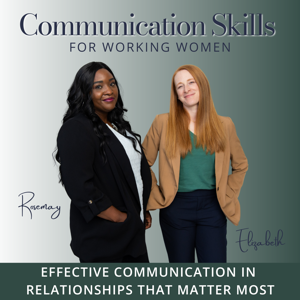
We’re Elizabeth and Rosemay, women, mothers, spouses, friends. Rosemay is a therapist and current PhD candidate, and Elizabeth is a facilitator and coach.
Over the last 20 years, we’ve lived, worked, and studied across different industries and cultures, and one thing has become clear: there’s no substitute for communication. Skill gaps can be fixed, connection is a basic human need, and when you learn to communicate with clarity, you can truly thrive.
We look forward to meeting you!
This podcast is designed to help you do just that. Each week, we share practical, communication skills you can apply right away, at work, at home, and in the relationships that matter most.
🎧 Hit play to learn a new skill you can start using today.
Ready to dive deeper?
✨ Visit us at: communicateconnectthrive.com
✨ Email us: [email protected]
✨Facebook: Develop confidence in relationships through effective communication skills
✨ Instagram: Communicationskillsforwomen https://www.instagram.com/communicationskillsforwomen/?hl=en

8,835 Listeners

43,345 Listeners

8,502 Listeners

369,597 Listeners

164,532 Listeners

41 Listeners

27,851 Listeners
8 Listeners

821 Listeners
15 Listeners

1,391 Listeners

15,296 Listeners

45 Listeners

19,271 Listeners
730 Listeners