
Sign up to save your podcasts
Or

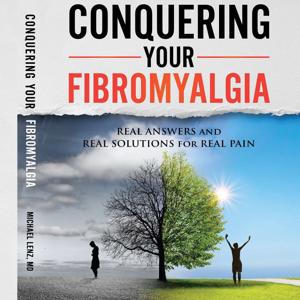
By Dr. Michael Lenz MD
When I started this podcast—and the book that came before it—I had my patients in mind. In the exam room, time is limited. But the need for understanding complex, often misunderstood conditions
... more

4.8
6868 ratings


The podcast currently has 274 episodes available.
The most played episodes among Podcast App listeners.
Text Dr. Lenz any feedback or questions Dr. Stephanie Pearson on Workplace Injury, Invisible Disability Claims, and Disability Insurance Pitfalls Dr. Stephanie Pearson, an OB-GYN, describes how a workplace shoulder injury during a delivery led to chronic pain, failed surgery outcomes, job termination after FMLA, and denial of her hospital disability coverage due to a fine-print work-injury exclusion, followed by a disputed workers’ comp claim and a settlement after litigation. She explains how invisible or subjective conditions (e.g., chronic pain, fibromyalgia, headaches) are often doubted by clinicians and challenged by insurers, why “gray” cases face scrutiny, and how documentation of worst-day functional limits and timely medical-record collection are critical, including possible IMEs. Pearson contrasts employer group vs private disability insurance, highlighting taxable group benefits, benefit caps, portability issues, and common two-year limitations for subjective illnesses, while private policies depend on underwriting, exclusions, and participation limits. She also discusses underwriting impacts of medical coding, runs a physician peer support group, and shares personal recovery supports and her company’s client advocacy approach. 00:00 Meet Dr Pearson 01:23 Injury In Delivery Room 02:25 Surgery And Termination 03:03 Denied And Sued 04:11 Mental Health Crisis 05:54 New Purpose And Company 06:40 Invisible Illness Bias 09:05 Building A Paper Trail 12:59 Independent Medical Exams 16:33 Group Versus Private Coverage 19:25 Subjective Illness Limits 23:12 Underwriting Exclusions 24:28 Fibromyalgia Stigma 25:15 Contracts And Legal Review 25:44 Coverage Limits Explained 28:44 Underwriting and Intake Process 29:54 Medical History Surprises 32:10 No Underwriting Options 33:32 Psych Diagnosis Pitfalls 36:26 Staying Properly Insured 38:44 Claims Support and Follow Up 39:49 Group Plans and Portability 42:15 Physicians Support Community 45:17 Family Silver Linings 46:59 Closing Reflections and Contact Click here for the YouTube Channel Click here for the YouTube channel International Conference on ADHD in November 2025 where Dr. Lenz will be one of the speakers. Support the show When I started this podcast and YouTube Channel—and the book that came before it—I had my patients in mind. Office visits are short, but understanding complex, often misunderstood conditions like fibromyalgia takes time. That’s why I created this space: to offer education, validation, and hope. If you’ve been told fibromyalgia “isn’t real” or that it’s “all in your head,” know this—I see you. I believe you. This podcast aims to affirm your experience and explain the science behind it. Whether you live with fibromyalgia, care for someone who does, or are a healthcare professional looking to better support patients, you’ll find trusted, evidence-based insights here, drawn from my 29+ years as an MD. Please remember to talk with your doctor about your symptoms and care. This content doesn’t replace per...

Text Dr. Lenz any feedback or questions Small Fiber Neuropathy and Fibromyalgia: Correlation, Not the Cause The script examines why findings of small fiber neuropathy (SFN) in fibromyalgia created hope for an objective “proof” of pain, yet argues this link is often misinterpreted as causation. It explains SFN, diagnosed via skin punch biopsy showing reduced nerve fiber density, and notes studies finding positive biopsies in about 40–60% of fibromyalgia patients, including a 2018 meta-analysis reporting 49% prevalence. The script outlines why SFN is not a smoking-gun cause: it appears in only about half of patients, nerve loss severity doesn’t reliably match pain severity, and SFN occurs in other conditions. It contrasts fibromyalgia with classic SFN in onset age, symptom patterns, comorbidities, and nerve-loss distribution, and presents central sensitization (nociplastic pain) as the primary driver, with SFN possibly a trigger in some or a downstream effect in others, emphasizing treatments targeting the central nervous system. 00:00 SFN Fibro Controversy 01:54 What Is SFN 02:57 Biopsy Evidence Buzz 04:04 Correlation Not Cause 05:54 SFN vs Fibro Differences 07:30 Central Sensitization Explained 10:12 Where SFN Fits In 11:10 Back Pain MRI Analogy 11:56 Treatment Focus And Wrap Click here for the YouTube Channel Support the show When I started this podcast and YouTube Channel—and the book that came before it—I had my patients in mind. Office visits are short, but understanding complex, often misunderstood conditions like fibromyalgia takes time. That’s why I created this space: to offer education, validation, and hope. If you’ve been told fibromyalgia “isn’t real” or that it’s “all in your head,” know this—I see you. I believe you. This podcast aims to affirm your experience and explain the science behind it. Whether you live with fibromyalgia, care for someone who does, or are a healthcare professional looking to better support patients, you’ll find trusted, evidence-based insights here, drawn from my 29+ years as an MD. Please remember to talk with your doctor about your symptoms and care. This content doesn’t replace per...
Text Dr. Lenz any feedback or questions Chronic Illness, Hidden Heart Risk, and the Coronary Artery Calcium (CAC) Score Dr. Michael Lenz, a clinical lipidologist, explains that chronic illnesses involving pain, inflammation, or central sensitization (e.g., rheumatoid arthritis, lupus, fibromyalgia) can silently increase long-term risk of heart attack, stroke, and cardiovascular death—sometimes doubling or tripling risk—through systemic inflammation, stress-hormone-driven autonomic strain, and associated factors like obesity, tobacco/substance use, and inflammatory diets. He argues standard LDL-based risk calculators can miss this “invisible” danger and discusses advanced assessment, focusing on the coronary artery calcium (CAC) score: a brief, non-contrast CT scan that measures calcified plaque as proof of coronary disease. Citing the MESA study, he describes the predictive value of CAC, including “power of zero,” outlines score ranges and implications, notes limitations such as soft plaque, and urges viewers to discuss CAC, statins, lifestyle, and additional blood tests with their doctor. 00:00 Chronic Illness Hidden Heart Risk 02:10 Invisible Threat Explained 03:50 UK Biobank Wake Up Call 04:11 How Damage Builds Up 06:20 Why Standard Tests Miss It 08:21 CAC Scan That Changes Everything 10:13 MESA Study Power of Zero 12:32 Understanding Your CAC Score 17:04 Treatment and Lifestyle Battle Plan 18:51 Take Back Control Closing Click here for the YouTube Channel Support the show When I started this podcast and YouTube Channel—and the book that came before it—I had my patients in mind. Office visits are short, but understanding complex, often misunderstood conditions like fibromyalgia takes time. That’s why I created this space: to offer education, validation, and hope. If you’ve been told fibromyalgia “isn’t real” or that it’s “all in your head,” know this—I see you. I believe you. This podcast aims to affirm your experience and explain the science behind it. Whether you live with fibromyalgia, care for someone who does, or are a healthcare professional looking to better support patients, you’ll find trusted, evidence-based insights here, drawn from my 29+ years as an MD. Please remember to talk with your doctor about your symptoms and care. This content doesn’t replace per...
Text Dr. Lenz any feedback or questions Fibromyalgia and the Hidden Sleep Disorder Fueling Your Pain: How Restorative Sleep Breaks the Vicious Cycle The script explains fibromyalgia as a real central nervous system disorder marked by widespread pain, crushing fatigue, and “fibro fog,” driven by central sensitization and neurochemical imbalance (elevated substance P/glutamate and reduced inhibitory neurotransmitters). It argues that non-restorative sleep is a core driver of symptoms, highlighting Moldofsky’s findings of the alpha-delta sleep anomaly in which wake-like alpha waves intrude into deep slow-wave sleep, preventing tissue repair and pain regulation. Fragmented sleep also impairs diffuse noxious inhibitory controls (DNIC), worsening hyperalgesia and allodynia; experimental sleep disruption in healthy volunteers can induce fibromyalgia-like tenderness, and diary studies show poor sleep predicts next-day pain more than pain predicts sleep. Solutions emphasize prioritizing deep sleep via CBT-I, paced gentle movement (especially aquatic), mind-body practices, warm baths, screening/treating sleep apnea and restless leg syndrome, and clinician-guided options such as low-dose tricyclics/cyclobenzaprine (including FDA-approved Tonmya in 2025), gabapentinoids, and melatonin while avoiding benzodiazepines. 00:00 Pain and Fatigue Cycle 01:17 Central Sensitization Explained 02:32 Fibromyalgia Symptom Breakdown 04:25 Neurochemistry Behind Pain 06:01 Non Restorative Sleep Mystery 07:16 Alpha Delta Sleep Anomaly 09:44 How Bad Sleep Creates Pain 13:02 Sleep as the Main Lever 15:05 Lifestyle Sleep Fixes 18:15 Check Other Sleep Disorders 19:04 Medication Support Options 20:45 Take Action and Advocate 21:56 Final Hopeful Wrap Up Click here for the YouTube Channel Click here for the YouTube channel Support the show When I started this podcast and YouTube Channel—and the book that came before it—I had my patients in mind. Office visits are short, but understanding complex, often misunderstood conditions like fibromyalgia takes time. That’s why I created this space: to offer education, validation, and hope. If you’ve been told fibromyalgia “isn’t real” or that it’s “all in your head,” know this—I see you. I believe you. This podcast aims to affirm your experience and explain the science behind it. Whether you live with fibromyalgia, care for someone who does, or are a healthcare professional looking to better support patients, you’ll find trusted, evidence-based insights here, drawn from my 29+ years as an MD. Please remember to talk with your doctor about your symptoms and care. This content doesn’t replace per...
Text Dr. Lenz any feedback or questions Making the Invisible Visible: A Longitudinal, Validating Framework for Fibromyalgia and Chronic Illness Care The script contrasts patients’ experiences of chronic pain, fatigue, and brain fog being dismissed despite normal tests with clinicians’ uncertainty in brief, system-pressured visits, framing “medical gaslighting” as a patient safety issue. It proposes rewriting the clinical approach to invisible illnesses like fibromyalgia, chronic fatigue, migraines, and IBS by starting with deep listening, validating symptoms, and using standardized tools (Widespread Pain Index, Symptom Severity Score, Fibro Score Index, and Fibromyalgia Impact Questionnaire Revised) to confirm diagnosis, set baselines, and track change over time like an A1C. It emphasizes longitudinal mapping of symptoms across the lifespan, including early nervous system sensitivity, neurodivergence, hormonal transitions, and cumulative stress, plus screening for ADHD, autism traits, and sleep disorders. The framework includes pacing with activity tracking, trauma-informed care, careful documentation, flexible follow-up, coordinated care, and transparent uncertainty paired with belief and hope. 00:00 Invisible Illness Reality 00:39 Clinician Perspective Pressure 01:10 Why Medicine Fails Here 01:49 Rewriting the Care Script 02:11 Start With Listening 02:41 Measure And Baseline 03:47 Build The Life Timeline 05:50 Hormones And Stress Load 07:05 Track Progress Over Time 08:10 Pacing And Hidden Comorbidities 09:22 The Gaslighting System Trap 10:11 What Better Care Looks Like 11:30 Hope And Closing Call Click here for the YouTube Channel Support the show When I started this podcast and YouTube Channel—and the book that came before it—I had my patients in mind. Office visits are short, but understanding complex, often misunderstood conditions like fibromyalgia takes time. That’s why I created this space: to offer education, validation, and hope. If you’ve been told fibromyalgia “isn’t real” or that it’s “all in your head,” know this—I see you. I believe you. This podcast aims to affirm your experience and explain the science behind it. Whether you live with fibromyalgia, care for someone who does, or are a healthcare professional looking to better support patients, you’ll find trusted, evidence-based insights here, drawn from my 29+ years as an MD. Please remember to talk with your doctor about your symptoms and care. This content doesn’t replace per...
The podcast currently has 274 episodes available.

921 Listeners

12,705 Listeners

14,918 Listeners

3,408 Listeners

3,474 Listeners

69,700 Listeners

44 Listeners

138 Listeners
709 Listeners

13,198 Listeners
368 Listeners

19,066 Listeners

10,819 Listeners
111 Listeners