
Sign up to save your podcasts
Or

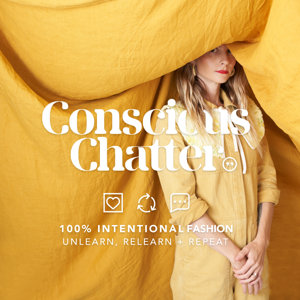


In episode 105, Kestrel welcomes Steph Cordes, the Vice Chair of the Cordes Foundation, to the show. Having worked with Conde Nast and luxury fashion brands in the past, Steph now works to advance the Cordes Foundation's ethical fashion and sustainable supply chain initiatives.
"I think my biggest takeaway was that minimum wage isn't a living wage, because they [garment workers she met in Sri Lanka] technically are paid minimum wage but that's not a living wage. They aren't able to have enough money to invest that in their families or their children." -Steph Cordes, Vice Chair of The Cordes FoundationIn this episode, Steph shares more on how the Cordes Foundation believes that elevating the role of women is essential to building stronger economies and improving the quality of life for women, men, families and communities.
She also shares some exceptionally powerful stories from the trips she has taken to meet with, and connect with women working in the garment industry around the world. For Steph, she sees a massive disconnect between designers and the actual people making their clothes in the supply chain.
The below thoughts, ideas + organizations were brought up in this chat:
Recommended Read From The Intro:Heart Talk by Cleo Wade
In episode 104, Kestrel welcomes Margaux Rousseau, the Cofounder of WOOLN, to the show. A company that brings together talented New York grandmothers and curious shoppers, WOOLN has a supply chain of senior knitters in New York, who lovingly hand-knit each piece in their collection.
"We have this community of older ladies who sometimes are a bit lonely, they usually stay home, and with WOOLN, they get together, they are part of a project, they have this feeling of belonging. You know, they are all very talented - what they do with their fingers is incredible." -Margaux Rousseau, Cofounder of WOOLNIn this episode, Margaux shares more of her story and what led her to have such a kindred alignment with knitting. When it comes to relaxation, she says, "it's even better than yoga for me."
Kestrel also asks Margaux about WOOLN's unique supply chain, from the animal welfare of the alpaca yarn from Peru, to "the grandmas" who knit their designs in New York City. For Margaux, it's all about looking at everyone involved in the process - from the production side to the conscious shoppers on the other side.
The below thoughts, ideas + organizations were brought up in this chat:
Recommended link from the intro: GlobeIn's Nasty Woman Box launching on International Women's Day: March 8th, 2018
In episode 103, Kestrel welcomes Paul Allard, the Founder and President of impak Finance, to the show. With the use of fintech, impak Finance has the intention of helping develop a positive social impact economy. They successfully launched the impak Coin ICO last summer, which is the 1st legal cryptocurrency in North America.
"We're in 2018 - the real economy should all be about the social impact economy - focusing on trying to solve environmental and social issues, while doing money." -Paul Allard, Founder of impak FinanceIn this episode, Paul explains the different facets of impak Finance, and how their e-wallet, marketplace and impak coins work together toward a goal of supporting the growth of an economy that has a positive social impact.
Additionally, Kestrel asks Paul to dive deeper into blockchain technology, to help us understand more of how it works, and especially, how the technology has the potential to create greater transparency in supply chains.
The below thoughts, ideas + organizations were brought up in this chat:
Recommended reading from the intro: The State of Fashion 2018 Report by The Business of Fashion + McKinsey & Company
In episode 102, Kestrel welcomes Dominique Drakeford, the founder of Melanin & Sustainable Style, to the show. A platform that is bringing melanin to the forefront of sustainable fashion, beauty and living, MelaninASS is helping to give the ethical industry an authentic and culturally relevant voice.
"This whole community is about 'let's talk about what's wrong' - we talk about what's wrong from an environmental point of view, we talk about fast fashion and we point fingers at H&M and we do all this ... but let's look at ourselves and let's talk about some real issues that are wrong because honestly, sustainability is founded on culture - the essence of sustainability is rooted in culture and we don't talk about it." -Dominique Drakeford, Founder of Melanin & Sustainable StyleIn this episode, Dominique shares a bit of her background and the eclectic experiences that have led her into the sustainable style conversation.
Kestrel and Dominique also discuss the layers behind two notable articles written by Dominique: "Who The Hell Wants To See Only White Women In Sustainable Fashion" and "Why I Think Ethical Fashion Is A Privileged White Girl Thing". Dominique highlights several of the disconnects in the sustainable fashion conversation - from representation to discrimination to tokenism to appropriation to privilege - and how historical relevance and institutional racism are being left out of the discourse.
They talk about the reality of how the ethical fashion space has been dominated by white women, and how privilege and race relations need to play a larger role in our approach to this conversation.
Also, Dominique shares her inspiration behind the Vanguard Series, a project she developed on her platform to highlight "true visionaries and cultural influencers who are creating a positive impact in the fashion, beauty and/or the sustainable lifestyle industry."
The below thoughts, ideas + organizations were brought up in this chat:
Recommended reading from the intro: "Why Fashion Is Key to Understanding the World of Black Panther" by Tanisha C. Ford in The Atlantic
In episode 101, Kestrel welcomes trailblazing print textile designer Becky Earley to the show. A designer, researcher, educator and facilitator for circular textiles, Becky is also a key part of the research consortium work for Mistra Future Fashion, as well as the UE Horizon 2020 project Trash2Cash.
"The job and role of the designer is changing radically - you're not just bringing a product to the shop floor anymore - you have to know so much more now about what will happen next." -Becky Earley, Circular Design ExpertIn this episode, Becky takes us back to some of the history and evolution of her work, including her early "upcycling" projects before the word had even been established. She highlights how she believes the designer plays a unique role moving into the future and how circular design concepts are part of that shift.
Additionally, Becky shares thoughts on how moving forward, she anticipates that the user will have more control and knowledge around the speed of the things in their wardrobe. So, not only will brands ask people to bring things back to the store when they're sick of them, but products will actually be created to move at different speeds in your wardrobe. As Becky says, there will be a need for fast and slow fashion in the future.
The below thoughts, ideas + organizations were brought up in this chat:
In episode 100, Kestrel welcomes Nadine Farag, the writer behind One Who Dresses, to the show. A website where she slowly explores the question of 'what is style,' One Who Dresses is a digital space dedicated to understanding the intricacies of personal style. Nadine is also known for her sustainable fashion writing for Man Repeller.
"Personal style is an extension of our being. It's another way to understand and articulate who we are in the world." -Nadine Farag of One Who DressesThroughout this episode, Nadine explores her transition from thinking about sustainability to the art of dressing when it comes to understanding our fashion sense. She also walks us through some of the discoveries she has made about personal style along the way. For Nadine, she believes we're all on this journey of trying to understand who we are and to articulate that to the world around us, and personal style is an extension of who we are, which allows us to enhance that.
Kestrel and Nadine also talk about the way they both used to be "pink haters" and have now become "pink lovers". Kestrel asks Nadine for her thoughts on what draws us to different colors at different points in our lives - is it marketing, exposure, something else? The two discuss different ideas on what inspires those evolving attractions.
The below thoughts, ideas + organizations were brought up in this chat:
In episode 99, Kestrel welcomes Shobha Philips, the CEO and founder of Proclaim, to the show. An ethically-made and inclusively-designed bra collection, Proclaim is expanding the definition of nude by celebrating real women.
"I think that lingerie should be marketed to the women that wear it - celebrating women's bodies of all types, all skin colors, letting women see themselves represented in these images, and feel like they are included and that they are beautiful." -Shobha Philips, CEO + Founder of ProclaimThroughout this episode, Shobha shares insight on the narrow definition of the color nude, and how she's redefining it with Proclaim.
In a past blog post, Shobha wrote: "What started as an annoyance about the color nude turned into something much bigger. It turned into the opportunity to revolutionize an industry. Proclaim is a love letter to women who demand change rather than settling for the status quo."
Kestrel asks if there are other layers of the lingerie industry that are expired or need to be evolved. Shobha talks about how she believes in taking lingerie out of the bedroom in its marketing, and using visuals that are representative of real women.
Shobha also explains how manufacturing locally, as well as accessible price points, are important to her and the future of Proclaim.
The below thoughts, ideas + organizations were brought up in this chat:
In episode 98, Kestrel welcomes Janet Wu and Erin Wold, the cofounders of SilkRoll, to the show. The ultimate community to trade and discover high quality fashion from style-mates around the world without spending an extra penny, SilkRoll's vision is to build the world's largest shared closet.
"The way that the resale space works is that our clothes depreciate really fast in second hand ... the minute you buy something from the retail store, pop the tag, wear it once, and the next day you try to put it on a second hand site to sell it, it's going to be worth less than 50% of what you paid for it." -Janet Wu, cofounder + CEO of SilkRollThroughout this episode, Janet and Erin provide insight into why they decided to build their business, using digital currency instead of dollars as their primary currency. And, they explain why they believe SilkRoll has large potential for scalability.
Additionally, Kestrel asks Janet and Erin to share their thoughts on the state of fashion, and where they see the sharing economy fitting into the industry at large.
The below thoughts, ideas + organizations were brought up in this chat:
In episode 97, Kestrel welcomes Kelly Wang Shanahan, the founder of The Ziran, to the show. A Los Angeles-based label which offers a new line of luxury silks, The Ziran's mission is to weave tradition into the modern world, leading a new generation to live the Ziran way: natural, spontaneous, and free.
"Fashion is important and it's not only a physical reflection of how you perceive yourself, but also how you want to be perceived. Otherwise we would walk out of the house naked every day. So, every time you put on a piece of clothing, you're making a choice and there aren't a lot of things other than eating food that you choose to do every single day." -Kelly, founder of The ZiranThroughout this episode, Kelly shares insight into the cultural history connected to xiang yun sha silk, and the extensive process behind its creation. Kestrel and Kelly also discuss the pros and cons of manufacturing in Los Angeles, and the challenges that come with building a new luxury label.
The below thoughts, ideas + organizations were brought up in this chat:
As mentioned in the introduction, if interested, you can check out CO (Common Objective)'s new report, Why Do Fashion Better: The Facts You Need To Succeed Sustainably In Fashion.
In episode 96, Kestrel welcomes Hannah Davis, the founder of BANGS shoes, to the show. A footwear company with a social mission and a partnership with Kiva, BANGS believes that "your adventure can help others find theirs".
"I want to provide people opportunities vs things." -Hannah of Bangs ShoesThroughout this episode, Hannah shares more insight into her experience manufacturing abroad, and the realities about where it's possible to actually produce vulcanized shoes. In addition, she expands further on BANGS Shoes' partnership with Kiva, and the way the nonprofit allows companies like BANGS to do good while at the same time, building out their business.
The below thoughts, ideas + organizations were brought up in this chat:
From the publisher's feed

11,569 Listeners

270 Listeners

260 Listeners

111,866 Listeners

577 Listeners
203 Listeners

1,493 Listeners

9,155 Listeners

4,089 Listeners
538 Listeners

4,832 Listeners

717 Listeners

15,908 Listeners

45 Listeners

19,163 Listeners