
Sign up to save your podcasts
Or

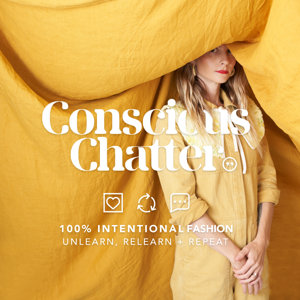


In episode 125, Kestrel welcomes Laurinda Ndenzako, the cofounder of Collective Closets, to the show. A womenswear label based + made in Melbourne, Collective Closets was built off of Laurinda + her sister Fatuma's African - Australian identities.
"As far as Collective Closets go, we always say that we don't have all the answers, but we definitely want to be part of that conversation - we want to be part of that movement as well to leave a positive impact. And it all starts at home - and sometimes, just the smallest changes make the biggest impact." -Laurinda Ndenzako, Cofounder of Collective ClosetsIn this episode, Laurinda shares more on the origins of Collective Closets, and how while she and her sister Fatuma were trained outside of fashion, both of their parents made clothing at home, and that was something that influenced them growing up.
A large part of the spark that pushed Laurinda + Fatuma to build Collective Closets was a family trip to Nairobi. According to Laurinda, the brand blossomed out of she and her sister being really proud of their African Australian culture, and embracing the chance to have a voice to tell their own story.
Additionally, throughout this show, Kestrel + Laurinda talk more specifically about the way that Collective Closets always shares a thought provoking piece to outline the inspiration behind each collection. As Laurinda explains, this storytelling component is a massive part of their brand and the way they connect on a larger level with their shoppers, family, friends and beyond.
The below thoughts, ideas + organizations were brought up in this chat:
Suggested Listening"Why A Drop Of 4 Degrees Made A Big Difference For A Garment Maker's Bottom Line"
In episode 124, Kestrel welcomes Luke Haverhals, the founder and CEO of Natural Fiber Welding, to the show. An analytical chemist, materials scientist and entrepreneur, Luke is working to produce sustainable, high performance materials for a variety of applications with his team at Natural Fiber Welding.
"We're doing something really important for the world which is to basically unleash the abundance of nature and what nature produces at scale (that's very high performance), and being able to convert those materials very simply and very cost-effectively into the things that we need to have high quality and standards of living that are sustainable and renewable." -Luke Haverhals, CEO + Founder of Natural Fiber WeldingIn this episode, Luke shares more of his backstory, and how growing up on a farm in the Midwest helped him understand some of the processes behind the creation of things - whether it was food or other materials. He also explains how his research / the early developments of Natural Fiber Welding evolved out of his work at the Department of Defense.
Additionally, Luke helps break down a bit more of the chemistry and science behind the Natural Fiber Welding closed loop system process.
Kestrel addresses an issue she has seen quite a bit recently in the innovative materials space - in that younger, smaller brands often aren't able to access these new fabrics, either due to minimums or requirements for large financial investments. Luke explains how he and Natural Fiber Welding are doing things differently - due to the way they have built an efficient, scalable system, they feel confident working with both smaller and larger brands.
The below thoughts, ideas + organizations were brought up in this chat:
Recommended Article From Intro"Sustainable Fashion Only Works When It's Inclusive: When talking about sustainability, we must address the elephant in the room."by Celine Semaan
In episode 123, Kestrel welcomes Rachel Temko, the founder + creative director of Whimsy+Row, to the show. A lifestyle brand for the creative, adventurous lady, Whimsy+Row not only offer their clothing + goods online, they also have a lovely freestanding store in Venice, California.
"I started Whimsy promoting other brands, and that to me is like - we should all be in this together to spread the word and make everybody aware that this is more of a lifestyle." -Rachel Temko, Founder + Creative Director of Whimsy+RowIn this episode, Rachel shares her journey toward taking the leap to start her own company, and how much the creative energy of her family has inspired her over the years.
Additionally, Kestrel + Rachel discuss this new age of influencers, and Whimsy+Row's approach to hiring them for their marketing efforts. While Rachel believes you have to use a combination of influencer marketing mixed with more traditional styles today, she sees the extra benefit of receiving valuable content through influencer partnerships.
Rachel also shares more on her larger vision for Whimsy+Row, which involves building an eco-conscious community first, and a fashion brand second.
The below thoughts, ideas + organizations were brought up in this chat:
Article Recommendation "You Can Quit Feeling Guilty - Sustainability Isn't An All Or Nothing Game" by Sarah Spoljaric for The Good Trade
In episode 122, Kestrel welcomes Anita Vandyke, the author of A Zero Waste Life: in thirty days, to the show. A rocket scientist, blogger, and current student of medicine, Anita is passionate about inspiring others to be every day activists by making small, individual steps to reduce their waste.
"Zero waste living to me means reducing your waste, but also at the same time, it means not wasting away your life - so, not wasting your time, your energy, and finding purpose in your life." -Anita Vandyke, Author of A Zero Waste LifeIn this episode, Anita shares more on her path toward a more zero waste life, how she wasn't always a minimalist, and how she gradually evolved from her past maximalist lifestyle.
Additionally, Anita shares some really digestible, accessible tips to help us think about reducing waste while traveling and beyond. For her, there isn't one specific way to work toward a more zero waste lifestyle, which is why she built a tiered system that offers options for you, depending on what's going on in your life at different time periods.
For Anita, it's about having grace for yourself throughout the process, and always understanding that life happens.
The below thoughts, ideas + organizations were brought up in this chat:
Book Recommendation From Intro:Give A Shit | Do Good. Live Better. Save The Planet by Ashlee Piper
In episode 121, Kestrel welcomes Rebecca van Bergen, the founder and executive director of Nest, to the show. A nonprofit that is building a new handworker economy, Nest is dedicated to generating global workforce inclusivity, improving women's wellbeing beyond factories, and preserving cultural traditions.
"Most consumers are completely unaware of this, but production is leaving the 4 wall factory. Anywhere between 20-60% of current garment manufacturing leaves the factory at some point, whether it's sewing a sole on a shoe or doing embroidery or finish work - to homeworkers that were completely invisible." -Rebecca van Bergen, founder + executive director of NestIn this episode, Rebecca shares more on her journey, and how she originally came to the craft sector from a social work lens, with an interest in helping women around the world. Craft is the second largest employer of women in emerging markets, and for Rebecca - handmade needs to be more accessible to businesses and customers.
Additionally, Rebecca talks in more detail about how she believes that the lack of programming and investment in global craft is aligned with the fact that the majority of the sector is female-dominated.
Considering that 20-60% of current garment manufacturing leaves the 4 walls of the factory at some point today, Nest has helped build The Nest Standards for Homes and Small Workshops + Nest Seal of Ethical Handcraft. Rebecca breaks down in more detail what their standards look like and the ways in which they approach transparency and compliance.
At Nest, they not only help connect brands to their artisan partner network, they also connect aligned professionals with artisan partners, to offer them pro bono consulting on building their businesses.
The below thoughts, ideas + organizations were brought up in this chat:
In episode 120, Kestrel welcomes Jessica Kelly, the founder of Thr3efold, to the show. A platform that helps connect brands to ethical factories around the world, Thr3efold also hosts Deadstock District, a private portal to sell your fabric liability and source dead stock.
"I keep digging deeper because sometimes people will be like, 'oh well, this brand doesn't talk about their factories so we should question their ethics' - maybe, but maybe not. It doesn't necessarily mean there's something that they're hiding." -Jessica Kelly, founder of Thr3efoldIn this episode, Jessica shares more on her journey into the fashion industry, and how she was inspired to self teach herself as much as she could about the sustainable and ethical fashion industry.
Additionally, Kestrel asks Jessica to expand on a blog post she wrote about transparency and whether or not it's actually the answer to a more ethical fashion industry. Here's a quote from that blog post:
"Does publishing your factories make you more sustainable? The short answer is no. Listing your factories does not make you more ethical or more sustainable, it simply makes you more transparent. Your factories could be great or they could only be mediocre (I hope not worse) but that doesn't mean they are better than other fashion brands who choose not to list their factories openly."
Also, Jessica shares more thoughts on what led her to build Deadstock District, a portal she hosts on Thr3efold. Deadstock District gives designers a way to sell their excess fabric, and other designers a place to source deadstock materials.
The below thoughts, ideas + organizations were brought up in this chat:
Instagram To WatchThis week, my partner Drew and I are traveling to Oaxaca on a trip with GlobeIn, a subscription box company that features handmade and ethically sourced goods from around the world. We'll be documenting the adventures and meeting some of the makers behind their products. If you're interested in tuning in to see some of the journey, follow along on GlobeIn's Instagram @globein_world.
In episode 119, Kestrel welcomes José Teunissen, the Dean of the School of Design and Technology at London College of Fashion, and a Professor of Fashion Theory, to the show. José is also the curator of State Of Fashion 2018 | searching for the new luxury, an exhibition that recently opened in Arnhem, Netherlands, and runs through July 22nd, 2018.
"Primarily, I also think this time period will be - it's a paradigm shift, probably a big paradigm shift - maybe it's only the start of it, but I think we are definitely in a period where we start to redefine what fashion is." -José Teunissen, Curator of State Of Fashion 2018In this episode, José shares more context on her past experiences with fashion, and how she became intrigued with fashion theory at an early age through exploring the way fashion can reflect a snapshot of culture in different time periods.
Additionally, José explains the approach to this year's State Of Fashion event, and how she and her team wanted to "search for the new luxury" to uncover potential options that could become future solutions.
For José, the fashion industry has lost a bit of control as well as its cultural meaning, and instead has become a system to give people more opportunities to buy new things all the time. State Of Fashion wants to redefine what fashion is, what values it can offer us, and the luxury it can offer us, to be more aligned with the current culture and moment we live in now.
The below thoughts, ideas + organizations were brought up in this chat:
Featured Artists From IntroVin+Omi, Self-Assembly, Elisa van Joolen and 11.11
In episode 118, Kestrel welcomes Rebecca Burgess, the founder of Fibershed, to the show. A globally recognized project, Fibershed is working to address and educate the public on the environmental, economic and social benefits of de-centralizing the textile supply chain.
"What are we doing? What is our consumption doing to other people's cultures?" -Rebecca Burgess, founder of FibershedIn this episode, Rebecca shares more on her exceptional and unexpected path into working in the textile industry. For her, it all started with agriculture, and a happenstance loom that happened to exist at her former university.
For Rebecca, she has continued to uncover and discover so many more intricacies of the textile system through her curiosity and drive to consistently ask more questions.
Throughout this chat, Rebecca also shares more in depth information on the power that farmers and ranchers hold today to turn around the health of our soil, while becoming climate change heroes.
The below thoughts, ideas + organizations were brought up in this chat:
Artist Alert From Intro:
Rachel Ignotofky is an author and illustrator, who creates exceptionally stunning systems-oriented artwork, connected to the earth, science and women.
If you're a visual learner like me, her artwork can truly help paint a clear explanation of some of the wonders of the planet and beyond.
In episode 117, Kestrel welcomes Juan Diego Gerscovich, the cofounder of Industry of All Nations, to the show. A design and development office that was founded in 2010, IOAN has a commitment to rethink methods of production for consumer goods.
"Every maker that we work with, we want to give them the chance, to let them express - via the product - their life." -Juan Diego Gerscovich, cofounder of IOANIn this episode, Juan shares insight into his early years, growing up in Argentina with parents in the fashion industry. He also talks about how from a young age, he had a powerful interest in the origin of things, and a curiosity connected to where things come from.
While Juan originally studies architecture, he eventually realized that garments and consumer goods allowed him to create things that were more accessible to people, and that allowed him to develop a more intimate connection.
Kestrel and Juan further explore this idea that products have their own identity - sparked by the below quote from IOAN's website:
"Products have their own identity, which come from their history. An alpaca sweater hand knit in Bolivia, a pair of alpargatas from Argentina or a checkered lined rain-coat made in England. Each of these represent specific moments in time, places, feelings, and we buy and wear them based on how they resonate with us. If you separate a thing from its origin, you separate it from its meaning and reduce it to a mere scrap of cotton and plastic. You orphan it."
Also, Juan shares more about how Industry Of All Nations was born to bring production back to the original makers.
The below thoughts, ideas + organizations were brought up in this chat:
Innovative BrandSelf-Assembly: based in Finland, Self-Assembly makes ready-to-assemble garment construction kits, and basically takes humans out of the supply chain.
In episode 116, Kestrel welcomes Mara Hoffman back to the show, for an update on where the company is - when it comes to sustainability - almost 2 years later. The first time Mara came to the show (in episode 18), the company was just beginning to shift Mara Hoffman over toward a more sustainable direction. In this chat, we get a chance to understand the evolution of the company over the last couple years, in their efforts to tackle their supply chain and fabrications, with a sustainability lens.
"I've been saying 'survival of the kindest' right now - this idea that people that aren't doing good things for the planet or for humanity or for any living beings (the planet as a whole), should be voted off the island." -Mara Hoffman, President & Creative Director of Mara HoffmanIn this episode, Mara shares her thoughts on how far her company has come since they decided to move toward a more sustainable direction. Additionally, Mara shares some of the challenges they encounter regularly since the adjustments, from changing timelines to factor in the timing necessary for fabric development, and navigating the world of certifications.
As a smaller company, Mara shares that while often, it can be challenging to not have a large amount of capital at your fingertips, she's grateful to have the freedom to make changes faster, by being independently run. For the company, they've found unique ways of getting more creative with money to make things work for them.
Also, a key element for Mara is always working on their fit. She believes fit is an important aspect of becoming more sustainable, because it plays largely into the wearability + longevity of their garments.
The below thoughts, ideas + organizations were brought up in this chat:
Event Alert From The Intro State Of Fashion (June 1st - July 22nd in Arnhem, Netherlands) Get Your Tickets Here >
From the publisher's feed

11,569 Listeners

270 Listeners

260 Listeners

111,866 Listeners

577 Listeners
203 Listeners

1,493 Listeners

9,155 Listeners

4,089 Listeners
538 Listeners

4,832 Listeners

717 Listeners

15,908 Listeners

45 Listeners

19,163 Listeners