
Sign up to save your podcasts
Or

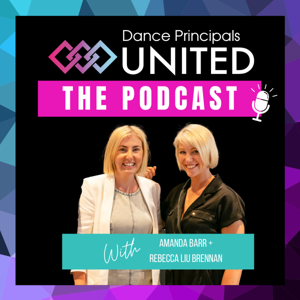


What if your dance studio timetable was costing you thousands of dollars in missed revenue, and you didn't even realise it?
It's that time of year again. Concerts are coming, teachers are exhausted, 2027 planning is underway and somewhere in the middle of it all, you've got to put together a timetable that actually works. But here's the thing. Your timetable isn't just about fitting classes into rooms and keeping teachers happy. It's one of the most important business decisions you'll make all year.
In this episode of the Dance Principals United Podcast, Amanda and Bec share the practical timetabling strategies they've used in their own studios, including how to fit more classes into your week, encourage students to enrol in more styles and make better use of your available space.
In This Episode We Discuss...
One of the biggest lessons from this conversation is that your timetable needs to be easy for families to say yes to.
If you'd love a student to take three classes, but those classes are spread across three different afternoons, you're making that decision harder than it needs to be.
Instead, think about the journey you want students to take through your studio.
Which classes naturally work together? How can you make it easier for a child to try another style? Are your most popular classes helping you fill the rest of your timetable?
These small decisions can have a huge impact on dance studio enrolment, retention and profitability.
Ready to rethink your 2027 timetable?
Tune in to this episode for practical ideas you can put to work straight away, along with a few entertaining detours into Dance Moms and reality TV.
If you enjoyed this episode, subscribe to the Dance Principals United Podcast, leave us a review and share it with another studio owner who's currently deep in timetable planning.
And don't forget, podcast listeners can access two weeks free in Dance Principals United Tribe through the link in the show notes. https://danceprincipalsunited.com/dpu-tribe/
What does it actually take to build a dance studio with more than 1,000 students?
Is it brilliant marketing? An incredible teaching team? A competition program that wins everything? Or something much simpler?
This week, we're coming to you from Fiji, where Beck is joined by one of our wonderful Studio Growth Club members, Katrina, the owner of Townsville Academy of Performing Arts (TAPA).
Katrina has been running her dance studio for 27 years. She bought the business in 1999 for $10,000, when it had around 50 students, and has since grown it into a thriving studio with more than 1,000 dancers, six purpose-built studios and a building the business now owns.
But what makes this conversation so interesting isn't just the size of her dance business.
It's how Katrina thinks about growth, teaching, studio culture and the people who walk through her doors.
Because after 27 years, she's still learning.
And she still genuinely loves what she does.
In this episode we discuss…
Dance competitions can be exciting, exhausting, stressful, hilarious and completely chaotic — sometimes all before your first routine has even hit the stage.
There's the missing hairpiece.
The last-minute position change because someone's sick.
The costume that suddenly doesn't fit.
The six-year-old who can't remember where she starts.
And, of course, the pressure to perform.
In this episode of the Dance Principals United podcast, Amanda and Bec are talking about something every dance studio owner with a competition team should think about:
What experience are we actually creating for our dancers at competitions?
Because it's easy to get caught up in scores, placings and cleaning that final formation. But when your dancers look back on their competition years, the things they remember might have very little to do with the trophy.
In this episode we discuss…
Your competition culture doesn't happen by accident.
You build it.
Listen to the full episode of the Dance Principals United podcast for a very honest conversation about winning, competition pressure, Lucky Octos, crazy hair changes and how we can make comp days better for dancers, teachers and parents. https://danceprincipalsunited.com/podcast/
If this episode gets you thinking differently about your own competition team, share it with your teachers before your next comp. And don't forget to subscribe and leave us a review so more dance studio owners can find the podcast.
Your dancers aren't the only people experiencing your end-of-year concert.
Think about the parent.
They've picked their child up from school, rushed home, done the hair and make-up, battled traffic, tried to find a park, dropped off an excited or stressed child... and now they might have two hours to wait before the concert even starts.
Then there's the show itself.
Then pick-up.
Then the tired child.
Then the drive home.
When was the last time you looked at your dance concert through **their** eyes?
In this episode of the Dance Principals United podcast, Amanda and Bec talk about creating a "fans-first" experience and why the small details surrounding your events can matter just as much as what happens on stage.
Because your concert isn't only a performance.
It's a customer experience. And for a dance studio owner, it can also play a huge role in dance studio retention.
In this episode we discuss...
What does "fans first" actually mean?
The conversation was sparked by Bec's experience at a recent dance competition.
There were photo booths for the dancers. A dedicated teacher area with food, drinks and somewhere to sit. A VIP viewing space for teachers. Even massages for studio owners.
Then, as the younger dancers left after awards, they were handed a lollipop.
That last one sounds incredibly simple.
But the children loved it.
They weren't walking out talking about where they'd placed. They were excited because they'd received a lollipop.
It's a great reminder that creating a memorable customer experience doesn't always require spending thousands of dollars.
Sometimes it's a 50-cent lollipop.
Your last interaction matters
Now think about the end of your dance concert.
What's the final experience your families have?
Is it standing in a huge line waiting for their child?
Is someone stressed and snapping at parents during sign-out?
Is everyone exhausted and desperate to get home?
Or could you change that final moment?
Perhaps students walk through a guard of honour while teachers congratulate them. Maybe there's a small treat on the way out. You could even schedule a message to arrive as families are driving home telling them how proud you are of the dancers.
The idea isn't that every studio needs to do the same thing.
It's to deliberately think about how you want families to **feel** when they leave.
Map the parent journey
One of the most practical exercises from this episode is to sit down and map the entire concert experience from a parent's point of view.
Start well before the curtain goes up.
What time are they collecting their child from school? How much time do they have for hair and make-up? What's parking like? What happens at drop-off? Where do they go afterwards? How long do they wait? Can they easily get something to eat or drink? What happens at pick-up?
Once you see the whole journey, you'll probably spot moments you can improve.
Some won't cost anything.
Your concert is part of your retention strategy
For a dance studio owner, concert planning can easily become focused on routines, costumes, lighting, props and making the show look incredible.
Those things matter.
But your families experience far more than what happens on stage.
A stressful, exhausting concert experience can affect how they feel about coming back next year. A thoughtful, enjoyable one can reinforce why they love being part of your dance studio.
So as you plan your next concert, ask yourself:
**Am I making this decision because I want the concert to look good, or because it's genuinely better for our clients?**
It's a simple question that can change the way you approach your entire event.
Listen to the full episode of the Dance Principals United podcast for more practical ideas around creating a fans-first concert experience. https://danceprincipalsunited.com/podcast/
And if you enjoyed this conversation, subscribe to the podcast, leave us a review and send this episode to another dance studio owner who's currently deep in concert planning.
You know that moment when you walk into the studio and the mat is still sitting in the middle of the floor?
Or a teacher turns up to tap without tap shoes. Someone hasn't marked the roll. A staff member hasn't replied to an important message. Or you look at the cameras and realise someone is scrolling on their phone during class.
And you're thinking, Surely I shouldn't have to tell them this?
In this episode of the Dance Principals United podcast, Bec is flying solo to talk about one of the most common frustrations for dance studio owners: staff not doing the basics.
But there's an important question to ask before getting frustrated with your dance studio team.
Have you actually told them what you expect?
What feels obvious to you after years of running a dance business may not be obvious to a young teacher, a new admin team member or someone who's never worked inside a well-run dance studio before.
Clear expectations give your team something concrete to work towards. They also make dance studio management much easier because when something isn't happening, you can coach the behaviour instead of having another awkward conversation based on assumptions.
In this episode we discuss...Why you can't assume your dance teachers know the "obvious" basics
What being prepared for class should actually look like
Setting clear rules around phones, uniforms, footwear and equipment
Why teachers need to mark their rolls every lesson
How your classes and teachers affect dance studio retention
Why teacher-to-parent communication matters more than you might think
How your teachers can help increase dance studio enrolment
Setting expectations around parent complaints and conflict
Creating clear standards for communication within your team
What great customer service should look like at your front desk
One of the biggest ideas in this episode is simple: you can have brilliant dance studio marketing, but the marketing only gets someone through the door.
What happens next matters even more.
Bec uses the example of seeing amazing marketing for a new bubble tea, buying it and discovering it tastes terrible. It doesn't matter how good the marketing was. You're probably not going back.
Your dance studio isn't that different.
Your teachers and classes are a huge part of the product families are paying for. If the class experience isn't good, more marketing won't solve the underlying problem.
That's why staff training isn't just a team leadership exercise. It's part of your dance studio growth and retention strategy.
Parent communication isn't an optional extraParents don't always get to see what happens inside the studio.
Unlike standing on the sideline at weekend sport, they might drop their child at dance and see very little of what happens during the lesson. Your teachers can help bridge that gap.
It can be as simple as walking out after class and saying:
"She's been working so hard on her flexibility. You can really see the improvement."
That tiny conversation gives the parent a window into their child's progress.
It builds trust. It shows that the teacher knows their child. And it helps the parent understand the value they're receiving from your dance studio.
Your teachers can support enrolment tooYour dance teachers also see opportunities that your admin team may never see.
Bec shares the story of three sisters who came into her studio after their mum had been searching for contortion classes. A simple conversation about another class led to the family becoming some of the studio's biggest clients. One sister went on to become a professional circus performer, while another later became a teacher at the studio.
That opportunity came from paying attention and having a conversation.
Upselling doesn't need to feel pushy. Done well, it's simply helping a family find a class that's genuinely right for their child.
Clear expectations make accountability easierThe biggest takeaway from this episode isn't that you need stricter staff.
It's that you need clearer expectations.
Tell your team what being prepared means. Explain how quickly you expect messages to be acknowledged. Set standards for social media, parent communication, class covers, customer service and class conduct.
And importantly, explain why those expectations exist.
Once your team knows the standard, you have something objective to coach against. Instead of saying, "You're not doing a good enough job," you can point to the agreed expectation and talk about the specific behaviour that needs to change.
That's a much healthier foundation for dance studio leadership.
If staff expectations have been causing frustration in your studio, Bec has also created a PDF covering the expectations discussed in this episode. Reach out to Dance Principals United to request a copy and use it as a starting point for your next staff training.
Subscribe to the Dance Principals United podcast so you don't miss future conversations about dance studio growth, marketing, leadership, systems and building a stronger dance business. If this episode helped, leave us a review and share it with another dance studio owner who needs it.
Most dance studio owners didn't open their business because they love spreadsheets, budgets or profit margins.
They opened because they love dance.
They love teaching.
They love creating opportunities for children and building a community that feels like family.
But passion alone doesn't pay the mortgage.
In this week's episode of the Dance Principles United Podcast, Nathan sits down with former financial adviser and small business owner Jess Bowles to tackle one of the most important — and often avoided — conversations in studio ownership: financial fitness.
Because while your studio might be changing lives every single day, it also needs to be doing something else.
It needs to be looking after you.
Together, Nathan and Jess unpack what it really means to build a financially healthy studio business, why profitability matters, and how studio owners can start thinking beyond simply surviving month to month.
In this episode we discuss:
Nathan and Jess also explore an uncomfortable but important question:
If you decided to stop teaching tomorrow, what would your studio actually be worth?
Because the goal isn't simply to build a business you love.
It's to build one that loves you back.
If you've ever wondered whether your studio is truly working for you financially, this is an episode you won't want to miss.
Do you know the three numbers that tell you how your dance studio is really going?
Not roughly.
Not "I think we're doing okay."
The actual numbers.
In this week's episode of the Dance Principles United Podcast, we're talking about the three key numbers every dance studio owner should be tracking:
They're simple numbers, but knowing them can completely change the way you make decisions in your dance business.
Because once you can see what's happening week by week, you can spot problems earlier, set clearer goals and make smarter calls around your timetable, pricing, enrolments and team.
We also chat about why class placements can tell you more than student numbers alone, why weekly direct debit can make such a difference to cash flow and retention, and what happens when you start looking at which classes are actually making money… and which ones are quietly costing you.
And if numbers make you want to stick your head in the sand, this episode is especially for you.
You don't need to become a spreadsheet person overnight.
You just need to start with the right three numbers.
🎧 Listen to the latest episode of the Dance Principles United Podcast now. https://danceprincipalsunited.com/podcast/
And if you're not currently tracking these numbers, send us a DM. We've got a simple tool to help you get started.
What if some of the things you've always done for your dance studio concert are actually making the experience worse for your families?
In this episode of the Dance Principles United podcast, Bec and Nathan are recording from New Zealand, where a conversation with another business owner gave them a fresh reminder of what dance concerts can feel like from the other side of the curtain.
This business owner loves that his daughter dances. He's happy to invest in quality training. But sitting through a long concert to see his daughter perform near the very end? Not exactly his idea of a great customer experience.
And that raised an important question for dance studio owners:
Are the decisions you're making about your concert truly fans-first, or are you doing them because that's how dance studios have always done things?
In this episode we discuss...
One of the biggest ideas in this conversation is that more isn't automatically better.
As dance studio owners, it's easy to believe that a huge concert with hours of routines, costume changes and production elements gives families better value.
But your families may see it differently.
Nathan shares the experience of sitting through his own daughters' three-hour concert. With three children performing regularly throughout the show, he had plenty to watch — and even he was checking how much longer was left by interval.
Bec admits her own concerts used to run for around four hours. At the time, she thought she was creating an incredible experience. Looking back, she sees it very differently.
A shorter, well-paced concert could leave families wanting more rather than watching the clock.
And there's a business strategy behind that too. If grandma, grandad, aunties and uncles know they're committing to several hours in a theatre, they may decide not to buy a ticket. A shorter experience could make it easier for extended family to say yes.
Rethinking dance concert costumes
The second big tradition under the microscope is costuming.
Instead of giving preschoolers and younger recreational students a different costume for every genre, Bec now uses one main costume and changes smaller elements such as shoes or accessories.
For recreational dancers, the studio may start with a quality base leotard and add a skirt for lyrical or cargo pants and a bandana for hip-hop.
It's simpler backstage.
It's cheaper for parents.
And importantly, it may help protect dance studio retention.
Nathan breaks down the numbers in the episode. Protecting a small costume profit isn't particularly useful if the total concert cost pushes a student to opt out and the studio then loses hundreds or thousands of dollars in tuition and ticket revenue.
That's why dance studio finances need to be looked at as a whole rather than focusing on one revenue line.
Make your concert a retention exercise
Your end-of-year concert isn't simply a performance.
It's one of the biggest customer experience moments in your dance business.
Parents and students should leave thinking, That was brilliant. I can't wait to do it again.
If instead families leave exhausted, financially stretched or relieved that it's finally over, something needs to change.
So before your next concert, audit your decisions.
Ask yourself: Is this fans-first?
That one question could change the way you approach concert length, costumes, rehearsals, production and even your dance studio systems backstage.
If this episode gives you something to think about, subscribe to the Dance Principles United podcast, leave us a review and share the episode with another dance studio owner who might need to rethink a few concert traditions too. https://danceprincipalsunited.com/dpu-tribe/
Are you accidentally ghosting people who want to give your dance studio money?
Someone fills out your website form. Sends you a DM. Asks about a preschool class. Maybe they even book a trial.
You mean to reply. You really do.
But then a teacher calls in sick, you've got costumes to organise, a parent needs you, there are 47 unread emails waiting and suddenly that new enquiry has been sitting there for three days.
In this episode of the Dance Principles United podcast, Amanda and Rebecca are talking about why dance studio owners ghost enquiries — and why fixing your follow-up process could be one of the simplest ways to increase dance studio enrolment.
Because here's the thing: if someone has enquired, they've already taken the first step.
They found your dance studio. Something caught their attention. They were interested enough to contact you.
You don't necessarily need more leads. You might simply need to do a better job with the ones you've already got.
In this episode we discuss...
One of the biggest issues Amanda and Rebecca see is that dance studio enquiries aren't always treated as a priority.
It's understandable. Running a dance business means there is always something urgent competing for your attention.
But there's an important difference between urgent and important.
Choosing a costume might feel urgent. Answering a current parent might feel urgent. Fixing tonight's class problem definitely feels urgent.
Following up the mum who asked about your three-year-old class yesterday? Easy to put off.
Yet that enquiry could become a family who stays at your dance studio for five years or more.
That's why good dance studio management needs a clear enquiry system, rather than relying on the owner remembering to reply when things calm down.
Because things rarely calm down.
Following up isn't being salesy
Many studio owners hesitate to follow up because they don't want to annoy people.
But remember: they contacted you first.
You're not cold calling a stranger who has never heard of your studio. You're helping someone who has already shown interest make a decision.
And sometimes they need more than one reminder.
Parents are busy. Dance class might be important to them, but it's competing with school, work, dinner, siblings, sport and everything else happening that week.
No reply doesn't automatically mean no.
Look beyond the weekly class fee
Another important shift is to stop looking at an enquiry as "$20 a week".
Think about the value of that family over a year — and potentially over five, eight or even ten years.
Add classes, costumes, concert tickets and other studio purchases, and one enquiry can represent thousands of dollars in lifetime value.
More importantly, that child could be at the beginning of an incredible dance journey.
Suddenly, making another phone call doesn't seem like such a hassle.
And don't ghost your no-shows
A family books a trial and doesn't arrive.
What happens next?
Too often, nothing.
Instead of assuming they weren't interested, call them. Ask if everything is okay and offer to book another trial.
They may have forgotten. Their child may have been sick. Their afternoon may simply have fallen apart.
Good dance studio customer experience means making the next step easy — not making people feel awkward because they missed the first one.
Your job isn't to chase people aggressively. It's to help interested families move forward.
So, after listening to this episode, check your inbox, DMs and dance studio software.
Is there someone you've accidentally ghosted?
Send the message. Make the call. Follow them up.
That one small action could turn into your next long-term dance family.
If this episode helped you, subscribe to the Dance Principles United podcast, leave us a review and share it with another dance studio owner who needs the reminder to stop ghosting their enquiries.
Competition season can bring out a lot in a dance studio owner.
You're managing routines, costume changes, warm-ups, teachers, parents, schedules and dozens of excited dancers. You're probably trying to remember when you last ate something too.
Then there are the results.
When your teams place well, everyone is buzzing. But when they don't? It's easy for a studio owner or dance teacher to feel disappointed and assume the parents and students must feel the same.
In this episode of the Dance Principals United Podcast, Amanda and Bec challenge that idea.
Because the thing your dance families remember most about competition day probably isn't whether they came first, third or didn't place at all.
They remember how your studio made them feel.
Amanda shares what she's noticed now that she's experiencing competitions from the other side — as a dance mum. After sitting in an audience for hours and watching her daughters compete, one of the most memorable parts of the entire day happened after the dancing had finished.
The teachers brought the students out together. They encouraged the parents to clap. They took team photos. They celebrated what the dancers had done well and told them how proud they were.
It took about five minutes.
The dancers hadn't won everything. That didn't matter.
They walked away feeling like absolute rock stars.
That's the opportunity we unpack in this episode: how studio owners can stop making competition days purely about results and intentionally create an experience that builds dance studio culture, student retention and a genuine sense of belonging.
In this episode we discuss...
One of our favourite ideas from this conversation is incredibly simple: "you don't personally have to be everywhere."
If you've got several age groups competing at once, assign teachers or team leaders to specific groups. Their job isn't simply to get the dancers backstage and onto the stage. They're there to create the experience.
Warm them up. Play games between routines. High-five them when they come off stage. Take the photo. Celebrate what went well.
At Bec's studio, younger dancers receive a medal after they come off stage at their first competition, regardless of the official result. It gives every child a physical reminder of what they achieved.
But it doesn't need to be expensive.
A little certificate, lolly bag or small collectible can work. What makes it special isn't the price. It's the story and tradition you build around it.
The same thinking applies to parents.
Competition days can be confusing for a new dance parent. They don't know when their child is dancing, where they're supposed to sit, how long sections take or whether they've got time to grab a coffee without missing the routine.
Having a staff member or trusted team parent helping your families can completely change that customer experience.
They can gather parents together, explain what's happening, introduce new families and encourage everyone to cheer for the team.
Those small moments build relationships.
And relationships build retention.
A child might forget whether their jazz routine received second or third place. They'll remember laughing backstage with their friends. They'll remember their teacher telling them they smashed the turn they'd been working on. They'll remember the team chant, the silly mascot and everyone cheering when they walked outside.
Their parents remember it too.
That's dance studio culture in action.
If you're heading into competition season, listen to this episode and ask one simple question: **How do we want our students and parents to feel when they go home?**
Then build your competition day around that answer.
If you enjoyed this episode, subscribe to the Dance Principals United Podcast so you don't miss the next one. We'd also love you to leave a rating or review and share this episode with another dance studio owner who might need the reminder that winning isn't the only measure of a successful competition day.
From the publisher's feed
70 Listeners

156 Listeners

24 Listeners

310 Listeners

47 Listeners

163 Listeners

75 Listeners

255 Listeners
0 Listeners

19 Listeners

11 Listeners

3 Listeners

6 Listeners

0 Listeners

2 Listeners