
Sign up to save your podcasts
Or

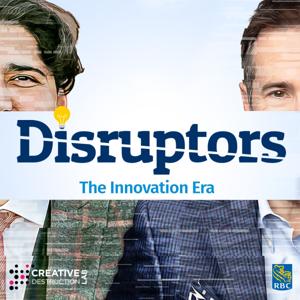


Have you ever wondered what qualities make up a true innovator? How do they approach problems and create new solutions? Is it nature or nurture?
On this episode of Disruptors, an RBC Podcast, host John Stackhouse goes inside the minds of three Canadian innovators, all recipients of this year’s Governor General Innovation Awards: Gary Agnew, Co-founder and CEO, Ideon Technologies; Paulette Senior, CEO and President, Canadian Women’s Foundation; and Dr. Mark Stradiotto, Professor of Chemistry in the Department of Chemistry at Dalhousie University.
Innovation requires pushing the envelope until the end goal is reached. Our guests share how to foster an innovative culture and safe environment to achieve new ways of doing business. As we found out, innovation is within all of us, but the environment needs to be created to support it.
Links:
For more information about the Governor General Innovation awards, click here.
For information on what’s happening at Canadian Innovation Week, check out their website.
CONNECT & SUBSCRIBE:
• Follow RBC Thought Leadership on LinkedIn
• Follow John Stackhouse on LinkedIn
• For more insights visit RBC Thought Leadership
Hosted by Simplecast, an AdsWizz company. See pcm.adswizz.com for information about our collection and use of personal data for advertising.
The COVID-19 pandemic, extreme weather events and record e-commerce demand have shone a spotlight on the world’s supply chains. The journey of how we receive “stuff” is quite complicated—and fragile. Luckily, the power of technologies such as automation, renewable energy and data are helping to both streamline and “green” Canada’s supply chains.
Goods valued at more than $275 billion pass through the Port of Vancouver every year, making it the fourth largest logistics hub in North America and a key anchor for the supply chains Canadians tend to take for granted.
On this episode of Disruptors, an RBC Podcast, host John Stackhouse is joined by special guest co-host Naomi Powell, Managing Editor of Economics & Thought Leadership at RBC, to speak with Peter Xotta, Vice-President, Operations and Supply Chains at Vancouver Fraser Port Authority.
Links:
For more information about the Vancouver Fraser Port Authority, click here.
To learn more about Assent, a global supply chain software solutions provider, check out their website.
CONNECT & SUBSCRIBE:
• Follow RBC Thought Leadership on LinkedIn
• Follow John Stackhouse on LinkedIn
• For more insights visit RBC Thought Leadership
Hosted by Simplecast, an AdsWizz company. See pcm.adswizz.com for information about our collection and use of personal data for advertising.
On this episode of Disruptors, an RBC podcast, host John Stackhouse is joined by a special guest co-host: Lindsay Patrick, Head of Strategic Initiatives & ESG at RBC Capital Markets, where she leads the Sustainable Finance Group.
As the world marks Earth Day on April 22, John and Lindsay explore various questions on climate and call on a cross-section of Canadian experts to help answer them.
Listen in to find out what exactly is a nuclear Small Modular Reactor (SMR), and whether electric vehicles ramp up will “blow up the grid?” We promise you will learn something new.
To read RBC’s report on electricity, “The Price of Power: How to cut Canada’s Net Zero electricity bill,” click here.
CONNECT & SUBSCRIBE:
• Follow RBC Thought Leadership on LinkedIn
• Follow John Stackhouse on LinkedIn
• For more insights visit RBC Thought Leadership
Hosted by Simplecast, an AdsWizz company. See pcm.adswizz.com for information about our collection and use of personal data for advertising.
Soil. We have a lot of it here in Canada, with the 12th largest agricultural land holding in the world. Our vast land presents a large opportunity to help combat climate change with sequestering carbon, as well as helping farmers’ bottom lines. Traditionally, agriculture has been all about yield: the more bushels, the better. But there’s a growing push to pay farmers for what they produce and what they preserve.
Canada’s soil can help grow food for an increasingly hungry world, but is also a powerful tool in the fight against climate change, because it has an incredible ability to store carbon. But it’s going to take technology and investment from Canada’s farming community to realize this full potential.
On this episode of Disruptors, an RBC Podcast, host John Stackhouse explores how soil carbon can help generate The Next Green Revolution. Guests include Mohamad Yaghi, RBC’s Climate & Agriculture Policy Lead, Dr. Angela Bedard-Haughn, Dean and Professor, College of Agriculture and Bioresources at the University of Saskatchewan and Marty Seymour, CEO & COO of Regina-based CarbonRX..
Check out RBC Thought Leadership’s The Next Green Revolution Project hub here.
For more information about the University of Saskatchewan’s College of Agriculture and Bioresources, click here. Click here to learn more about CarbonRX.
CONNECT & SUBSCRIBE:
• Follow RBC Thought Leadership on LinkedIn
• Follow John Stackhouse on LinkedIn
• For more insights visit RBC Thought Leadership
Hosted by Simplecast, an AdsWizz company. See pcm.adswizz.com for information about our collection and use of personal data for advertising.
Cyber threats have been around as long as the Internet, but attacks have ramped up in the last few years, with the pandemic dramatically shifting more of our work—and our lives—online. Organizations also moved more of their operations to the cloud, creating a new potential liability.
Recent high-profile security breaches have crippled some of Canada’s largest companies such as Empire Foods, Indigo, and Maple Leaf Foods, with costly impacts to the tune of tens of millions of dollars. Organized crime and some nation states are getting better and better at breaching existing security. It’s up to Canada to leverage our talent, technology, and knowledge to turn those cybersecurity challenges into opportunities.
On this episode of Disruptors, an RBC Podcast, host John Stackhouse takes a deep dive into what is being done to fight cybercrime. Guests include Adam Evans, RBC’s Senior Vice-President & Chief Information Security Officer Michelle Zatlyn, the founder, President, and COO of Cloudflare, and David Shipley, founder & CEO of Beauceron Security. What are the biggest risks to your data and what’s being done to keep it safe? Listen in to find out.
For more information about Cloudflare, check out their website. Click here to read about Beauceron Security. More information about RBC’s cybersecurity initiative can be found here.
CONNECT & SUBSCRIBE:
• Follow RBC Thought Leadership on LinkedIn
• Follow John Stackhouse on LinkedIn
• For more insights visit RBC Thought Leadership
Hosted by Simplecast, an AdsWizz company. See pcm.adswizz.com for information about our collection and use of personal data for advertising.
It’s no secret that 2023 hasn’t exactly started on a high note for the tech sector. With more than 100,000 workers laid off already this year, looking in from the outside, the industry seems to have lost some of its momentum. But what are insiders saying?
In the short term, large scale layoffs may not be over, but they’re slowing. And a look back in time offers insights into the kind of mega companies that got their start during economic downturns.
On this special, on-location episode of Disruptors, an RBC Podcast, host John Stackhouse speaks with tech leaders at the C100 annual summit in Silicon Valley, to get the real scoop from Canadians in the thick of it. We hear from a range of voices: Andre Charoo, managing partner at Maple VC, a venture capital firm with Canadian roots; Chris Arsenault, president and CEO of Inovia Capital; Shari Hatch Jones, founder and managing partner at Sightline Coaching, and Dominic Penaloza, founder and CEO of Peace. Is 2023 a time for the tech sector to move away from concepts and experimentation and start generating returns? Will the economic downturn slow development or is now the time for the best ideas to rise to the top? Listen in and find out.
For more information about the annual C100 Summit click here. To read about Maple VC, visit their site. Information on Inovia Capital can be found here and Sightline Coaching here.
CONNECT & SUBSCRIBE:
• Follow RBC Thought Leadership on LinkedIn
• Follow John Stackhouse on LinkedIn
• For more insights visit RBC Thought Leadership
Hosted by Simplecast, an AdsWizz company. See pcm.adswizz.com for information about our collection and use of personal data for advertising.
Is the hustle to build a reliable, domestic supply of semiconductors the new space race?
Semiconductors are small computer chips the size of a fingerprint that contain hundreds of millions, if not billions, of tiny transistors. And they’re essential for today’s electronics—from coffee machines to data centres that run the Internet. The world needs a lot of them to function.
But the world is a complicated place, filled with even more complicated supply chains. Nations worldwide are announcing semiconductor strategies to either onshore their production or at the very least make sure they aren’t being left behind.
On this episode of Disruptors, an RBC podcast, host John Stackhouse is joined by Benjamin Bergen, president of the Council of Canadian Innovators, and the co-author of a recent Globe and Mail op-ed, “U.S. is seizing the moment on chips and semiconductors—why can’t Canada?”
He’ll also speak to Jim Keller, CEO of Toronto-based Tenstorrent, makers of specialized AI application chips.
Semiconductor production is extremely complex and their factories are the most expensive in human history. Does Canada have the resources and know-how to keep up? Listen in to find out.
To read Benjamin Bergen’s op-ed, click here, to find out more about the Council of Canadian Innovators, go to their website. Click here to find out more about Tenstorrent’s specialized Next Generation chips. For more information about the U.S. government’s Chips and Science act, click here.
CONNECT & SUBSCRIBE:
• Follow RBC Thought Leadership on LinkedIn
• Follow John Stackhouse on LinkedIn
• For more insights visit RBC Thought Leadership
Hosted by Simplecast, an AdsWizz company. See pcm.adswizz.com for information about our collection and use of personal data for advertising.
Imagine a mathematical problem so complex, it would take today’s most sophisticated supercomputer 9,000 years to solve. Now, imagine a new type of computer that could solve the very same problem in just a fraction of a second. That’s the promise of quantum computing—and it turns out, Canada is well on its way to becoming a global force in the research, development, and implementation of that cutting-edge technology.
On this episode of Disruptors, an RBC podcast, host John Stackhouse is joined by the CEO of Toronto-based Xanadu Quantum Technologies Inc, Christian Weedbrook. Just last year, Xanadu became one of the first companies on the planet to successfully achieve what’s known as “quantum advantage” or “quantum supremacy”; in essence, demonstrating that a programmable quantum device can solve a problem that no classical computer could in a realistic time frame. There’s also a special guest appearance by Dr Stephanie Simmons, Founder and Chief Quantum Officer at Photonic. She was also recently named the co-chair of the newly announced National Quantum Strategy of Canada.
The next step is to scale the technology, and develop real-world applications that can be used to tackle pressing problems like pandemics and climate change.
But plenty of other countries, including Israel, India, China and the United States, are competing with Canada in this race, and Europe is also investing billions into quantum research and development. So how can Canada maintain the pole position? What’s needed in terms of government support and investment? And why did Christian name his company after an infamous box-office bomb from the 1980s? You’ll have to listen to find out!
You can learn more about Canada’s quantum strategy on the Federal Government’s website.
Xanadu has posted a series of resources online, including a helpful explainer video, which you can find here. RBC Capital Markets also wrote about the promise of quantum technology back in December 2022, you can read that article here. You can learn more about Dr. Stephanie Simmons and Photonic here.
CONNECT & SUBSCRIBE:
• Follow RBC Thought Leadership on LinkedIn
• Follow John Stackhouse on LinkedIn
• For more insights visit RBC Thought Leadership
Hosted by Simplecast, an AdsWizz company. See pcm.adswizz.com for information about our collection and use of personal data for advertising.
After a three-year hiatus, the World Economic Forum Annual Meeting in Davos, Switzerland, came back with a vengeance, just as a fragmented world confronts a confluence of crises.
The global meeting of government, business and community leaders—the first in three years—can’t quite be described as optimistic, among the 600+ CEOs, 200 cabinet ministers, 50 heads of government and 20 central bank governors who attended the event. But after a year marked by war, inflation, energy shortages and pandemic fears, the general view of Davos 2023 was, “hey, things could be a lot worse.”
In this episode, host John Stackhouse offers his key learnings during his visit to the Swiss Alps. Alongside his special co-host Naomi Powell, Managing Editor of RBC Economics and Thought Leadership, John takes us through the memorable moments and key themes from this year’s #WEF2023 in Davos. From complications arising from the war in Ukraine, to the energy transition and the global innovation landscape, listen to John’s front-row seat perspective.
Hear from some of the world’s top leaders and thinkers, including Matthew Prince, CEO of IT security firm Cloudflare, Ursula von der Leyen, President of the European Commission, and Svein Tore Holsether, the CEO of Yara International, a leading crop nutrition company.
John also talks about the macro and micro trends discussed at the forum, and where Canada can lead. Also, what was the general sentiment around prospects for 2023 among world leaders? Listen in and find out.
John Stackhouse shares his takeaways from Davos 2023, click here to read the piece called, “The Meh-conomy & Matterhorn-sized risks: 12 themes for a fragmented world.” John also penned daily “dispatch from Davos” editorials, which you can read on his LinkedIn page.
For more information about the World Economic Forum, click here.
CONNECT & SUBSCRIBE:
• Follow RBC Thought Leadership on LinkedIn
• Follow John Stackhouse on LinkedIn
• For more insights visit RBC Thought Leadership
Hosted by Simplecast, an AdsWizz company. See pcm.adswizz.com for information about our collection and use of personal data for advertising.
As we begin a new year, we’re creeping ever closer to the point of no return in the fight against climate change. Sea levels are rising, the earth is warming, we’ve seen thawing permafrost and large scale die-offs in coral reefs, and parts of the Amazon are experiencing increased instances of drought and deforestation.
Thankfully, the world is taking notice and more money than ever before is on the table.
The U.S. is making its largest investment ever in green technology in the form of the Inflation Reduction Act or I.R.A., an almost 370 billion dollar pledge to fight climate change. Across the pond, the European Commission has pledged to mobilize at least a trillion Euros in sustainable investments over the next ten years. So how does Canada ensure it isn’t left behind and instead find its place at the head of the pack? Now is the time to think big.
On this episode of Disruptors, an RBC podcast, host John Stackhouse speaks to Dr. Andrew Steer, President and CEO of the $10 billion Bezos Earth Fund, as well as Eli Aheto, a Managing Director at BeyondNetZero, a new climate venture from General Atlantic that invests in high-growth companies developing innovative climate solutions. These two titans are collectively responsible for investing billions of dollars in green tech. They discuss with John about where the money will go and what the future can look like—if we play our cards right.
For more information on the Bezos Earth Fund, visit their site. More information on BeyondNetZero can be found here.
CONNECT & SUBSCRIBE:
• Follow RBC Thought Leadership on LinkedIn
• Follow John Stackhouse on LinkedIn
• For more insights visit RBC Thought Leadership
Hosted by Simplecast, an AdsWizz company. See pcm.adswizz.com for information about our collection and use of personal data for advertising.
From the publisher's feed

391 Listeners

207 Listeners
735 Listeners

74 Listeners

105 Listeners

0 Listeners

5 Listeners
81 Listeners
25 Listeners

424 Listeners
27 Listeners

1 Listeners

89 Listeners

17 Listeners

3 Listeners

7 Listeners

40 Listeners

10 Listeners

12 Listeners
106 Listeners

25 Listeners