
Sign up to save your podcasts
Or

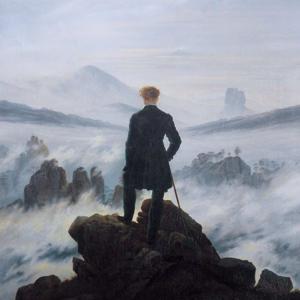


What if nihilism is not the end of meaning, but an opening into a deeper way of seeing?
John Vervaeke is joined by Ethan Hsieh to introduce Notes on No-Thing, a course on the Kyoto School of Philosophy and its response to nihilism, nothingness, and the advent of the sacred.
They explore why modern people often oscillate between nihilism and narcissism, why meaning must be shareable, and how the Kyoto School offers a different way through the meaning crisis. Rather than treating nothingness as a wound to be covered over with distraction, John considers it as an aperture—a way of seeing through nihilism toward a renewed encounter with reality, religion, sacredness, and transformation.
The conversation draws on Nishida, Nishitani, and Tanabe alongside Zen, Neoplatonism, Nietzsche, Dostoevsky, Heidegger, Sartre, grief, shame, the death of God, and post-Christian nihilism. It asks what a post-nihilistic understanding of the sacred might make possible.
Notes on No-Thing runs September 14–November 9, with no class on October 26.
Learn more and register: https://lectern.johnvervaeke.com/courses/notes-on-no-thing
Explore courses and teachings from The Lectern: https://lectern.johnvervaeke.com/
Support The Lectern on Patreon: https://www.patreon.com/johnvervaeke
Connect with John Vervaeke: Website: https://johnvervaeke.com/ X: https://twitter.com/vervaeke_john YouTube: https://www.youtube.com/@johnvervaeke Patreon: https://www.patreon.com/johnvervaeke
Chapters
00:00 Nothingness as an opening 00:40 Welcome to The Lectern 01:20 Why this course matters 03:10 The Kyoto School and nihilism 07:10 Beyond nihilism and the sacred 11:10 The everyday voice of nihilism 12:30 Nihilism and clinical depression 17:20 The clenched fist analogy 20:50 Forms of nihilism 25:00 Beyond familiar Western religious frameworks 26:00 From hole to aperture 27:00 Grief, loss, and reality 29:10 Narcissism as a response to nihilism 32:40 Why meaning must be shareable 35:10 Nishitani and self-overcoming 37:20 Nihilism and narcissism 38:30 The Kyoto School as a dialogical partner 45:20 Nietzsche, Christianity, and modernity 49:10 Guilt, shame, and cultural frameworks 52:30 Grief over the death of God 58:00 The advent of the sacred 60:20 What students can expect 61:20 Transformation and no-thingness 64:40 Meaning, flourishing, and resilience 66:40 Mourning, grief, and love 68:40 Course registration and closing
Why are we losing our taste for what is real—and what practices can help us recover it?
John Vervaeke is joined by Guy Sengstock and Kyle Koch for a conversation on connection as something constitutive of who we are: our relationship to nature, one another, story, personhood, and the sacred.
Together, they explore the practices behind the Reconnecting to the Real retreat in Whistler, British Columbia. Kyle shares how nature connection, tracking, bird language, and embodied practice can transform how we perceive and participate in the world. Guy brings the relational depth of Circling, considering how conversation can become a practice of presence, listening, and genuine contact.
John situates these practices within his work on the meaning crisis, Socratic dialogue, wisdom, and the renewal of the senses. The conversation moves from fire, forest, and shared meals to deeper questions of flourishing, AI and virtual mediation, touch and taste, and how we can develop a more participatory relationship with reality.
Learn more about the Reconnecting to the Real retreat: https://lnkd.in/erVwif6A
Explore courses and teachings from The Lectern: https://lectern.johnvervaeke.com/
Support The Lectern on Patreon: https://www.patreon.com/johnvervaeke
Connect with John Vervaeke: Website: https://johnvervaeke.com/ X: https://twitter.com/vervaeke_john YouTube: https://www.youtube.com/@johnvervaeke Patreon: https://www.patreon.com/johnvervaeke
Chapters
00:00 Welcome to The Lectern 00:40 Reconnecting to the Real 01:20 Nature connection and meaning 04:20 Discovering Circling 07:20 Tending the earth and togetherness 13:20 Socrates, meaning, and dialogue 18:20 Retreat as practice and participation 24:20 Facilitating rather than lecturing 30:40 The senses reaching toward the world 36:00 Why connection restores energy and life 41:40 Touch, contact, and the real 43:20 Taste and spiritual perception 46:00 The skill that unlocks a life 48:00 Shared meals and tasting together 51:20 Renewing the senses 52:20 Flourishing and the real 54:30 Closing reflections
Is civilization making us smarter while disconnecting us from what matters most?
In this episode, John Vervaeke speaks with Kyle Koch, a deep nature connection practitioner and new father living in an intentional community in northern British Columbia, about applying Vervaeke's work to raise children with belonging and connectedness.
Together they explore cognition as a dynamical developmental process, how culture increasingly "raises" children through screens, and how capitalism functions as a dominant religion shaping salience and meaning. Drawing on Iain McGilchrist's work and 4E cognitive science, they discuss left-hemisphere dominance, relevance realization, extended families and credible role models, narrative as "keeping track of tracking," and the need for a meta-narrative beyond a chaos of stories.
The conversation also examines kinship and Indigenous worldviews, personhood as promise-making, the "spirit of place," pilgrimage as transformative theoria, and a civium model that combines Dunbar-scale communities with a more virtuous virtual world—including retreats like Reconnecting with the Real.
Timestamps
00:00 – Welcome to the Lectern 02:00 – Fatherhood and meaning 05:00 – Questions on development 06:30 – Cognition as dynamic 07:30 – Culture raises kids 09:00 – Capitalism as religion 11:00 – Alloparenting and nature 13:00 – Becoming self and person 17:30 – Trust and role models 22:00 – Narratives and consumption 26:00 – Spirit of place 31:30 – Promises and personhood 33:30 – Narrative practice tracking 39:30 – Meta-narrative challenge 43:00 – Why we cannot return 43:30 – The synergy of civilization 44:30 – Civium at Dunbar scale 46:30 – Making the virtual sacred 49:30 – Can the virtual be virtuous? 51:00 – Keeping civilization's gifts 57:30 – Hospicing modernity and cultural transition 1:00:00 – Capitalism and demographic collapse 1:02:30 – Pilgrimage and theoria 1:09:00 – Apprenticeship to sages 1:11:30 – Eldership and the sage symphony
About Kyle Koch
Kyle Koch is a nature connection expert who bridges philosophical concepts and embodied reality through tracking, bird language, and nature-based core routines. Coming from a background in Evolve Move Play, he helps people reclaim an innate sense of belonging within the natural world.
Learn more: https://www.ecologyofconnection.com
Email: [email protected]
Resources
The Matter With Things: https://channelmcgilchrist.com/the-matter-with-things
Evolve Move Play: https://www.evolvemoveplay.com/
Follow John Vervaeke
Website: https://johnvervaeke.com/
X: https://x.com/DrJohnVervaeke
YouTube: https://www.youtube.com/@johnvervaeke
Patreon: https://www.patreon.com/johnvervaeke
Thank you for listening!
What does it mean to "see God again" after modernity has taught us to look for the sacred in all the wrong ways?
In this special Lectern conversation, John Vervaeke is joined by Guy Sengstock for a deep reflection on John's three-part course trilogy, Seeing God Again for the First Time. John invited Guy to watch the courses and respond not only to their arguments, but to the way the courses enact a philosophical, phenomenological, and spiritual exercise. Guy begins from his own background as co-founder of Circling, describing how relational practice opened a mystery that psychological language could not fully hold, eventually leading him into Heidegger, phenomenology, and philosophy as contemplation. From there, he draws out the personal and pedagogical arc of John's work: teaching as encounter, as vulnerability, and as a way of revealing what students are already confronted with.
John describes the course as an attempt to integrate rigorous argument, phenomenological exploration, and spiritual exercise in the spirit of Socrates, Plotinus, and Pierre Hadot. Rather than define religion or God and then argue for or against them, John sets out to deconstruct the modern grammar that blocks our ability to encounter sacredness at all: the fact/value, is/ought, subjective/objective, theory/data, and meaning/measurement dichotomies. The conversation moves through Paul Tillich, William Desmond, Wittgenstein, Heidegger, Catherine Pickstock, Janet Soskice, D.C. Schindler, and 4E cognitive science, showing how analytic philosophy, continental phenomenology, and cognitive science converge in undermining modernity's inherited picture.
Guy and John explore sacredness as ultimately real, ultimately orienting, ultimately transformative, and ultimately resonant; naming as relational participation rather than possession; wonder as calling self and world into question; and aletheia as truth that discloses beauty, goodness, and intelligibility. The conversation closes with the contemporary stakes of this recovery: AI, consciousness, personhood, the meaning crisis, and the alignment problem. John argues that we can no longer treat philosophy and sacredness as academic luxuries when our technologies are reshaping cognition, identity, and agency. If we are creating new kinds of intelligence, the question is not merely how to bind them to us, but how to orient them - and ourselves - toward truth, goodness, beauty, intelligibility, and the sacred.
Guy Sengstock is a co-founder of Circling and a longtime teacher of relational, dialogical, and contemplative practice. His work bridges phenomenology, philosophy, facilitation, and the lived mystery of interpersonal encounter.
Explore courses and other offerings from The Lectern:
https://lectern.teachable.com
About The Lectern
The Lectern is dedicated to wisdom cultivation through dialogue, inquiry, and transformative practices. Through courses, live events, and community conversations, we seek not merely to discuss ideas, but to explore how they can shape the way we live.
00:00 Welcome to The Lectern 01:00 Why Guy is reflecting on Seeing God Again 02:00 Guy introduces his background in Circling and philosophy 04:00 Circling, mystery, and the limits of psychological language 06:00 Heidegger, Being and Time, and philosophy as contemplation 09:00 John's Socratic and Plotinian aspirations 10:30 Argument, phenomenology, and spiritual exercise 12:00 Seeing God Again, pilgrimage, and the Philosophical Silk Road 13:00 John the person, scientist, philosopher, and teacher 15:00 Teaching as existential confrontation 17:00 The manner of teaching as part of the teaching 18:00 Modernity, the meaning crisis, and sacredness 20:00 When teaching became encounter 21:00 Paul Tillich, cognitive science, and teaching virtue 23:00 William Desmond and philosophy as spiritual exercise 25:00 Teaching toward a philosophical-spiritual end 26:00 Involving the whole self without becoming self-involved 29:00 Revealing what students are already confronted with 31:00 Teaching, social phobia, and vulnerability 33:00 The sacred as deep teaching 35:00 Idealization, temptation, and participation 38:00 Naming God and the loss of relational naming 41:00 The four dichotomies of modernity 42:00 Out-rigoring the rigor 44:00 Deconstructing the grammar that blocks sacredness 45:00 Mystical traditions as phenomenological exemplars 47:00 Modernity's vertical and horizontal dichotomies 49:00 Recovering sight beyond modernity's glasses 50:00 Sacredness as ultimately real, orienting, transformative, and resonant 52:00 Why John uses atheist scholarship before apologetics 53:00 Counter-modern thought and the limits of postmodernism 55:00 Why these dichotomies matter beyond academia 57:00 Everything Everywhere All at Once, nihilism, and value 01:01:00 Philosophy outside the ivory tower 01:02:00 Postmodernity and living in the ruins 01:04:00 Recovery and asking "Where are we?" 01:05:00 Wittgenstein, Heidegger, and recovering meaning 01:07:00 Modernity as icon rather than representation 01:08:00 Truth, goodness, beauty, and intelligibility 01:12:00 Wonder vs. curiosity 01:15:00 Aletheia, beauty, liberation, and onto-normativity 01:18:00 Seeing God Again as pilgrimage 01:19:00 Theoria as theory, contemplation, and pilgrimage 01:21:00 AI, analytic philosophy, and consciousness 01:24:00 Meaning, relevance, and the limits of computation 01:26:00 AI personhood and disembodied embodiment 01:30:00 Why philosophy matters for technologies shaping us 01:32:00 AI agents, personhood, and the coming ontological crisis 01:35:00 The meaning crisis and the loss of sacred orientation 01:37:00 Personhood, ontology, and responsibility 01:39:00 The alignment problem and binding intelligence to the sacred 01:40:00 Why the course must be taken as a course 01:41:00 Teacher assistance, Socratic process, and future retreats 01:42:00 Socratic Salon and participatory practice 01:43:00 Closing reflections on retreat and relationship
Thank you for listening!
What is applied metatheory - and why might it matter for ordinary people trying to make sense of reality, meaning, spirituality, and complexity?
In this live Q&A from The Lectern, Ethan Hsieh speaks with Brendan Graham Dempsey about metatheory, meaning-making, complexity, and the spiritual task of learning to feel at home in the universe. Brendan introduces his work as Director of Research at the Institute of Applied Metatheory and Director at Sky Meadow Institute, where he explores developmental models, metamodern thought, complexity science, worldview, value, and the sacred. The conversation begins by demystifying "meta" itself: not as abstract ivory-tower speculation, but as the human effort to build better maps of reality from an overwhelming abundance of knowledge. Ethan and Brendan examine how we are always philosophizing - asking what is true, who to trust, what matters, and how different domains of meaning relate to each other. They discuss the pitfalls of complexity, including conspiracy thinking, premature certainty, and the difficulty of staying with learning when one does not yet understand. The conversation moves through AI, mentorship, spiritual development, metaphor, phenomenology, and the challenge of describing transformative experience without over-reifying inherited symbols. Brendan frames metatheory as a way of relating different "data" of human experience - from mystical encounter to neuroscience to integral theory - without collapsing them into chaos or dogma. The episode closes with a question about perennialism, where Brendan makes a case for dynamic spirituality, interpretive humility, and pluralism not as a failure to answer, but perhaps as part of the answer itself.
Brendan Graham Dempsey is Director of Research at the Institute of Applied Metatheory and Director at Sky Meadow Institute in Vermont. He is the host of the Metamodern Meaning podcast and author of the multi-volume series The Evolution of Meaning. His upcoming Lectern course, Matters Over Time, explores meaning, complexity, development, and the sacred.
00:00 Welcome and live Q&A format 01:30 Introducing Brendan Graham Dempsey 01:50 Institute of Applied Metatheory, Sky Meadow Institute, and Metamodern Meaning 02:50 The Evolution of Meaning and Matters Over Time 03:30 Why "applied metatheory" can sound intimidating 04:20 What is applied metatheory? 05:00 Big-picture thinking across human history 06:00 The impossibility of "reading everything" today 07:00 Making sense of reality from specialized knowledge 07:40 Metatheory as a way to feel at home in the universe 09:30 Why useful maps matter 09:50 We are always philosophizing 11:30 Meaning as reality continually disclosing itself 12:10 Development, wisdom, and the expanding horizon of thought 13:00 Epistemology, truth, and learning to hold complexity 14:50 Demystifying "meta" 15:20 Pitfalls in approaching complexity 16:00 Conspiracy theories and seeking complexity in the wrong places 17:40 AI, wisdom, and the demands of complex conversations 18:30 Learning, discomfort, mentors, and staying on the path 20:00 Rabbit holes vs. deeper engagement with reality 27:00 Complexity, integrity, and discernment 35:00 Metatheory, spirituality, and meaning-making frameworks 45:00 How symbols and metaphors point beyond themselves 55:00 Spiritual experience, interpretation, and inherited maps 01:06:40 The finger pointing at the moon 01:07:00 Bird watching as spiritual exercise 01:08:00 "Things happen. That was something." 01:08:50 Getting closer to lived experience 01:09:30 Phenomenology, Layman Pascal, and expanding spiritual vocabulary 01:10:30 The divine as doorway into experience 01:11:00 Mapping spiritual data without collapsing into chaos 01:12:10 Would Brendan consider himself a perennialist? 01:13:20 Dynamic spirituality, emergence, novelty, and evolution 01:15:00 Naturalizing perennial claims and studying causal dynamics 01:17:20 Near-death experience and interpretive humility 01:19:00 Ontological claims as proposals, not closures 01:20:00 Integrity, skepticism, and not being sold a worldview 01:22:40 Pluralism as part of the answer 01:24:50 Brendan's course Matters Over Time 01:25:20 Closing thanks
Explore Brendan's course and other offerings:
https://lectern.teachable.com
About The Lectern
The Lectern is dedicated to wisdom cultivation through dialogue, inquiry, and transformative practices. Through courses, live events, and community conversations, we seek not merely to discuss ideas, but to explore how they can shape the way we live.
Thank you for listening!
What happens when wonder is reduced to curiosity, and curiosity becomes a drive to master everything?
In this second conversation with William Desmond, John Vervaeke returns to the question of astonishment: not as a passing emotional state, but as a deeper opening of the mind to reality. Desmond frames scientism as a philosophical interpretation of science that tries to make all essential questions answerable through determinate method, precision, and control. Science remains valuable, but scientism forgets the more original wonder from which inquiry arises.
The conversation distinguishes astonishment, perplexity, and curiosity. Curiosity seeks determinate answers, while astonishment opens us to what exceeds our mastery. Vervaeke connects this with his own distinction between the having mode and the being mode, arguing that genuine wonder is bound up with transformation rather than mere information.
From there, the dialogue turns to Plato, Aristotle, Hegel, logical positivism, AI, computation, relevance realization, and insight. Desmond and Vervaeke ask whether intelligibility can be reduced to determination, or whether the most important forms of understanding depend on a living act of insight that formal systems cannot generate on their own.
The final movement turns toward spiritual practice, Socrates, Jesus, the Buddha, religion, trust, and forgiveness. If modern culture suffers from a dearth of astonishment, then the recovery of meaning may require more than better arguments. It may require practices, communities, and forms of dialogue that reawaken porosity, reverence, and an openness to the sacred.
TimestampsWilliam Desmond is a philosopher whose work engages metaphysics, religion, art, science, and transcendence. In this conversation, he and John Vervaeke continue their exploration of astonishment, scientism, the between, and philosophical practice.
Follow The Lectern for conversations on philosophy, meaning, wisdom, and the recovery of deeper forms of knowing.
Thanks for listening!
What happens when a society possesses extraordinary technological power but lacks a shared sense of what that power is for?
John Vervaeke, Jordan Hall, Guy Sengstock, and Christopher Mastropietro reunite for a sustained inquiry into normativity: the structures by which human beings perceive direction, value, responsibility, and the difference between better and worse action. The question becomes urgent in the context of artificial intelligence, where increasingly consequential decisions are being made inside a culture that struggles to articulate a coherent basis for judgment.
The conversation begins with Guy's encounters with the AI community and the fear that humanity may soon make decisions it cannot reverse. From there, the group investigates modernity's technological understanding of being, the reduction of creation to artifacts, and the modern self's attachment to sole authorship. John and Jordan propose that meaning is participatory: intelligibility is not manufactured by isolated selves but emerges through shared authorship with other people, traditions, practices, and reality itself.
The dialogue then turns toward virtue. If the problem is not simply ignorance but malformed attention and desire, knowing what should be done is insufficient. The deeper difficulty is how people become capable of wanting, perceiving, and participating in what is good. Socratic aporia, vulnerability, kenosis, embodied practice, pilgrimage, and dialogue are explored as ways of undergoing reorientation rather than merely acquiring information.
In the final movement, the speakers discuss bad-faith dialogue, leisure, lingering, tourism, linguistic lostness, and doomscrolling. These apparently different subjects converge on one insight: when people remain sealed inside environments engineered around their existing capacities and preferences, they lose access to the forms of friction, surprise, and participation that can transform them.
Key InsightsFollow Lectern for more conversations about wisdom, meaning, philosophy, technology, spirituality, and cultural renewal.
What if pilgrimage is not primarily about reaching a destination, but about learning how to be addressed by reality again?
In this episode of Lectern Dialogues, John Vervaeke speaks with Ish Peregrino, a practitioner, facilitator, and pilgrim whose very chosen name carries the meaning of pilgrimage. John met Ish during his own pilgrimage in Spain, and their conversation returns to the question of what pilgrimage makes possible: spiritually, psychologically, relationally, and culturally.
Ish begins by describing his background in contemplative practice, community work, Latin American and Asian contexts, and his long apprenticeship under a teacher who exposed him to Hindu, Buddhist, Zen, ecological, and indigenous traditions. This opens into a discussion of the "beyond human": the sacred, the more-than-human world, distributed intelligence in community, and the goodness that calls a person toward transformation.
The heart of the conversation is pilgrimage. John proposes pilgrimage as a meta-practice: a living practice that places one's whole ecology of practices under a kind of positive stress test. Ish extends this by describing how pilgrimage changes one's environment, identity, pace, attention, and relationship to grief. It is not merely a practice added to life, but a passage that can reshape the life to which one returns.
The conversation then contrasts the pilgrim with the tourist and the explorer. Tourism seeks experience and pleasure; exploration seeks conquest, achievement, and control. Pilgrimage, by contrast, is marked by participation, willingness, availability, receptivity, reverence, and deep listening. It is not just movement through space, but a transformation in the way the world is allowed to speak.
Toward the end, John and Ish explore pilgrimage's relationship to God, sacredness, memory, dreams, community, and integration. Ish offers one of the conversation's most memorable images: after pilgrimage, the path was still walking him in his dreams. The episode closes with the claim that pilgrimage is not only for the Camino or other famous routes. It is a way of relating differently to what is already around us: with attention, reverence, openness, and love.
Key InsightsIsh Peregrino, also known as Mauricio-Ishwara González G., is the creator of Modo Peregrino, a living space of inquiry, accompaniment, and public reflection where the inner journey and the outer crisis of meaning meet. His work accompanies leaders, organizations, and communities through cultural transformation and regeneration, weaving applied complexity, transformative learning, deep dialogue, and contemplative practice into long-term, context-rooted processes.
He is co-founder and Academic Director of DeUmbrales: Experiencias de Transición and a tutor-facilitator in Ronald Sistek's international Organizational Regeneration program. For more than 22 years, he has worked across Latin America, the United States, Spain, and Greece in universities, executive programs, organizations, and liminal spaces where real transformation tends to happen.
Ish's links:
Follow Lectern for more conversations on wisdom, meaning, spirituality, philosophy, and the renewal of culture.
Can transcendence still make philosophical sense after modernity?
John Vervaeke speaks with philosopher William Desmond about Platonism as a living tradition, the meaning of strong transcendence, and Desmond's philosophy of the metaxu: the between. The conversation builds from John's proposal that relevance realization and transjectivity are philosophically grounded in Desmond's ontological account of the between.
John begins by distinguishing modern psychological accounts of transcendence from the ancient and Platonic sense of strong transcendence. In this stronger sense, transcendence is not merely a better state of mind. It discloses truths that are otherwise unavailable and changes the knower's relation to reality. That claim challenges modern assumptions about flat ontology, the buffered self, representational cognition, and the fact-value split.
Desmond responds through Plato. He presents Plato not as a dry theorist of two worlds, but as a philosophical artist of the between: a thinker of mimesis, eros, mania, dialogue, singularity, and participatory transformation. Plato's dialogues are not ornamental containers for arguments; their drama, characters, and dialogical movement are part of the philosophy itself.
The later conversation opens into deep memory, imagination, eternity, possibility, God, Daoism, intercultural philosophy, pilgrimage, and the life-world. Desmond and Vervaeke converge on the need to move beyond the view from nowhere and return philosophy to transformative practice, embodied dwelling, and a richer contact with the sources of intelligibility.
Key Insights00:00 Welcome and setup 01:00 Relevance realization and the philosophy of the between 02:00 Platonism as living tradition 02:40 The need for strong transcendence 03:50 Transcendence after modernity 04:40 William Desmond introduces his work 05:00 Between system and poetics 06:00 The Western tradition as conversation partner 08:00 John's paper on strong transcendence 09:20 Psychological transcendence in modern thought 10:00 Truths disclosed through transcendence 11:00 Flat ontology and layered reality 12:30 The buffered self 14:00 Fact-value dichotomy and default atheism 15:10 Contact epistemology and participatory relation 17:20 Being realized as you realize 18:20 Anagoge and the cave 18:40 Interior, exterior, and superior transcendence 20:10 Autonomy, heteronomy, theonomy, and theosis 21:30 Desmond responds 22:00 Plato's philosophical art and the Sophist 22:30 Art, origins, and otherness 23:40 Originality, creativity, and modern art 25:20 Mimesis and the difference between image and original 28:20 Plato as thinker of the metaxu 29:00 Eros and self-transcendence 30:00 Mania and divine inspiration 31:30 Inspiration as transmission 33:20 Metaxology and Hegel 34:40 The Sophist and participatory knowing 36:40 The who of the sophist 38:10 Periagoge and the turning of the soul 39:40 Philosophy as a way of life 40:30 Exiting modernity's frame 43:20 The dialogue form is not ornamental 45:30 Socrates as an image of courage 46:20 Dialogos and method 48:00 Diaphanous logos 49:00 Singular incarnation and witness 51:10 Theoria as contemplation and pilgrimage 52:00 John's dialectic-in-dialogos practice 53:20 Anamnesis in practice 54:20 The logos beyond the participants 55:20 Deep memory and imagination 57:00 Muses, memory, and hidden springs 58:20 AI and outsourced memory 59:00 Memory as ontological depth 01:00:30 Eternity and the other to time 01:02:40 Inward otherness and ultimate otherness 01:04:50 Plato's sun and enabling light 01:06:20 Porosity and the buffered self 01:07:00 Living possibility 01:09:00 Possibility, transcendence, and God 01:10:40 What makes intelligibility intelligible? 01:11:40 Eastern and Western approaches to possibility 01:13:30 Coming to be and becoming 01:15:40 Nicholas of Cusa 01:17:00 Wu wei and giving way 01:18:20 Daoist practice and Socratic midwifery 01:20:20 Philosophical Silk Road 01:22:10 The intimate universal 01:23:20 Against philosophical tourism 01:25:30 Elemental porosity 01:26:00 Pilgrimage and practice 01:27:40 Being underway 01:29:30 Theoria as metanoetic passage 01:30:10 Symphonic language 01:34:00 The life-world 01:35:40 Rejecting the view from nowhere 01:36:20 Closing
ResourcesFollow John Vervaeke: Website: https://johnvervaeke.com/ YouTube: https://www.youtube.com/@johnvervaeke/videos X: https://x.com/DrJohnVervaeke Patreon: https://www.patreon.com/johnvervaeke
Why is the modern world making us lose our "taste for the real," and can ancient practices like animal tracking and Socratic dialogue actually save our personhood from the "virtual matrix" of AI?
John Vervaeke, Guy Sengstock, and Kyle Koch announce their second "Reconnecting to the Real" retreat and outline what each will teach: Kyle offers nature-connection practices such as tracking and bird language to cultivate belonging; Guy brings Circling Method relational practices to deepen listening, communication, and group connection; John brings reconstructed Socratic practices including dialogos, dialectic, imaginal reflection, and a two-hour Socratic salon for questions. They describe the retreat as a non-vacation "pilgrimage" meant to transfer skills back into everyday life amid increasing virtual mediation and AI-driven risks of losing the "taste for the real." Logistics: Aug 31–Sept 4 in Whistler, British Columbia at Brû Creek Lodge, with lodging and meals included, costing $3,995 USD, and limited spots remaining with many returning participants.
Guy Sengstock
Co-founder of The Circling Method: He has spent 30 years developing this relational practice to transform peer-to-peer communication into a profound "asana" of listening and presence. Relational "Maestro": He uses spontaneous inquiry and formal circling to help groups move beyond intellectual concepts into direct contact with "the real".
Personal Blog/Website
Kyle Koch
Nature Connection Expert: He bridges the gap between philosophical concepts and embodied reality through tracking, bird language, and nature-based core routines. Embodiment Practitioner: Coming from a background in Evolve Move Play, he focuses on reclaiming our innate sense of belonging to the natural world
EARTHKIN WILD - Kyle's Website
Reconnecting to the Real
The Circling Method
Evolve Move Play
Nature Connection Mentoring with Kyle
Rewild your Week-7 day nervous system reset
Timecodes:
00:00 Welcome to the Lectern
01:00 Kyle nature connection
02:30 Guy circling practice
06:00 John socratic practices
09:30 Whistler logistics
14:00 Why reconnecting real
16:00 Guy ear for real
20:00 John true good beautiful
30:00 Kyle beyond virtual
33:00 Tracking as truthing
35:30 Primordial skills return
38:00 Biases and feedback
40:00 Games reveal patterns
43:00 Beauty as practice
46:30 Pilgrimage not vacation
49:00 Screens and ai mediation
53:19 " The real is becoming option, like optional in some strange way."
53:30 Losing taste for real
58:00 Bring it back home
Explore courses and teachings from The Lectern https://lectern.johnvervaeke.com/
Support the Lectern and join a growing community of wisdom seekers https://www.patreon.com/johnvervaeke
John Vervaeke:
https://johnvervaeke.com/
https://twitter.com/drjohnvervaeke
https://www.youtube.com/@johnvervaeke
https://www.patreon.com/johnvervaeke
Thanks for listening!
From the publisher's feed

15,235 Listeners
2,021 Listeners

26,239 Listeners
1,609 Listeners

315 Listeners
33,445 Listeners

1,029 Listeners

2,159 Listeners
868 Listeners

4,171 Listeners

354 Listeners
1,634 Listeners

19 Listeners

437 Listeners
283 Listeners