
Sign up to save your podcasts
Or

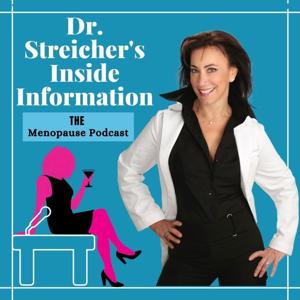
By Lauren Streicher, MD


4.7
343343 ratings


The podcast currently has 169 episodes available.
The most played episodes among Podcast App listeners.
Come Again: Sexuality and Orgasm, my solution-driven audio Series, for both non-healthcare professionals and healthcare professionals is now available on demand on drstreicher.com. Subscribers get loads of supplementary guides and resources. Health care professionals have an option to purchase additional material on incorporating sexual medicine into their practice. For a 25% discount to the COME AGAIN Series, use code PODCAST25. This discount code expires December 21. This episode is a free preview from COME AGAIN Episode 19 When it comes to testosterone, hairy guys with round the clock virility come to mind, thanks to those non-stop ads warning men of the dire consequences of "Low T". Not as well known is that TESTOSTERONE is not just a male hormone but is a HUMAN hormone that is just as important for women. In this episode: · The ROLE of testosterone in women · WHERE testosterone is normally produced · The potential BENEFITS of taking testosterone · How well testosterone therapy WORKS and why it doesn’t work in everyone · How to PREDICT if you will respond to testosterone therapy · What TESTS you should have prior to starting testosterone therapy · Why is SEX HORMONE BINDING GLOBULIN important? · Why someone would have a HIGH SEX HORMONE BINDING GLOBULIN · Why the FDA has never approved testosterone for women · Why PELLETS are a PROBLEM · Why gels are the SAFEST and MOST EFFECTIVE form of testosterone for women · The potential SIDE EFFECTS of testosterone therapy

During my hiatus, please join me on Substack for written content and Substack Lives (also available on replay) Go to substack.com and download the APP FREE subscribers get access to most content and Subtack LIVEs PAID subscribers get access to all content, and can attend the monthly ASK ME ANYTHING Webinars. For a FREE subscription, go to https://drstreicher.substack.com/subscribe. If you choose to become a PAID subscriber, use this link to subscribe, and you will get 30% off (Discount can be applied for the next week) DrStreicher.Substack.com/podcast200 This is my 200th episode! So I decided to replay a fan favorite. Dr. Steven Goldstein's perimenopause episode was among the top 5 most downloaded, with good reason. The only thing predictable about perimenopause is that it is …unpredictable. My guest today is Dr. Steven Goldstein, a tenured professor at NYU's Grossman School of Medicine, the past President of the International Menopause Society, Past President of The Menopause Society, and one of the WORLD’S top experts on the science of perimenopause. The problem with the standard definition of menopause. Why bleeding and having a period is not the same thing Why perimenopausal women bleed erratically Why anxiety and other symptoms occur during How to interrupt FSH and estradiol blood levels The best treatment for perimenopause Why birth control pills work so well during perimenopause Myths about birth control pills The concept of “suppression and substitution” How long perimenopause lasts What triggers perimenopause Why fibroids often grow during perimenopause How to know if symptoms are perimenopause hormonal fluctuations or something else How long someone can stay on a birth control pill When the 12-month rule doesn’t hold When perimenopause and menopause hit before the age of 40. When perimenopause hits before 40 why it needs to be treated Options if someone can’t take birth control pills When you can ignore irregular bleeding and when it needs to be evaluated What Black women need to know about perimenopause bleeding The likelihood of cancer if there is a uterine polyp and you are not bleeding Link to Steven Goldstein MD https://www.goldsteinmd.com/services/gynecologist-perimenopause-specialist/ Link to John Rock’s Error Article Lauren Streicher, MD is a clinical professor of obstetrics and gynecology at Northwestern University’s Feinberg School of Medicine, and the founding medical director of the Northwestern Medicine Center for Sexual Medicine and Menopause and a Senior Research Fellow of The Kinsey Institute, Indiana University. She is a certified menopause practitioner of The Menopause Society. Dr. Streicher is the medical correspondent for Chicago’s top-rated news program, the WGN Morning News, and has been seen on The Today Show, Good Morning America, The Oprah Winfrey Show, CNN, NPR, Dr. Radio, Nightline, Fox and Friends, The Steve Harvey Show, CBS This Morning, ABC News Now, NBCNightlyNews,20/20, and World News Tonight. She is an expert source for many magazines and serves on the medical advisory board of The Kinsey Institute, Self Magazine, and Prevention Magazine. She writes a regular column for The Ethel by AARP and Prevention Magazine.
As a gynecologist, I help women with the physical, hormonal, and medical aspects of sexual response: eliminate sexual pain, and help women who can’t orgasm due to an SSRI, diabetes or vascular disease. I am not a therapist. I do not treat the psychosocial aspects of sexual difficulties or address the mind-body connection. And that is why the work I do depends on experts like my guest today, Dr. Lori Brotto Dr. Lori Brotto is a registered psychologist, researcher, and global leader in women’s sexual health. A Professor at the University of British Columbia and Distinguished University Scholar, she has spent more than two decades developing and validating evidence-based treatments for women’s sexual concerns and is widely recognized for pioneering the use of mindfulness in sexual health. She co-developed eSense to translate this body of research into accessible, evidence-based care beyond traditional clinical settings. Dr. Brotto has authored more than 280 scientific publications and is also the author of Better Sex Through Mindfulness and its companion workbook. In this episode: Why a sex therapist and medical clinician need to collaborate How mindfulness helps arousal and libido once there is no pain with sexual activity How well mindfulness works to increase libido The difference between mindfulness and cognitive behavioral therapy Why women avoid sex (besides pain) The circular sexual response cycle If most sex therapists are aware of the impact of menopause symptoms The role of systemic testosterone and libido The eSense Health tool for individualized digital access to CBT and mindfulness Why Dr. Brotto developed eSense Health What eSense is How eSense works and how well it works Who eSense is for How this tool helps women Living with a cancer diagnosis PTSD History of trauma History of sexual abuse With different cultural and religious backgrounds What to expect during an eSense session The cost of eSense Linked In https://www.linkedin.com/in/lori-brotto-9974a236/ Instagram @drloribrotto Information about eSense HEALTH eSense Health is a digital health company focused on closing the care gap in women’s sexual health. The e-Sense program is based on proven therapeutic approaches, including CBT and mindfulness, and turns them into a structured self-guided experience that women can access privately. It offers support that’s similar to what you might receive in therapy, but in a more accessible and affordable format. To learn more and sign up for updates, visit: https://esensehealth.com/contact/ IG: https://www.instagram.com/esensehealth/ YouTube: Episode 195 Vulvar Relief with Dr. Andrew Goldstein COME AGAIN is a 30-part audio series to address the biological, hormonal, and medical issues that can sabotage your sex life. This solution-driven, science-based guide will help get your libido to kick in and your clitoral nerve endings to wake up. For more information, go to DrStreicher.com/COMEAGAIN Dr. Streicher is on SUBSTACK DrStreicher.Substack.com Articles Monthly News Flash Reports on recent research Monthly Zoom Ask Me Anything Webinar Lauren Streicher MD is a clinical professor of obstetrics and gynecology at Northwestern University’s Feinberg School of Medicine, the founding medical director of the Northwestern Medicine Center for Sexual Medicine and Menopause, and a Senior Research Fellow of The Kinsey Institute, Indiana University. She is a certified menopause practitioner of The Menopause Society. Dr. Streicher is the medical correspondent for Chicago’s top-rated news program, the WGN Morning News, and has been seen on The Today Show, Good Morning America, The Oprah Winfrey Show, CNN, NPR, Dr. Radio, Nightline, Fox and Friends, The Steve Harvey Show, CBS This Morning, ABC News Now, NBCNightlyNews,20/20, and World News Tonight. She is an expert source for many magazines and serves on the medical advisory board of The Kinsey Institute, Self Magazine, and Prevention Magazine. She writes a regular column for The Ethel by AARP and Prevention Magazine. LINKS Subscribe To Dr. Streicher’s Substack Information About COME AGAIN Dr. Streicher’s CV and additional bio information To Find a Menopause Clinician and Other Resources Glossary Of Medical Terminology Books by Lauren Streicher, MD Slip Sliding Away: Turning Back the Clock on Your Vagina-A gynecologist’s guide to eliminating post-menopause dryness and pain Hot Flash Hell: A Gynecologist's Guide to Turning Down the Heat Sex Rx- Hormones, Health, and Your Best Sex Ever The Essential Guide to Hysterectomy Dr. Streicher’s Inside Information podcast is for education and information and is not intended to replace medical advice from your personal healthcare clinician. Dr. Streicher disclaims liability for any medical outcomes that may occur because of applying methods suggested or discussed in this podcast.
At my monthly Ask Me Anything Webinars, I always get questions about hormone therapy- when to start, when to stop, if the dose should be changed as women get older, and what to do if someone continues to have symptoms or continues to bleed… In this episode, Dr. Risa Kagan and I answer submitted questions. We start by briefly running through the established indications for starting menopausal hormone therapy (MHT), and then Dr. Kagan and I discuss the “what ifs” of hormone therapy. Do you have to wait for 12 months without a period before starting MHT? If someone is taking birth control pills for control of perimenopause symptoms, at what point should they go off? And can they immediately transition to MHT or do they need to take a break and make sure they are no longer making estrogen? A woman with severe hot flashes is having all day, all night hot flashes- how long is it going to take to get some relief? Does it matter if it is oral or transdermal as far as the onset of action? What are the chances of getting 100% relief? If someone has started MHT but is still having flashes, how long should they wait before adjusting it? What is the best starting dose if someone has severe flashes? High or low? A woman wrote in that she has been using a 0.75 patch, but continues to have severe flashes. She got a serum level, and it is 10. Her doctor is reluctant to increase her dose. What would you tell her? A woman has tried four different protocols and has nuisance bleeding with all. She had an ultrasound and biopsy, and it was all normal. She wants to continue MHT, but is tired of the bleeding. She wants to know which protocol is the least likely to cause bleeding An internist told a woman that after 5 years, it is time to go off her MHT. What about if she is primarily taking it for hot flashes- how likely is it that her hot flashes will return? What about if she is primarily on it for bone health (known osteopenia) and joint pain-? What about if she is primarily taking it for sexual benefits? (Libido, lubrication, orgasm) ? What about if she is primarily taking it because she is worried about dementia A woman decided to go off HT since she was only taking it for hot flashes and is now 10 years out. Her manicurist told her that she should taper; otherwise, her flashes will come back. Her gyne says, stop. What does Dr. Kagan say? A 60 year old woman started estrogen when she had a hysterectomy and ovary removal. She was told by her internist that there is no way she will still be having hot flashes in her 60s, and therefore no reason to continue her estrogen. Is that correct? What is the likelihood that she will still be having hot flashes in her 60s or 70s? The next question is from a woman who increased her oral estradiol to 2 mg to get rid of her flashes, but is still taking her original Prometrium dose 100 mg. Is that enough to protect the lining of her uterus? When do you increase it? A question from a Substack reader- “I used estradiol gel for 8 years at the start of menopause. I decided to stop it and did so for 3 years; however, my hot flashes (sleep, mood, etc) were relentless and violent. I decided to start again after a 3-years hiatus and at the age of 65. I feel so much better. Is this a problem having stopped and then started again a few years later?” How can you tell the effectiveness of the HRT you're taking (other than no more hot flashes?) I still feel lack of motivation, low libido, joint aches and I'm so much slower running (1 min+/mile). (What this really comes down to, is what are realistic expectations for what HT will do?) How long can a postmenopausal woman stay on testosterone, estrogen and Progesterone? Let’s say a woman has been using a .05 estradiol patch but her skin is really irritated and has decided to try the spray instead. What is the equivalent dose? A woman with a hysterectomy who is taking estrogen alone has been taking a 1 mg estradiol pill. She has decided to switch to conjugated equine estrogen since she would like breast protection. Is that correct thinking? If she is going to make the switch, what is the equivalent dose? A 51 year old is no longer having hot flashes but wants to continue her transdermal estrogen since she has low bone mass and is worried about progression to osteoporosis. What is the minimum dose of estradiol to ensure that she is getting maximum bone protection? Many questions came in about initiating hormone therapy after age 65... Dr. Risa Kagan is a Clinical Professor in the Department of Obstetrics, Gynecology, and Reproductive Sciences at the University of California, San Francisco, and a consulting gynecologist with Sutter Health. Other episodes with Dr. Kagan Episode 114- Is Duovee the Ideal Hormone Therapy? Episode 175 Your Bones On and Off Estrogen When an IUD is Your Post Menopause Plan
I was invited to participate in the FDA roundtable on menopausal hormone therapy. I declined. In this episode, I’m going to tell you why. A brief history of the FDA Why there is a black box warning on all estrogen products Why the black box warning should be removed from all local vaginal estrogen products Prior efforts to get the label removed How product labels and warnings traditionally have been modified or removed at the FDA My concerns and why I did not participate in the roundtable My article on increased sepsis when local vaginal estrogen is not used. https://drstreicher.substack.com/p/can-genitourinary-syndrome-of-menopause My Substack article on the FDA https://drstreicher.substack.com/p/crises-at-the-food-and-drug-administration?r=740mq Dr. Streicher is on SUBSTACK DrStreicher.Substack.com Articles Monthly newsletter All COME AGAIN podcast episodes Monthly News Flash Reports on recent research Monthly Zoom Ask Me Anything Webinar Information on Dr. Streicher's COME AGAIN Podcast- Sexuality and Orgasm Lauren Streicher MD, is a clinical professor of obstetrics and gynecology at Northwestern University’s Feinberg School of Medicine, the founding medical director of the Northwestern Medicine Center for Sexual Medicine and Menopause, and a Senior Research Fellow of The Kinsey Institute, Indiana University. She is a certified menopause practitioner of The Menopause Society. She is the Medical Director of Community Education and Outreach for Midi Health. Dr. Streicher is the medical correspondent for Chicago’s top-rated news program, the WGN Morning News, and has been seen on The Today Show, Good Morning America, The Oprah Winfrey Show, CNN, NPR, Dr. Radio, Nightline, Fox and Friends, The Steve Harvey Show, CBS This Morning, ABC News Now, NBCNightlyNews,20/20, and World News Tonight. She is an expert source for many magazines and serves on the medical advisory board of The Kinsey Institute, Self Magazine, and Prevention Magazine. She writes a regular column for The Ethel by AARP and Prevention Magazine. LINKS Subscribe To Dr. Streicher’s Substack Information About the COME AGAIN Podcast Dr. Streicher’s CV and additional bio information To Find a Menopause Clinician and Other Resources Glossary Of Medical Terminology Books by Lauren Streicher, MD Slip Sliding Away: Turning Back the Clock on Your Vagina-A gynecologist’s guide to eliminating post-menopause dryness and pain Hot Flash Hell: A Gynecologist's Guide to Turning Down the Heat Sex Rx- Hormones, Health, and Your Best Sex Ever The Essential Guide to Hysterectomy Dr. Streicher’s Inside Information podcast is for education and information and is not intended to replace medical advice from your personal healthcare clinician. Dr. Streicher disclaims liability for any medical outcomes that may occur because of applying methods suggested or discussed in this podcast.
The podcast currently has 169 episodes available.

1,076 Listeners
244 Listeners

987 Listeners

8,010 Listeners
639 Listeners

337 Listeners
137 Listeners
269 Listeners
614 Listeners
1,139 Listeners
730 Listeners
1,218 Listeners
214 Listeners
459 Listeners
1,156 Listeners