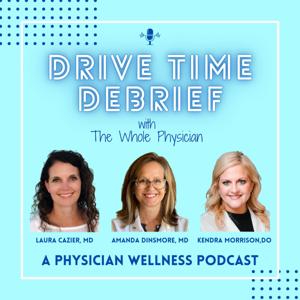
DRIVE TIME DEBRIEF: A Physician Wellness Podcast with The Whole Physician

DRIVE TIME DEBRIEF: A Physician Wellness Podcast with The Whole Physician

By Drs. Cazier, Dinsmore and MorrisonBusinessMedicineHealth & FitnessMental HealthCareers
Download on the App Store

DRIVE TIME DEBRIEF: A Physician Wellness Podcast with The Whole Physician episodes

  • Tony Overbay, LMFT on the Four Pillars of Connected Conversation: Episode 79

    Title: Connected Conversations & Nonviolent Communication with Dr. Tony Overbay

    1. Introduction:

      • Hosts: Amanda, Laura, Kendra.
      • Special guest: Tony Overbay, referred to as "Doctor of Narcissism."
      • Mentions & Promotions:

        • Reminder for listeners to leave a review and comment.
        • Tony Overbay’s podcast: Virtual Couch.
        • Other content from Tony:
          • "Waking Up to Narcissism" podcast and premium version.
          • Podcasts with his children: "The Mind, The Mirror and Me" and "Murder on the Couch."
          • Discussion Topics:

            • Importance of effective communication for physicians.
            • Tony's concept of the "Pre-pillar" before diving into the "Four Pillars of a Connected Conversation."
            • Introduction to "Nonviolent Communication" by Marshall Rosenberg.
              • Misunderstanding of the title and initial reluctance to explore it.
              • Concept of violence in communication.
              • Key lessons:
                1. Separating observation from judgment.
                2. Connecting actions and requests to specific needs.
                3. Applying the same principles in self-talk.
                4.  

                  • Deep Dive into Nonviolent Communication:

                    • Separating observation from judgment:
                      • Tony’s example: Son not doing homework leads to a judgment of laziness.
                      • Consequences of assuming someone isn’t being honest based on our judgments.
                      • Observations and judgments in faith communities and personal relationships.
                      • Importance of truly hearing someone's feelings without preconceived judgments.
                      • Question for Doctors:
                        • Does the concept of separating observation from judgment apply in the medical field?
                        • Challenges faced by doctors in having to make quick diagnoses.
                        • The variable nature of patient responses and potential biases.
                        • Doctors’ Perspective:

                          • Importance of separating a medical judgment from moral judgment.
                          • Renewal of the DEA certificate and recent training requirements:
                            • An increased emphasis on treating people, including those with addiction, with respect.
                            • Acknowledgement of past training inadequacies in treating people struggling with addiction.
                            • The evolving awareness in the medical community towards compassionate care.
                            • Emergency physicians: Need for quick assessment but also understanding the importance of not placing a moral judgment on the patient.
                            • Nocebo Effect Discussion:

                              • Brief mention of the concept of nocebo effect versus the well-known placebo effect.
                              • Importance of patients’ beliefs and mindset on their healing process.
                              • The writer passionately delves into the intricate nature of human communication, highlighting the psychological, emotional, and even physical implications of our interactions. Here's a concise summary of the third chunk:

                                Understanding and Impact of Words

                                • Doctors & Authority Figures: Their words can have unintended consequences. For instance, focusing on a patient's low chances of survival can negatively influence the patient’s mindset. The speaker recalls previous experiences where they might have unintentionally affected patients with their words. They emphasize the importance of being factual yet optimistic.

                                • Expectation Effect: The power of one's expectations and beliefs can influence their physical well-being. A book, "The Expectation Effect", and another titled "Mind Over Medicine" by Lisa Rankin provide instances where patients' health changed dramatically based on their beliefs and what they heard. Some patients improved believing in the effectiveness of a treatment, only to worsen after hearing negative news about the treatment.

                                • Mind-Body Connection: Western medicine often overlooks the profound connection between the mind and body, a connection that other traditions might address more holistically. The speaker believes that communication has a significant role to play in this connection.

                                • Observing & Judging: People are naturally observant and often pass judgments based on their observations. Such judgments are not always accurate, and they can stem from personal biases or experiences. Using an example of people-watching with their son-in-law, the writer illustrates how easily we jump to conclusions based on appearances or preconceived notions.

                                • Parent-Child Dynamics: The continuous cycle of misunderstanding and defense between parents and children can be harmful. It leads to preconceived notions and defensive behaviors which prevent genuine communication. Over time, the repeated emotional responses become habitual and override logical responses.

                                • Relational Frames: Each individual associates different feelings and meanings to the same word, based on personal experiences and upbringing. This causes challenges in communication, as people might not be understanding each other in the way they intend to.

                                • Differentiation: Emphasizes the importance of distinguishing one's thoughts and feelings from another person's. Effective communication requires understanding and empathy.

                                  1. Judgement vs. Observation: The speaker suggests that separating observation from judgment can lead to self-awareness and growth. Instead of getting defensive when someone offers a critique, they suggest treating it as information and deciding if it has merit.

                                  2. Knowing oneself: Understanding oneself deeply means recognizing when someone else doesn't truly know who you are. This self-awareness helps in avoiding unproductive arguments.

                                  3. Four Pillars for Effective Communication:

                                    • Pillar One: Assume good intentions. This is about giving the benefit of the doubt and believing that most people don't intentionally try to hurt or undermine others. However, if it's challenging to assume good intentions, one should consider that there may be reasons why someone behaves a certain way.
                                    • Pillar Two: Refrain from telling someone they're wrong, even if you believe they are. This is about avoiding immediate defensive reactions that can derail conversations.
                                    • Pillar Three: Ask questions before making comments. This is about understanding someone's perspective more deeply before offering an opinion or reaction.
                                    • Pillar Four: Stay present and lean into the conversation without resorting to a victim mentality.
                                    • Using the Four Pillars in a Scenario: Tony uses an example of a husband and wife misunderstanding to illustrate the application of the pillars. By applying the pillars, both parties can feel heard, leading to a more fulfilling resolution.

                                    • Turning into the Victim: Tony mentions that often, when faced with criticism or uncomfortable conversations, some people may adopt a victim mentality to divert attention from the issue at hand. This tactic often leaves the original concern unaddressed.

                                    • Here's how to apply the teachings in personal relationships:

                                      1. Practice Active Listening: When your partner speaks, make sure to give them your undivided attention. Don't interrupt, make judgments, or try to find solutions immediately. Instead, try to understand their perspective.

                                      2. Use "I" Statements: Instead of pointing fingers or playing the blame game, express your feelings using "I" statements. This reduces defensiveness and makes the conversation more about understanding each other rather than arguing.

                                      3. Ask Open-Ended Questions: Instead of asking yes or no questions, ask questions that make the other person think and express themselves. This can lead to a deeper understanding.

                                      4. Validate: Even if you don't agree, it's crucial to validate your partner's feelings and experiences. Just acknowledging that their feelings are valid can go a long way in building trust and understanding.

                                      5. Avoid Assuming: Instead of assuming you know what your partner feels or thinks, ask them. This prevents misunderstandings and unnecessary conflicts.

                                      6. Self-awareness and Growth: It's essential to be self-aware and be willing to grow. If you notice patterns in your behavior that might be contributing to conflicts, be open to changing and evolving.

                                      7. Seek Help if Needed: Sometimes, it might be beneficial to seek couples therapy or counseling to navigate complex issues.

                                      8. Patience: Remember that change doesn't happen overnight. Be patient with yourself and your partner. Celebrate the small victories and understand that both of you are learning and growing.

                                        In the end, the key is mutual respect, understanding, and a genuine desire to understand each other. If both parties are willing, applying these teachings can significantly improve the quality of personal relationships.

                                      9. Tony's approach is a methodical way to handle conversations that could potentially turn confrontational. By implementing these pillars, people can navigate tough conversations in a way that promotes understanding and connection rather than conflict.

                                      10. Join us for our free webinar, "What's the ICD-10 Code for Injury Sustained in a Dumpster Fire?" Wednesday, September 27th at noon central. Click here save your spot!
                                      11. Revitalize Networking Event at ACEP: Click here to reserve your spot: https://www.peoplealwayshcc.com/em-revitalized-networking-event
                                      12.  

                                        50 min
                                      13. #78: Reframing Discomfort- Part 1

                                        Reframing Discomfort for Personal Growth

                                        Part 1: Introduction to the Motivational Triad

                                        • The motivational triad consists of seeking pleasure, avoiding pain, and conserving energy.
                                        • It served primitive humans well for survival but can hinder personal growth in modern times.
                                        • The brain prefers familiar, low-energy thought patterns, even if they are not beneficial.
                                        • Part 2: Embracing Discomfort for Growth

                                          • Discomfort is often a sign of potential growth.
                                          • The hosts emphasize the importance of reframing discomfort as an opportunity for progress.
                                          • They discuss the idea that discomfort can be motivating and lead to personal development.
                                          • The concept of emotional granularity, labeling emotions, and their power.
                                          • Part 3: Examples of Embracing Discomfort

                                            • The hosts share examples from research studies where embracing discomfort led to personal growth.
                                            • Encouraging individuals to see discomfort as a signal of self-growth can lead to motivation, persistence, and openness to learning.
                                            • Mention the importance of trying new things and avoiding complacency.
                                            • Part 4: Encouraging Action and Closing Remarks

                                              • The hosts encourage listeners to choose discomfort that leads to personal growth.
                                              • They discuss the benefits of facing discomfort and taking action rather than avoiding it.
                                              • Upcoming Webinar Announcement

                                                • Back by popular demand, our free webinar, What's the ICD-10 Code for Injury Sustained in a Dumpster Fire?  is happening! September 27th at 12:00 PM Central. 
                                                • Register Here for "What's the ICD-10 Code for Injury Sustained in a Dumpster Fire?" 

                                                  25 min
                                                • #77: Forgiving Ourselves

                                                   Podcast Show Notes: Forgiving Ourselves and Moving Forward

                                                  In this episode, Amanda, Laura, and Kendra discuss the importance of forgiving oneself and moving forward. We address the tendency to hold onto mistakes and regrets, how these feelings can lead to negative emotions and even depression, and strategies for self-forgiveness.

                                                  Introduction:

                                                  • Amanda introduces the show and reminds listeners to rate and review the podcast.
                                                  • Laura introduces the topic of forgiving oneself and its importance for personal progress and well-being.
                                                  • The hosts acknowledge that mistakes are inevitable in a medical career and can lead to carrying negative emotions.
                                                  • Importance of Forgiving Ourselves:

                                                    • Laura discusses the significance of forgiving oneself and the impact of past mistakes on self-perception.
                                                    • Kendra highlights the connection between self-forgiveness, shame, guilt, interpersonal relationships, and decision-making.
                                                    • They emphasize the link between not forgiving oneself and increased risk of depression and anxiety.
                                                    • Personal Stories and Learning from Mistakes:

                                                      • Amanda shares a personal story related to self-forgiveness and recalls the idea from "The Four Agreements" about humans punishing themselves for mistakes.
                                                      • Kendra narrates a medical case that weighed heavily on her and led to changes in her practice and decision-making.
                                                      • Laura talks about the necessity of mistakes in shaping medical practice and improving patient care.
                                                      • Overcoming Negative Self-Talk:

                                                        • The hosts discuss the inner critic and the inner protector as sub-personalities within the mind.
                                                        • Laura provides insights from Dr. Rick Hanson on cultivating the inner protector to counter the critical voice.
                                                        • They explore how acknowledging caring relationships and one's own good qualities can help build self-forgiveness.
                                                        • Steps to Self-Forgiveness:

                                                          1. Start with the feeling of being cared about and cultivate the inner protector.
                                                          2. Consider moral faults, unskillfulness, and other aspects of the situation.
                                                          3. Sort the situation and assign feelings of guilt or remorse where appropriate.
                                                          4. Take responsibility and feel it, then reflect on lessons learned.
                                                          5. Make amends and seek forgiveness from the inner protector.
                                                          6. Repeat these steps to rewire the brain and promote self-forgiveness over time.
                                                          7. Conclusion:

                                                            • The hosts emphasize the need to release the grip of the past and forgive oneself to move forward and be the best version.
                                                            • They encourage self-forgiveness not only for personal well-being but also to set an example for others.
                                                            • Just One Thing, by Rick Hanson, Ph.D.

                                                              27 min
                                                            • #76: Choosing Your Habits (Lessons from Atomic Habits)

                                                              Register Here for "What's the ICD-10 Code for Injury Sustained in a Dumpster Fire"

                                                              Choosing your Habits

                                                              • Housekeeping: Encouragement for listeners to review, rate, and share the podcast for visibility.
                                                              • Announcement of upcoming webinar on anti-burnout mindset techniques.
                                                              • Discussion: Atomic Habits by James Clear

                                                                Key Principles:

                                                                1. Small Habits Make a Huge Difference:

                                                                  • Emphasis on small habits and their significant impact over time.
                                                                  • The analogy of a ship's rudder to illustrate tiny course corrections leading to substantial changes.
                                                                  • Importance of small, consistent improvements (1% better each day) to yield remarkable results.
                                                                  • Focus on Systems Instead of Goals:

                                                                    • Highlighting the difference between goals (results) and systems (actions).
                                                                    • The need to focus on creating effective systems that lead to desired results.
                                                                    • Encouragement to shift attention from goals to actions and processes.
                                                                    • Learn Identity-Based Habits:

                                                                      • Discussing the power of self-identity in shaping behavior.
                                                                      • The idea that current actions reflect one's self-perceived identity.
                                                                      • Encouragement to challenge negative self-labels and adopt a positive self-identity.
                                                                      • The Four Laws of Behavior Change:

                                                                        1. Make It Obvious:

                                                                          • Exploring cues that trigger habits.
                                                                          • Examples of cues for positive habits, like placing fruit in a visible location.
                                                                          • Make It Attractive:

                                                                            • Exploring the craving phase of habit formation.
                                                                            • Tying desired actions to enjoyable activities, creating positive associations.
                                                                            • Make It Easy:

                                                                              • Emphasis on simplicity and automation in habit formation.
                                                                              • Starting with small, manageable actions and gradually building on them.
                                                                              • Make It Satisfying:

                                                                                • Discussing rewards and dopamine reinforcement.
                                                                                • Using rewards, habit trackers, and positive self-talk to reinforce desired behavior.
                                                                                • Breaking Bad Habits:

                                                                                  • Strategies for breaking bad habits using the four laws of behavior change in reverse.
                                                                                  • Making bad habits less obvious, less attractive, more difficult, and unsatisfying.
                                                                                  • Importance of changing the story and self-identity associated with bad habits.
                                                                                  • Shifting Mindset:

                                                                                    • Highlighting the significance of changing the perspective on habits.
                                                                                    • The concept of avoiding the "all or nothing" mindset.
                                                                                    • Promoting self-compassion and gradual change over perfectionism.
                                                                                    • Neuro Cycle App and Habit Formation:

                                                                                      • Mentioning Dr. Caroline Leaf's NeuroCycle app for habit formation.
                                                                                      • Explaining the 21/42/63-day process to build and strengthen new neural pathways.
                                                                                      • Encouraging consistent practice and patience for habit transformation.
                                                                                      • Webinar Announcement:

                                                                                        • Announcing the upcoming webinar: "What's the ICD-10 Code for Injuries Sustained in a Dumpster Fire."
                                                                                        • Details about the webinar's focus on anti-burnout techniques and personal growth.
                                                                                        •  Register here for "What's the ICD-10 Code for Injury Sustained in a Dumpster Fire?"
                                                                                        •  

                                                                                          27 min
                                                                                        • #75: Your Future Self

                                                                                          Your Future Self

                                                                                          Show Notes:

                                                                                          • Introduction to the Topic
                                                                                            • Laura introduces the topic of "future you" and its importance.
                                                                                            • Reflects on the perception of time and how we imagine our future selves.
                                                                                            • Visualizing the Future
                                                                                              • Discusses an article by Mariana Pogosyan, PhD, about future self.
                                                                                              • Considers the shortness of life in terms of weeks lived.
                                                                                              • Talks about the challenge of imagining our future selves realistically.
                                                                                              • Importance of Future Self
                                                                                                • Relates the concept of future self to achieving career goals (e.g., becoming a physician).
                                                                                                • Explores the idea that many people perceive their future selves as distant and not real.
                                                                                                • Balancing Present and Future
                                                                                                  • Discusses the concept of "myopia" (overfocus on the present) and "hyperopia" (overdelaying gratification).
                                                                                                  • Explores examples of present indulgence at the expense of the future.
                                                                                                  • Highlights the need to make decisions that benefit both present and future selves.
                                                                                                  • Strengthening the Connection with Future Self
                                                                                                    • Discusses strategies to connect with the best version of your future self.
                                                                                                    • Mentions the importance of imagining and feeling the best version of oneself.
                                                                                                    • Advice from Future Self
                                                                                                      • Encourages listeners to seek advice from their future selves for present decision-making.
                                                                                                      • Offers examples of how future self's advice can guide actions and choices.
                                                                                                      • Living in the Present
                                                                                                        • Emphasizes the significance of living in the present and finding happiness now.
                                                                                                        • Discusses the concept of happiness being in the present rather than at a future destination.
                                                                                                        • Manifesting and Empowerment
                                                                                                          • Explores the practice of manifesting and raising one's vibration.
                                                                                                          • Discusses how embodying the best version of yourself leads to different actions and results.
                                                                                                          • Accountability to Future Self
                                                                                                            • Talks about using future self as a source of accountability.
                                                                                                            • Reflects on the benefits of making choices that support future happiness.
                                                                                                            • Taking Control of Your Story
                                                                                                              • Describes the process of taking control of one's life and creating a fulfilling narrative.
                                                                                                              • Emphasizes the importance of intentional decision-making for a better life story.
                                                                                                              •  

                                                                                                                Click here to read the referenced article.

                                                                                                                Referenced Eckhart Tolle video.

                                                                                                                Click here to access the free mini-course for residents: 

                                                                                                                Free Anti-burnout Resource for Residents

                                                                                                                27 min
                                                                                                              • Success Story- Atashi Mandal, MD: Episode #74

                                                                                                                Join us as we interview Dr. Atashi Mandal, med/peds hospitalist and amazing human as she describes her experience in Wellness 911, our coaching plus CME course. She also shares with us some thoughts about the book The Four Agreements by Don Miguel Ruiz, which are: 

                                                                                                                • 1) Be impeccable with your word.
                                                                                                                • 2) Don't take anything personally.
                                                                                                                • 3) Don't make assumptions. 
                                                                                                                • 4) Always do your best.
                                                                                                                • We discuss the application of these agreements, and how they integrate with our program. Atashi is an incredibly kind, wise, insightful, and brave person--you won't want to miss hearing her story!

                                                                                                                  40 min
                                                                                                                • #73: Focus

                                                                                                                  In this episode we discuss why it matters to what your brain is paying attention.  There are several terms we discuss including:

                                                                                                                  • selective attention: tuning out unimportant details in order to focus on what matters
                                                                                                                  • mental filtering: focusing on the negative rather than the whole picture, negativity bias
                                                                                                                  • disqualifying the positive: minimizing the good things in our lives
                                                                                                                  • Reframing and changing perspective is key, but is NOT the same as toxic positivity. It is acknowledging that there is both good and bad in the world, but choosing to focus on the good parts on purpose.

                                                                                                                    If you're stuck in negativity, we discuss ways to challenge your point of view. Eventually, with enough practice, neuroplasticity allows our default thoughts to be much more positive.

                                                                                                                    Some quotes:

                                                                                                                    • George Lucas: "Your focus determines your reality."
                                                                                                                    • Tony Robbins: "Your life is controlled by what you focus on," and "energy flows where your attention goes."
                                                                                                                    • Invisible Gorilla Experiment

                                                                                                                      Medical Resident Anti-Burnout Mini-Course


                                                                                                                      If you want to work with us, visit our website: www.thewholephysician.com. We have private coaching and online courses available. Additionally, we're happy to lecture for your institution. Sign up for our Weekly Well Check by clicking the link. The Weekly Well Check is your weekly dose of encouragement and your only access to secret insider sales on our products.

                                                                                                                      If you're interested in a personal loan from Doc2Doc Lending, use our affiliate link: www.doc2doclending.com/thewholephysician

                                                                                                                      For a free quote on Own-Occupation Insurance from Pattern, use our affiliate link: patternlife.com/drivetime 

                                                                                                                      24 min
                                                                                                                    • Understanding Narcissism with Tony Overbay, LMFT: Episode 72

                                                                                                                      In this episode, meet Tony Overbay, LMFT, Laura's favorite podcaster (besides Amanda and Kendra, of course). In addition to being a licensed marriage and family therapist, he is a popular podcaster and host of The Virtual Couch and Waking Up to Narcissism, as well as cohost of Murder on the Couch. Tony is also the developer of the The Path Back, an online course to help people recover from unhealthy coping mechanisms, in addition to his Magnetic Marriage workshop and course. 

                                                                                                                      In this episode Tony:

                                                                                                                      • shares his journey to becoming an LMFT from a career in the computer software industry
                                                                                                                      • how he became interested in narcissism
                                                                                                                      • describes narcissism and emotional immaturity
                                                                                                                      • explains the difference between Narcissistic Personality Disorder and narcissistic traits
                                                                                                                      • defines gaslighting and confabulation
                                                                                                                      • gives his rules for engaging with narcissists
                                                                                                                      • discusses trauma bonds, and so much more fascinating narcissism information!
                                                                                                                      • To reach Tony, visit his website at https://www.tonyoverbay.com/. 


                                                                                                                        55 min
                                                                                                                      • #71: Working in Government with Dara Kass, MD

                                                                                                                        In this episode, meet Dara Kass, MD. She's an Emergency Physician who now works as Regional Director for Region 2 of the US Dept of Health and Human Services. She's here to talk about how she pivoted from working in traditional clinical medicine to working in government.

                                                                                                                        In this episode Dr. Kass:

                                                                                                                        • shares the inspiration behind FeminEM
                                                                                                                        • tells the story how she first got started in government
                                                                                                                        • explains how working in government can impact in healthcare access for all
                                                                                                                        • highlights different tasks she might do in a workday
                                                                                                                        • explains the difference, including ethical requirements, between elected, career, and appointed positions
                                                                                                                        • suggests different ways one can get started working in government
                                                                                                                        •  explains common misconceptions that clinical docs might not have considered
                                                                                                                        • advocates the importance of not politicizing access to equitable and safe healthcare, medications and treatments 
                                                                                                                        • highlights the healthcare workforce crisis and the need to revisit the sustainability of our careers
                                                                                                                        • To reach Dr. Kass, email: [email protected]


                                                                                                                          21 min
                                                                                                                        • #70: Five Ways Your Medical Training Has Failed You with Kristin Yates, DO

                                                                                                                          As we continue in this part 2 of our conversation with Rebel  Physician founder, Dr Kristin Yates, she explains "Five Ways Your Medical Training Has Failed You."

                                                                                                                          Highlights:

                                                                                                                          • The hustle culture
                                                                                                                          • Lack of emphasis on mental health
                                                                                                                          • No individualization
                                                                                                                          • Denial of play time
                                                                                                                          • Forced reliance on external validation
                                                                                                                          • Whew, these are some hot topics and Dr Yates is not afraid to back down from any of them! Enjoy!


                                                                                                                            Contact Dr Yates:

                                                                                                                            Instagram: @kristinyatesdo 

                                                                                                                            Rebel Physician Podcast

                                                                                                                            rebelphysician.com

                                                                                                                            Rebel Physician Community


                                                                                                                            If you want to work with us, visit our website: www.thewholephysician.com. We have private coaching and online courses available. Additionally, we're happy to lecture for your institution. Sign up for our Weekly Well Check by clicking the link. The Weekly Well Check is your weekly dose of encouragement and your only access to secret insider sales on our products.

                                                                                                                            If you're interested in a personal loan from Doc2Doc Lending, use our affiliate link: www.doc2doclending.com/thewholephysician

                                                                                                                            For a free quote on Own-Occupation Insurance from Pattern, use our affiliate link: patternlife.com/drivetime 

                                                                                                                            24 min

                                                                                                                          About DRIVE TIME DEBRIEF: A Physician Wellness Podcast with The Whole Physician

                                                                                                                          From the publisher's feed

                                                                                                                          🔥 Doctors Feeling the Burnout? We’ve Been There—and We’re Here to Help You Climb Out of the Fire. 🔥

                                                                                                                          More shows like DRIVE TIME DEBRIEF: A Physician Wellness Podcast with The Whole Physician

                                                                                                                          Radiolab by WNYC Studios

                                                                                                                          Radiolab

                                                                                                                          43,824 Listeners

                                                                                                                          EMCrit FOAM Feed by Scott D. Weingart, MD FCCM

                                                                                                                          EMCrit FOAM Feed

                                                                                                                          1,866 Listeners

                                                                                                                          This Week in Virology by Vincent Racaniello

                                                                                                                          This Week in Virology

                                                                                                                          2,053 Listeners

                                                                                                                          ChooseFI | Financial Independence Podcast by ChooseFI

                                                                                                                          ChooseFI | Financial Independence Podcast

                                                                                                                          5,136 Listeners

                                                                                                                          White Coat Investor Podcast by Dr. Jim Dahle of the White Coat Investor

                                                                                                                          White Coat Investor Podcast

                                                                                                                          2,443 Listeners

                                                                                                                          The Daily by The New York Times

                                                                                                                          The Daily

                                                                                                                          111,852 Listeners

                                                                                                                          Core IM | Internal Medicine Podcast by Core IM Team

                                                                                                                          Core IM | Internal Medicine Podcast

                                                                                                                          1,158 Listeners

                                                                                                                          The Peter Attia Drive by Peter Attia, MD

                                                                                                                          The Peter Attia Drive

                                                                                                                          7,983 Listeners

                                                                                                                          The Happiness Lab with Dr. Laurie Santos by Pushkin Industries

                                                                                                                          The Happiness Lab with Dr. Laurie Santos

                                                                                                                          14,363 Listeners

                                                                                                                          Money Meets Medicine by Doctor Podcast Network, Jimmy Turner MD

                                                                                                                          Money Meets Medicine

                                                                                                                          226 Listeners

                                                                                                                          All the Hacks: Money, Points & Life by Chris Hutchins

                                                                                                                          All the Hacks: Money, Points & Life

                                                                                                                          1,607 Listeners

                                                                                                                          The Mel Robbins Podcast by Mel Robbins

                                                                                                                          The Mel Robbins Podcast

                                                                                                                          19,223 Listeners

                                                                                                                          The Obesity Guide with Matthea Rentea MD by Matthea Rentea MD

                                                                                                                          The Obesity Guide with Matthea Rentea MD

                                                                                                                          268 Listeners

                                                                                                                          Ending Physician Overwhelm by Megan Melo, Physician and Life Coach

                                                                                                                          Ending Physician Overwhelm

                                                                                                                          40 Listeners

                                                                                                                          Good Hang with Amy Poehler by The Ringer

                                                                                                                          Good Hang with Amy Poehler

                                                                                                                          12,466 Listeners