
Sign up to save your podcasts
Or

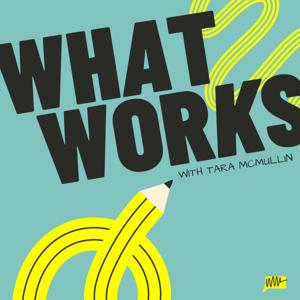

Typically, the question of accessibility online is considered in technical terms: How does this website need to be designed? What ALT text is appropriate for this image? Are captions available for this video? And obviously, knowing the technical aspects of accessibility is important.
But if accessibility stops at the technical requirements, we forget that there are people on the other side of those checklists and manuals. We forget that even the most rigorous checklist can’t account for everyone and their experiences. We forget to ask critical questions that seem obvious when it comes to a backstage pass but are readily dismissed when it comes to most other social spaces.
In the 3rd episode of my 5-part series on Decoding Empathy, I talk with Erin Perkins, an accessibility educator and the founder of MabelyQ, and draw on the work of disability studies scholar Tanya Titchkosky to theorize the overlap between access and empathy—and what it means for you.
Footnotes:
Every episode of What Works is also available in essay form at whatworks.fyi
What Works is funded by readers and listeners. To help support this work, upgrade to a premium subscription for just $7 per month.
 View all episodes
 By Tara McMullin

4.8
236236 ratings
Typically, the question of accessibility online is considered in technical terms: How does this website need to be designed? What ALT text is appropriate for this image? Are captions available for this video? And obviously, knowing the technical aspects of accessibility is important.
But if accessibility stops at the technical requirements, we forget that there are people on the other side of those checklists and manuals. We forget that even the most rigorous checklist can’t account for everyone and their experiences. We forget to ask critical questions that seem obvious when it comes to a backstage pass but are readily dismissed when it comes to most other social spaces.
In the 3rd episode of my 5-part series on Decoding Empathy, I talk with Erin Perkins, an accessibility educator and the founder of MabelyQ, and draw on the work of disability studies scholar Tanya Titchkosky to theorize the overlap between access and empathy—and what it means for you.
Footnotes:
Every episode of What Works is also available in essay form at whatworks.fyi
What Works is funded by readers and listeners. To help support this work, upgrade to a premium subscription for just $7 per month.

90,994 Listeners

43,528 Listeners

16,051 Listeners

26,984 Listeners
2,004 Listeners
3,348 Listeners

30,185 Listeners

6,685 Listeners

12,077 Listeners
8,748 Listeners

1,943 Listeners

1,888 Listeners
149 Listeners

13,636 Listeners
711 Listeners