
Sign up to save your podcasts
Or

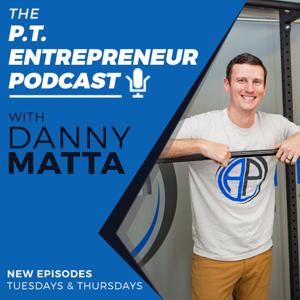

In this episode of the PT Entrepreneur Podcast, Dr. Danny Matta breaks down the 80/20 principle for cash-based clinic owners and simplifies what you should track if you want to grow past yourself. Instead of obsessing over dozens of metrics, Danny argues there are three "dollar productive" KPIs that drive almost all clinic growth. He also explains why provider schedules either snowball fast or stall for a year and how to shorten that ramp from 12+ months to around six months with the right focus.
In This Episode, You'll Learn:Danny opens with a simple math breakdown clinic owners can understand quickly.
Time is valuable, for you and for your staff clinicians. PT Biz has found that Claire, their AI scribe, saves staff clinicians about six hours per week on average.
Even if you only reclaim half of that time and convert it into patient care, that is roughly three additional one-hour visits per week per clinician.
Example Danny gives:
The point is not to overload your team. The point is to use technology to remove the documentation burden so you can increase capacity without increasing burnout.
Try Claire free for 7 days: https://meetclaire.ai
The 80/20 Principle in a Cash PracticeThe 80/20 principle is the idea that 20% of your actions lead to 80% of your results. Danny applies this directly to clinic growth.
When your clinic is small, it is easy to get busy doing "everything" and tracking a long list of numbers. The problem is most of those activities do not move the business.
Instead, Danny recommends narrowing your focus to the most "dollar productive" activities. In other words, the actions and metrics that actually drive revenue and schedule utilization.
The Goal: Get a Provider Productive FastDanny frames the big objective clearly.
You want to get your own schedule full enough to hire someone. Then you want any provider you hire to get productive as fast as possible.
In PT Biz's world, once a provider reaches roughly 80 to 90 visits per month, it tends to snowball into 100+ pretty quickly. But getting to that point can take some clinics over a year.
If you can shorten that ramp to six months, your growth compounds. In a year, you might be able to hire two people instead of one, because each provider becomes profitable faster.
The Three Dollar-Productive KPIsDanny says there are three key metrics that drive the majority of growth in a cash-based clinic. Each one represents a drop-off point that can either accelerate growth or quietly crush it.
1) New Patient Volume and Discovery Call ConversionMany owners only track "how many evals we have." Danny says you need to go one step back and track conversion from lead to evaluation.
There is often a major drop-off between someone becoming a lead and actually booking an evaluation. This is usually happening on discovery calls.
Benchmarks Danny shares:
He also makes a strong recommendation: during growth phases, the owner should handle discovery calls.
Why? In many clinics, admins convert around 45% to 50%. Owners often convert 80% to 90% because they carry authority and can handle objections better.
Danny gives an example:
That gap can be the difference between a provider staying empty and a provider getting busy quickly.
He also points out that owners sometimes resist this because it feels like a step backward, but the time requirement is smaller than most people assume. If you have 20 calls at 20 minutes each, that is under 10 hours per month and it can dramatically impact growth.
2) Evaluation to Plan of Care ConversionThe second KPI is how many evaluations convert into a plan of care.
When people do not commit to a plan of care, Danny says many still come back a few times, often around three visits, until symptoms improve and then they disappear. That creates unpredictable revenue and inconsistent schedules.
Plan-of-care conversion makes volume and revenue more predictable.
Benchmarks Danny shares:
He emphasizes that this requires quality control and training. Staff clinicians need to be comfortable with diagnosis, prognosis, and presenting a clear plan. Otherwise close rates drift and schedules stall.
3) Recurring Services After Plan of CareDanny calls this the sneaky variable that people forget, but it can make the biggest difference in schedule stability.
Hiring a clinician is usually a net negative for the business at first. You are paying salary, taxes, and benefits while they are still ramping up.
What stabilizes and compounds a provider schedule is recurring volume. The goal is that roughly 40% of plan-of-care patients transition into some type of recurring service after discharge.
Why this matters:
Danny also explains why this is often hard for staff clinicians.
So this requires two things: education on the clinical delivery of recurring services and training on how to present it confidently.
Put It Together: How to Grow Faster Without Tracking EverythingDanny's bigger point is that clinic owners often get lost in too many tasks and too many numbers.
If you simplify down to these three KPIs and train your team around them, your odds of building provider schedules faster go up dramatically:
When those are strong, growth compounds. You hire faster, providers get productive faster, and you get to choose what you want the clinic to become instead of being stuck trying to "just get busy."
Resources Mentioned View all episodes
 By Dr. Danny Matta, PT, DPT, OCS, CSCS, & Entrepreneur

4.9
244244 ratings
In this episode of the PT Entrepreneur Podcast, Dr. Danny Matta breaks down the 80/20 principle for cash-based clinic owners and simplifies what you should track if you want to grow past yourself. Instead of obsessing over dozens of metrics, Danny argues there are three "dollar productive" KPIs that drive almost all clinic growth. He also explains why provider schedules either snowball fast or stall for a year and how to shorten that ramp from 12+ months to around six months with the right focus.
In This Episode, You'll Learn:Danny opens with a simple math breakdown clinic owners can understand quickly.
Time is valuable, for you and for your staff clinicians. PT Biz has found that Claire, their AI scribe, saves staff clinicians about six hours per week on average.
Even if you only reclaim half of that time and convert it into patient care, that is roughly three additional one-hour visits per week per clinician.
Example Danny gives:
The point is not to overload your team. The point is to use technology to remove the documentation burden so you can increase capacity without increasing burnout.
Try Claire free for 7 days: https://meetclaire.ai
The 80/20 Principle in a Cash PracticeThe 80/20 principle is the idea that 20% of your actions lead to 80% of your results. Danny applies this directly to clinic growth.
When your clinic is small, it is easy to get busy doing "everything" and tracking a long list of numbers. The problem is most of those activities do not move the business.
Instead, Danny recommends narrowing your focus to the most "dollar productive" activities. In other words, the actions and metrics that actually drive revenue and schedule utilization.
The Goal: Get a Provider Productive FastDanny frames the big objective clearly.
You want to get your own schedule full enough to hire someone. Then you want any provider you hire to get productive as fast as possible.
In PT Biz's world, once a provider reaches roughly 80 to 90 visits per month, it tends to snowball into 100+ pretty quickly. But getting to that point can take some clinics over a year.
If you can shorten that ramp to six months, your growth compounds. In a year, you might be able to hire two people instead of one, because each provider becomes profitable faster.
The Three Dollar-Productive KPIsDanny says there are three key metrics that drive the majority of growth in a cash-based clinic. Each one represents a drop-off point that can either accelerate growth or quietly crush it.
1) New Patient Volume and Discovery Call ConversionMany owners only track "how many evals we have." Danny says you need to go one step back and track conversion from lead to evaluation.
There is often a major drop-off between someone becoming a lead and actually booking an evaluation. This is usually happening on discovery calls.
Benchmarks Danny shares:
He also makes a strong recommendation: during growth phases, the owner should handle discovery calls.
Why? In many clinics, admins convert around 45% to 50%. Owners often convert 80% to 90% because they carry authority and can handle objections better.
Danny gives an example:
That gap can be the difference between a provider staying empty and a provider getting busy quickly.
He also points out that owners sometimes resist this because it feels like a step backward, but the time requirement is smaller than most people assume. If you have 20 calls at 20 minutes each, that is under 10 hours per month and it can dramatically impact growth.
2) Evaluation to Plan of Care ConversionThe second KPI is how many evaluations convert into a plan of care.
When people do not commit to a plan of care, Danny says many still come back a few times, often around three visits, until symptoms improve and then they disappear. That creates unpredictable revenue and inconsistent schedules.
Plan-of-care conversion makes volume and revenue more predictable.
Benchmarks Danny shares:
He emphasizes that this requires quality control and training. Staff clinicians need to be comfortable with diagnosis, prognosis, and presenting a clear plan. Otherwise close rates drift and schedules stall.
3) Recurring Services After Plan of CareDanny calls this the sneaky variable that people forget, but it can make the biggest difference in schedule stability.
Hiring a clinician is usually a net negative for the business at first. You are paying salary, taxes, and benefits while they are still ramping up.
What stabilizes and compounds a provider schedule is recurring volume. The goal is that roughly 40% of plan-of-care patients transition into some type of recurring service after discharge.
Why this matters:
Danny also explains why this is often hard for staff clinicians.
So this requires two things: education on the clinical delivery of recurring services and training on how to present it confidently.
Put It Together: How to Grow Faster Without Tracking EverythingDanny's bigger point is that clinic owners often get lost in too many tasks and too many numbers.
If you simplify down to these three KPIs and train your team around them, your odds of building provider schedules faster go up dramatically:
When those are strong, growth compounds. You hire faster, providers get productive faster, and you get to choose what you want the clinic to become instead of being stuck trying to "just get busy."
Resources Mentioned
4,426 Listeners

12,171 Listeners

12,092 Listeners

589 Listeners

4,485 Listeners

8,866 Listeners

500 Listeners

9,291 Listeners

128 Listeners

5,777 Listeners

29,340 Listeners

1,268 Listeners

958 Listeners

3 Listeners

3 Listeners