
Sign up to save your podcasts
Or

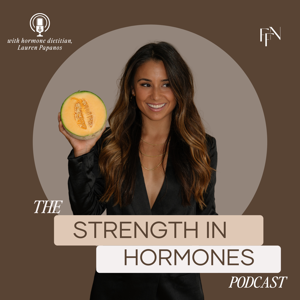

Low progesterone is one of the most common hormone concerns I see—but it’s also one of the most misunderstood. In this episode, we unpack why low progesterone is rarely a true progesterone deficiency and is far more often a downstream signal of poor ovulation quality driven by low T3, metabolic stress, or thyroid autoimmunity.
You’ll learn why progesterone is best understood as a marker of ovulation strength—not something the body simply “fails to make”—and how thyroid hormone, mitochondrial energy, inflammation, blood sugar, and nervous system safety all determine whether ovulation (and the corpus luteum) can function properly.
We also dive into why luteal phase defect is frequently misdiagnosed as PCOS, how Hashimoto’s can quietly disrupt ovulation even with normal cycles, and why progesterone supplementation alone often fails to fix the problem.
A few things we chat about in this episode 👇👇👇
Why progesterone reflects ovulation quality—not ovarian failure
The thyroid–progesterone axis and how low T3 weakens ovulation and the corpus luteum
How stress, cortisol, and reverse T3 put metabolic “brakes” on progesterone production
The overlooked role of thyroid autoimmunity in low progesterone, short luteal phases, and miscarriage risk
Luteal phase defect vs. PCOS: how to tell the difference
What labs actually matter for identifying thyroid-driven low progesterone (and how to time them correctly)
Why progesterone supplementation is sometimes helpful—but rarely a root-cause solution
Treatment priorities that restore ovulation by fixing thyroid conversion, metabolism, and immune stress
Important show links 👇👇👇
 View all episodes
 By Lauren Papanos
5
6969 ratings
Low progesterone is one of the most common hormone concerns I see—but it’s also one of the most misunderstood. In this episode, we unpack why low progesterone is rarely a true progesterone deficiency and is far more often a downstream signal of poor ovulation quality driven by low T3, metabolic stress, or thyroid autoimmunity.
You’ll learn why progesterone is best understood as a marker of ovulation strength—not something the body simply “fails to make”—and how thyroid hormone, mitochondrial energy, inflammation, blood sugar, and nervous system safety all determine whether ovulation (and the corpus luteum) can function properly.
We also dive into why luteal phase defect is frequently misdiagnosed as PCOS, how Hashimoto’s can quietly disrupt ovulation even with normal cycles, and why progesterone supplementation alone often fails to fix the problem.
A few things we chat about in this episode 👇👇👇
Why progesterone reflects ovulation quality—not ovarian failure
The thyroid–progesterone axis and how low T3 weakens ovulation and the corpus luteum
How stress, cortisol, and reverse T3 put metabolic “brakes” on progesterone production
The overlooked role of thyroid autoimmunity in low progesterone, short luteal phases, and miscarriage risk
Luteal phase defect vs. PCOS: how to tell the difference
What labs actually matter for identifying thyroid-driven low progesterone (and how to time them correctly)
Why progesterone supplementation is sometimes helpful—but rarely a root-cause solution
Treatment priorities that restore ovulation by fixing thyroid conversion, metabolism, and immune stress
Important show links 👇👇👇

3,955 Listeners

1,370 Listeners

786 Listeners

4,935 Listeners

9,236 Listeners

169 Listeners

4,090 Listeners

623 Listeners

1,407 Listeners

1,577 Listeners

1,480 Listeners

2,684 Listeners

402 Listeners

596 Listeners

147 Listeners