
Sign up to save your podcasts
Or

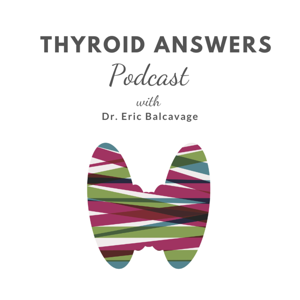

T3-based thyroid medications, including desiccated thyroid extract and combination T4/T3 therapy, are some of the most misunderstood and controversial tools in thyroid care.
Some patients feel dramatically better. Others feel briefly improved, then crash. Labs often look "optimized," yet long-term recovery stalls.
So what's actually happening?
In this episode of Thyroid Answers, Dr. Eric Balcavage breaks down the most common mistakes, misunderstandings, and miscommunication surrounding T3-based thyroid therapy — and explains why outcomes vary so widely between patients.
You'll learn:
Why so many people end up on T3 or desiccated thyroid in the first place
The real physiologic arguments clinicians use to justify T3 therapy
What a healthy human thyroid gland actually produces — and why that matters
Where most of the body's T3 really comes from
Why "poor conversion" is often an adaptive response, not a defect
Why lowering reverse T3 doesn't necessarily mean recovery
Why T3 helps some people and destabilizes others
The difference between managing symptoms and restoring physiology
This episode reframes T3 therapy through the lens of physiologic state, not just lab values — and explains why adding more thyroid hormone can sometimes push the body further away from recovery.
If you've ever wondered whether T3 is helping you, hurting you, or simply masking deeper issues, this conversation will give you a clearer framework for understanding what's really going on.
 View all episodes
 By Dr. Eric Balcavage

4.6
147147 ratings
T3-based thyroid medications, including desiccated thyroid extract and combination T4/T3 therapy, are some of the most misunderstood and controversial tools in thyroid care.
Some patients feel dramatically better. Others feel briefly improved, then crash. Labs often look "optimized," yet long-term recovery stalls.
So what's actually happening?
In this episode of Thyroid Answers, Dr. Eric Balcavage breaks down the most common mistakes, misunderstandings, and miscommunication surrounding T3-based thyroid therapy — and explains why outcomes vary so widely between patients.
You'll learn:
Why so many people end up on T3 or desiccated thyroid in the first place
The real physiologic arguments clinicians use to justify T3 therapy
What a healthy human thyroid gland actually produces — and why that matters
Where most of the body's T3 really comes from
Why "poor conversion" is often an adaptive response, not a defect
Why lowering reverse T3 doesn't necessarily mean recovery
Why T3 helps some people and destabilizes others
The difference between managing symptoms and restoring physiology
This episode reframes T3 therapy through the lens of physiologic state, not just lab values — and explains why adding more thyroid hormone can sometimes push the body further away from recovery.
If you've ever wondered whether T3 is helping you, hurting you, or simply masking deeper issues, this conversation will give you a clearer framework for understanding what's really going on.

3,934 Listeners

770 Listeners

717 Listeners
3,457 Listeners

9,231 Listeners
336 Listeners

142 Listeners
1,096 Listeners
1,781 Listeners
840 Listeners
516 Listeners
573 Listeners

59 Listeners

259 Listeners

49 Listeners