
Sign up to save your podcasts
Or

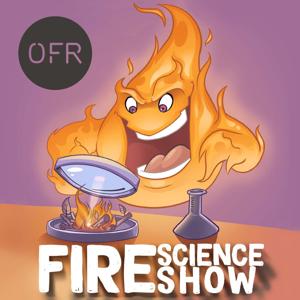


Welcome to Questions & Answers session 01 covering the topics brought up in November 2022.
In this session you can find answers to the following questions:
Please join my 2022 Listener Experience Survey - the link will work till Christmas 2022 :)
Episodes mentioned in this one:
073 - Smoke control in shopping malls - uncommon aspects that make or break the system
070 - Fire resistance is whatever you want it to be with Piotr Turkowski
015 - Global view on the fire safety from a starchitect perpective with Benjamin Ralph
----
The Fire Science Show is produced by the Fire Science Media in collaboration with OFR Consultants. Thank you to the podcast sponsor for their continuous support towards our mission.
If Dalmarnock was the reality check for fire modelling, we could call the work carried by BRE at Cardington the birthplace of Structural Fire Engineering. Welcome to episode 2 of Experiments that Changed Fire Science!
In this episode dr Tom Lennon from BRE takes us to a journey through the massive experimental programmes carried at BRE Cardington facility. A former aircraft hangar turned into a testing ground for ENTIRE BUILDINGS. That is what was the most unique for the programme - instead of focusing on single elements of the building (which we had been doing for ~150 years at that point) we did observe, touch and measure the behaviour of the entire structure. We did learn a lot from that... From understanding membrane actions, and the alternative load paths in structures, through validation of the natural fire Eurocode model to building a massive database still used to this day to verify and validate modern tools of structural fire engineering. Without Cardington, fire science would not be here. So please join me in this and listen to Tom's recollection of the glorious days of the fire science, at Cardington.
If you want to read more, I would start with the Book on the Behaviour of Multi Storey Steel Framed Buildings in Fire.
and also check these resources:
----
The Fire Science Show is produced by the Fire Science Media in collaboration with OFR Consultants. Thank you to the podcast sponsor for their continuous support towards our mission.
Delivery of fire safety to one billion inhabitants of informal settlements cannot be done through a single solution. No magical extinguishing ball nor hyper-sensitive sensor can solve this issue. As it is not a single issue - it is dozens of overlapping problems spanning from the availability of materials, how structures are built and how the urban landscape can be planned and managed. It is related to how society is managed, what role models are presented to them and what resources they have to fight fires... in fact, it is much much more. This is what we have discussed with prof. Richard Walls of Stallenbosch University in South Africa. Richard's group is leading in efforts to understand the science behind the informal settlement fires (and participated in the notable IRIS project by the University of Edinburgh, which is something you should also check here).
As discussed in the episode, Richard's group has prepared Fire Safety Engineering Guidelines, which can be accessed here for free! Please check it out and share it with those who may benefit from it.
If you have missed the episode with Danielle Antonellis, please check it in here.
Check out the free training series and documentaries on battling fires in informal settlements at Stallenbosch University Fire Group (FireSun) youtube (preview for the guests of Fire Science Show, soon to be released to the public!): https://www.youtube.com/watch?v=Qi21ZyVLOWI
Picture credit: https://www.sun.ac.za/english/Lists/news/DispForm.aspx?ID=7730
----
The Fire Science Show is produced by the Fire Science Media in collaboration with OFR Consultants. Thank you to the podcast sponsor for their continuous support towards our mission.
Welcome to a mini-series of episodes on experiments that changed fire science. In the first episode, we cover the a prioiri and posteriori modelling task within the Dalmarnock Fire Experiments programme carried out by the BRE Centre for Fire Safety Engineering at the University of Edinburgh. The whole experimental programme was led by prof. Jose Torrero. In this episode, we focus on two modelling tasks within the programme, that lead to a major shift in how modern modelling tools are used in fire engineering.
To learn more about the testing programme please visit the BRE Centre for Fire Safety Engineering and the proceedings of the FIRESEAT Symposium 2007 which covered the study in depth. Guillermo's blog article about blind vs open fire modelling can be found here.
The major papers discussed within this episode are:
----
The Fire Science Show is produced by the Fire Science Media in collaboration with OFR Consultants. Thank you to the podcast sponsor for their continuous support towards our mission.
Dear Terrestial Fire Engineers, let me take you on a journey that will make you experience fire engineering like nothing on our planet. Because in fact, it is the fire engineering of spacecraft for their operations in a zero-gravity environment. The environment in which the most fundamental aspects of fire engineering (think about smoke cannot go up when there is no up!) are being challenged. Where fire physics is completely different, and where things that are necessary for humans (oxygen, clothes...) become a major risk factor.
From my today's guest, Dr David L. Urban of NASA Glenn Research Centre, we will learn about the catastrophical fires that shaped the space industry. We get introduced to testing methods and fire safety engineering solutions commonly used on older and modern spaceships, and also try to take on the issue of fire safety of beyond-Earth human habitats.
I'm not sure how much practical engineering you will learn, but I am more than sure that you will enjoy this thoroughly. And maybe one day, you can pursue a career in space fire engineering...Who knows!
Additional resources:
Cover picture credit: NASA Glenn Research Centre
https://www.nasa.gov/feature/studying-flame-behavior-in-microgravity-with-a-solid-high-five
----
The Fire Science Show is produced by the Fire Science Media in collaboration with OFR Consultants. Thank you to the podcast sponsor for their continuous support towards our mission.
Intumescent coatings are not magic. They are a product of amazing engineering, a theatre of thermophysical properties that create an insulative layer that sometimes is the only thing holding fire from destroying a structure. A chemical masterpiece in which the onset of swelling is chosen so that the paint layer is soft just when the chemical compound used to foam starts releasing gasses. Sharing many features with natural carbon-made materials, they char and oxidize. And once you start modelling them, you soon realize how crazy the solid heat transfer can become when you change not only the thermal conductivity but also the size of your body. Boy, what a complexity in a sub-millimetre layer of paint!
To learn all about them, I have invited dr Andrea Lucherini of FRISSBE and Ghent University, who mastered them in his MSc and PhD. Andrea covers in detail all the mag... I mean engineering that goes into an intumescent coating and shares his own journey in this world.
In this episode, we have referenced episode 70 with Piotr Turkowski - fire resistance. If you have not heard it, it's a good moment to catch up.
Andrea has provided me links to his research, which I highly recommend:
- PhD thesis: https://doi.org/10.14264/uql.2020.1021
- modelling: https://doi.org/10.1016/j.ijthermalsci.2022.107922
- influence of heating conditions and thickness: https://doi.org/10.1016/j.firesaf.2020.103078
- influence of substrate: https://doi.org/10.1002/fam.2840
- application on timber: https://doi.org/10.1016/j.firesaf.2019.102887
- critical literature review: https://doi.org/10.1016/j.jcsr.2019.105712
- onset of swelling: https://doi.org/10.1016/j.firesaf.2019.03.014
- MSc thesis paper: https://doi.org/10.1016/j.firesaf.2017.10.004
----
The Fire Science Show is produced by the Fire Science Media in collaboration with OFR Consultants. Thank you to the podcast sponsor for their continuous support towards our mission.
Long before I started the podcast, my bread and butter was to find clever ways to remove smoke from shopping malls. Actually, I like to believe I was pretty good at the job, given the fact some of the biggest projects in Eastern Europe successfully made their way through our office. At some point (after reading Roger Harrisons PhD thesis) I figured out there is some science in the stuff we are doing in our engineering, and that day I turned into a scientist. This idea turned into passion, and passion into quite an intense research that ended up with a PhD.
What matters in this journey is not the profits or titles I've received, but my own transformation. From someone seeking to optimize a system through improving assumptions for my analytical models and some more advanced calculation methods, to someone who appreciates the complexity of airflow in a labyrinthine mall. And some conclusions of this journey I would like to share with you. What I think are the uncommon things that make or break a smoke control system in a mall? Listen to the episode and you will find out (TL:DR - design fire, architecture, inlets, architecture and outlets :))
Here are some resources you may find useful:
- Gus Gaggliardi's list of resources mentioned in the podcast intro;
- My ResearchGate with a ton of resources on smoke control;
- The only English paper from my PhD with the summary of findings;
- I've lied, there is a second paper from my PhD summarizing why it does not matter where you place the fire in a compartment when running CFD!
- Review paper on axisymmetric plume models
- Actually, a funny story - in the end, I've written a book on smoke control in malls and it is available here (in Polish, sorry!). It is a summary of my PhD and not a guidebook as I've envisioned in 2016, but still - I guess it counts as a book :)
----
The Fire Science Show is produced by the Fire Science Media in collaboration with OFR Consultants. Thank you to the podcast sponsor for their continuous support towards our mission.
Many creators will not agree, but in some cases, copying is the highest form of admiration. And there are things in Fire Safety Engineering that are more than worthy of being copied. One of them is the famous International Masters in Fire Safety Engineering course, carried together by the Universities of Ghent, Edinburgh, Lund and a new member - Universitat Politècnica de Catalunya. And from what I've just learned from one of the masterminds - Prof. Bart Merci and Prof. Eulalia Planas- they do not mind that.
Of course, starting a second IMFSE is probably not feasible, but let us focus on WHY this particular programme is so successful. What makes this group of people so sought on the job market, and so competent when pursuing careers in academia? How is this programme so consistent, year after year, delivering world-class fire engineers? We try to isolate the little things that differentiate this programme from others in the world, so copying their success is a little easier. This episode is for anyone who is seeking an answer to the question, of what makes a great fire engineer.
If you are in a (lucky!) position to choose your MSc course, make sure to consider applying to IMFSE at www.imfse.be If I was making that decision today, I would not hesitate for a second!
----
The Fire Science Show is produced by the Fire Science Media in collaboration with OFR Consultants. Thank you to the podcast sponsor for their continuous support towards our mission.
When thinking about 'risk' do you view it as a tool? I usually thought about it as a concept or maybe as a measure of 'how safe my building is?', but I have not really appreciated how beneficial it might be when used in such a way. Once you take it in its basic form - presentation of probabilities and consequences of fires in your buildings, you may use it to find answers to questions, that are a struggle to answer in another way. You can understand the performance of your building, its shortcomings and strengths.
I did not find this out on my own. It just had an amazing guest - prof. Ruben van Coile, outlined the risk concept for me, so I could discover it once again. And here, we both welcome you to join us in this discovery.
As you are done with this episode, I definitely recommend episode 45 where Ruben van Coile and Danny Hopkin discuss how risk can be used to determine the foundations of fire safety. If you liked this one, episode 45 is for you.
I will also shamelessly copy the list of resources provided the last time, as they are as relevant to this episode:
Also, keep your eyes open for the next edition of SFPE Handbook where my guests are publishing a new chapter on "Economics and Decision Making in Fire Risk Analysis"
----
The Fire Science Show is produced by the Fire Science Media in collaboration with OFR Consultants. Thank you to the podcast sponsor for their continuous support towards our mission.
Today we talk fire resistance, but unlike you have ever heard. Join me and Dr Piotr Turkowski - two fire laboratory professionals in an honest discussion about their craft. The challenges in standardization and committee work, discoveries in laboratories that are very tough to implement in the test method design, and sometimes unscientific approaches which are necessary for a market consensus. All the challenges that make us view fire resistance in a different way than you may have.
Here are some resources for further learning:
----
The Fire Science Show is produced by the Fire Science Media in collaboration with OFR Consultants. Thank you to the podcast sponsor for their continuous support towards our mission.
From the publisher's feed
78,375 Listeners

43,824 Listeners

31,973 Listeners
26,165 Listeners
30,720 Listeners

54 Listeners
5,082 Listeners
772 Listeners
491 Listeners
2,319 Listeners
3,019 Listeners
770 Listeners

132 Listeners
4 Listeners

1,129 Listeners