
Sign up to save your podcasts
Or

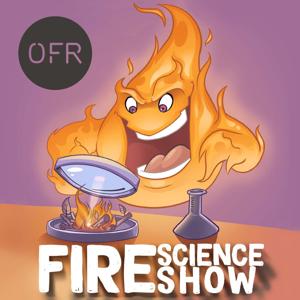


How much the fire scene at households has changed over the last 30 years? Why modern furniture burns worse than one made with wood, cotton and other natural materials? And what does that mean to firefighting? What challenges do modern firefighters face fighting residential fires... There is so many questions to be asked about residential fires, and in this episode, I answer a lot of them with the firefighting research legends - Dan Madrzykowski of the UL Fire Safety Research Institute and professor Charlie Fleischmann from the University of Canterbury.
After listening to this episode you must check the website of the UL FSRI! That is a vault fille with fire science gold, not to be missed by anyone passionate about fire safety.
And if you are here to find some info about the Fire Hose Prop we have discussed, seek no more - just follow this link to learn all about it.
----
The Fire Science Show is produced by the Fire Science Media in collaboration with OFR Consultants. Thank you to the podcast sponsor for their continuous support towards our mission.
Have you wondered how fire science started? But I mean the real real start... not 1666 one, nor the one when we've started to build furnaces... The start when the first evolutionary ancestor of homo sapiens figured out this warm bright thing could be used to process food. The start when this bright thing was protected and used intentionally. The bright thing that was so important for our kind, that the proof for this relationship can be found literally in our anatomy...
The best way to study this origin would obviously be a time machine. I don't have that. But I have the second-best thing - a real scientist Dr Ivo Jacobs studying the relationship between animals and fire, to uncover how our ancestors could have learnt how to behave at the fire and how to use fire to their advantage. There is not much fire safety engineering in this episode, but there is something really magical to learning how impactful that thing we study was for our kind. And I hope you will really enjoy this.
And if this sparked your interest, go on and check these great resources:
----
The Fire Science Show is produced by the Fire Science Media in collaboration with OFR Consultants. Thank you to the podcast sponsor for their continuous support towards our mission.
The subject of structural fire engineering was long overdue in the podcast schedule. But once I finally got it on my agenda, I made sure to interview one of the very best there are - prof Thomas Gernay of John Hopkins University. Not only a structural engineer and researcher, but also one of the developers of SAFIR® - one of most popular structural fire engineering numerical codes out there.
In this discussion I get to ask some important questions on the role structural fire engineering plays in engineering modern buildings, and Thomas makes the point that it it the way forward in understanding the building performance in a holistic way. I learn about FDS-SAFIR integration (which is superb interesting!), challenges with new materials and the development of design fires (hint - travelling fires get a ton of mention, so be sure to also tag episode 27 with Guillermo Rein on them!). And as usual, in the end, we geek on the future of fire science and technology. God, I love these discussions so much!!!
Make sure to check Thomas webpage at: https://mars.jhu.edu/
If you would like to learn more on structural fire engineering, Thomas has compiled a list of resources you should check:
----
The Fire Science Show is produced by the Fire Science Media in collaboration with OFR Consultants. Thank you to the podcast sponsor for their continuous support towards our mission.
How does being a volunteer firefighter improve your abilities to do Performance-Based Design (PBD) and how your knowledge in PBD may translate to firefighting? That is not a question you can ask to every fire protection engineer, but luckily - David Stacy is one who can answer that fully. Tapping into his unique skillset and career path I try to extract answers on how does one translate firefighting experience into improved design. Where does he see the most immediate gain (duh - communication!), and how does a fire safety engineer seek knowledge.
And knowing that Dave builds his own machines and does his CFD, I would not be myself if we eventually did not venture into world of CPU's, BIM and difficult choices when managing uncertainties in commercial and scientific projects.
Join us in this multi-faceted episode, and hopefully enjoy the talk between two fire safety engineers, who are absolutely passionate about their work.
Oh, and make sure to check Dave's company - Performance Based Fire Protection Engineering webpage. Lots of great resources and more of them coming!
https://www.pbfpe.com/
----
The Fire Science Show is produced by the Fire Science Media in collaboration with OFR Consultants. Thank you to the podcast sponsor for their continuous support towards our mission.
I once said the future looks stupid... but after this discussion with Arnold Dix, I know - future is exciting. And for Fire Safety Engineers and others involved in fire protection - the future seems to be super exciting! In this episode, we let go and try to discuss the future tech in the world of tunnelling. From autonomous vehicles in tiny (and seems a bit dangerous) tunnels, McDonnaldization of TBM's, Hyperloops to city concepts build all the way around humans (and tunnels!). This is a future to look for, and I hope to live through at least some of these inventions. They will not come without challenges, but that is the point of being an engineer, right?!
This is the second part of two-piece interview with Professor Arnold Dix. If you can't get enough of Arnold (like me), I have great news for you. There are six episodes of the Tunneling Journal podcast exclusively with Arnold, that you can listen here: https://tunnellingjournal.com/podcasts-tunnelling-journal/
Highly recommended!
----
The Fire Science Show is produced by the Fire Science Media in collaboration with OFR Consultants. Thank you to the podcast sponsor for their continuous support towards our mission.
A few episodes ago I called for better communication in fire safety. And in this episode, tunnel fire safety legend Prof. Arnold Dix is answering that, by teaching us the ways of the 'sustainability' talk - how to communicate better having the global sustainability goals in mind? But it is not only a way of communication. It is a mindset. And it is a powerful one, leading to a rethink of the concept of safety and how one is delivered. A rejuvenating perspective in which we are mindful of our solutions and the goals we wish to achieve.
It may be too good to be true, but then again... it is not the first time the tunnelling industry is ahead of the curve. We are still discussing how to deal with risk methods, while for a long time it is a standard approach in tunnelling. We still wonder if buildings really need to survive burnout, while tunnelling talks about resiliency. We wonder which plume model to use in our atria, while tunnelling fully embraces PBD. These are just some examples, but they really highlight how this industry is on the leading edge in innovative and disruptive ways for fire safety.
I hope you will enjoy this episode. There is a lot we can learn from the tunnelling industry, that we can implement at every end of fire safety. And if you like this talk I have good news for you! Next week, join us for part 2. Innovative approaches in transportation, how will they change our cities and the landscape of fire protection engineering! An episode not to be missed.
----
The Fire Science Show is produced by the Fire Science Media in collaboration with OFR Consultants. Thank you to the podcast sponsor for their continuous support towards our mission.
It has been one year since I started this show. I've promised you that we will learn Fire Safety Engineering together, and today comes a great time to reflect on some lessons learnt. In this episode, I will take you on a short journey through some most insightful moments in the show, that allowed me to identify the number one skill needed to thrive as a fire protection engineer.
What is that skill? Well press the play button and find it for yourself! The answer is 35 minutes away, and I promise this will not be a time wasted.
In this episode I have repurposed parts of other excellent interviews, each of them worth a listen (or a re-listen):
----
The Fire Science Show is produced by the Fire Science Media in collaboration with OFR Consultants. Thank you to the podcast sponsor for their continuous support towards our mission.
With this lifestyle, this was inevitable... due to a busy week I had to move the schedule a bit and was pretty sure I will get away with it by recording a solo episode... but my throat has decided otherwise and I kind of cannot record a full episode. I need a week off to heal this up before the 1-year anniversary episode that I care a lot about!
In the meantime, please try and enjoy some excellent episodes from the past, which I have recommended in this short apology piece:
----
The Fire Science Show is produced by the Fire Science Media in collaboration with OFR Consultants. Thank you to the podcast sponsor for their continuous support towards our mission.
You have seen these lovely evacuation simulations, the ones with a bunch of agents moving together or clumping at an exit. Ones that we use to determine ASET condition, and which are present in almost every large PBD project...
Maybe even you are running such simulations. So, with that experience in mind - have you ever wondered if what you see makes sense. We all feel that humans in groups behave differently than a bunch of units in a crowd. But to what extent that 'different' could be important? That is the question with which I have approached dr Anne Templeton from the University of Edinburgh. Anne is a renowned scientist in the field of crowd psychology. She was kind enough to tell me the difference between psychological and physical crowds and why sending students to a pub helped here quantify that. Tap into this episode if you would like to learn the new stuff we are finding about human behaviour, and how that may change our future modelling and evacuation planning.
And make sure to check out Anne's webpage which is absolutely full of resources!
https://www.identitiesandcollectivebehaviour.com/
----
The Fire Science Show is produced by the Fire Science Media in collaboration with OFR Consultants. Thank you to the podcast sponsor for their continuous support towards our mission.
In this show, we often discuss how fire science can help firefighters. Today we drop the UNO reverse card and figure out what firefighters actually need from fire science. And for that, I've got a perfect person to talk to - a firefighter, commander, instructor and a fire scientist. Szymon Kokot of the Nidzica Fire Brigade and CFBT Poland
With this talk, I wanted to achieve two answers. How firefighters view fire science (and how to make it more useful to them). And how engineers should view firefighting operations. You will learn a lot about the commanders' role and multiple not-so-obvious factors that go into consideration when battling a fire. From this talk, you will understand why risks related to high-rise (and large space) buildings are so different from simple structures.
I hope you appreciate this point of view. For me, it was very eye-opening. We need to be more sensitive to the needs of the firefighters, and more often include them in our discussion. At the same time, we need to find a way to communicate fire science and engineering to them, so they can fully benefit from the technologies we introduce with them in mind.
----
The Fire Science Show is produced by the Fire Science Media in collaboration with OFR Consultants. Thank you to the podcast sponsor for their continuous support towards our mission.
From the publisher's feed

78,375 Listeners

43,824 Listeners

31,973 Listeners
26,165 Listeners
30,720 Listeners

54 Listeners
5,082 Listeners
772 Listeners
491 Listeners

2,319 Listeners
3,019 Listeners
770 Listeners

132 Listeners
4 Listeners

1,129 Listeners