
Sign up to save your podcasts
Or

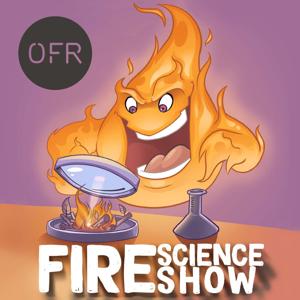


Episode 50! Time to celebrate, and for this one we have a surprise. A mysterious host takes over the show to interview a wind and fire modelling celebrity...
Ok, this should be enough to not reveal everything once the show notes get auto-posted on all social media :) I am super happy for multiple reasons. You guys were with me 50 times on my way to share fire science with everyone who wants to listen. You have downloaded my content 25.000 times. And finally, I get to share with you some of my own science. Could not be happier! Thank you so much to Guillermo Rein for creating this opportunity for me.
I hope that the subject of my work is interesting to you. I have some papers to share, along with the most important ones that were mentioned in the episode. Psst...some of them are behind a paywall but I am MORE THAN HAPPY to share the copies with you, just send me a request through my ResearchGate profile :)
----
The Fire Science Show is produced by the Fire Science Media in collaboration with OFR Consultants. Thank you to the podcast sponsor for their continuous support towards our mission.
So we all know batteries burn... but do we know what exactly does burn? What is inside this tiny metal cylinder that scares so many of us? We try to understand it a bit more with Dr Francesco Restuccia of Kings College London, who is an expert in battery fire safety and self-heating. And this combination of skills gave him a unique view of the challenges of fire safety of batteries - especially the ones that are stored in warehouses and not fueling anything. Francesco takes me on a journey into the world of cathodes, anodes and electrol... I mean battery juice. Knowing what is inside and why it burns is fundamental to understanding how can we protect the world from the risks arising from Li-ION batter technology. And I hope this podcast episode is a concise introduction to this!
And here is a paper choice curated by Francesco, containing the important papers discussed within the episode (because we discuss real science here! :))
----
The Fire Science Show is produced by the Fire Science Media in collaboration with OFR Consultants. Thank you to the podcast sponsor for their continuous support towards our mission.
Did you know first car parks were built for electric vehicles? Or what clever techniques can be used to model the spread of fire between vehicles? Or what challenges scientists meet burning vehicles, and why pneumatic suspension makes stuff more interesting... These (and much much more) are the things you learn by inviting Mike Spearpoint of the OFR for a lovely chat about design fires in car parks, and car parking infrastructure in general.
But wait for it, there is much more. The hidden underlying message about the broadness of fire science, and the holistic view on how certain compartments are used today (and how it differs from their past use). Delightfully refreshing point of view! Hope you will enjoy it as much as I did.
----
The Fire Science Show is produced by the Fire Science Media in collaboration with OFR Consultants. Thank you to the podcast sponsor for their continuous support towards our mission.
Pressurization is a common strategy for protecting spaces against the infiltration of smoke. However, the solution has a kind-of bad press as "not-working" or "incapable to meet its design goals". We know, that the systems are as good as their design, and in this episode with my guest, Grzegorz Sypek, we try to bust some myths around PDS systems. We touch on the important design points and the properties of modern solutions available in the market. We also discuss the standardization of PDS systems in Europe, giving a glimpse into incoming EN 12101-6 and EN12101-13.
If you seek help with the design of pressurization systems for your buildings, feel free to contact Grzegorz @ [email protected]
LinkedIn: https://www.linkedin.com/in/teknolink-gsypek/
----
The Fire Science Show is produced by the Fire Science Media in collaboration with OFR Consultants. Thank you to the podcast sponsor for their continuous support towards our mission.
This week we do something funny - a crossover episode with the host of the Fire Code Tech podcast - Gus Gagliardi. We end up discussing the paths of fire safety engineers, from school to specialized roles in engineering companies, and the challenges associated with that.
We hope you liked this twist to the podcast, and maybe discovered a new show to follow up!
If you want to hear a familiar voice, you can start with this episode https://firecodetech.com/research-smoke-control-systems-and-cfd-with-wojciech-wgrzyski featuring yours truly :)
----
The Fire Science Show is produced by the Fire Science Media in collaboration with OFR Consultants. Thank you to the podcast sponsor for their continuous support towards our mission.
How does one decide when a building is fire safe? That is a real hell of a question to answer! Is it when no harm can occur? But such a condition can never be fulfilled... there is always a meteor waiting around the corner to fall into your building! So if some situations can occur for which we cannot prepare, when do we decide we are 'safe enough'?
This is the tough question we try to decipher together with prof. Ruben van Coile and prof. Danny Hopkin. It is an inspiring journey, and you can trust me on this - at the end the episode gets even better!
Also, Danny was kind enough to curate this fantastic list of resources for you to read, if you would like to build a more complete idea on the concepts of risk and safety:
Also, keep your eyes open for the next edition of SFPE Handbook where my guests are publishing a new chapter on "Economics and Decision Making in Fire Risk Analysis"
----
The Fire Science Show is produced by the Fire Science Media in collaboration with OFR Consultants. Thank you to the podcast sponsor for their continuous support towards our mission.
Since Episode 6, the fire safety of battery systems was not very much visible in the show - a good time to change that! And we do this with a true legend of fire safety - Ofodike Ezekoye. In the last year, I have learnt a lot about battery systems, which did not make me more afraid. Entirely opposite - the more I know, the more confident I am in fire science and engineers finding solutions for any outstanding issues with this emerging technology. In this episode, we go through the challenges at different scales of the battery system - from the chemistry of cathode, anode and electrolyte, through challenges in manufacturing and quality control, battery management systems up to the scale of whole off-grid systems. Each presents unique challenges. Each is a place of ongoing innovation.
But the most important, IMHO, is to look at the threat holistically. Even if we remove all the intrinsic dangers of energy storage, the batteries may still be there when a fire starts for other reasons... We may be able to contain the 'thermal' threats, but are we looking for solutions to the smoke? And what to do with billions of already existing batteries that we deal with everywhere in our lives... All these questions got answered here, so you don't want to miss this episode!
----
The Fire Science Show is produced by the Fire Science Media in collaboration with OFR Consultants. Thank you to the podcast sponsor for their continuous support towards our mission.
It is always a pleasure to interview a true legend of fire safety. And when the topic of the interview is their thoughts on neglected areas of our discipline, based on almost five decades of experience? This must end up great! And it did (IMHO).
Please join me and prof. Vyto Babrauskas in discovering what are the parts of fire science that are in need of research. What are some obvious solutions, that I think we all acknowledge, but for some reason, we do not have? What are the dead ends and missing links... And how many of the ideas go to sleep for decades, just to be rediscovered as the field matures.
Please learn more about prof. Babrauskas on his webpage: www.doctorfire.com and his scientific paper repository at ResearchGate
The paper mentioned by Vyto - Some Neglected Areas in Fire Safety Engineering
----
The Fire Science Show is produced by the Fire Science Media in collaboration with OFR Consultants. Thank you to the podcast sponsor for their continuous support towards our mission.
We all understand the dangers of smoke inhalation in fires. But what about the site of the fire a few days after it was put out? It looks clean, maybe even lost the smell... Is it something to worry about, or you can rush straight in, wearing your shorts and a t-shirt? Well, I guess I would not be that reckless, but if I can be honest - I don't think I would care that much about protecting myself either... At least that was me before the talk to dr Gavin Horn from UL FSRI.
Gavin spent more than a decade investigating the environment of post-fire scenes. And these places are where many of us work, almost on daily basis. Firefighters, investigators, fire researchers, constructors and demolished... And the scenes do certainly hide some threats within. In this episode you will learn a lot about them, and how these threats change as the environment evolves. More than that, Gavin is a pretty down-to-earth guy and does not imply you should dress for an investigation in a NASA space suit. You have to balance the risks related to contamination through inhalation and absorption, with risks of overheating, falling or cutting yourself, and as well with the capability to do the actual work wearing PPE. That is not the kind of discussion I get with my own H&S experts, and I appreciate this smart and holistic view a lot.
To learn more about the environment of fire scenes, you MUST read this excellent paper by Gavin Horn et. al. Airborne contamination during post-fire investigations: Hot, warm and cold scenes
You may also want to enter the gold mine of resources that Gavin has shared with me:
----
The Fire Science Show is produced by the Fire Science Media in collaboration with OFR Consultants. Thank you to the podcast sponsor for their continuous support towards our mission.
How reliable are sprinkler systems? Is it 100%? Is it 95%? Maybe it is 88%... actually, whatever the number is, do we truly understand what does it represent? What does it mean that a sprinkler has succeeded and what does it mean it failed. These are the questions that were behind my today's interview with Arnstein Fedoy. You may remember Arnstein from his short appearance in episode 26 . This time, we've had the whole episode for this discussion, and I must say it was well invested hour on my side.
If you would like to learn more about sprinkler reliability, Arnstein also wrote a book exclusively on this topic:
https://www.taylorfrancis.com/books/mono/10.1201/9780429287503/reliability-data-fire-sprinkler-systems-arnstein-fed%C3%B8y-ajit-kumar-verma
----
The Fire Science Show is produced by the Fire Science Media in collaboration with OFR Consultants. Thank you to the podcast sponsor for their continuous support towards our mission.
From the publisher's feed
78,375 Listeners

43,824 Listeners

31,973 Listeners
26,165 Listeners
30,720 Listeners

54 Listeners
5,082 Listeners
772 Listeners
491 Listeners

2,319 Listeners

3,019 Listeners
770 Listeners

132 Listeners
4 Listeners

1,129 Listeners