
Sign up to save your podcasts
Or



Based on Podcast App listening data
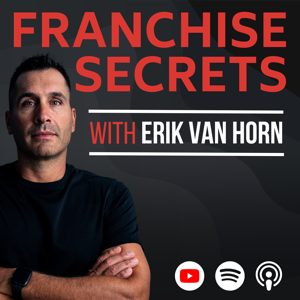
On this episode of the Franchise Secrets podcast, Erik is joined by Stan Friedman to discuss how to find the best emerging and established brands.
As a franchising veteran and high-level executive at several companies, Stan brings a wealth of experience to the table. Whether it’s finding the best emerging and established brands to get involved with or how to beat out the bigger brands, Stan has seen and done it all in franchising.
Listen to Erik and Stan talk about emerging and established brands:Introduction
How Stan found franchising (2:10)
Stan explains how he entered the world of franchising after an unstable career in radio. He went through a program that taught him how to market and offer franchises to large real estate brokers who were suffering under the reign of RE/MAX.
Competing with the big players (4:26)
At the time, RE/MAX was snapping up the best agents by offering competition commission deals. In working for ERA Franchises, Stan offered a better alternative to those who didn’t want to cross over to RE/MAX.
Conversion franchising (6:36)
Stan talks about the method of conversion franchising, which is identifying the top players in a field and going after their base. He touches on how this is a strategic, proactive and more efficient alternative to just advertising to everyone and hoping for the best.
How Google changed franchising (10:15)
Stan discusses how the internet, and the wealth of information that comes with it, has changed the franchising game. The franchisor and franchisee dynamic has shifted, giving franchisees more power. The franchisor needs to adapt to meeting potential franchisees on their terms.
Researching the right franchisees (12:57)
Stan emphasizes the importance of finding the right initial franchisees by researching their backgrounds. Ultimately, the success of the first franchisees is the success of the franchisor.
Collecting data (15:22)
Stan believes the best tool is the ability to collect as much data as possible in order to make more intentional and informed decisions
What Stan does now (18:07)
Nowadays, Stan is the president of FRM Solutions, which produces customizable tools for franchisors to use to help better manage their system. He also hosts his own podcast, Franchise Today, which brings in successful guests to help educate those in franchising.
Mastermind groups (23:56)
Stan has recently started new projects to aid emerging franchisors by creating educational peer groups. Stan and Erik discuss the value in these mastermind networks, how they began and how they can improve your career and life.
Emerging and established brands (27:05)
Stan pinpoints what separates a successful emerging brand from all the others. He explains how leadership, mentality, values, and collaboration allows certain emerging brands to excel.
Brand loyalty (28:36)
Stan urges new franchisees to find the brand, culture, and values that align with their interests. He stresses discovering what is best for you and your passions. He encourages any franchisee to explore the culture on the ground level before becoming involved.
Trainers and tools (32:20)
Stan states that the most imperative employee in a franchise is the trainer. He says look at what a franchisor has invested in their trainers and tools that ensure a franchisee’s success. He highlights the tools and the positions the franchisor has set up in order to decide your own involvement.
How Covid-19 distinguished the best brands (35:27)
The best way to judge if a franchisee should get involved with a certain brand is to look at how they handled Covid-19. How did a franchisor help aid their franchisee in a time of crisis? Stan says look at the behavior—it will reveal everything.
The most memorable people (40:09)
Stan talks about his interaction with Jimmy John Liautaud, whose interview stuck with him to this day. He touches on how Jimmy John’s approach to business epitomized giving back to the team and collaborating with others. To Stan, Jimmy John’s interview represented the spirit of franchising: making others and yourself successful.
Struggling franchisees (42:18)
Stan gives an analogy of planting a garden to explain how struggling franchisees can pivot to start excelling. He explains how to distinguish systemic failure from personal, and what to do once you’ve examined yourself and your franchise. Lastly, Stan and Erik discuss playing to your strengths and finding the right franchise for you, whether that is emerging or established.
Links:Franchise Secrets - Website
Franchise Secrets - Facebook group
On this episode of the Franchise Secrets podcast, Erik is joined by Tim Jolicoeur to talk about his journey with Nutrishop and Restore fitness franchises. From his beginnings in the Marines and starting a flooring business to eventually opening Restore, Tim has found success through his passions
Health and fitness franchise opportunities can be really rewardingTim owns several Nutrishop locations and a Restore franchise. After being in the Marines and suffering from severe pain, Tim wanted to help others like him find some relief. Since that time, he’s opened three Nutrishop locations and Restore to provide health and wellness options.
Listen to Erik and Tim talk about fitness franchise opportunities:Introduction
Tim’s military background and start with a fitness franchise (1:21)
Time explains why he went into the Marines, how it helped him, and how pain eventually forced him out of the military and into franchising.
Expansion (4:47)
After opening his first Nutrishop location in 2014, Tim has expanded into three units. He explains his journey in expanding the business over the years.
Mental toughness (7:17)
As Tim opened his third location, the SBA loan wasn’t coming through fast enough so he bankrolled the project himself. Erik and Tim talk about where the mental toughness to do that came from.
Opening Restore (8:50)
After having three Nutrishop locations, Tim opened up a completely new franchise called Restore. They do a variety of direct therapies, including IV, stretch, red light, and more. Tim explains the concept and how he got it started.
What lessons have been learned about bigger deals (12:26)
Erik notes that both he and Tim started with smaller businesses before jumping into a bigger and more expensive franchise system. Tim shares some of his insight about what he’s learned from making that jump.
Restore franchise: What they do well and what they don’t (14:18)
Tim discusses what the Restore franchise does well, including leadership. He also talks about what Restore has struggled with, from communication to a lack of in-house tools.
Becoming part of the solution (16:10)
As Tim and Erik note, the early days of a franchisor can be a little rough around the edges. Instead of complaining or wallowing in defeat, Tim believes being proactive is the first step to finding a solution.
Employees - Crossover (19:05)
Tim opens up about how his leadership crosses over between his fitness franchises, especially as they continue to grow.
Further expansion (20:50)
Erik and Tim talk about how big the businesses are currently and what expansion plans are for both Nutrishop and Restore.
Military and franchising (22:19)
Erik wonders what veterans should know about getting into franchising after they’re done with their military careers. Tim, as a veteran himself, shares his thoughts.
Hours (25:16)
The grind is real and Erik wants to know just how many hours Tim is currently putting into his businesses and where those hours go. Tim says his time is shifting from working in the business and more on the business and himself.
The concept of Restore (29:13)
With so many unique services, Tim details how they create a plan for clients and what some of the services actually are.
Local business networking (31:31)
Networking is one of the best ways to drive customers in the door and help build connections with other businesses. Tim and Erik share some personal stories and insights on how to properly network.
Expanding into a 2nd brand (35:22)
With Tim’s experience opening two different brands, Erik picks his brain for some tips and tricks to ensure the best results as well as what went both right and wrong for him.
Finding passion (40:28)
Not every franchise is going to get your blood pumping with excitement. Erik and Tim explain how everyone can find their passion, even if they aren’t necessarily working in/on a business that excites them.
Favorite charities and books (44:51)
Tim talks about why he supports certain charities and the few books he’d recommend to any entrepreneur or franchisee.
Erik is joined by John Warrillow on this episode of the Franchise Secrets podcast to talk about building and selling a business. The guys break down some of the myths and pitfalls about selling your business, all the things you need to be thinking about from the very start, and how to achieve the highest value possible for your business.
Before selling a business, you have to build it up the right way firstJohn Warrillow is a master of building and selling businesses, founding The Value Builder System to help others become the same. John’s a best-selling author of several business books on the topic and he’s the host of Built To Sell Radio, interviewing hundreds of successful founders following their exit.
Listen to Erik and John talk about selling a business:Introduction
John’s background (1:40)
John discusses his experience and what you might know him from.
Selling a business too reliant on the owner (2:55)
Erik asks John about the difficulties of selling a business that is so reliant on the owner and their inability to take a step back.
How to perform due diligence in equity companies (4:44)
John gives his thoughts on selling a percentage of a business to a private equity company, including where there are risks and what you should be looking for in any deal.
When to think about building a sellable business (9:45)
John likes building a business to being a parent. While you might have dreams of what it could become, simply nurturing the company to be the best it possibly can is the best way of building a sellable business.
How to know when you’re in the right mindset (13:01)
Following up on the last topic, Erik and John talk about knowing when you’ve got the right entrepreneurial mindset to build and sell a business. John also breaks down how basing your company around your personal brand actually hurts when selling a business.
Finding higher-multiple businesses (15:45)
When beginning with building and selling a business in mind, finding the ones with a higher-multiple exit is ideal. But where do you go to find those types of businesses? John explains some of the myths and misnomers with the idea, as well as what you really should be using to find the real value.
What can impact Discounted Cash Flow valuations (18:00)
Erik and John talk a bit about how things like leases impact the value of a business and how to calculate Discounted Cash Flow (DCF).
Calculating Discounted Cash Flow for a business on a downward trend (21:12)
Selling a business that’s successful is always the goal but if you’re looking to sell and revenue is expected to take a hit in the coming years, John notes that it’ll dramatically impact your Discounted Cash Flow valuation and could even kill the deal.
What is gross margin? (28:03)
John explains what gross margin is, how to calculate it, and how important it can be when selling a business.
The impact of COVID-19 on selling a business (29:51)
Erik uses the example of fitness businesses and the struggle they’re having during the pandemic to ask John about the difficulties of buying and selling businesses right now. John breaks down what things both sellers and buyers should consider going into a deal.
The differences between selling to individuals and private equity group (38:07)
Not every sale is going to be the same and depending on who you sell to, there are major differences. John breaks down how and why selling a business to an individual differs from selling to an individual.
Pre-diligence (39:40)
John explains what pre-diligence is and what it encompasses, giving an example of what it looks like and the impact it can have.
What is a virtual data room (42:09)
John details what a data room is and how it’s used for sellers and buyers.
Key takeaways from “Built to sell” (43:34)
One of John’s books “Built to sell” is about the process of turning a company’s diverse set of offerings into more of a niche service in order to sell the business. Erik and John talk about how that process would work with Mighty Dog Roofing.
Do potential buyers look at customer reviews? (48:03)
John discusses how customer reviews and Net Promoter Score can have an impact on selling a business.
Key takeaways from “The art of selling your business” (49:10)
John discusses his book “The art of selling your business” and how he wrote it as a field guide of sorts for the process of selling a business.
Links:Franchise Secrets - Website
Franchise Secrets - Facebook group
Tippi Toes Dance - Website
Who is your mama - Podcast
Built to sell - Website
On this episode of the Franchise Secrets podcast, Erik is joined by Megan Reilly, the co-founder and COO of Tippi Toes Dance. Megan shares her experience running a business as a hands-on mother of three daughters, as well as appearing on Shark Tank.
Appearing on Shark Tank isn’t a silver bulletMegan takes Erik on a deep dive into her appearance on Shark Tank, including how she and her sister prepared and what she’s taken away from the experience. She also shares some behind-the-scenes information about how the deal they accepted on the show eventually fell through after the cameras were finished rolling.
This is the perfect episode for working parents, those that want to franchise their business the right way, and anyone potentially thinking about appearing on Shark Tank.
Listen to Erik and Megan talk about Shark Tank and parenting as a business owner:Introduction
Being a mom and running a business (2:06)
Megan talks about her three daughters and touches on both the hurdles and advantages of being a hands-on parent while running a business. From having conference calls with kids screaming in the background to educating them about business, Erik and Megan talk about their children and some of the ways they’ve helped them form business ideas.
Knowing when to take a break (10:37)
It can be easy to get into the routine of working to build your business but one of the hardest things for business owners can be knowing when to take a break. Erik and Megan discuss what their own tells are.
Starting Tippi Toes (12:25)
Megan shares the story of her sister, Sarah, starting Tippi Toes. After losing her waitressing job, the idea to go into schools and teach dance sprang into Sarah’s mind. Megan joined soon after.
When did the business take off? (15:15)
With Megan still in school and earning a degree in nutrition, Sarah was doing Tippi Toes full time. It was at that point both Megan and Sarah realized the business was taking off. They spent the next 10 years building up the brand across the country before opening their first official franchise.
Franchising the business (19:56)
After failing to create a television show, someone pointed out franchising the business was a viable option. Megan opens up about their process, from hiring a consultant to help set it up to spending a full year working with just one franchisee to ensure their processes were correct and well tested.
Shark Tank (24:29)
Megan and Sarah went on Shark Tank to pitch their television show but quickly found the panel to be far more interested in their business. Megan shares her belief on whether their advice to drop the show was correct.
Preparing for Shark Tank (26:48)
Megan talks about her experiences preparing for the show, including some of the things she studied for.
What she learned on Shark Tank (29:04)
Megan and Erik discuss some of the lessons learned after appearing on Shark Tank, including the confidence gained from being so prepared. Erik opens up about how he prepares (or sometimes doesn’t prepare) for each show.
Deal or no deal (31:30)
Despite agreeing to a deal with Mark Cuban on the show, Megan explains how some issues with contract language stopped everything right in its tracks.
Why did they want to make a deal (35:09)
Megan talks through some of the reasons she went on the show and wanted to make a deal in the first place.
Where is Tippi Toes now (36:46)
Megan and her sister have expanded Tippi Toes to 35 domestic franchises and another franchise in China. She also talks about the difficulties of the business through the pandemic and how they’ve helped their franchisees.
Who is your mama podcast (41:02)
Erik and Megan talk about her podcast, which talks to the mothers of some important and high-profile people, including major brand CEOs.
Links:Franchise Secrets - Website
Franchise Secrets - Facebook group
Tippi Toes Dance - Website
Who is your mama - Podcast
While the COVID-19 pandemic has impacted so many businesses around the country, now might be the perfect time to actually expand. With franchises hurting and possibly looking to get out, those thinking long-term have access to more affordable avenues of business expansion right now.
Business expansion during a pandemicOn this episode of the Franchise Secrets podcast, Erik is joined by Todd Bains, the owner of several Massage Envy and Sports Clips franchises. Erik talks to Todd about his recent expansion, including buying seven more locations.
Listen to Erik and Todd talk about business expansion:Introduction
Todd’s franchise portfolio (0:55)
Todd explains what franchises and businesses he currently has
Why Todd is expanding business during a pandemic (2:45)
Todd is about to open seven more SportsClips franchises. He tells Erik why he’s expanding during the middle of the coronavirus pandemic.
Legacy franchising (6:43)
Erik has noticed a lot of people want to start a franchise for legacy purposes, to pass down to their children. Todd talks about his son’s journey through the family businesses to the point where he started his own business.
Business expansion in a pandemic (13:55)
Todd explains the reasoning for his desire to expand during the pandemic, including what the potential long-term growth process is.
Buying a Massage Envy right now (15:00)
Erik asks Todd how easy it is to buy a Massage Envy franchise during the pandemic. They talk about the risks and difficulties of buying existing franchise locations during the pandemic.
Why Todd is comfortable with business expansion in a pandemic (16:45)
Many people would stay away from expanding during these uncertain times. Todd explains to Erik why he’s doing it and they talk about why that makes sense.
Increasing your pricing (18:26)
Erik and Todd break down why increasing your pricing is necessary and why they believe some owners are hesitant to do it. Erik shares some of his experience with price increases and how he was able to do it.
Value of outside help (23:40)
Todd had his managers take a sales training course with Orange Theory’s Ryan Casey. Todd talks about how the process went and what the end results were for his businesses.
Heading into the new year (31:00)
Todd talks about his goals for 2021 and how he’s handled the pandemic thus far.
Links:Franchise Secrets - Website
Franchise Secrets - Facebook group
Regal Pet Resort - Website
This episode of the Franchise Secrets podcast is all about self-storage investing. Erik is joined by Michael Wagner, creator of Storage Rebellion, to talk about his journey into the business and what he’s learned along the way. From finding the right deals to finding the money, Michael breaks down the entire process and gives some golden nuggets.
Self-storage investment could be right for youMichael spent hundreds of thousands of dollars in schooling to become a physical therapist. But with a schedule he had very little control over, Michael quickly found out it wasn’t right for him. Instead, self-storage investment caught his eye. Using a nest egg he had built up, Michael took a failing location and turned it into massive profits, and he’s now teaching others to do the same.
Listen to Erik and Michael talk about self-storage investing:Introduction
Michael’s journey to franchising (2:00)
Erik introduces Michael, who shares how he got into franchising. After earning degrees to do physical therapy, Michael realized it wasn’t for him. He got into real estate investing and eventually franchising.
Why did Michael quit his day job? (4:16)
Michael dove headfirst into owning his own business, quitting his day job and buying a failing storage facility that was actually losing money. Erik and Michael talk about his motivations for the sudden shift.
Teaching and investing (5:41)
Michael’s focus when investing is about finding the right conditions. By being pickier in which opportunities he invests in, Michael not only makes money but still lives a free and fulfilling life. In addition to still investing, Michael teaches others about self-storage investing, taking them to even bigger heights.
What would Michael do differently now (8:30)
Michael has steadily shortened the amount of time his investments take to pay off. He shares some of the tips and tricks he’s learned from personal experience and some things he’s seen his students do to improve ROI quicker.
Different roles in investment (10:10)
A successful deal is all about merging the money and sweat equity together. You don’t necessarily have to have all the money to invest or be the one running the operation on a daily basis. Some deals come together as partnerships between investors and those that can run the business.
Storage Rebellion (15:36)
Michael talks about his newest venture, Storage Rebellion. Michael launched Storage Rebellion as a community and give away his knowledge to others. He talks about his motivation for giving away amazing information for free.
What’s it cost to start self-storage investing? (19:26)
Though it can range wildly due to partnership investing, Michael breaks down the basic costs to get started with storage facilities, including how little his students have had to invest to make a deal happen.
How long does it take to find a deal? (21:39)
Michael talks about the timeframes for those looking to find and make a deal for a storage facility -- From initially learning about storage facilities to finding the right location and getting a deal done.
Storage and franchising (24:00)
Michael discusses why the franchise model doesn’t necessarily make sense for storage facilities. Erik and Michael talk about why some businesses don’t fit franchising.
Difference between real-estate investment and storage (25:48)
While they seem similar at face value, there are some significant differences between investing and running a self-storage facility compared to the typical multi-family real-estate. Michael breaks down the key differences between the two, especially the pros for storage.
What’s the hardest part of storage? (29:51)
It can’t all be easy money, right? With so many of the positives of storage out of the way, Erik and Michael talk about the biggest hurdles with storage investment. From not quitting too early to taking the leap and investing in a location that isn’t near you, there are some difficulties that can handicap any storage business.
How to find the best deals (35:00)
While leaning on the appropriate relationships is always going to be the best case, there are other ways of finding the best deals out there.
Links:Franchise Secrets - Website
Franchise Secrets - Facebook group
Storage Rebellion
On this episode of the Franchise Secrets Podcast, Erik is joined by Zachary Lease, owner of several Board & Brush franchise locations, to talk about his journey into franchising. Zack discusses how he went from selling things as a teen to co-owning a business with his father before jumping head-first into franchising with his wife.
Thinking smarter and growing faster with vertical integrationBy looking for opportunities and making the most of them, what started as a single location quickly turned to three and another business for Zack. He expanded his franchise thanks to his own success and taking the opportunity to buy out a struggling location. But by thinking about vertical integration and how he could offer value, Zack opened up another business as a vendor to his own franchisor, growing that quickly as well.
Failure is not a bad thing, even if people believe it is. In fact, failure can be one of the quickest paths toward greater success if you learn from those mistakes. With many businesses and entrepreneurs struggling during the coronavirus pandemic, there are plenty of lessons to be learned for even the most successful franchisees.
On this episode of the Franchise Secrets Podcast, Erik is joined by Marcos Moura, CDO of Amada Franchise, to talk about his experiences with failure. Marcos discusses how he lost his business and home in 2008, and what lessons he learned from that strife. Whether it’s a reminder that everyone goes through troubles at some point or learning how to deal with issues head-on, Erik’s and Marcos’ insight is sure to help you out.
Investing doesn’t have to just be the stock market or million-dollar deals where your money is tied up for years. Lifestyle investor Justin Donald joins Erik Van Horn on The Franchise Secrets podcast to help you think about investing a little differently.
Justin shares some of the low-risk investment principles he’s developed over the years, so you too can live the life you want. Whether you’re looking for low-risk cash flow investments for passive income, building your wealth more efficiently and easily, or just trying to get out of the rat race; Justin teaches some of the insights that have helped him find and structure deals that make his money work for him, not the other way around.
On today’s episode of Franchise Secrets, I’m joined by LinkedIn marketing specialist, Joshua B. Lee. Josh shares his unique outlook on marketing and gives some tips and tricks to improve your marketing efforts on LinkedIn.
Josh talks about some of the basic things you can do to improve your LinkedIn profile to attract more interest. We also talk about thinking of marketing as a human-to-human connection rather than hard pitches and goal-oriented discussions. With a few tweaks to your marketing mindset and making your target audience more focused, you too can find more success when using LinkedIn.
From the publisher's feed

1,580 Listeners

2,199 Listeners

13,958 Listeners
578 Listeners

4,462 Listeners
2,298 Listeners

8,554 Listeners

822 Listeners
18 Listeners
36 Listeners

29,197 Listeners

77 Listeners

956 Listeners

932 Listeners

2 Listeners